Women's Health
Are Brittle Nails Normal in Perimenopause?
Up to 35% of women report worsening nail quality during perimenopause, yet most are told it's just aging. Hormonal shifts, nutritional gaps, and thyroid changes all converge during this transition — and brittle nails are often the first visible sign. Here's what's actually happening and what you can do about it.
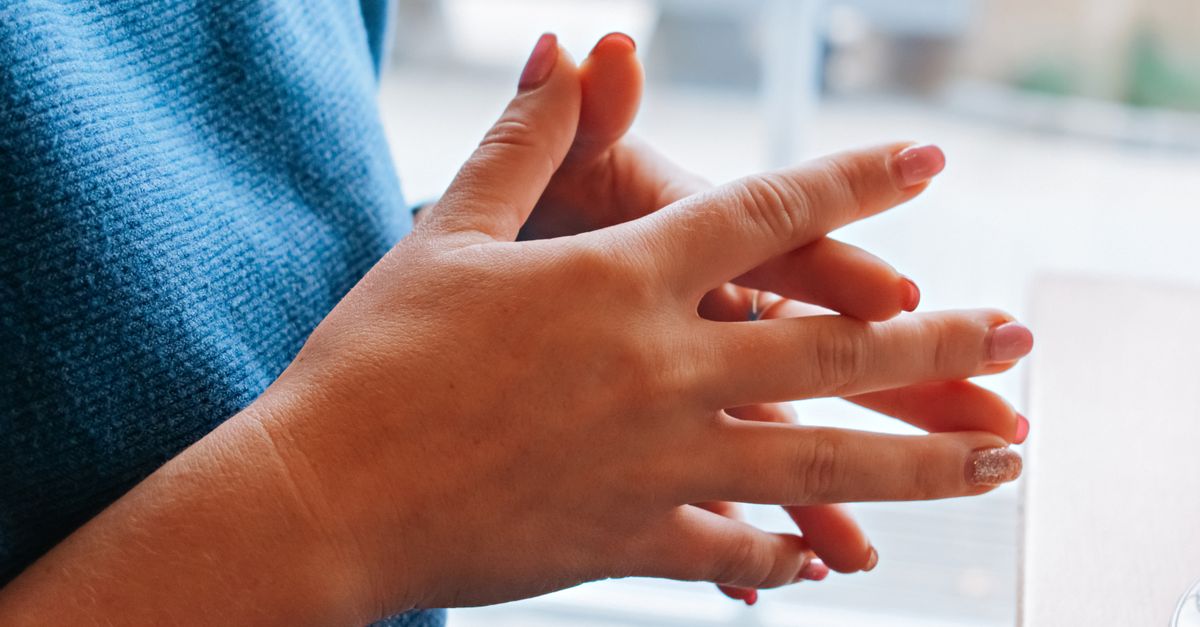
Are Brittle Nails Normal in Perimenopause?
Yes, brittle nails are genuinely common during perimenopause — but common doesn't mean inevitable or untreatable. Declining estrogen reduces nail plate hydration and collagen turnover, making nails thinner, more ridged, and prone to splitting. The main caveat: if nail changes appear suddenly or are severe, thyroid dysfunction or iron deficiency should be ruled out first.
---
Why Estrogen Affects Your Nails
Estrogen receptors are present throughout skin, hair follicles, and the nail matrix — the tissue at the base of your nail that produces new nail cells. When estrogen levels begin their erratic decline in perimenopause, collagen synthesis slows, keratin quality changes, and the nail plate retains less moisture (Brincat et al., Maturitas 2005; PMID: 15936590).
The nail plate is roughly 80–90% keratin protein, but its structural integrity depends on a matrix of sulfur-containing amino acids, lipids, and water. Estrogen supports all three pathways. Animal and human studies show that estrogen deficiency is associated with measurable reductions in skin collagen density — and the same mechanisms apply to nails, which share keratinocyte biology with skin (Verdier-Sévrain & Bonté, Skin Pharmacology and Physiology 2007; PMID: 17191053).
In practical terms, this plays out as:
- Onychoschizia (horizontal layering and peeling at the free edge)
- Onychorrhexis (longitudinal ridging and vertical splitting)
- Increased brittleness, especially in dry environments
- Slower nail growth rate
These changes often begin in the mid-40s, well before the final menstrual period, because estrogen fluctuation — not just estrogen absence — disrupts tissue remodeling cycles.
---
The Thyroid Connection You Shouldn't Miss
Perimenopausal women are at significantly elevated risk for thyroid dysfunction, and thyroid hormones are independently essential for nail matrix cell proliferation. Hypothyroidism — even subclinical hypothyroidism with a TSH above 4.5 mIU/L — commonly presents with brittle, slow-growing nails, dry skin, and hair loss.
The challenge is that these symptoms overlap almost perfectly with estrogen decline, making it easy for both patients and clinicians to attribute everything to menopause. A TSH test is a low-cost, high-yield first step. If you're navigating perimenopausal thyroid questions, understanding what TSH levels mean in perimenopause can help you interpret your own results in context.
A 2018 meta-analysis found that women over 40 have roughly a 2-fold higher prevalence of subclinical hypothyroidism compared to women in their 30s (Garber et al., Thyroid 2012; PMID: 22442517). Nail changes should prompt a TSH check — not just an assumption that perimenopause is the sole culprit.
---
Key Nutrients That Decline During Perimenopause and Affect Nail Quality
Hormones don't act alone. Several micronutrients that support nail structure become harder to maintain adequately during the perimenopausal years, either because dietary intake drops, absorption changes, or demand increases.
Biotin
Biotin (vitamin B7) is the most studied nutrient for nail brittleness. A controlled trial published in the Journal of the American Academy of Dermatology found that 2.5 mg of biotin daily for 6 months increased nail plate thickness by 25% and reduced splitting in women with documented brittle nails (Colombo et al., Cutis 1990). Note: biotin supplementation can interfere with certain thyroid and troponin lab assays at high doses — always inform your clinician if you're taking more than 1 mg/day.
Iron
Low ferritin — even without frank anemia — is associated with koilonychia (spoon-shaped nails), slow growth, and increased brittleness. Perimenopausal women who still have irregular or heavy periods are particularly at risk for iron depletion. Ferritin below 30 ng/mL is often clinically relevant for nail and hair changes, even when hemoglobin is within normal range.
Zinc
Zinc is required for keratinocyte differentiation and nail plate formation. Deficiency presents as Beau's lines (transverse grooves), white spots, and slow regrowth. Zinc intake often falls short in women following low-calorie or plant-heavy diets, and absorption can be impaired by high-phytate foods.
Collagen Precursors: Vitamin C and Amino Acids
Collagen synthesis requires adequate vitamin C as a cofactor for prolyl hydroxylase. As estrogen declines, baseline collagen turnover is already compromised — insufficient vitamin C compounds this. Glycine, proline, and hydroxyproline from dietary protein complete the picture.
Vitamin D
Vitamin D receptors are expressed in the nail matrix, and deficiency has been linked to nail psoriasis and general plate fragility. Many perimenopausal women are deficient, particularly at northern latitudes or with limited sun exposure. Checking serum 25(OH)D and targeting 40–60 ng/mL is reasonable practice for anyone with unexplained nail changes.
---
How Hormonal Fluctuation Affects Nail Growth Rate
Nail growth rate averages about 3.5 mm per month in healthy adults, but this slows with age and hormonal change. Studies on nail growth physiology suggest that androgens accelerate growth while the role of estrogen is more nuanced — primarily supporting the structural integrity of what grows rather than the speed of growth.
During perimenopause, testosterone also declines (though less dramatically than estrogen in most women), potentially contributing to slower growth on top of the estrogen-driven structural changes. The result is nails that grow more slowly and are more fragile when they do — a doubly frustrating combination.
It's worth noting that these same hormonal shifts can affect other areas of appearance and health. Changes in SHBG levels during perimenopause influence how much free testosterone and estrogen are biologically active, which affects skin, hair, and nail tissue directly.
---
Distinguishing Normal Perimenopausal Nail Changes from a Medical Issue
Most perimenopausal nail changes are bilateral (both hands affected roughly equally), gradual in onset, and worsen slowly over months. Red flags that warrant prompt medical evaluation include:
| Feature | Likely Perimenopausal | Warrants Investigation |
|---|---|---|
| Onset | Gradual, over months | Sudden, over weeks |
| Pattern | Both hands, symmetric | Asymmetric, single digit |
| Color | Normal or slightly pale | Yellow, green, dark, or banded |
| Texture | Ridged, splitting, thin | Clubbing, severe pitting, separation |
| Associated symptoms | Hot flashes, irregular periods | Swollen joints, rash, breathing changes |
Yellow nail syndrome, nail psoriasis, fungal onychomycosis, and connective tissue disorders can all present with nail changes. If you've been taking biotin supplements, pause them at least 5–7 days before any blood testing, as they can skew thyroid, cardiac, and hormone assay results.
---
Evidence-Based Approaches to Improving Nail Strength in Perimenopause
The following interventions have the strongest evidence base or mechanistic rationale for perimenopausal nail brittleness:
- Address nutritional deficits first. Run a comprehensive panel: ferritin, zinc, 25(OH)D, B12, and TSH. Supplementing blindly is less effective and can mask diagnoses.
- Biotin 2.5 mg/day for a minimum of 3–6 months. Effects are slow because you're waiting for the new nail plate to grow out.
- Collagen peptides 5–10 g/day — a 2019 randomized controlled trial found that women taking hydrolyzed collagen for 24 weeks had significantly improved nail growth rate and reduced frequency of broken nails compared to placebo (Hexsel et al., Journal of Cosmetic Dermatology 2017; PMID: 28786550).
- Optimize vitamin D to serum levels of 40–60 ng/mL using D3 co-administered with vitamin K2 (MK-7) for proper calcium routing.
- Minimize mechanical trauma: keep nails short during the recovery phase, use cotton-lined gloves for wet work, and avoid acetone-based nail polish removers.
- Consider estrogen status in discussion with your OB-GYN or menopause specialist. Some women find that hormone therapy improves skin and nail quality alongside other perimenopausal symptoms.
Women dealing with heart palpitations in perimenopause or other systemic symptoms alongside nail changes should ensure their workup includes thyroid function, B12, and iron — a single comprehensive panel catches multiple deficiencies at once.
---
What This Means for Your Formula
Ones uses AI-driven analysis of blood work and health history to identify the specific nutrient gaps driving symptoms like brittle nails — rather than guessing based on age or symptoms alone. For perimenopausal nail changes, several ingredients in the Ones catalog are directly relevant:
Zinc (individually dosed): Ones formulas include zinc at clinically relevant doses calibrated to your serum zinc or dietary intake patterns. Zinc deficiency is one of the most correctable drivers of nail fragility, and Ones doses it precisely rather than using a one-size multivitamin amount.
Vitamin D3 + K2 (MK-7): Ones pairs D3 with vitamin K2 in MK-7 form, the combination that clinical evidence favors for both calcium metabolism and soft-tissue health. The K2 component ensures that vitamin D-driven calcium is directed to bone rather than soft tissue — important for women whose cardiovascular risk profile is changing alongside hormonal status.
Thyroid Support (System Blend): For women whose bloodwork suggests suboptimal thyroid function — common in perimenopause — Ones can include its Thyroid Support blend, which provides iodine, selenium as selenomethionine, and supporting cofactors at evidence-informed doses. Thyroid optimization is often the highest-leverage intervention for perimenopausal nail and hair changes.
If your lab data reveals low ferritin or flagged B12, those are also addressable within an Ones formula — the platform is designed to see the full picture rather than treating nails in isolation from the hormonal and metabolic context they exist within.
---
Key Takeaways
- Brittle nails are common during perimenopause and are primarily driven by estrogen-related changes in nail matrix collagen synthesis and hydration — but they are not inevitable.
- Thyroid dysfunction mimics estrogen-related nail changes almost perfectly; a TSH test is essential before attributing everything to menopause.
- Biotin (2.5 mg/day for 3–6 months), zinc, vitamin D3+K2, and collagen peptides have the strongest evidence for improving nail strength in this population.
- Sudden, asymmetric, or severely discolored nail changes warrant medical evaluation rather than supplementation alone.
- Iron deficiency — even without anemia — can cause significant nail fragility; ferritin below 30 ng/mL is a meaningful threshold.
- Personalized blood-based assessment identifies which specific deficiencies are driving your nail changes, making targeted supplementation far more effective than broad-spectrum guessing.
---
This article is for informational purposes only and does not constitute medical advice. Consult a qualified healthcare provider before starting any supplement protocol, particularly if you have thyroid disease, cardiovascular conditions, or are taking medications.