Skin & Beauty
Collagen Type 1 vs Type 2: A Practitioner's Decision Framework
Not all collagen is the same — and taking the wrong type for your goal is one of the most common supplement mistakes. Whether you're chasing firmer skin, stronger nails, or healthier joints, the distinction between collagen Type 1 and Type 2 determines whether you'll see results or waste money. Here's the practitioner-level framework for making the right call.
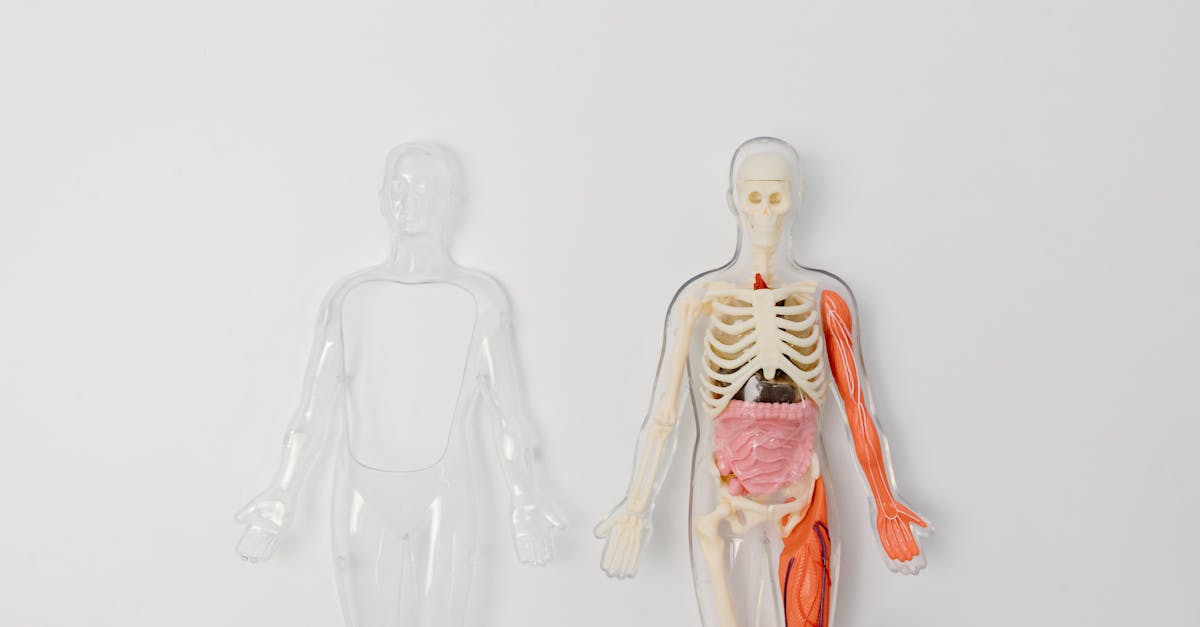
Collagen Type 1 vs Type 2: A Practitioner's Decision Framework
Collagen is the most abundant protein in the human body — accounting for roughly 30% of total protein mass — yet most people supplementing with it have no idea which type they're taking or whether it matches their health goal. Walk into any supplement aisle and you'll find products labeled "collagen peptides," "marine collagen," "joint collagen," or "Type I, II & III blend" with little guidance on what any of it actually does.
That ambiguity has real consequences. A randomized controlled trial published in the Journal of Medical Nutrition & Nutraceuticals (Borumand & Sibilla, 2015; doi.org/10.4103/2278-019X.146161) found that hydrolyzed collagen supplementation measurably improved skin elasticity and hydration — but the effect was driven almost entirely by Type I peptides, not the cartilage-targeting Type II matrix. The wrong formulation doesn't just underperform; it may crowd out capsule space that could have been filled by something genuinely useful for your biology.
This guide gives you the clinical decision tree that functional medicine practitioners use to match collagen type to tissue target, goal, and dose.
---
What Is Collagen Type 1 and How Does It Differ from Type 2?
Collagen is a family of fibrous structural proteins built from repeating tripeptide sequences — primarily Gly-X-Y — wound into triple helices. There are at least 28 genetically distinct collagen types, but Types I and II account for the majority of supplemental and clinical interest.
Type I collagen is the body's default structural protein. It forms the scaffolding of skin, tendons, ligaments, bone matrix, and the cornea. Pound for pound, it's one of the strongest biological materials known — more tensile than steel by weight. Approximately 90% of the collagen in your body is Type I. When it degrades — through UV exposure, chronic stress, smoking, poor nutrition, or natural aging (production declines roughly 1% per year after age 25 per the NIH ODS) — you see it first in skin laxity, fine lines, slow tendon healing, and brittle nails.
Type II collagen is the dominant structural protein in articular (joint) cartilage and the vitreous humor of the eye. It's less dense than Type I and forms a looser, more hydrated matrix designed to absorb compressive load rather than resist tensile force. When Type II degrades — as it does in osteoarthritis, repetitive-impact athletes, and auto-inflammatory conditions — the result is joint pain, crepitus, and reduced range of motion.
| Feature | Type I Collagen | Type II Collagen |
|---|---|---|
| Primary tissue | Skin, bone, tendons, ligaments, nails | Articular cartilage, intervertebral discs |
| Source (supplements) | Bovine hide, marine fish, eggshell membrane | Chicken sternum, undenatured chicken cartilage |
| Typical form | Hydrolyzed peptides (bioavailable fragments) | Undenatured (UC-II®) or hydrolyzed |
| Clinical dose range | 2.5–10 g/day hydrolyzed | 40 mg/day undenatured (UC-II®) |
| Primary mechanism | Stimulates fibroblast collagen synthesis | Oral tolerization via MALT immune pathway |
| Best evidence for | Skin elasticity, nail strength, wound healing | Knee OA symptom relief, joint comfort in athletes |
The Mechanism Gap Nobody Talks About
Here's what makes the Type I vs. Type II comparison more nuanced than a simple "skin vs. joints" split: the mechanism of action is fundamentally different.
Hydrolyzed Type I peptides work through a "proline-hydroxyproline" (Pro-Hyp) signaling pathway. When you ingest collagen peptides, the dipeptides Pro-Hyp and Hyp-Gly are absorbed intact, travel to the dermis and connective tissue, and stimulate resident fibroblasts to upregulate their own collagen synthesis (Sugihara et al., Journal of Agricultural and Food Chemistry, 2012; PMID: 22416691). It's an indirect, growth-signal mechanism.
Undenatured Type II collagen (UC-II®) works through oral tolerization. A tiny 40 mg dose of intact, undenatured chicken cartilage collagen is presented to gut-associated lymphoid tissue (MALT), where regulatory T-cells learn to suppress the immune attack on joint cartilage. This is why the dose is so small — you're not replacing lost collagen, you're re-educating the immune system. A 2009 randomized controlled trial in International Journal of Medical Sciences (Crowley et al.; PMID: 19415121) found UC-II (40 mg) outperformed glucosamine + chondroitin (1500 mg + 1200 mg) on WOMAC osteoarthritis scores and VAS pain over 90 days — a striking result given the dose differential.
---
Collagen for Nails: What the Evidence Actually Says
Brittle nails are one of the most frequently cited reasons people start collagen supplementation — and for good reason. Nails are composed primarily of a hard keratin matrix reinforced by Type I collagen fibers in the nail bed. Deficiencies in that structural collagen manifest as peeling, ridging, slow growth, and increased breakage.
A prospective study by Hexsel et al. published in the Journal of Cosmetic Dermatology (2017; PMID: 28786550) followed 25 participants taking 2.5 g/day of specific bioactive collagen peptides (VERISOL®) for 24 weeks. Results showed a 12% increase in nail growth rate and a 42% reduction in broken nails — with 64% of participants reporting overall improvement. Importantly, the effect persisted four weeks after stopping supplementation, suggesting true structural remodeling rather than temporary hydration.
For collagen and nail strength optimization, the evidence consistently points to Type I hydrolyzed peptides at 2.5–5 g/day, not Type II, and not a generic multi-collagen blend where Type II dilutes the effective Type I dose. If nail health is your primary driver, a formula weighted toward marine or bovine-hide-derived Type I peptides is the correct call.
Biotin is frequently co-marketed with collagen for nail health. The two act on different pathways — biotin supports keratin infrastructure synthesis while Type I peptides reinforce the structural scaffold — so they're complementary, not redundant.
---
When to Take Collagen Peptides: Timing, Form, and Bioavailability
Once you've selected the right type, timing and form determine how much of the dose actually reaches target tissue.
Hydrolyzed Type I peptides (for skin, nails, tendons):
- Peak plasma Pro-Hyp levels occur approximately 60–120 minutes post-ingestion when taken fasted or with a small protein-free meal (Iwai et al., Journal of Agricultural and Food Chemistry, 2005; PMID: 15740079)
- Taking alongside Vitamin C is clinically meaningful — ascorbate is a required cofactor for prolyl hydroxylase, the enzyme that hydroxylates proline residues during collagen synthesis. Without adequate Vitamin C, collagen chains cannot form stable triple helices (NIH ODS, Vitamin C Fact Sheet)
- Morning or pre-workout timing aligns well with the connective tissue remodeling window that follows exercise-induced loading (Shaw et al., American Journal of Clinical Nutrition, 2017; PMID: 27852613 demonstrated that 15 g collagen peptides + Vitamin C taken 1 hour before jump rope exercise doubled collagen synthesis markers in tendons vs. placebo)
Undenatured Type II (for joints, immune tolerization):
- 40 mg taken on an empty stomach, 30–60 minutes before the first meal, maximizes MALT exposure and tolerization signaling
- Should NOT be hydrolyzed — the intact triple helix structure is required for the immune tolerization mechanism. Heating or enzymatic breakdown destroys efficacy
| Goal | Type | Dose | Timing | Key Co-factor |
|---|---|---|---|---|
| Skin elasticity / hydration | Type I hydrolyzed | 2.5–10 g/day | Morning, fasted or with Vit C | Vitamin C (500–1000 mg) |
| Nail strength | Type I hydrolyzed | 2.5–5 g/day | Morning | Biotin + Vitamin C |
| Tendon / ligament repair | Type I hydrolyzed | 15 g pre-exercise | 1 hr pre-workout with Vit C | Vitamin C (500 mg) |
| Joint cartilage (OA) | Type II undenatured | 40 mg/day | Empty stomach, AM | — |
| Rheumatoid joint comfort | Type II undenatured | 40 mg/day | Empty stomach, AM | — |
For a deeper look at when to take collagen peptides for maximum absorption, the pre-exercise window with Vitamin C co-ingestion is currently the strongest evidence-based protocol for tendon and ligament targets.
---
Collagen Peptides Dosage: A Clinical Range Breakdown
Dosing collagen is not one-size-fits-all. The clinically effective range varies by target tissue, peptide source, and molecular weight of the hydrolysate.
Skin: The landmark Proksch et al. RCT (Skin Pharmacology and Physiology, 2014; PMID: 24401291) used 2.5 g and 5 g/day of VERISOL® collagen peptides in 69 women aged 35–55 over 8 weeks. The 2.5 g dose improved skin elasticity by 15%; the 5 g dose by 20%. Higher doses did not produce proportionally greater benefit in skin endpoints, suggesting a ceiling effect around 5 g for dermis-targeted outcomes.
Tendons and ligaments: Shaw et al. (2017; PMID: 27852613) used 15 g/day, and this higher dose appears necessary to saturate the tendon remodeling window. Athletes recovering from connective tissue injuries are the primary population where doses above 10 g are justified.
Osteoarthritis: Most UC-II trials use 40 mg/day (undenatured). Hydrolyzed Type II at 10 g/day has also shown benefit in OA populations (Benito-Ruiz et al., International Journal of Food Sciences and Nutrition, 2009; PMID: 19522946), though the undenatured UC-II mechanism is better characterized.
Practical collagen peptides dosage guidance:
- Start at 2.5–5 g/day hydrolyzed Type I for skin and nail goals
- Escalate to 10–15 g/day for tendon/ligament recovery protocols
- Use 40 mg/day UC-II undenatured for joint comfort and OA symptom relief
- Always pair hydrolyzed collagen with Vitamin C at the same serving
- Allow 8–12 weeks minimum before evaluating skin or nail outcomes
For a full breakdown of optimal collagen peptides dosage by tissue target, the key variable is molecular weight: peptides below 5,000 Da (typical of high-quality hydrolysates) are absorbed more efficiently than larger fragments.
---
What This Means for Your Formula
At Ones, collagen strategy isn't selected from a dropdown — it's derived from your biomarkers, health history, and goals. The AI health practitioner cross-references your data against a curated catalog of clinically validated ingredients to build a formula that earns every capsule it occupies.
Three Ones ingredients are particularly relevant to the collagen conversation:
1. Ligament Support (Proprietary System Blend)
Ones' Ligament Support blend is formulated specifically for connective tissue integrity. It includes clinically relevant cofactors that support Type I collagen synthesis and extracellular matrix remodeling — designed for users whose wearable or activity data signals high mechanical load on joints and tendons, or whose health history flags a connective tissue concern. The blend is calibrated to complement, not duplicate, dietary protein intake.
2. Vitamin C (as part of the C Boost and Immune-C blends)
Given that ascorbate is a non-negotiable cofactor for collagen triple-helix formation, Ones formulas flag Vitamin C insufficiency from lab data and can include the C Boost or Immune-C system blends to ensure the synthesis pathway isn't bottlenecked. This is the mechanistic reason Ones doesn't recommend collagen supplementation in isolation — without adequate Vitamin C, increased collagen peptide intake has limited structural impact.
3. Zinc (individual active, dosed to clinical range)
Zinc is a required cofactor for multiple metalloproteinase enzymes involved in collagen remodeling and wound healing. Functional zinc deficiency — detectable through serum zinc or alkaline phosphatase trends — can impair the fibroblast response that Type I peptides are trying to stimulate. Ones includes Zinc as an individual active, dosed based on your lab values rather than a generic RDA estimate.
Because Ones formulas come in 6, 9, or 12-capsule plans, the decision about whether to include collagen-adjacent ingredients (Vitamin C, Zinc, Ligament Support) versus a direct collagen peptide is made within a capsule budget — ensuring the most evidence-backed combination for your specific biology gets prioritized. You can explore how Ones' personalized formula approach works for skin and connective tissue goals to understand the full decision logic.
---
Key Takeaways
- Type I collagen (hydrolyzed) targets skin, nails, tendons, and ligaments via fibroblast stimulation; the clinically effective dose is 2.5–15 g/day depending on the tissue target
- Type II collagen (undenatured, UC-II®) targets articular cartilage through immune oral tolerization at just 40 mg/day — a fundamentally different mechanism that does not scale with higher doses
- Vitamin C is non-negotiable as a co-factor with hydrolyzed Type I — without it, the collagen synthesis pathway cannot complete the hydroxylation step required for stable triple helices
- Timing matters: hydrolyzed Type I is best taken 1 hour pre-exercise with Vitamin C for tendon targets; UC-II should be taken fasted, away from meals, for MALT tolerization
- Nail health evidence points specifically to Type I peptides at 2.5–5 g/day (VERISOL® data), not generic multi-collagen blends that dilute the active fraction
- Ones personalizes the collagen equation by factoring in your lab results, wearable load data, and health goals — then building a formula that addresses cofactor gaps (Vitamin C, Zinc) and structural support through ingredients like the Ligament Support blend, rather than defaulting to a generic collagen product
---
This article is for informational purposes only and does not constitute medical advice. Consult a qualified healthcare provider before starting any supplement protocol, particularly if you have a diagnosed medical condition or are taking prescription medications.