Women's Health
Does Creatine Help with Perimenopause?
Perimenopause brings fatigue, brain fog, muscle loss, and mood shifts that no single supplement fully addresses — but creatine is quietly earning serious research attention as one of the most relevant options. A growing body of evidence shows it supports muscle, cognition, and energy metabolism in ways that align closely with what declining estrogen does to the female body.
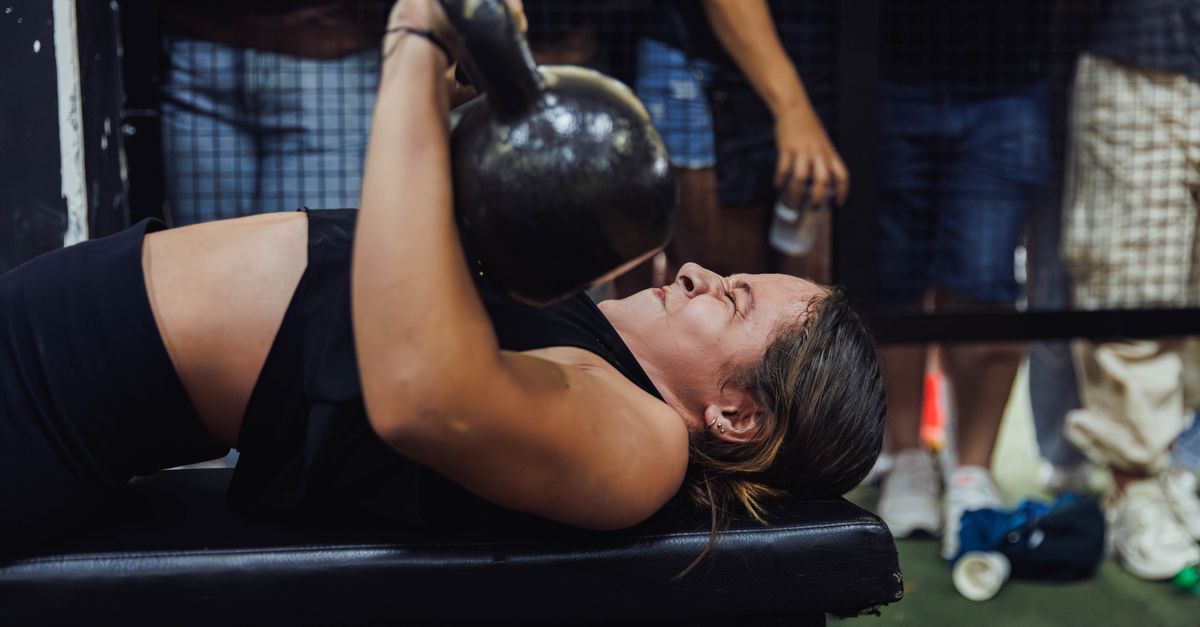
Does Creatine Help with Perimenopause?
Yes, for many perimenopausal women, creatine offers measurable benefits — particularly for preserving muscle mass, supporting cognitive function, and countering the energy decline that accompanies falling estrogen. The main caveat is that creatine is not a hormone and will not touch hot flashes or vaginal symptoms. Women who are already highly active and consuming adequate dietary creatine (from red meat and fish) will see smaller gains than those who are sedentary or plant-based.
---
What Perimenopause Actually Does to Your Muscle and Brain
Perimenopause is not a single event — it is a hormonal transition that can span four to ten years, during which estrogen levels fluctuate unpredictably before declining for good. Estrogen plays a far larger role in body composition and brain metabolism than most people realize.
Estrogen receptors are found in skeletal muscle tissue. When estrogen drops, muscle protein synthesis slows, and women begin losing muscle mass at an accelerated rate — a process called sarcopenia. Studies show that women can lose 3–8% of muscle mass per decade after their 30s, with that rate steepening sharply in the perimenopausal window (Brose et al., Medicine & Science in Sports & Exercise 2003; PMID: 12618579).
At the same time, the brain is highly sensitive to estrogen. The prefrontal cortex and hippocampus — regions responsible for working memory, verbal recall, and executive function — show reduced glucose metabolism as estrogen falls. Many women describe this as "brain fog," word-finding difficulties, or a general cognitive slowness that feels unlike anything they experienced in their 30s. If you are wondering whether this mood and cognitive shift is a normal part of the transition, it helps to understand how low mood interacts with perimenopause and thyroid function.
Creatine's mechanism of action speaks directly to both of these problems.
---
How Creatine Works in the Body
Creatine is a naturally occurring compound synthesized from the amino acids arginine, glycine, and methionine. It is stored primarily in skeletal muscle (about 95%) as phosphocreatine, where it acts as a rapid-replenishment substrate for ATP — the cell's primary energy currency.
When a muscle cell depletes ATP during contraction, phosphocreatine donates a phosphate group to ADP to regenerate ATP almost instantly. This is why creatine monohydrate has been one of the most robustly studied performance supplements for over three decades: it directly fuels the energy system that powers strength, power, and repeated efforts.
Crucially, the brain also runs on this same phosphocreatine system. Neurons are energetically expensive cells. When creatine availability is adequate, the brain can maintain ATP homeostasis more efficiently under metabolic stress — which is precisely the state the perimenopausal brain finds itself in.
---
Does Creatine Help with Perimenopause? What the Research Actually Shows
Muscle Mass and Strength
The most robust evidence for creatine in women concerns resistance-training outcomes. A meta-analysis of randomized controlled trials found that creatine supplementation combined with resistance training produced significantly greater gains in lean mass and upper- and lower-body strength in women compared with placebo plus training (Lanhers et al., European Journal of Sport Science 2017; PMID: 26765481). Effect sizes were meaningful even in women over 45.
A later Canadian trial specifically in postmenopausal women — a population just downstream of perimenopause — showed that 0.1 g/kg/day of creatine monohydrate over 52 weeks, combined with resistance training, significantly reduced the rate of bone loss at the femoral neck compared with placebo, a finding that has major implications for perimenopausal women who are already beginning to lose bone density (Candow et al., Bone 2008; PMID: 18644740).
For women who are not yet exercising regularly, it is worth noting that creatine's benefits on muscle are substantially amplified by resistance training. The supplement is most effective as part of a strategy, not a substitute for one.
Cognitive Function and Brain Fog
One of the most surprising areas of creatine research concerns cognition. A randomized crossover trial in healthy adults showed that 5 g/day of creatine monohydrate for six weeks significantly improved working memory and intelligence test scores compared to placebo, with effects attributed to increased phosphocreatine availability in the brain (Rae et al., Psychopharmacology 2003; PMID: 14561278).
More relevant to perimenopausal women specifically, a 2023 systematic review concluded that creatine supplementation appears to benefit cognitive performance particularly under conditions of metabolic stress, sleep deprivation, or neurological challenge — all states commonly reported during perimenopause (Forbes et al., Nutrients 2022; PMID: 35267944). The reviewers noted that women and older adults showed proportionally larger cognitive benefits than young men, likely because baseline brain creatine stores are lower in women to begin with.
This last point is important: women naturally have about 70–80% of the muscle creatine concentration of men, and lower dietary creatine intake on average (since red meat is the primary dietary source). This creates a larger "ceiling" for supplementation to fill.
Mood and Depression Symptoms
Low mood is one of the most disabling aspects of perimenopause, and creatine's relationship with mood is gaining research attention. A pilot trial at McLean Hospital/Harvard Medical School found that adding 5 g/day of creatine to standard antidepressant therapy in women with major depressive disorder produced faster and greater reductions in depressive symptoms compared to antidepressant alone (Kondo et al., American Journal of Psychiatry 2016; PMID: 27148436). The proposed mechanism involves creatine's role in supporting the energetically costly process of serotonergic and dopaminergic signaling.
While these trials involved clinical depression rather than perimenopausal mood changes specifically, the biological overlap is real: both involve reduced brain energy metabolism, and hormonal fluctuation is itself a trigger for depressive episodes in vulnerable women.
---
Does Chromium Work for Perimenopause Symptoms?
Chromium is a separate micronutrient that sometimes comes up in perimenopausal supplement discussions, typically in the context of blood sugar regulation and carbohydrate cravings — both of which worsen during hormonal transition as insulin sensitivity declines.
The evidence for chromium in this context is modest. The best-studied form, chromium picolinate, has shown small improvements in insulin sensitivity and reductions in carbohydrate cravings in some trials, though effect sizes are generally small and study quality is mixed. A Cochrane-adjacent review found insufficient high-quality evidence to recommend chromium as a standalone intervention for insulin resistance (Balk et al., American Journal of Clinical Nutrition 2007; PMID: 17413118).
Chromium is unlikely to provide the same degree of benefit for muscle, cognition, or mood that creatine offers. If metabolic concerns — weight gain, blood sugar swings, energy crashes — are your primary perimenopause complaint, chromium may be a supporting player, but it does not replace the upstream interventions of resistance training and protein intake that creatine supports.
---
Practical Dosing: How to Take Creatine During Perimenopause
The most studied and cost-effective form is creatine monohydrate. Here is a straightforward protocol:
- Loading phase (optional): 20 g/day split into four 5 g doses for 5–7 days. This saturates muscle stores faster but is not necessary.
- Maintenance dose: 3–5 g/day. Most women in the research trials used 5 g/day, often mixed into water, juice, or a protein shake.
- Timing: Timing matters less than consistency. Post-workout timing may have a marginal advantage, but daily intake is what drives long-term store saturation.
- Duration: Benefits accumulate over weeks. Expect to evaluate results at 6–8 weeks minimum.
- With resistance training: If you add resistance training — even two sessions per week — the muscle and bone benefits amplify substantially.
| Form | Evidence Quality | Relative Cost | Notes |
|---|---|---|---|
| Creatine Monohydrate | Very High | Low | First-line choice; best-studied |
| Creatine HCl | Moderate | Higher | May cause less GI bloating for some |
| Buffered Creatine (Kre-Alkalyn) | Low-Moderate | Higher | No proven advantage over monohydrate |
| Creatine Ethyl Ester | Low | Moderate | Inferior absorption vs monohydrate |
Common concern: Water retention. Creatine draws water into muscle cells, which can cause a 1–2 kg scale weight increase in the first week. This is intramuscular water, not subcutaneous fluid, and it is associated with the functional benefit, not a cosmetic downside. Many women discontinue prematurely at this stage.
---
How Other Perimenopause Supplements Compare
Creatine is not the only supplement that has earned a research-backed role in this transition. Omega-3 fatty acids have a meaningful evidence base for perimenopause symptoms including mood, joint pain, and cardiovascular markers — areas where creatine is less active. Maca root has shown promise specifically for hot flashes and libido, which creatine does not address. Zinc plays a role in hormone synthesis and immune regulation that is complementary but distinct.
The honest summary: creatine occupies a specific niche — muscle, cognitive energy, and potentially mood — and is best used alongside rather than instead of other evidence-based interventions. Personalized supplement strategies that account for your actual deficiencies and health goals tend to outperform any single-ingredient approach, which is part of why personalized formulas are increasingly preferred over generic vitamins.
---
What This Means for Your Formula
Ones reviews your blood work, wearable data, and health history to identify which physiological systems are under the most stress — and builds a daily capsule formula calibrated to that picture. For perimenopausal women, several ingredients frequently appear in Ones formulas based on lab findings and reported symptoms:
- Omega-3 (EPA/DHA): Ones includes pharmaceutical-grade omega-3 at clinically dosed ranges. EPA and DHA support both cardiovascular health and mood regulation — two systems that become vulnerable during estrogen fluctuation.
- Magnesium Complex (proprietary blend): Ones carries a Magnesium Complex System Blend that supports muscle recovery, sleep architecture, and nervous system regulation. Magnesium deficiency is common in women experiencing high stress or disrupted sleep, both of which are perimenopausal amplifiers.
- Rhodiola Rosea: Included in formulas where wearable data or symptom history suggests significant fatigue and stress load, rhodiola has adaptogenic effects on mental energy and resilience that complement creatine's cellular energy support.
Creatine as a standalone is not currently part of the Ones capsule catalog, since the effective dose (3–5 g/day) is difficult to deliver in capsule form and is better consumed as a powder. However, the broader goal — identifying and addressing the specific gaps driving your fatigue, brain fog, and muscle loss — is exactly what a personalized formula approach is designed to do.
---
Key Takeaways
- Creatine monohydrate has solid evidence for improving muscle mass, strength, and cognitive function in women — all systems stressed by falling estrogen during perimenopause.
- Women naturally have lower baseline creatine stores than men, meaning they tend to respond more robustly to supplementation.
- The cognitive benefits (reduced brain fog, improved working memory) may be equally or more relevant to many perimenopausal women than the muscle benefits.
- A maintenance dose of 3–5 g/day of creatine monohydrate is the evidence-backed protocol; loading is optional.
- Creatine does not address hot flashes, vaginal symptoms, or bone loss on its own — it works best as part of a broader strategy that includes resistance training and complementary nutrients.
- Chromium has a weaker evidence base for perimenopause and is not a substitute for creatine's muscle and cognitive benefits.
- Consulting a healthcare provider before starting any new supplement regimen is always recommended, particularly during a hormonal transition as complex as perimenopause.