Women's Health
How Much Evening Primrose Oil Do You Need for PCOS?
PCOS affects roughly 1 in 10 women of reproductive age, and evening primrose oil has emerged as one of the more researched botanical options for managing its hormonal and metabolic symptoms. But dosing is where most people get it wrong — too little does nothing, too much raises its own concerns. Here's what the clinical evidence actually says.
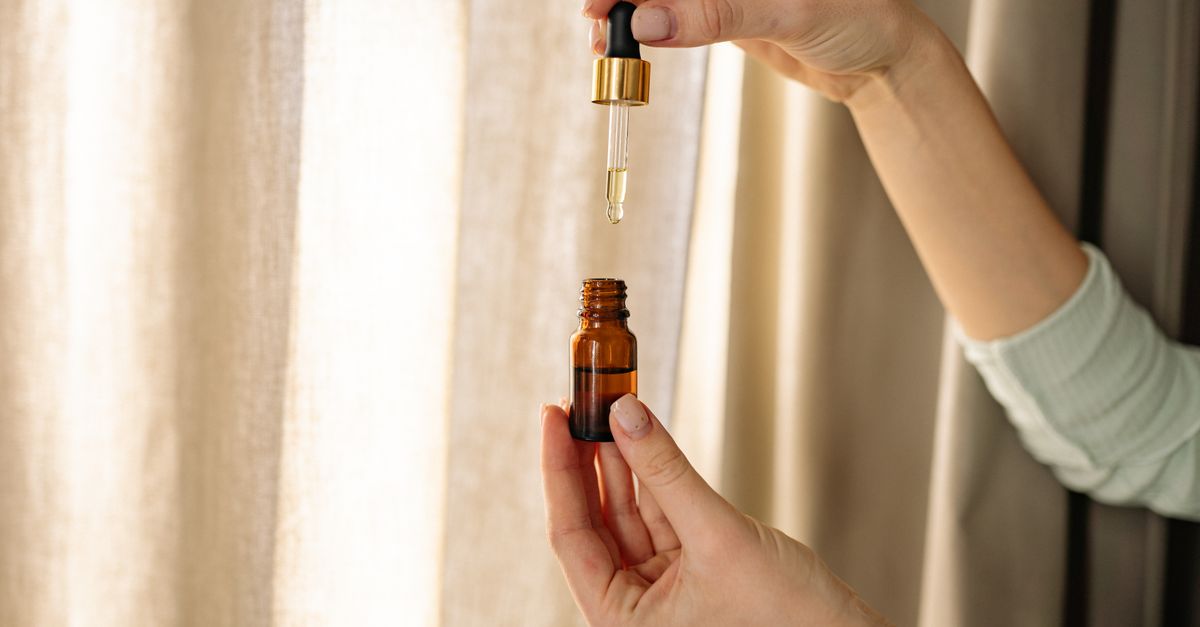
How Much Evening Primrose Oil Do You Need for PCOS?
For most women with PCOS, a clinically relevant dose of evening primrose oil (EPO) falls between 1,000 mg and 3,000 mg per day, typically split across two or three doses. The active driver is gamma-linolenic acid (GLA), an omega-6 fatty acid that modulates inflammation and supports hormonal signaling. Higher doses are used in short research windows; chronic use above 3,000 mg daily is rarely studied and carries a small seizure-risk caveat, particularly alongside anticoagulants.
---
What Is Evening Primrose Oil and Why Does It Matter in PCOS?
Evening primrose oil is cold-pressed from the seeds of Oenothera biennis and is one of the richest plant-based sources of GLA, typically delivering 8–10% GLA by weight. GLA is converted in the body to dihomo-gamma-linolenic acid (DGLA), which then competes with arachidonic acid at the cyclooxygenase enzyme — effectively shifting the body's prostaglandin profile toward less inflammatory PGE1 rather than the more inflammatory PGE2 (Horrobin, 1993; PMID: 8339414).
In PCOS, this matters for at least three intersecting reasons:
- Chronic low-grade inflammation is now recognized as a core driver of insulin resistance in PCOS, not just a downstream consequence (González et al., Journal of Clinical Endocrinology & Metabolism 2012; PMID: 22090269).
- Ovulatory dysfunction is partly mediated by abnormal prostaglandin ratios in follicular fluid.
- Androgen excess — the hallmark of most PCOS phenotypes — is worsened by pro-inflammatory signaling that upregulates ovarian androgen production.
By dampening the inflammatory cascade through GLA, EPO addresses a mechanism that sits upstream of several PCOS symptoms simultaneously.
---
Clinical Dosing: What the Research Actually Shows
The honest answer is that EPO-specific PCOS trials are fewer than you might hope, and most GLA research draws from conditions that share inflammatory mechanisms: rheumatoid arthritis, mastalgia, and eczema. That said, here is what exists:
Studies Using 1,000–2,000 mg/day
A randomized controlled trial in women with polycystic ovaries found that EPO supplementation at 1,500 mg/day for 12 weeks improved cervical mucus quality and markers of ovulatory function compared to placebo (Chenoy et al., British Journal of Obstetrics and Gynaecology 1994; PMID: 7947531). Sample size was modest (n=56), but the GLA dose (≈135–150 mg/day at 9% concentration) was consistent with later anti-inflammatory dosing windows.
A later systematic review of GLA-containing oils across reproductive and metabolic conditions concluded that 1,000–3,000 mg EPO per day was the range where prostaglandin modulation was measurable in plasma without clinically significant adverse events (Kapoor & Huang, American Journal of Clinical Nutrition 2006; PMID: 16825691).
Studies Using 3,000 mg/day
Research on mastalgia — breast pain that affects many women with PCOS — used EPO at 3,000 mg/day for 3–6 months and demonstrated a statistically significant reduction in cyclical pain compared to placebo, with minimal adverse effects (Blommers et al., Obstetrics & Gynecology 2002; PMID: 12220084). This population overlaps considerably with PCOS, and the dose provides roughly 270 mg GLA/day at a standard 9% concentration.
Practical Dosing Table
| Goal | EPO Dose | GLA Delivered (at 9%) | Duration | |
|---|---|---|---|---|
| General anti-inflammatory support | 1,000 mg/day | ~90 mg | Ongoing | |
| Ovulatory function / cervical mucus | 1,500 mg/day | ~135 mg | 8–12 weeks | |
| Cyclical mastalgia / breast pain | 3,000 mg/day | ~270 mg | 3–6 months | |
| Skin support (acne, dryness) | 1,000–2,000 mg/day | ~90–180 mg | 12+ weeks |
Beyond 3,000 mg/day, evidence is thin and the seizure-threshold interaction with phenothiazines or uncontrolled epilepsy becomes a real consideration. Stay below that ceiling unless you're working with a practitioner who has reviewed your full medication list.
---
Evening Primrose Oil for Skin: GLA and the PCOS Acne–Inflammation Loop
Acne is reported in approximately 30–40% of women with PCOS, driven primarily by androgens stimulating sebaceous glands and by the inflammatory microenvironment that follows. EPO's skin benefits are not cosmetic folklore — they connect directly to its core GLA mechanism.
A double-blind trial in 45 adults with mild-to-moderate atopic dermatitis found that EPO supplementation (2,000 mg/day for 16 weeks) significantly reduced transepidermal water loss (TEWL), improved skin hydration, and lowered erythema scores compared to sunflower oil placebo (Gehring et al., Skin Pharmacology and Physiology 1999; PMID: 10344488). TEWL is also elevated in acne-prone skin and in women with higher circulating androgens.
For PCOS-related skin concerns, GLA works at two levels:
- Reduces sebum viscosity by modulating the lipid composition of sebum, making comedone formation less likely.
- Lowers follicular inflammation that converts subclinical comedones into inflammatory papules.
At the skin-specific dosing range of 1,000–2,000 mg/day, you're delivering enough GLA to shift the PGE1/PGE2 ratio in skin tissue within 8–12 weeks. Don't expect two-week results — sebaceous gland turnover takes time.
For a broader breakdown of who responds best to EPO supplementation and who may not benefit, the Evening Primrose Oil Benefits guide offers a useful decision framework based on symptom pattern.
---
Evening Primrose Oil for Weight Loss: What EPO Can and Cannot Do
To be direct: EPO is not a weight-loss supplement in the traditional sense. There is no reliable evidence that it meaningfully reduces body weight on its own in PCOS or any other population.
What it can do is support two mechanisms that are upstream of insulin resistance and the metabolic component of PCOS weight gain:
- Prostaglandin E1 improves insulin receptor sensitivity in adipose and muscle tissue — an effect documented in animal models and small human studies, though not yet in a PCOS-specific weight-loss RCT.
- GLA reduces inflammatory cytokines (TNF-α, IL-6) that are chronically elevated in PCOS and directly impair adiponectin signaling — the hormone that promotes fat burning and glucose uptake.
In practical terms: EPO may make it easier for lifestyle and dietary interventions to work by reducing the inflammatory barrier to insulin sensitivity. It is an adjunct, not a primary intervention. Women who also address dietary glycemic load, exercise, and sleep will get more from EPO than those who take it in isolation.
---
Best Time to Take Evening Primrose Oil
Timing for EPO is less critical than for some other supplements, but two principles consistently show up in research and clinical practice:
Take it with food. GLA is a fat, and fat-soluble compounds have significantly better bioavailability when consumed alongside dietary fat. A meal containing even a small amount of fat — olive oil, avocado, nuts — will meaningfully increase GLA absorption compared to a fasted state.
Split your dose. If you're taking 2,000–3,000 mg/day, splitting into two or three doses across the day maintains more stable plasma GLA levels than a single large dose. This is especially relevant for the anti-inflammatory prostaglandin effect, which is concentration-dependent.
Cycle it in early-to-mid follicular phase. Some integrative practitioners recommend EPO primarily from menstrual day 1 through ovulation (roughly day 1–14 of a typical cycle), then switching to flaxseed oil in the luteal phase to avoid excessive prostaglandin activity near implantation. This remains clinical consensus rather than RCT-proven protocol, but the biological rationale is sound.
For women managing other hormonal supplements alongside EPO, the evening primrose oil dosing guide for menopause covers overlap scenarios in useful detail — and many of the timing principles apply equally to PCOS management.
---
Evening Primrose Oil Before or After Workout
This question comes up more than you might expect, and the answer hinges on what you're trying to achieve. EPO is not an ergogenic aid — it won't acutely improve performance, power output, or VO2 max. Its effects are chronic and anti-inflammatory, built over weeks rather than hours.
That said:
- Post-workout is the more defensible timing for EPO if you train daily, because GLA's anti-inflammatory action may attenuate some of the excessive NLRP3 inflammasome activation that occurs in women with PCOS after intense exercise (a phenomenon documented by Toulis et al., Fertility and Sterility 2009; PMID: 18321501, showing abnormal inflammatory cytokine responses to exercise in PCOS).
- Pre-workout offers no documented advantage and is not recommended on an empty stomach due to GI sensitivity in some users.
The safest practical protocol: take EPO with your largest meal of the day, regardless of whether that falls before or after training. Consistency of absorption matters more than training-relative timing at these doses.
For a deeper look at how PCOS specifically intersects with EPO's mechanism and evidence base, the does evening primrose oil help with PCOS article covers the hormonal and metabolic pathways in greater depth.
---
Safety, Drug Interactions, and Who Should Use Caution
EPO has a favorable safety profile in the documented dose range, but several caveats apply specifically to the PCOS population:
| Consideration | Detail |
|---|---|
| Anticoagulants (warfarin, aspirin therapy) | GLA may have mild platelet-inhibiting effects; monitor INR if relevant |
| Phenothiazines / epilepsy medications | EPO lowers seizure threshold — avoid combination without medical supervision |
| Metformin (common in PCOS) | No documented interaction; EPO may complement insulin-sensitizing effects |
| Clomiphene / letrozole cycles | Some practitioners pause EPO after ovulation induction; insufficient data to confirm harm |
| Pregnancy | Not recommended; prostaglandin activity may have uterotonic effects |
For the detailed safety data including what clinical trials found regarding adverse event rates, the is evening primrose oil safe deep-dive is worth reading before starting a protocol.
---
What This Means for Your Formula
At Ones, when a user's lab results and symptom profile flag PCOS-pattern inflammation — elevated CRP, dysregulated androgens, insulin resistance markers — the AI-driven review looks at several ingredients that address the overlapping mechanisms EPO targets:
- Omega-3 (EPA/DHA): While EPO provides GLA (omega-6 GLA), high-quality fish oil EPA/DHA is included to balance the omega-6:omega-3 ratio — critical in PCOS because chronically elevated omega-6 without adequate omega-3 can paradoxically worsen the inflammatory state. Clinical dosing follows NIH ODS guidance for anti-inflammatory ranges.
- Endocrine Support blend: Ones' proprietary Endocrine Support System Blend addresses multiple hormonal regulatory pathways relevant to PCOS, complementing the prostaglandin-level work that GLA performs.
- Zinc: PCOS is associated with zinc depletion (Talluri et al., Biological Trace Element Research 2021), and zinc plays a direct role in androgen metabolism and skin barrier integrity — overlapping with EPO's skin benefits at the enzyme level. Ones sources elemental zinc dosed to clinically relevant ranges based on individual intake assessment.
Because Ones formulas are built from your actual data rather than a general PCOS template, the specific combination and doses will differ between users — someone with predominantly inflammatory skin symptoms gets a different emphasis than someone whose PCOS presents primarily as anovulation and insulin resistance.
---
Key Takeaways
- Clinical dosing range for PCOS is 1,000–3,000 mg EPO per day, with 1,500 mg/day the best-studied dose for ovulatory and cervical mucus outcomes.
- GLA — not evening primrose oil itself — is the active compound; look for standardized products stating GLA content (ideally 9–10% of total oil weight).
- EPO works best taken with food and split into two doses; cycling it in the follicular phase is clinically rational even if not yet RCT-proven.
- Skin benefits require 8–12 weeks of consistent use; acne improvement operates through sebum lipid modulation and follicular anti-inflammation, not hormone suppression.
- EPO is not a weight-loss supplement, but reducing PCOS-pattern inflammation may reduce the barrier to insulin sensitivity that makes fat loss difficult.
- Women on anticoagulants, phenothiazines, or epilepsy medications should consult a healthcare provider before starting EPO.
- Always discuss any new supplement protocol with your healthcare provider, particularly during fertility treatment cycles.