Supplements
How Much Reishi Mushroom Per Day? Dosage, Benefits & Safety
Reishi mushroom is one of the most studied medicinal fungi in the world, yet dosage recommendations vary wildly — from 500mg to 9g per day — because the form matters enormously. Standardized extracts and raw powder are not interchangeable, and the difference can determine whether you get a measurable effect or none at all.
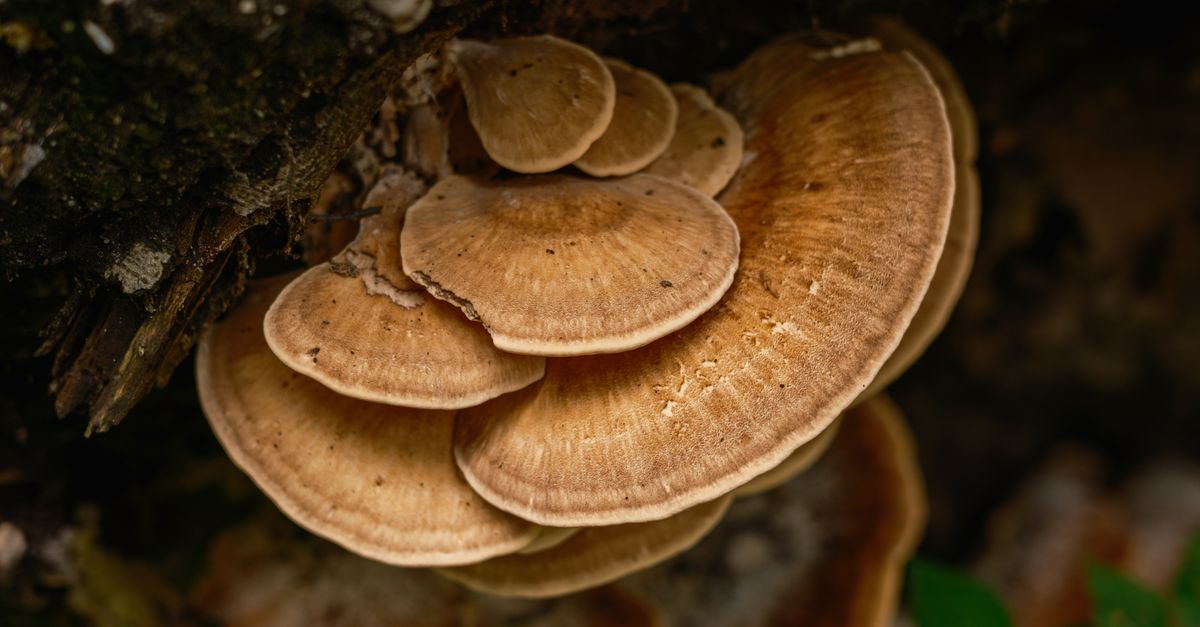
How Much Reishi Mushroom Per Day? Dosage, Benefits & Safety
For most healthy adults, 1,000–1,500 mg of a standardized reishi extract (typically standardized to 10–20% polysaccharides or 1–2% triterpenes) taken daily is the evidence-based starting point. The main caveat: raw dried mushroom powder requires much higher amounts — roughly 3–5 g — to reach equivalent active-compound levels. The exception is anyone with pre-existing liver conditions, autoimmune disease, or who is on anticoagulant therapy, who should consult a clinician before starting.
---
What Makes Reishi Dosage So Confusing?
Ganoderma lucidum — commonly called reishi, lingzhi, or the "mushroom of immortality" — is not like most supplements where you simply match a milligram number on a label. Three distinct product types exist on the market, and they are not interchangeable:
- Standardized polysaccharide extract — Water-extracted, concentrated to a specified percentage of beta-glucans or total polysaccharides. This is the form used in the majority of published clinical trials.
- Triterpene-rich extract — Alcohol or dual-extracted, capturing ganoderic acids and other lanostane-type triterpenoids. Often labeled as a hot-water + ethanol dual extract.
- Dried fruiting body powder — Whole ground mushroom. The least expensive option, but bioactive concentrations are far lower. A 1 g standardized extract can represent the potency equivalent of 5–10 g of raw powder, depending on the source.
This variability explains why a consumer reading one paper recommending "1 g" and another saying "9 g" is not necessarily looking at a contradiction — they are almost certainly looking at different product forms.
---
Clinical Dose Ranges: What the Research Actually Shows
The evidence base for reishi is broader than many people realize. A 2016 Cochrane systematic review by Jin et al. examined reishi in cancer patients as an adjunct to chemotherapy or radiotherapy and identified multiple RCTs at doses ranging from 1.8 g to 5.4 g per day of polysaccharide extract — the conclusion was that reishi could not be recommended as a first-line treatment but that it showed immunomodulatory benefit as an adjunct (Jin et al., Cochrane Database Syst Rev 2016; PMID: 27347865).
For immune modulation specifically, a randomized placebo-controlled trial published in the Journal of Medicinal Food found that 1,800 mg per day of a hot-water reishi extract for 8 weeks significantly increased NK cell activity and CD4+ T-lymphocyte counts in healthy participants (Gao et al., J Med Food 2004; PMID: 15383224). This is one of the most-cited trials establishing a minimum effective dose for immune endpoints.
For fatigue and quality of life, a 12-week RCT in breast cancer survivors used 1,000 mg of Ganoderma lucidum extract three times daily (3,000 mg/day total) and demonstrated significant reductions in fatigue scores compared to placebo, alongside measurable improvements in self-reported quality of life (Zhao et al., J Ethnopharmacol 2012; PMID: 22795482).
For blood sugar and insulin sensitivity, a dose of 1.44 g/day of a water-soluble extract showed modest reductions in postprandial glucose in a small RCT in type 2 diabetic subjects (Gao et al., Diabetes Care 2004; PMID: 14747215). The effect size was modest — HbA1c reductions of approximately 0.5% — suggesting reishi is a supportive adjunct to metabolic management rather than a primary intervention.
In summary, here is how to read the dose landscape:
| Goal | Form | Daily Dose Used in Trials | Duration |
|---|---|---|---|
| Immune modulation | Standardized hot-water extract | 1,800 mg | 8 weeks |
| Fatigue reduction | Standardized extract | 3,000 mg | 12 weeks |
| Blood glucose support | Water-soluble extract | 1,440 mg | 12 weeks |
| Adjunct to oncology care | Polysaccharide extract | 1,800–5,400 mg | Varies |
| Liver enzyme normalization | Ganopoly extract | 1,800 mg | 12 weeks |
The practical takeaway: for general wellness and immune support, 1,000–1,800 mg of a quality standardized extract is the clinically defensible starting range. Athletes or individuals with high fatigue burden may tolerate and benefit from 2,000–3,000 mg. Raw powder users need to multiply by approximately 5 to reach comparable bioactive exposure.
---
Reishi Mushroom Morning or Night?
There is no published RCT directly comparing morning versus evening dosing for reishi. However, the mechanistic evidence points toward a mild sedative and cortisol-modulating effect driven primarily by the triterpene fraction, which makes evening dosing a reasonable default for anyone taking reishi for sleep quality or stress relief.
An animal study demonstrated that ganoderic acid A suppresses corticosterone secretion via HPA axis modulation, an effect that logically stacks better with the natural evening cortisol decline. For individuals using reishi primarily for immune function or metabolic support, morning dosing with breakfast is equally supported — the immune-modulating polysaccharides are not time-sensitive.
Practical guidance:
- Morning dosing: Better for cognitive focus and metabolic endpoints; take with breakfast to blunt any GI sensitivity.
- Evening dosing: Better for sleep quality, stress relief, and HPA axis support; take 60–90 minutes before bed.
- Split dosing: For doses of 2,000 mg or higher, splitting into a morning and evening dose improves tolerability and may sustain plasma levels of active compounds more consistently throughout the day.
If you are pairing reishi with other adaptogens like ashwagandha, it is worth reviewing ashwagandha with food or empty stomach timing to build a coherent once- or twice-daily protocol.
---
Reishi Mushroom with Food or Empty Stomach?
This question matters more for tolerability than for absorption, based on what we know. Reishi extracts — particularly those with a high triterpene content — can cause mild nausea or stomach discomfort when taken on an empty stomach, especially at doses above 1,000 mg. Taking reishi with a small meal that includes fat may enhance the absorption of fat-soluble triterpenes, similar to the food-effect seen with other lipophilic compounds.
The polysaccharide fraction, being water-soluble, is not significantly affected by the presence of food. This means:
- With food: Recommended for most users, especially at doses ≥ 1,500 mg, or if GI sensitivity is a concern.
- Empty stomach: Acceptable for water-extracted products at lower doses (≤ 1,000 mg) if GI tolerance is good and faster absorption is desired.
For individuals also taking zinc or other minerals that have documented food interactions, it is worth comparing notes on zinc picolinate with food or empty stomach, since multi-ingredient morning stacks often need to be sequenced deliberately.
---
Reishi Mushroom Overdose Symptoms
Reishi is generally regarded as safe at doses used in clinical trials (up to 5,400 mg/day for extended periods), but "natural" does not mean unlimited. Here is what the evidence says about upper limits and adverse signals.
Liver toxicity is the most clinically documented risk. Case reports and a systematic review identified hepatotoxicity — sometimes severe — in individuals using powdered whole reishi mushroom at high doses over extended periods. Critically, the hepatotoxic cases in the literature are almost exclusively associated with powdered fruiting body rather than hot-water extracts, and several involved concomitant alcohol use or pre-existing liver conditions (Wanmuang et al., J Med Assoc Thai 2004; referenced in multiple case series). Individuals with elevated liver enzymes or prior hepatic injury should not self-initiate reishi supplementation without clinician oversight.
Common dose-dependent side effects at doses above 3,000 mg/day:
- Loose stools or mild diarrhea
- Nausea (more common on empty stomach)
- Dry mouth or throat
- Dizziness (rare, possibly related to mild blood pressure reduction)
- Skin rash (rare; possibly immune-related)
Anticoagulant interaction: Reishi inhibits platelet aggregation and may potentiate the effect of warfarin and other anticoagulants. Anyone on blood thinners should discuss with their prescriber before use — this is not a theoretical concern, it is documented in pharmacokinetic interaction literature.
Immunosuppressant interaction: Because reishi upregulates NK cell and T-cell activity, it may theoretically oppose immunosuppressant medications used in autoimmune conditions or post-transplant care. This is a mechanistic concern rather than a confirmed clinical risk, but caution is warranted.
For comparison, the overdose and toxicity profile of omega-3 fatty acids — another commonly over-dosed supplement — is worth reviewing at omega-3 overdose symptoms to understand how fat-soluble supplement toxicity generally presents.
Who should not use reishi without medical guidance:
- Individuals on anticoagulants (warfarin, apixaban, clopidogrel)
- Individuals on immunosuppressants
- Those with active liver disease or persistently elevated ALT/AST
- Pregnant or breastfeeding individuals (insufficient safety data)
- Pre-surgical patients (discontinue 2 weeks before surgery due to antiplatelet effects)
---
Signs of Reishi Mushroom Deficiency
It is important to be direct here: reishi is not an essential nutrient. There is no defined deficiency state for Ganoderma lucidum, and the concept of a "reishi deficiency" does not exist in clinical medicine. Unlike, say, signs of vitamin B3 deficiency — which has a well-documented clinical syndrome (pellagra) — missing reishi from your diet does not create a measurable physiological deficit.
What does exist is a population of people whose immune dysregulation, chronic fatigue, elevated inflammatory markers, or poor sleep quality may respond meaningfully to reishi supplementation — not because they are "deficient," but because the mushroom's bioactive compounds address underlying physiological imbalances.
Functional signs that reishi is likely to be beneficial include:
- Chronically elevated cortisol or blunted HPA axis response (high stress, poor stress recovery)
- Suboptimal NK cell activity (frequent illness, slow recovery from infection)
- Elevated inflammatory markers (CRP, IL-6) without a clear infectious cause
- Fatigue disproportionate to lifestyle load, particularly post-viral fatigue
- Blood glucose instability with normal HbA1c but high postprandial variability
These are not "deficiency" markers — they are signals that reishi's pharmacological profile is well-matched to your physiology. The distinction matters because taking reishi expecting to correct a deficiency will lead to disappointment; taking it as a targeted adaptogen for a specific functional goal is where the evidence supports it.
---
What This Means for Your Formula
Ones builds personalized supplement formulas from blood work, wearable data, and health history — which makes reishi a nuanced inclusion. The platform's AI evaluates whether your immune markers, cortisol data from wearables, and sleep quality metrics actually support a reishi recommendation, rather than defaulting to it as a general wellness ingredient.
Within the Ones catalog, the ingredients most relevant to reishi's functional territory include:
- Rhodiola Rosea — An adaptogen with strong evidence for HPA axis regulation and fatigue reduction. Where reishi's triterpene fraction supports cortisol modulation gently over weeks, rhodiola acts faster on fatigue via AMPK and monoamine pathways. These two adaptogens are complementary rather than redundant.
- Immune-C (Ones System Blend) — Combines vitamin C with supporting immune cofactors at clinical doses. For individuals where reishi's immune upregulation is the primary goal, the immune-supporting nutrients in Immune-C provide a foundation that makes the mushroom's NK cell activation more meaningful.
- Magnesium Complex (Ones System Blend) — Addresses the sleep and cortisol dysregulation that reishi also targets. When wearable data shows fragmented sleep or elevated resting heart rate, magnesium and reishi together address HPA axis and sleep architecture from complementary angles.
If your bloodwork or health intake indicates chronic immune suppression, elevated inflammatory load, or significant fatigue burden, Ones may include a reishi extract equivalent in its curated formula — always at a clinically validated dose, never as a token inclusion.
---
Key Takeaways
- Form determines dose: 1,000–1,800 mg of standardized extract equals approximately 5–9 g of raw dried mushroom powder — these are not interchangeable on a milligram-for-milligram basis.
- Clinical evidence supports: immune modulation, fatigue reduction, modest blood glucose support, and HPA axis regulation — each at doses between 1,000–3,000 mg/day of standardized extract.
- Timing matters by goal: evening for sleep and stress; morning for metabolic and immune endpoints; split dosing for 2,000 mg+ protocols.
- Liver toxicity is real but form-specific: hepatotoxic cases are almost entirely linked to high-dose raw powder, not hot-water extracts. Know what you are taking.
- No true deficiency state exists: reishi is a targeted adaptogen, not an essential nutrient — the value is in matching its pharmacological profile to your specific physiological needs.
- Drug interactions require clinical review: anticoagulants and immunosuppressants are the two non-negotiable flag categories before starting reishi.