Metabolic Health
Is Weight Gain Around the Middle Normal During a Heavy Period?
If your waistline expands during a heavy period, you're not imagining it — and you're not gaining fat. A precise hormonal cascade drives fluid retention, inflammation, and gut changes that mimic weight gain around the middle. But when the bloat lingers past your period's end, the story gets more complicated.
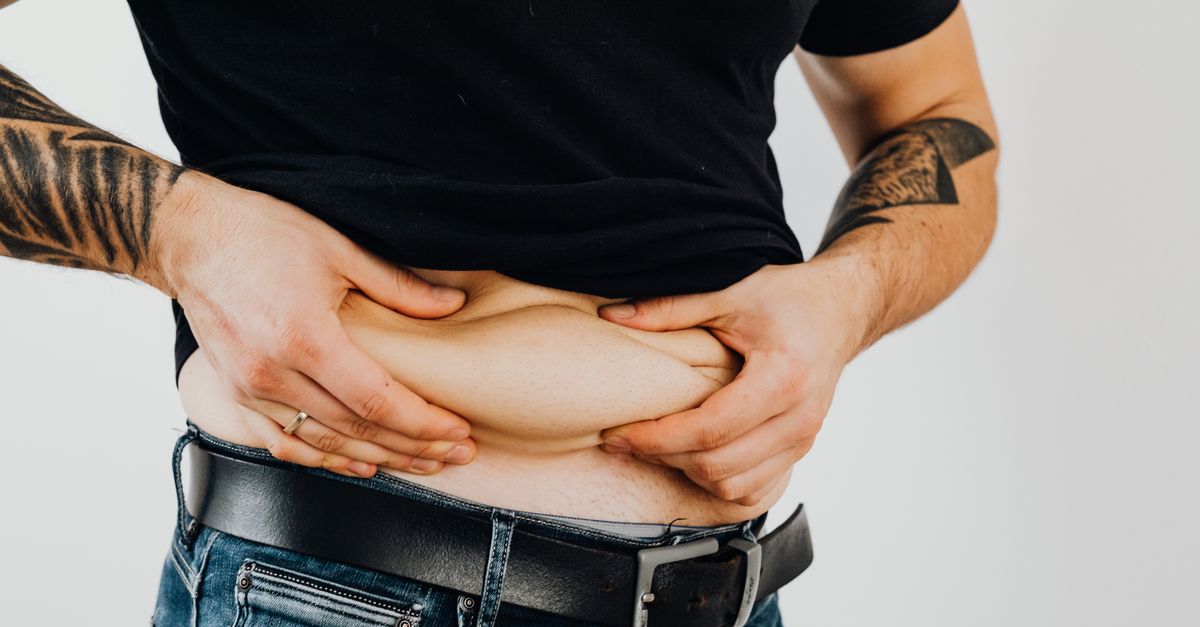
Is Weight Gain Around the Middle Normal During a Heavy Period?
Yes, for most people with heavy periods. A combination of fluid retention, estrogen-driven fat redistribution, and prostaglandin-induced inflammation can add 2–5 lbs of apparent weight around the midsection — nearly all of it temporary. The main caveat: if the bloating and central weight gain persist beyond a few days after your period ends, or keep worsening cycle after cycle, an underlying hormonal imbalance is the more likely culprit.
---
What Actually Happens to Your Body During a Heavy Period
The week before and during a heavy menstrual bleed, your body goes through a rapid hormonal transition. Progesterone — which had been rising through the luteal phase — drops sharply. Estrogen fluctuates. Prostaglandins surge to trigger uterine contractions and increase blood flow. Each of these changes has a direct effect on water balance, gut motility, and even fat storage signals.
Fluid retention is the dominant mechanism. The drop in progesterone removes its natural diuretic effect, causing sodium and water to be held in tissue (Stachenfeld et al., Medicine & Science in Sports & Exercise 2008; PMID: 18614940). This shows up as puffiness in the abdomen, face, and hands — not true fat gain, but it looks and feels like it. Aldosterone, the primary sodium-retaining hormone, rises in the late luteal phase in response to the falling progesterone, compounding water accumulation in soft tissue. In practical terms, a woman can retain 1–3 liters of interstitial fluid during this window — enough to register as 2–6 lbs on the scale without any change in body fat percentage.
Prostaglandin-driven inflammation compounds the issue. High prostaglandin E2 and F2α levels — which are elevated in women with heavy menstrual bleeding (menorrhagia) — cause local inflammation and gut hypersensitivity. This slows intestinal transit, increases gas production, and causes the intestines themselves to bloat (Lundström & Green, Prostaglandins 1978; PMID: 694530). That's the bloated, tight-belly feeling that often accompanies the first heavy days of flow. Women with particularly heavy periods, defined clinically as blood loss exceeding 80 mL per cycle, tend to show measurably higher prostaglandin concentrations in their endometrial tissue, which correlates directly with the severity of cramping, diarrhea, and abdominal swelling they experience.
Iron depletion and fatigue signaling also plays a less obvious role. Chronic heavy bleeding depletes iron stores over successive cycles. Ferritin levels falling below 30 ng/mL are associated with impaired mitochondrial function and reduced physical activity — a subtle mechanism by which heavy periods contribute to gradual fat accumulation rather than just acute water weight. If you've noticed your energy and muscle tone declining around your period, iron status is worth investigating.
---
Estrogen and Weight Gain: The Hormonal Architecture
Estrogen does far more than regulate the menstrual cycle. It directly modulates adipocyte (fat cell) behavior, glucose uptake, and where the body preferentially stores fat. During the perimenstrual phase — the days just before and during the bleed — estrogen levels drop abruptly after the brief late-follicular peak. This rapid withdrawal can temporarily alter insulin sensitivity in adipose tissue, making fat cells in the abdominal region more receptive to lipid storage signals.
Research from the Women's Health Initiative and subsequent mechanistic studies has shown that estrogen maintains a predominantly gluteal-femoral (hip and thigh) fat distribution pattern in premenopausal women (Lovejoy et al., Obesity 2008; PMID: 18356842). When estrogen drops — even transiently during menstruation — the inhibitory signal on visceral fat storage weakens. This is one reason why the belly, not the hips, tends to bloat first during a heavy period.
Longer-term, if estrogen is chronically elevated relative to progesterone — a state called estrogen dominance — the balance tips further. Estrogen dominance is associated with heavier periods, more pronounced premenstrual bloating, and a gradual accumulation of subcutaneous abdominal fat over months and years. Women who notice that their mid-section weight gain is worsening each cycle may be experiencing this hormonal shift rather than a normal cyclical fluctuation.
Unlike the acute fluid retention that resolves within days of the bleed starting, estrogen-mediated fat redistribution is slower-moving and does not self-correct without addressing the underlying hormonal pattern.
---
Free Testosterone and Weight Gain: The Androgen Angle
Testosterone is rarely the first hormone discussed in the context of menstrual weight gain, but it plays a meaningful supporting role. In women, free testosterone (the unbound, biologically active fraction) governs muscle protein synthesis, metabolic rate, and fat distribution. When free testosterone is low — which can happen when sex hormone-binding globulin (SHBG) is elevated — lean mass decreases and fat mass increases, particularly around the abdomen.
Heavy menstrual bleeding, especially when accompanied by iron-deficiency anemia, drives up inflammatory cytokines including IL-6 and TNF-α. These cytokines suppress ovarian androgen production and increase hepatic SHBG synthesis, effectively lowering free testosterone even when total testosterone appears normal on standard lab panels (Cunningham & Toma 2011; doi.org/10.1210/jc.2010-2167). The practical result: reduced muscle mass, a slower resting metabolic rate, and a body composition that shifts toward fat-dominant even without caloric excess.
This mechanism explains why some women with consistently heavy periods gradually lose the muscle definition they once maintained without changing their diet or exercise habits. It also points to why bloating and joint pain during a heavy period can co-occur — both are downstream of the same inflammatory cascade that suppresses androgen signaling.
---
Who Gets Persistent Central Weight Gain — and Why
Transient bloating and a 2–5 lb scale increase during and immediately after a heavy period is normal physiology. It resolves within 2–4 days of the bleed tapering. Persistent or progressive belly weight gain points to one or more of the following:
1. Insulin resistance with hyperinsulinemia. Elevated insulin acts synergistically with estrogen to promote abdominal fat storage. Women with heavy periods who also have insulin resistance — even subclinical, pre-diabetic insulin resistance — tend to experience much more pronounced perimenstrual weight swings. A fasting insulin above 10 µIU/mL in the luteal phase is a reasonable clinical flag.
2. Thyroid dysfunction. Hypothyroidism slows gut motility (worsening bloat), reduces metabolic rate, and independently causes heavy periods by impairing coagulation factor synthesis. Subclinical hypothyroidism — TSH between 2.5 and 10 mIU/L without overt symptoms — is underdiagnosed and directly links menstrual heaviness to chronic, non-resolving abdominal weight gain. The cyclical nature described in the community — take thyroid medication, feel better, then feel worse again — reflects the difficulty of static dosing in a dynamic hormonal environment.
3. PCOS-related androgen and insulin dysregulation. PCOS is the most common endocrine disorder in reproductive-age women, affecting 8–13% of this population (Teede et al., Nature Reviews Endocrinology 2022; PMID: 35760894). Central adiposity is a core feature of PCOS, driven by hyperinsulinemia and androgen excess together. If your heavy period is irregular or anovulatory, weight gain around the middle may be part of a PCOS pattern rather than normal menstrual physiology — see what causes weight gain around the middle in PCOS for a deeper breakdown.
4. Endometriosis. Ectopic endometrial tissue triggers a systemic inflammatory state with elevated prostaglandins and immune activation. This chronic low-grade inflammation disrupts cortisol regulation and promotes visceral fat accumulation independently of caloric intake. If your heaviest days are also your most painful and the abdominal fullness never quite resolves, endometriosis warrants investigation — weight gain around the middle is common in endometriosis for related reasons.
---
The Timeline: What's Normal vs. What's a Signal
| Timing | What You See | Likely Cause | Resolves? |
|---|---|---|---|
| 5–10 days before period | Bloating, fullness, mild scale rise | Progesterone-aldosterone fluid shift | Yes, within days of bleed start |
| Days 1–3 of heavy bleed | Peak bloat, cramping, gut symptoms | Prostaglandin surge | Yes, within 2–4 days of tapering |
| Days 4–7, after bleeding slows | Gradual resolution, scale drops | Estrogen and progesterone normalize | Yes, for most |
| Persists 7+ days after period | Continued bloat, scale doesn't return to baseline | Hormonal imbalance, thyroid, PCOS | No — investigate |
| Worsens each successive cycle | Progressive central fat gain | Chronic estrogen dominance, insulin resistance, anemia | No — investigate |
---
Practical Protocol: What Actually Helps During a Heavy Period
For the acute phase — the 3–5 days of heavy bleeding with associated bloating — the evidence supports a targeted approach:
- Reduce dietary sodium to under 2,000 mg/day during the luteal and early menstrual phase. Sodium drives aldosterone-mediated water retention. A 2016 systematic review of PMS interventions found that low-sodium diets reduced subjective bloating scores by approximately 30% in randomized trials (Direkvand-Moghadam et al., Obstetrics & Gynecology International 2014; PMID: 24799895).
- Increase magnesium to 300–400 mg/day elemental from the second half of your cycle. Magnesium acts as a natural aldosterone antagonist and prostaglandin modulator. A double-blind RCT found that 360 mg/day of magnesium reduced premenstrual fluid retention and mood symptoms significantly versus placebo (Facchinetti et al., Obstetrics & Gynecology 1991; PMID: 1923979).
- Prioritize iron repletion between cycles. If your ferritin is below 30 ng/mL — a threshold associated with functional iron deficiency even without frank anemia — repletion with 25–50 mg elemental iron daily can gradually reduce menstrual blood volume over 3–6 cycles, as iron supports normal endometrial coagulation. Discuss with your provider before supplementing iron.
- Support prostaglandin balance with omega-3 fatty acids. EPA at 1,000–2,000 mg/day competes with arachidonic acid at the COX enzyme, reducing prostaglandin E2 and F2α synthesis. A crossover RCT in women with primary dysmenorrhea found that fish oil at 1,080 mg EPA/day reduced menstrual pain scores significantly compared to ibuprofen, with a shift in prostaglandin metabolites confirmed biochemically (Harel et al., American Journal of Obstetrics and Gynecology 1996; PMID: 8623866).
- Track, don't guess. Logging your scale weight daily across 2–3 full cycles will reveal whether the 2–5 lb swing is consistent and self-resolving (normal) or trending upward cycle over cycle (a signal to investigate).
---
What This Means for Your Formula
If heavy periods are driving cyclical bloating and the associated scale changes, the most evidence-backed nutritional targets are magnesium, omega-3 fatty acids, and iron-supportive nutrients — not a broad multivitamin sweep.
Magnesium Glycinate at the doses used in clinical trials (300–400 mg elemental magnesium) is one of the best-studied interventions for premenstrual fluid retention and prostaglandin sensitivity. Ones formulas include Magnesium Complex, which provides magnesium in highly bioavailable forms calibrated to individual intake gaps identified from blood and dietary data — rather than a one-size dose that may undershoot or overshoot your actual need.
Omega-3 (EPA/DHA) at clinically relevant EPA doses directly modulates the prostaglandin pathway implicated in heavy bleeding, gut hypersensitivity, and abdominal bloating. Ones sources pharmaceutical-grade EPA/DHA and doses it to your omega-3 index from blood work, which is the only reliable way to know whether you're actually repleting tissue stores or just supplementing in the abstract.
Liver Support (one of Ones' proprietary System Blends) is relevant here because the liver is the primary site of estrogen conjugation and clearance. Poor hepatic estrogen metabolism contributes to estrogen dominance and the progressive worsening of menstrual symptoms over time. Supporting glucuronidation and phase II detoxification pathways helps the body clear estrogen metabolites efficiently between cycles.
Because Ones uses your actual lab data and health history, the formula accounts for the interaction between these mechanisms rather than treating each in isolation — a critical distinction when multiple systems are involved in a single symptom like perimenstrual belly weight gain.
---
Key Takeaways
- Temporary bloating and a 2–5 lb scale increase during a heavy period is normal — driven by progesterone withdrawal, aldosterone-mediated fluid retention, and prostaglandin-induced gut inflammation, not true fat gain.
- Estrogen's role is dual: acutely, it modulates fluid distribution; chronically, when elevated relative to progesterone, it promotes abdominal fat storage and heavier periods.
- Free testosterone suppression — via high SHBG driven by inflammation and iron deficiency — reduces muscle mass and metabolic rate, creating a slower-building but real body composition shift.
- Persistent or progressive central weight gain that doesn't resolve after your period ends points to thyroid dysfunction, PCOS, endometriosis, or insulin resistance — not normal menstrual physiology.
- Magnesium (300–400 mg), omega-3 EPA (1,000–2,000 mg), and low-sodium diet during the luteal and early menstrual phase are the most evidence-backed interventions for acute perimenstrual bloating.
- Track your scale daily across multiple cycles to distinguish normal cyclical fluctuation from a trend that warrants investigation with your healthcare provider.