Sleep
Does Eating a Large Healthy Dinner Actually Help You Sleep Better?
Most people assume a heavy dinner tanks sleep quality. The reality is more nuanced: meal size, timing, and what's on the plate all interact with your circadian biology in ways that can either hurt or meaningfully improve the night ahead.
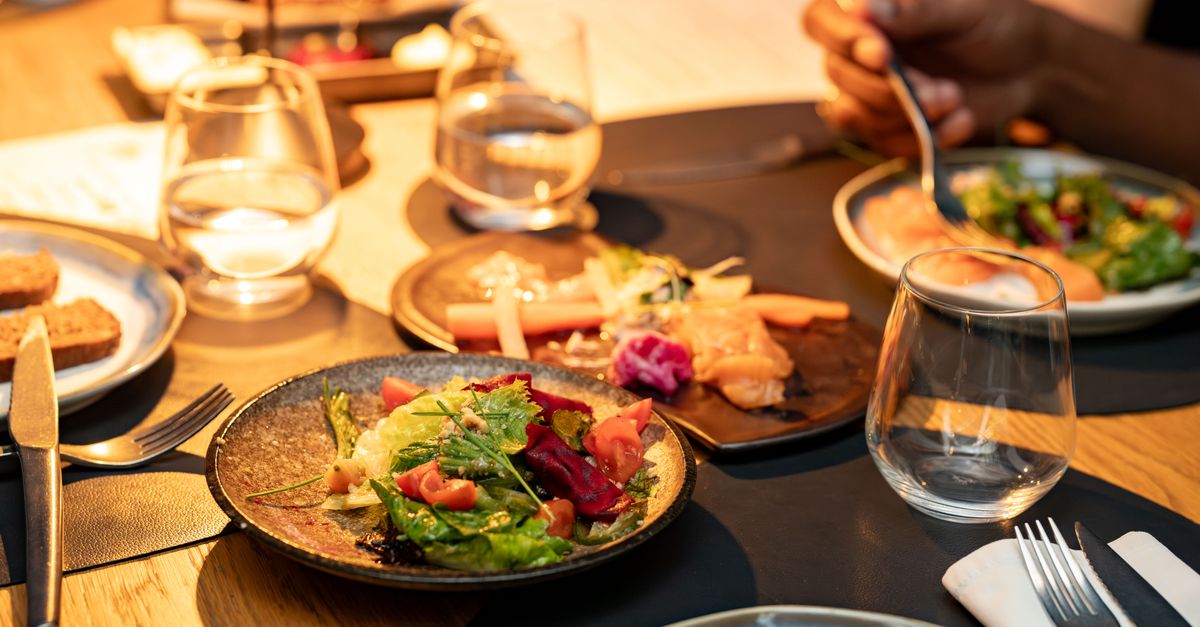
Does Eating a Large Healthy Dinner Actually Help You Sleep Better?
For most people, yes — with important caveats. A larger evening meal composed of sleep-supportive nutrients (complex carbohydrates, tryptophan-rich proteins, magnesium-containing vegetables) can measurably improve sleep onset and slow-wave sleep depth. The key variables are what you eat, when you eat it, and whether your gut and nervous system are in a state to actually use those nutrients overnight.
---
Why Dinner Composition Matters More Than Dinner Size
The popular advice to "eat light at night" misses the underlying mechanism. Sleep quality is not driven primarily by caloric volume but by the neuroendocrine cascade that dinner triggers. Specifically:
- Tryptophan → serotonin → melatonin: Dietary tryptophan, found in turkey, eggs, dairy, tofu, and pumpkin seeds, crosses the blood-brain barrier more efficiently when paired with carbohydrates that spike insulin and reduce competing amino acids in circulation (Markus et al., American Journal of Clinical Nutrition 2005; PMID: 15797686).
- Carbohydrate timing: A 2007 randomized trial found that subjects who consumed a high-glycemic index meal four hours before bed fell asleep significantly faster than those eating a low-GI meal — sleep onset latency dropped by 48% (Afaghi et al., American Journal of Clinical Nutrition 2007; PMID: 17284739). The mechanism is insulin-driven tryptophan availability.
- Glycine from collagen-rich foods: Consuming 3g of supplemental glycine before bed reduced self-reported fatigue and improved polysomnography-measured sleep efficiency in a controlled trial (Bannai et al., Sleep and Biological Rhythms 2012; PMID: 23023553). Bone broth, skin-on chicken, and gelatin are dinner-friendly sources.
So a "large healthy dinner" built around these principles — a substantial portion of complex carbohydrates, a tryptophan-rich protein, and magnesium-dense vegetables — is genuinely different from a large dinner of processed food, which elevates cortisol and gut inflammation instead.
---
Glycine for Sleep: The Underrated Nutrient in Your Evening Meal
Glycine deserves its own spotlight here. It is the most abundant amino acid in connective tissue and an inhibitory neurotransmitter in the spinal cord, brainstem, and retina. In the context of sleep, glycine appears to lower core body temperature — a necessary precondition for sleep onset — by directing blood flow to the extremities (Kawai et al., Nutritional Neuroscience 2015; PMID: 25533534).
In the Bannai trial mentioned above, 3g of glycine taken before dinner reduced subjective sleepiness the following day, suggesting that glycine's overnight effect was improving actual restorative sleep rather than simply sedating. Subjects also scored better on psychomotor vigilance tests the morning after glycine intake.
How to get it at dinner:
- A serving of bone broth (approx. 1–2g glycine per cup)
- Slow-cooked collagen-containing cuts (beef shank, chicken thighs with skin)
- Gelatin-thickened sauces or soups
- A direct 3g glycine supplement dissolved in water before the meal
For people who wake up exhausted even after a full night's sleep, glycine intake at dinner is one of the lowest-risk and most underused interventions to test first.
---
Timing: The Window That Makes or Breaks It
Even a perfectly composed dinner works against you if eaten too close to bed. Digestion raises core body temperature and activates the sympathetic nervous system — both antagonistic to sleep onset. Research from the NIH suggests that eating within two to three hours of bed is associated with worse REM sleep architecture and more nocturnal awakenings, especially in people with gastroesophageal reflux or blood sugar variability.
The practical sweet spot is 3–4 hours before your target sleep time. At that window:
- Blood glucose has peaked and is descending, reducing nighttime glucose spikes
- Gastric emptying is largely complete
- Tryptophan transport into the brain is near its post-meal peak
- Core body temperature has had time to begin its natural descent
If your schedule forces a later dinner (7–9 PM sleep target means 3–5 PM dinner — unrealistic for most), the mitigation strategy is to front-load protein earlier and keep the evening meal carbohydrate-dominant but moderate in fat, since fat dramatically slows gastric emptying.
---
When Sleep Anxiety Makes All of This Harder
Some people aren't just trying to optimize their sleep — they're managing genuine fear around it. A cycle of dreading sleep onset, lying awake hypervigilant, and waking unrefreshed is one of the more exhausting patterns in sleep medicine, and no amount of tryptophan at dinner fixes an activated amygdala.
If the anxiety itself is the primary barrier, dietary tweaks are supportive but not sufficient. L-theanine (200mg) is one evidence-backed option that promotes alpha-wave brain activity without sedation — you can read a detailed breakdown in our article on whether L-theanine actually works. Cognitive behavioral therapy for insomnia (CBT-I) remains the gold-standard first-line intervention for sleep anxiety, with remission rates exceeding pharmacotherapy at 12-month follow-up (Morin et al., JAMA 2009; PMID: 19996401).
For dinner's role specifically: a predictable, calming dinner ritual — same time, same general composition, no screens, eaten at a table — functions as a circadian anchor. The ritual signals safety to the nervous system before any nutrient has time to act. This is not woo; it is how entrainment of circadian cues actually works.
If sleep anxiety co-occurs with hormonal shifts, headaches before your period or poor deep sleep recovery after a stressful period, these may share a common neuroendocrine driver worth investigating with bloodwork and wearable data rather than just behavioral adjustments.
---
The Crash Pattern: When Post-Dinner Energy Collapse Signals Something Deeper
Many people report a sudden, heavy crash after dinner — distinct from normal tiredness — that disrupts their evening and fragments their night. If that crash has been occurring for months or years and feels qualitatively different from ordinary sleepiness, it warrants attention beyond dinner composition.
Postprandial crashes with this profile are frequently associated with:
| Pattern | Likely Mechanism | Investigative Step |
|---|---|---|
| Crash within 30 min of eating, regardless of meal size | Reactive hypoglycemia or dumping syndrome | Continuous glucose monitor, HbA1c, fasting insulin |
| Crash after any carbohydrate, with brain fog | Insulin resistance or poor mitochondrial efficiency | Fasting insulin, HOMA-IR, CoQ10 status |
| Crash with joint pain or histamine-type symptoms | Histamine intolerance | Elimination diet, DAO enzyme testing |
| Crash only after large meals, resolves with smaller portions | Vagal overstimulation, gastroparesis | Gastric emptying study, vagal tone assessment |
| Crash that has worsened over 1–3 years | Adrenal fatigue pattern, HPA dysregulation | 4-point salivary cortisol, DHEA-S |
A sudden worsening of a crash pattern that has been gradual for years — sometimes described as an abrupt shift in how severe the afternoon or post-dinner collapse feels — can reflect accumulated HPA axis dysregulation. If your deep sleep has also deteriorated over a period of chronic stress, these threads often connect to the same underlying biology.
---
Foods That Actively Support Sleep Architecture
Not all "healthy" dinners are sleep-supportive in the same way. Here is a practical breakdown:
Sleep-promoting dinner components:
- Kiwifruit: Two kiwis one hour before bed for four weeks reduced sleep onset by 35% and improved total sleep time in a small RCT (Lin et al., Asia Pacific Journal of Clinical Nutrition 2011; PMID: 21669584). The mechanism may involve serotonin precursors and antioxidants.
- Tart cherry: Contains melatonin and tryptophan; 8oz tart cherry juice twice daily raised melatonin levels and improved sleep efficiency in older adults.
- Fatty fish (salmon, mackerel): High in omega-3 EPA/DHA and vitamin D, both associated with serotonin synthesis regulation. People with higher omega-3 index scores show better sleep quality in population data.
- Magnesium-rich greens (spinach, Swiss chard, edamame): Magnesium activates GABA receptors and blunts HPA-axis activation at night.
- Complex carbohydrates (sweet potato, brown rice, lentils): Support tryptophan transport without causing rapid glucose spikes that fragment sleep.
Sleep-disrupting dinner choices to limit:
- Alcohol (suppresses REM, fragments second half of night)
- High saturated fat (delays gastric emptying, raises overnight cortisol in some studies)
- Spicy food (raises core body temperature)
- Excessive dietary tyramine (aged cheese, cured meats — activates norepinephrine)
---
What This Means for Your Formula
Food is the foundation, but targeted supplementation can close the gaps that dinner alone cannot fill — especially if your bloodwork or wearable data flags deficiencies that blunt your body's ability to use what you eat.
Magnesium Glycinate is among the most direct nutritional interventions for sleep. Ones includes magnesium glycinate in its Magnesium Complex blend, formulated at doses aligned with clinical research. Glycinate is the preferred chelate because glycine itself has independent sleep benefits (see above), making this form doubly relevant to overnight recovery.
Omega-3 (EPA/DHA): Ones includes pharmaceutical-grade omega-3 concentrate dosed to clinical ranges. The relationship between omega-3 status and sleep quality runs through prostaglandin regulation and serotonin receptor density — mechanisms that a dinner of salmon twice a week may not fully saturate for people with poor baseline omega-3 index. If you're curious how omega-3 holds up in the broader research, the article on whether omega-3 really works covers the evidence in detail.
Adrenal Support blend: For people whose post-dinner crash or sleep difficulty is driven by dysregulated cortisol (high in the evening when it should be low), Ones includes a proprietary Adrenal Support blend. This matters because no amount of dietary tryptophan improves sleep in the presence of chronically elevated evening cortisol — you need to address the HPA axis, not just the plate.
Ones' AI practitioner analyzes blood data and wearable outputs — including sleep stage breakdowns from devices like WHOOP or Garmin — to determine whether your sleep difficulty is primarily a nutrient gap, a circadian rhythm mismatch, or an adrenal or thyroid pattern. The formula is calibrated to the actual finding, not a generic sleep stack.
---
Key Takeaways
- A large, nutritionally composed dinner can improve sleep — especially when it includes tryptophan-rich protein, complex carbohydrates, and magnesium-dense vegetables eaten 3–4 hours before bed.
- Glycine (3g, from food or supplement) before dinner measurably improves sleep efficiency and next-day alertness through a core-temperature-lowering mechanism.
- Meal timing matters as much as meal content: eating within 2 hours of bed disrupts REM architecture regardless of food quality.
- Post-dinner energy crashes lasting months or years are not purely about what you ate — they may reflect HPA dysregulation, insulin resistance, or histamine intolerance that warrants investigation.
- Sleep anxiety requires behavioral and nervous-system interventions (CBT-I, L-theanine, circadian anchoring rituals) that work alongside — not instead of — dietary optimization.
- Targeted supplementation with magnesium glycinate, omega-3, and adrenal-support compounds can address deficiencies that blunt the sleep benefits of an otherwise healthy dinner.