Brand Comparison
ONES vs AG1: Personalized Daily Capsules vs One-Size Greens Powder
AG1 spends more on celebrity endorsements than most people spend on groceries — yet its proprietary blends make it impossible to know whether any single ingredient reaches a clinically meaningful dose. If you're paying $99 a month for a daily supplement, shouldn't it actually be built for you? Here's an honest, data-driven breakdown of Ones versus AG1.
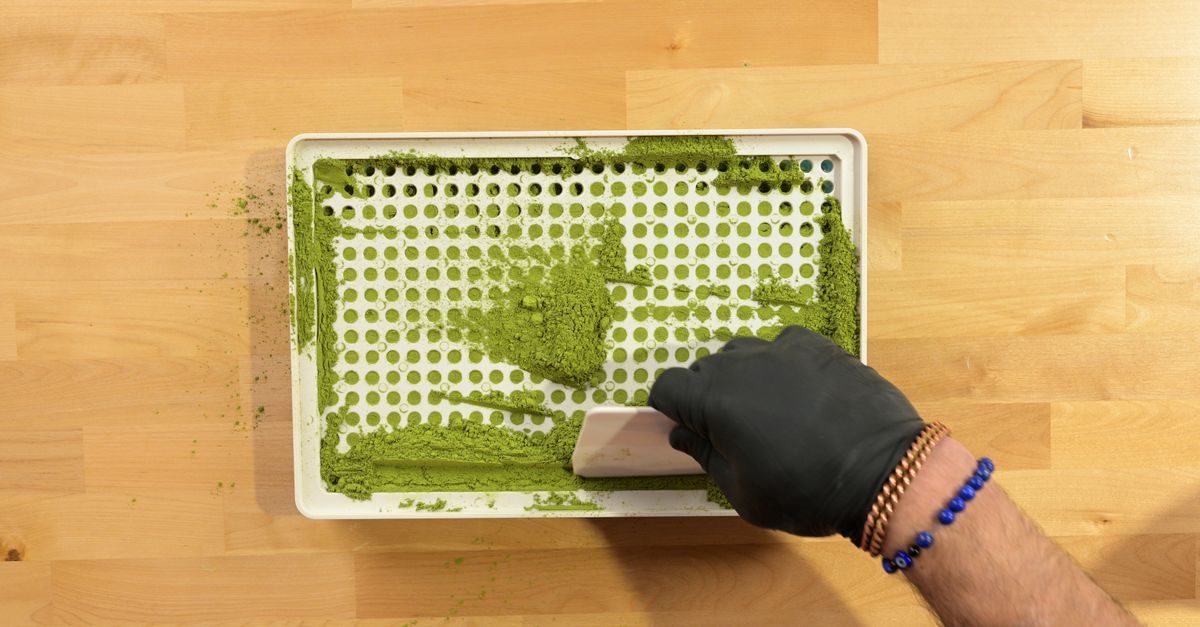
The $99-a-Month Question: Are You Getting What You Pay For?
AG1 — formerly known as Athletic Greens — has become one of the most marketed supplements in the world, backed by podcast sponsorships, elite athletes, and a sleek brand identity. At roughly $99 per month for a single-serving greens powder, it promises to cover your nutritional bases with 75 ingredients in one daily scoop.
But here's the problem: when 75 ingredients are packed into a proprietary blend, the math rarely adds up. Each ingredient ends up dosed far below the thresholds used in clinical research — a concept known as "fairy dusting." Meanwhile, Ones takes an entirely different approach: instead of sending everyone the same formula, it analyzes your blood work, wearable data, and health history to build a custom capsule plan calibrated specifically to what your body is actually missing.
This comparison isn't about which product has a prettier label. It's about which approach actually moves the needle on your health.
---
AG1 Review: Honest Look at What's Inside
AG1's formula lists an impressive 75 ingredients across several proprietary blends — a raw superfood complex, a nutrient-dense extract blend, a digestive enzyme and mushroom complex, and a dairy-free probiotic. At first glance, it looks comprehensive. But a closer examination raises important questions about dosing.
Proprietary blends are not required to disclose individual ingredient amounts — only the total blend weight. AG1's "Alkaline Nutrient Dense Raw Superfood Complex" weighs in at 7,388mg total, split across spirulina, lecithin, inulin, apple powder, broccoli flower powder, and over a dozen other ingredients. If you do the arithmetic, most individual ingredients receive well under 500mg — and many clinically validated actives need significantly more than that to work.
For example:
- Ashwagandha (KSM-66) requires 600mg daily to produce the cortisol-lowering and stress-relief effects demonstrated in clinical trials (Chandrasekhar et al., Indian Journal of Psychological Medicine 2012; PMID: 23439798).
- Rhodiola Rosea exerts adaptogenic and anti-fatigue effects at 400–600mg (Darbinyan et al., Phytomedicine 2000; PMID: 10839209).
- CoQ10/Ubiquinol is used at 100–200mg in cardiovascular and mitochondrial research (Mortensen et al., JACC: Heart Failure 2014; PMID: 25282512).
AG1 does not disclose individual doses for these actives, and given the total blend weights, it is mathematically impossible for all — or even most — of them to reach clinical thresholds simultaneously. What you get is a broad-spectrum formula that covers a little of everything but enough of almost nothing.
What AG1 does reasonably well: It's a convenient way to consume greens, digestive enzymes, and probiotics (AG1 includes Lactobacillus acidophilus at a disclosed 7.2 billion CFU). If your diet is genuinely poor in vegetables and you have no specific health concerns, the greens component may offer modest benefit. But for anyone dealing with measurable deficiencies — low vitamin D, suboptimal ferritin, high cortisol, poor thyroid markers — a generic greens powder is unlikely to move those numbers.
---
AG1 vs Custom Supplements: Why Personalization Changes the Equation
The fundamental flaw in the AG1 model — and in most mass-market supplements — is the assumption that every human body has the same nutritional needs. The evidence strongly disagrees.
A 2016 review published in Nutrients found that micronutrient status varies dramatically between individuals based on genetics, gut absorption capacity, medication use, age, sex, and lifestyle factors (Mohn et al., Nutrients 2018; PMID: 29757226). Two people can eat the same diet, live the same lifestyle, and present with completely different nutrient profiles on a blood panel.
This is precisely why Ones was built around data rather than demographic assumptions. The platform functions as an AI health practitioner: it ingests your blood work, wearable biometrics (like HRV, sleep scores, and resting heart rate), and health goals, then builds a custom capsule formula from a curated catalog of approximately 70 clinically validated ingredients.
Unlike AG1's single scoop-for-everyone approach, Ones formulas are calibrated to capsule budgets selected by the AI based on what your data actually reveals — either a 6 or 9-capsule daily plan. Each ingredient included in your formula is dosed to the range used in published research, not sprinkled in at symbolic quantities.
| Feature | Ones | AG1 |
|---|---|---|
| Personalized to your lab results | Yes | No |
| Individual ingredient doses disclosed | Yes | Mostly hidden in blends |
| Clinically dosed actives | Yes | Not verifiable |
| Adapts as your health data changes | Yes | No |
| Includes greens/fiber component | No | Yes |
| Price per month | Varies by formula | ~$99 |
| Proprietary blend opacity | None | Significant |
If your primary goal is greens consumption alongside a whole-food diet, AG1 may serve a purpose. But if you're trying to address a specific health signal — chronic fatigue, poor sleep, elevated inflammation markers, suboptimal thyroid function — then an unpersonalized greens powder is simply the wrong tool.
---
Athletic Greens vs Ones: The Ingredient Transparency Gap
Transparency is one of the sharpest dividing lines between these two approaches. When Ones includes, say, Omega-3 EPA/DHA or Vitamin D3 with K2 in a formula, the doses are known, documented, and aligned with what clinical literature supports. When AG1 includes similar ingredients inside a proprietary blend, the consumer has no way to verify whether the amount present is pharmacologically meaningful.
This matters because underdosing isn't neutral — it creates a false sense of security. A person who believes they are covered for vitamin D because it appears on their supplement label may not seek a blood test that would reveal they are still deficient. Research from the NIH Office of Dietary Supplements consistently notes that vitamin D insufficiency (serum 25(OH)D below 50 nmol/L) affects an estimated 24% of U.S. adults — a gap that a few hundred IU hidden inside a greens blend will not close (NIH ODS, Vitamin D Fact Sheet for Health Professionals, 2023).
Ones also draws on your blood work to determine whether specific System Blends are warranted. For example, someone presenting with high histamine symptoms, chronic sinus congestion, and poor sleep might receive the Histamine Support blend alongside targeted individual actives — a level of nuance that no fixed-formula product can replicate.
For a deeper look at how lab-driven supplement personalization works, see our guide to understanding your blood panel for supplement decisions.
---
AG1 Alternative Personalized: Who Should Switch — and Who Shouldn't
AG1 built its audience on convenience and aspiration. It's easy to use, well-branded, and backed by fitness influencers whose labs you've never seen. But convenience and efficacy aren't the same thing.
You might be ready for a Ones formula instead of AG1 if:
- You've had blood work done and have flagged deficiencies or suboptimal ranges (vitamin D, ferritin, B12, zinc, thyroid markers)
- You're dealing with energy, sleep, stress, or hormonal issues that generic supplementation hasn't resolved
- You want to know exactly what you're taking and why — with doses that match the research
- You're already eating a reasonably vegetable-rich diet and don't need a greens powder
AG1 may still work for you if:
- You genuinely struggle to eat vegetables and want an easy daily greens habit
- You have no specific health concerns and are supplementing for general coverage
- You're not ready to share or don't have access to recent lab data
That said, even in the second category, there are increasingly strong AG1 alternatives in the personalized supplement space. Platforms like Viome address gut microbiome-specific nutrition, while Thorne offers practitioner-grade individual products. Ones stands apart by combining AI-driven interpretation of your actual health data with a custom capsule formula — a model closer to working with a functional medicine practitioner than purchasing a consumer product off a shelf.
---
What This Means for Your Formula
If you've been relying on AG1 and you're still experiencing fatigue, poor recovery, brain fog, or sleep issues, the most likely explanation isn't that you need a different greens powder — it's that you need to understand what's actually happening inside your body.
Ones addresses this by building formulas from real clinical signals. A few examples of how specific ingredients in the Ones catalog relate to common gaps that AG1's format can't meaningfully address:
- KSM-66 Ashwagandha at 600mg — the exact dose used in the Chandrasekhar 2012 trial showing a 27.9% reduction in serum cortisol. Included when your data suggests HPA axis dysregulation or chronic stress burden (Chandrasekhar et al., Indian Journal of Psychological Medicine 2012; PMID: 23439798).
- CoQ10/Ubiquinol at 200mg — matched to doses used in cardiovascular and mitochondrial fatigue research, relevant for individuals over 40 or on statin therapy, where endogenous CoQ10 synthesis declines (Mortensen et al., JACC: Heart Failure 2014; PMID: 25282512).
- Ones Adrenal Support blend — a proprietary combination targeting adrenal resilience, relevant when wearable data shows poor HRV and your history indicates burnout patterns.
None of these interventions are one-size-fits-all. And none of them are what you get when you mix 75 ingredients into a single scoop.
For more on how adrenal health and cortisol management interact with supplement choices, our dedicated guide covers the clinical evidence in detail.
---
Key Takeaways
- AG1 uses proprietary blends that obscure individual ingredient doses, making it impossible to verify whether any active reaches a clinically meaningful threshold.
- Personalized supplement platforms like Ones build formulas from your actual blood work and biometric data — eliminating the guesswork that drives most supplement spending.
- Clinical dosing matters: ashwagandha requires 600mg, CoQ10 requires 100–200mg, and Rhodiola requires 400–600mg to replicate published trial results — doses that can't coexist in a fixed-formula greens powder.
- AG1 has a legitimate use case for people with poor vegetable intake and no specific health concerns, but it is a blunt instrument for anyone dealing with measurable deficiencies or chronic symptoms.
- Transparency is a core differentiator: Ones discloses every dose in your formula; AG1 hides most doses behind proprietary blend labels.
- Before spending $99/month on any supplement, getting a blood panel done and working with a platform that interprets those results is almost always a better investment in your long-term health.