Supplements
Should I Worry About My LDL Particle Number Result?: Who Actually Benefits — and Who Should Skip It
Your standard cholesterol panel says your LDL is fine — but your doctor flags your LDL particle number as borderline high. Which one should you trust? For millions of people with metabolic syndrome, insulin resistance, or family history of early heart disease, LDL particle number (LDL-P) is the metric that standard testing misses entirely — and the distinction can be clinically significant.
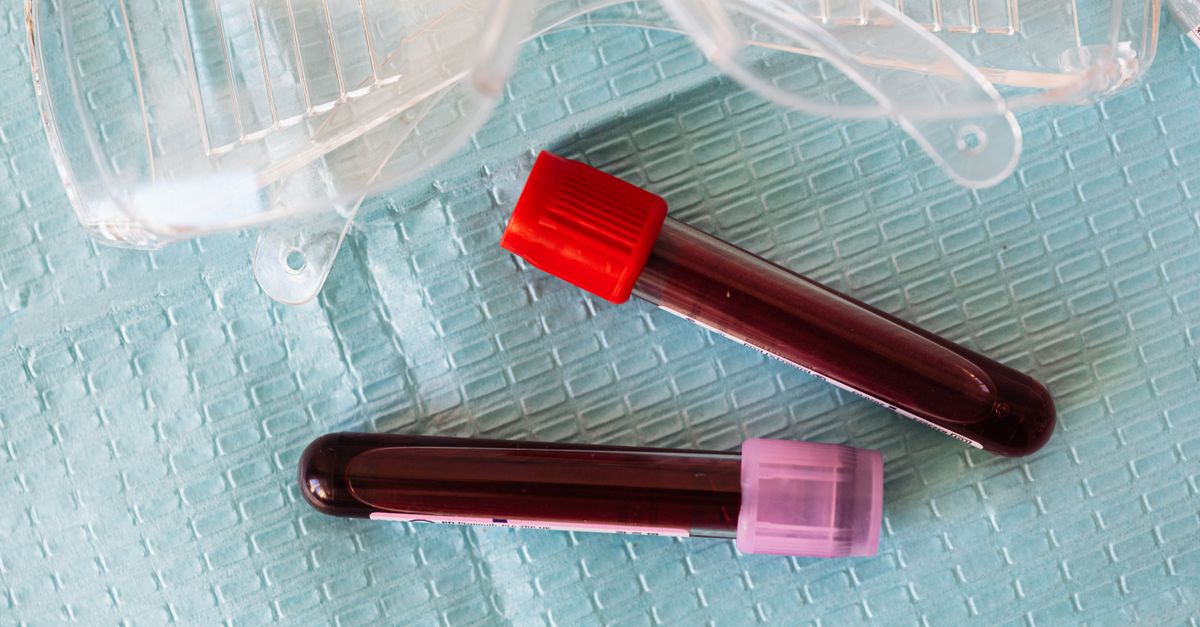
Should I Worry About My LDL Particle Number Result?
You got your labs back. Your LDL cholesterol (LDL-C) sits at 110 mg/dL — perfectly acceptable by most guidelines. But somewhere on the same report, or on a more advanced lipid panel, there's another number: LDL particle number, or LDL-P. It's elevated. Now you're asking the right question: should I worry about my LDL particle number result?
The short answer is: it depends on your metabolic context. The longer answer requires understanding what LDL-P actually measures, why it sometimes tells a completely different story than LDL-C, and which patients genuinely benefit from acting on it — versus who can reasonably deprioritize it.
---
What LDL Particle Number Measures (and Why It's Not the Same as LDL-C)
LDL cholesterol (LDL-C) measures the amount of cholesterol packed inside LDL particles. LDL particle number (LDL-P) measures how many LDL particles are circulating in your blood. These two values can diverge dramatically — a phenomenon called LDL discordance.
Think of it this way: you can ship the same total weight of cargo in a few large trucks or in many small vans. The number of vehicles on the road — not the total cargo — determines how much traffic congestion occurs at the arterial wall. Small, dense LDL particles carry less cholesterol per particle, so a person can have a "normal" LDL-C while running an unusually high LDL-P, with more particles available to infiltrate the endothelium and initiate atherosclerosis.
This is not theoretical. A landmark analysis from the MESA (Multi-Ethnic Study of Atherosclerosis) cohort, which followed over 5,500 participants, found that LDL-P was a stronger predictor of cardiovascular events than LDL-C in most subgroups — and that when the two measures disagreed, LDL-P was the more accurate risk predictor (Mora et al., Journal of the American College of Cardiology 2014; PMID: 25104528).
LDL-P is measured primarily through two methods:
- NMR spectroscopy (the most common clinical test in the U.S., offered by LabCorp's NMR LipoProfile)
- Ion mobility (used by some specialty labs)
Optimal LDL-P on NMR is generally cited as < 1,000 nmol/L, with borderline risk at 1,000–1,299 nmol/L and high risk above 1,300 nmol/L, per the National Lipid Association consensus guidance.
---
Should I Worry About My LDL Result? Understanding Discordance
If you're asking should I worry about my LDL result?, the key first step is understanding whether your LDL-C and LDL-P are telling the same story.
Concordant results (both high, or both low) are straightforward — your standard LDL-C is a reliable proxy, and clinical guidelines apply directly.
Discordant results — especially high LDL-P with normal or low LDL-C — are the clinical nuance worth paying attention to. This pattern is strongly associated with:
- Insulin resistance and metabolic syndrome — Excess insulin drives hepatic production of small, dense LDL particles, inflating LDL-P without necessarily raising LDL-C. A 2020 systematic review in Metabolism confirmed that LDL-P discordance is most pronounced in individuals with elevated triglycerides and low HDL, the classic metabolic syndrome lipid pattern (Rizzo et al., Metabolism 2020; PMID: 32220581).
- Type 2 diabetes — Similar mechanism; dysfunctional lipid metabolism drives particle number up.
- Hypothyroidism — Thyroid hormone directly regulates LDL receptor expression. When thyroid function is suboptimal, LDL clearance slows, particle count rises. More on this below.
- Familial hypercholesterolemia (FH) — In FH, both LDL-C and LDL-P are typically elevated concordantly, but particle testing can help assess treatment response.
Conversely, high LDL-C with normal LDL-P (common in people with large, buoyant LDL particles — sometimes called "Pattern A") may carry lower cardiovascular risk than the standard number implies. Some researchers and clinicians argue this group is being overtreated (Cromwell et al., American Journal of Cardiology 2007; PMID: 17689933).
The takeaway: if your LDL-C is elevated and your clinician wants to act on it, asking for LDL-P context — and asking about particle size — is a reasonable, evidence-supported next step.
---
Who Actually Benefits from Testing LDL Particle Number?
Not everyone needs an advanced lipid panel. Standard LDL-C remains a cost-effective screening tool for the general population. LDL-P testing adds the most value for:
| Population | Why LDL-P Adds Value |
|---|---|
| Metabolic syndrome / high triglycerides | LDL-C often underestimates risk |
| Type 2 diabetes or prediabetes | Small dense LDL predominates |
| Normal LDL-C with family CVD history | May have elevated particle burden |
| Statin users monitoring treatment | LDL-P response tracks better than LDL-C in some cases |
| Suspected hypothyroidism | Thyroid dysfunction impairs LDL receptor activity |
| Borderline LDL-C (100–129 mg/dL) | Clarifies true cardiovascular risk tier |
Who can likely skip it: Healthy adults with no metabolic risk factors, low triglycerides, high HDL, and no family history of early cardiovascular disease. For this group, LDL-C and non-HDL cholesterol provide adequate risk stratification without the added cost of NMR testing.
---
The Thyroid Connection: Should I Worry About My TSH Result Alongside Lipids?
Here's a connection many people miss: thyroid status is one of the most underappreciated drivers of elevated LDL-P. If you're asking should I worry about my TSH result? in the same breath as your lipid panel, the answer is — yes, they're often directly related.
Thyroid hormone (T3, in its active form) upregulates hepatic LDL receptor density. More receptors mean faster LDL clearance from the bloodstream and lower particle burden. When TSH is elevated — indicating the thyroid isn't producing enough hormone — LDL receptor activity falls, particles accumulate, and both LDL-C and LDL-P rise (Duntas & Brenta, Journal of Clinical Endocrinology & Metabolism 2012; PMID: 22745245).
This means that subclinical hypothyroidism (TSH between 4.5 and 10 mIU/L, with normal free T4 and free T3) is a legitimate and correctable cause of dyslipidemia. In clinical studies, treating subclinical hypothyroidism with levothyroxine consistently reduces LDL-C — and the effect on LDL particle number, while less studied, follows the same mechanistic logic.
Practical implication: If your LDL-P is elevated and your TSH is above 3.0 mIU/L (or borderline), don't jump straight to lipid-lowering strategies without ruling out a thyroid contribution. A full thyroid panel — TSH, free T4, free T3, and thyroid antibodies — gives the complete picture.
For a deeper dive into how to read these values, our guide on understanding thyroid lab results and what they mean covers the clinical ranges and what action thresholds actually look like in practice.
---
What This Means for Your Formula
At Ones, AI-driven analysis of your blood work — including advanced lipid markers when available — shapes a custom capsule formula designed around your actual metabolic findings, not generic cardiovascular recommendations.
For individuals with elevated LDL-P in the context of metabolic risk, several ingredients in the Ones catalog address distinct mechanisms:
Omega-3 (EPA/DHA): Fish oil supplementation is one of the most evidence-backed interventions for improving lipid particle quality. High-dose EPA/DHA preferentially lowers triglycerides, shifts LDL particle distribution toward larger, less atherogenic particles, and reduces VLDL output from the liver. A Cochrane meta-analysis confirmed significant triglyceride reduction (mean −0.59 mmol/L) with omega-3 supplementation at typical clinical doses of 2–4g EPA+DHA daily (Hartley et al., Cochrane Database of Systematic Reviews 2013). Ones includes pharmaceutical-grade Omega-3 dosed to clinically relevant EPA/DHA levels based on your baseline triglyceride and particle data.
Heart Support (Proprietary Blend): Ones' Heart Support system blend is formulated for individuals with cardiovascular risk markers identified in their lab results. Rather than generic "heart health" marketing, this blend is reserved for formulas where the AI detects specific findings — elevated LDL-P, high hs-CRP, or endothelial stress markers — that justify a multi-mechanism cardiovascular approach.
CoQ10/Ubiquinol (200mg): Relevant particularly for individuals already on statin therapy, who are the most likely subset of LDL-P-conscious patients. Statins deplete endogenous CoQ10 by inhibiting the mevalonate pathway — the same pathway that produces cholesterol. Ubiquinol (the reduced, bioavailable form) at 200mg has been shown to restore CoQ10 levels in statin users and may reduce statin-associated myopathy symptoms (Skarlovnik et al., Medical Science Monitor 2014; PMID: 25399974). When Ones detects statin use in a user's health history, CoQ10/Ubiquinol is a high-priority addition to the formula.
If your thyroid labs are also flagged — an elevated TSH or suppressed free T3 alongside dyslipidemia — Ones' Thyroid Support blend or targeted iodine and selenium dosing may be incorporated to address the upstream hormonal driver, not just the downstream lipid marker.
For more context on how personalized supplementation differs from off-the-shelf cardiovascular products, see our overview of how blood work drives personalized supplement formulas.
---
Lifestyle and Clinical Interventions That Lower LDL-P
Before or alongside any supplementation protocol, these evidence-based lifestyle strategies directly improve LDL particle number:
- Reduce refined carbohydrates and added sugars — Dietary carbohydrate drives hepatic VLDL production, which feeds the small-dense LDL pool. Low-glycemic or Mediterranean-style eating consistently improves LDL-P in metabolic syndrome.
- Resistance training — Improves insulin sensitivity, which is the root driver of particle count elevation in most non-FH cases.
- Increase soluble fiber intake — Soluble fiber (oats, legumes, psyllium) binds bile acids, forcing LDL receptor upregulation to replenish the bile acid pool.
- Optimize thyroid status — As discussed above; if TSH is elevated, addressing it pharmaceutically or nutritionally (selenium, iodine, addressing autoimmunity) can meaningfully reduce LDL-P.
- Consider pharmacological therapy if warranted — Statins reduce LDL-P, though LDL-C falls proportionally more. PCSK9 inhibitors reduce LDL-P dramatically. Discuss with your prescriber whether your LDL-P level warrants medication.
For those with LDL-P in the borderline range (1,000–1,299 nmol/L) and no other major risk factors, lifestyle-first intervention over 3–6 months is a reasonable, guideline-compatible approach before escalating to medication.
---
Key Takeaways
- LDL particle number (LDL-P) and LDL cholesterol (LDL-C) measure different things — LDL-P counts particles, LDL-C measures cholesterol cargo. They can disagree, and when they do, LDL-P is usually the better cardiovascular risk predictor.
- LDL-P testing adds the most value for people with metabolic syndrome, insulin resistance, diabetes, or borderline LDL-C who want a clearer risk picture.
- Thyroid status is a major, underappreciated driver of LDL-P elevation — elevated TSH reduces LDL receptor activity and drives up particle number. Always consider a full thyroid panel if your lipids are unexpectedly high.
- Not everyone needs advanced lipid testing — healthy individuals with no metabolic risk factors can rely on standard LDL-C and non-HDL cholesterol for routine screening.
- Omega-3 fatty acids, lifestyle modification, and addressing insulin resistance are the first-line interventions for elevated LDL-P in the non-FH population.
- A personalized approach matters — because LDL-P elevation has different root causes in different people, a formula built from your actual labs (like those generated through Ones) is more targeted than any generic cardiovascular supplement stack.