Stress
Best Supplements for High Morning Cortisol: When You Wake Wired Before the Alarm
Waking up at 3 or 4 AM with your heart already racing — before the alarm, before coffee, before anything — is a hallmark sign of dysregulated morning cortisol. Research shows the cortisol awakening response can spike 50–160% above baseline within 30 minutes of waking, and when it's chronically elevated, the downstream damage touches sleep, metabolism, immunity, and mood. The right supplement protocol, built around your actual biomarkers, can help bring that curve back under control.
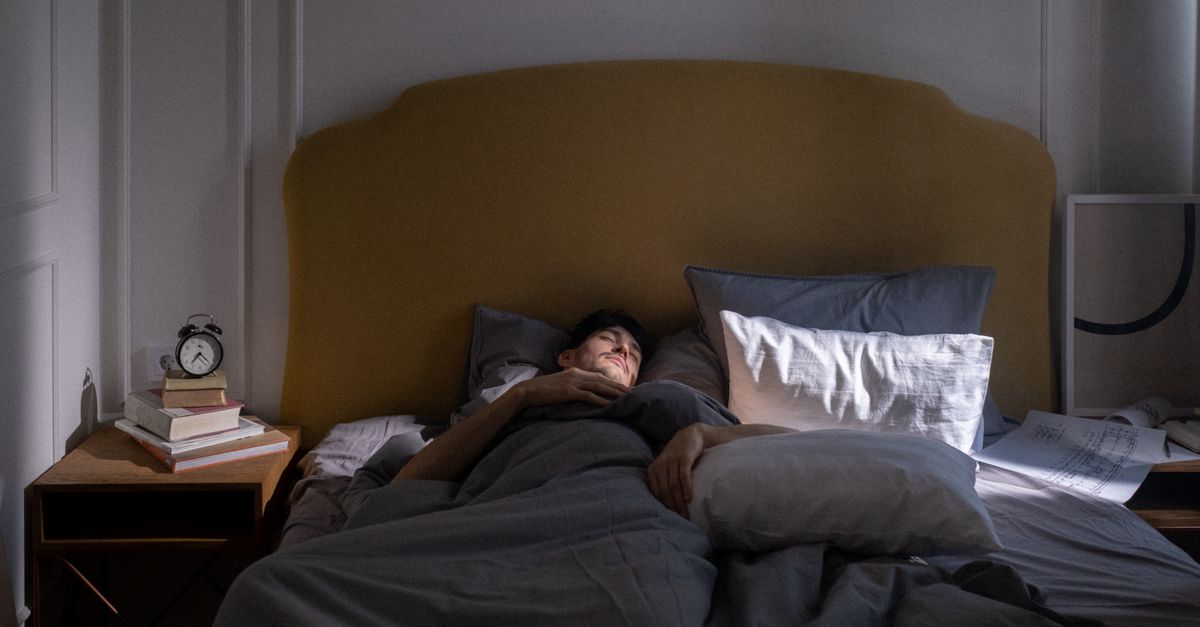
Why Your Body Is Already in Fight-or-Flight Before Breakfast
Most people assume cortisol is a stress hormone that rises only when something goes wrong. In reality, cortisol follows a precise 24-hour rhythm, and the steepest climb happens in the hour immediately after you open your eyes. This is called the cortisol awakening response (CAR) — a deliberate, evolutionarily programmed surge that prepares the body for the metabolic and cognitive demands of the day.
A healthy CAR looks like a 50–160% increase in cortisol from the moment of waking, peaking around 30–45 minutes post-awakening, then declining steadily toward evening. That arc is protective. But when the arc is flattened, blunted, or — more commonly for high-stress individuals — dramatically exaggerated, you feel it: eyes snapping open at 3 AM, chest tension before you've checked a single notification, and a fatigue that somehow coexists with a buzzing, wired feeling that makes returning to sleep impossible.
This article breaks down what drives an overactive morning cortisol response, which biomarkers reveal it, and which clinically studied supplements can help normalize it.
---
Cortisol Awakening Response High: What the Research Actually Says
The cortisol awakening response is not simply "cortisol in the morning." It is a discrete neuroendocrine event driven by the hypothalamic-pituitary-adrenal (HPA) axis and synchronized with the central circadian clock in the suprachiasmatic nucleus. Measuring it requires collecting saliva at the moment of waking and at 15, 30, and 45 minutes post-waking — a standard protocol used in psychoneuroendocrinology research.
Studies consistently link an exaggerated CAR to several upstream stressors:
- Chronic psychological stress: A meta-analysis of 81 studies found that anticipatory stress (upcoming demands, work overload) reliably amplifies the CAR, while studies using the Trier Social Stress Test confirmed the same pattern under acute stress induction (Kudielka et al., Psychoneuroendocrinology 2009; PMID: 19019561).
- Sleep fragmentation and shortened sleep duration: Even one night of disrupted sleep can amplify the following morning's CAR by altering hippocampal feedback to the HPA axis (Backhaus et al., Psychoneuroendocrinology 2007; PMID: 17466461).
- Elevated evening light exposure: Blue light suppresses melatonin and disrupts the circadian signal that normally caps nighttime cortisol, creating a higher baseline from which the morning surge launches.
- Subclinical hypothyroidism and insulin resistance: Both conditions impair negative feedback at the glucocorticoid receptor, allowing cortisol to run higher and longer than it should.
For anyone experiencing the "wired before the alarm" pattern, the goal is not to obliterate the CAR — you need it for cognitive function and immune regulation — but to bring its amplitude back within the normal physiological window.
---
Wake Up Wired Supplements: The Clinical Evidence
Not every adaptogen on the market has been tested specifically against the cortisol awakening response or morning cortisol dynamics. Below is a focused review of the ingredients with the strongest mechanistic rationale and human trial data.
Phosphatidylserine
Phosphatidylserine (PS) is a phospholipid concentrated in neuronal membranes that directly modulates HPA axis activity. Its mechanism is well characterized: PS increases glucocorticoid receptor sensitivity in the hippocampus, strengthening the negative feedback loop that tells the adrenal glands to stop producing cortisol (Starks et al., Journal of the International Society of Sports Nutrition 2008; PMID: 18662395).
In a double-blind crossover trial in 80 mg and 400 mg doses, PS supplementation significantly blunted exercise-induced cortisol elevation and improved the cortisol-to-testosterone ratio — a marker of HPA axis balance. The 400 mg dose showed the most consistent effects (Monteleone et al., European Journal of Clinical Pharmacology 1992; PMID: 1325348).
For morning cortisol specifically, PS taken in the evening (300–400 mg) appears most effective at dampening the overnight HPA activation that feeds into an exaggerated CAR. Some protocols split the dose — 200 mg in the morning, 200 mg at night — particularly for individuals whose elevated cortisol is stress-driven rather than circadian-driven.
| Ingredient | Mechanism | Clinical Dose | Timing |
|---|---|---|---|
| Phosphatidylserine | Enhances glucocorticoid receptor feedback | 300–400 mg/day | Evening or split AM/PM |
| Ashwagandha (KSM-66) | Lowers cortisol via HPA axis normalization | 300–600 mg/day | Morning or with meals |
| Rhodiola Rosea | Reduces cortisol via AMPK/stress-resilience pathways | 200–400 mg/day | Morning, before stress exposure |
| Magnesium Glycinate | HPA regulation, supports GABA; deficiency raises cortisol | 300–400 mg elemental | Evening |
| Vitamin C (high-dose) | Reduces adrenal cortisol synthesis after acute stress | 1,000–3,000 mg/day | With meals |
---
Phosphatidylserine Cortisol: The Most Underrated Supplement for HPA Dysregulation
Despite decades of research, phosphatidylserine remains obscure outside sports nutrition and anti-aging circles. This is a missed opportunity for anyone dealing with high morning cortisol.
The EFSA (European Food Safety Authority) has formally recognized PS's role in supporting normal cognitive function under stress, and multiple randomized controlled trials in non-athletic adults confirm its cortisol-dampening properties. A 2006 study in German male subjects found that 400 mg/day of soy-derived PS significantly reduced ACTH (the pituitary signal that triggers cortisol release) during a mental arithmetic stress test — not just cortisol itself, but the upstream hormonal driver (Hellhammer et al., Stress 2004; PMID: 15512856).
This upstream action matters. Supplements that only block cortisol's downstream effects are working late in the cascade. PS modulates the HPA axis at the hypothalamic-pituitary level, making it mechanistically more elegant for preventing the morning spike before it begins.
For individuals with an exaggerated CAR, combining PS with adequate sleep hygiene, magnesium repletion, and an adaptogen creates a more complete protocol than any single agent alone. Understanding your adrenal health biomarkers is the starting point for knowing whether PS should be a priority or a complement in your stack.
---
Morning Cortisol Ashwagandha: What the Trials Show
Ashwagandha — specifically the KSM-66 extract standardized to ≥5% withanolides — has the most robust human trial data of any adaptogen for cortisol reduction.
The landmark 60-subject RCT by Chandrasekhar et al. (Indian Journal of Psychological Medicine 2012; PMID: 23439798) used 300 mg of KSM-66 twice daily (600 mg total) for 60 days. Serum cortisol dropped by 27.9% in the ashwagandha group versus placebo. Participants also reported a 44% reduction in perceived stress scores and significant improvements in sleep quality — both of which feed directly into a healthier CAR the following morning.
The mechanism is multifactorial: withanolides appear to act as glucocorticoid receptor modulators, reducing HPA axis reactivity without fully suppressing the cortisol rhythm the way pharmaceutical cortisol blockers do. This is important because blunting the CAR entirely — as sometimes happens with chronic corticosteroid use — carries its own health risks, including impaired immune function and poor metabolic regulation.
For morning cortisol specifically, taking ashwagandha in the morning with food (rather than at night) appears to match the window of highest HPA axis activity and may better attenuate the post-awakening surge. Some practitioners use it twice daily when cortisol remains elevated throughout the day, but for an isolated morning spike, a single 600 mg morning dose is the most common protocol.
Ashwagandha stacks well with Rhodiola Rosea, which works through a complementary pathway — activating AMPK and reducing stress-triggered reactive oxygen species in adrenal tissue — rather than competing at the same receptor targets. If you're exploring adaptogens for stress and cortisol, this combination has the strongest evidence base.
---
Reading Your Biomarkers: Saliva vs. Blood vs. Urine Cortisol
One of the most common mistakes in addressing high morning cortisol is relying solely on a single serum cortisol draw. Standard blood panels measure cortisol at one point in time — usually mid-morning — and miss the awakening surge entirely.
For accurate CAR assessment:
- Salivary cortisol panels (4-point or awakening + 30 min + 60 min): Gold standard for capturing the CAR. Collected at home on a typical day. Measures free, biologically active cortisol.
- Dried urine testing (DUTCH): Captures total cortisol metabolites over 24 hours and differentiates cortisol production from cortisol clearance — useful when the picture is ambiguous.
- Serum cortisol AM draw: Still useful for ruling out frank hypercortisolism (Cushing's) or adrenal insufficiency, but insufficient alone for HPA dysregulation assessment.
- Wearable HRV data: Heart rate variability at night is a non-invasive proxy for HPA tone. Consistently low HRV in the early morning hours (2–5 AM) often reflects elevated cortisol before the formal awakening surge.
Platforms that integrate multiple data streams — lab results alongside wearable data — can identify patterns that a single cortisol draw misses entirely. This kind of integrated analysis is exactly where a personalized supplement protocol becomes more precise than a generic "adrenal support" formula off the shelf.
---
What This Means for Your Formula
At Ones, the AI health practitioner doesn't see "high morning cortisol" as a single variable to suppress. It maps the full context: your serum cortisol, any available wearable HRV patterns, sleep data, thyroid markers, and stated symptoms — then builds a formula calibrated to your specific HPA axis picture.
For someone presenting with an exaggerated cortisol awakening response, a Ones formula would typically consider:
- Ashwagandha KSM-66 at 600 mg — the clinical dose used in the Chandrasekhar 2012 trial, not the underdosed 200–250 mg found in many off-the-shelf formulas (Chandrasekhar et al., Indian Journal of Psychological Medicine 2012; PMID: 23439798).
- Rhodiola Rosea — included at a dose matching the standardized extracts used in European clinical trials, complementing ashwagandha's receptor-level effects with AMPK-mediated stress resilience. Ones includes Rhodiola as an individual active in its catalog, dosed to the 200–400 mg range supported by clinical evidence.
- Adrenal Support system blend — Ones' proprietary Adrenal Support blend combines multiple adrenal-targeted botanicals and cofactors that work synergistically. For users with deeper HPA dysregulation, this blend may be incorporated alongside individual adaptogens rather than instead of them.
The formula arrives as a daily plan of either 6 or 9 capsules, selected by the AI based on the breadth of findings — not chosen by the user. This prevents the common mistake of over-supplementing with 12 or more capsules of loosely related ingredients and ensures that each capsule in the formula is earning its place based on your data.
For anyone not yet ready to run labs, understanding the connection between sleep quality and cortisol dysregulation is a useful starting point before pursuing a full biomarker panel.
---
Key Takeaways
- The cortisol awakening response is a normal, protective event — but when it becomes exaggerated (50–160%+ spikes that leave you wired before the alarm), it signals HPA axis dysregulation worth addressing.
- Phosphatidylserine (300–400 mg) is the most mechanistically specific supplement for dampening an overactive CAR, working upstream at the pituitary level to reduce ACTH-driven cortisol surges.
- Ashwagandha KSM-66 at 600 mg/day has the strongest RCT evidence for serum cortisol reduction in chronically stressed adults, with a 27.9% reduction demonstrated in a 60-day trial.
- Rhodiola Rosea and magnesium glycinate provide complementary support — Rhodiola through AMPK and oxidative stress pathways, magnesium through GABA regulation and glucocorticoid receptor modulation.
- Accurate assessment requires salivary cortisol panels or DUTCH testing, not just a single morning blood draw — wearable HRV data can serve as a useful between-test proxy.
- Ones builds cortisol-related protocols using clinically dosed individual ingredients and its Adrenal Support system blend, calibrated to your lab results and wearable data rather than a generic formula.
---
This article is for informational purposes only and does not constitute medical advice. Consult a qualified healthcare provider before making changes to your supplement protocol, particularly if you are experiencing symptoms that may indicate adrenal or endocrine pathology.