Sleep
What Causes Insomnia in Perimenopause?
Up to 60% of women in perimenopause report significant sleep disruption — yet the standard advice to 'try magnesium' or 'reduce caffeine' misses the actual biology. Perimenopause insomnia is driven by at least four distinct, overlapping mechanisms, each with its own biomarker signature and intervention window. Getting the wrong one treated first is why so many women stay exhausted for years.
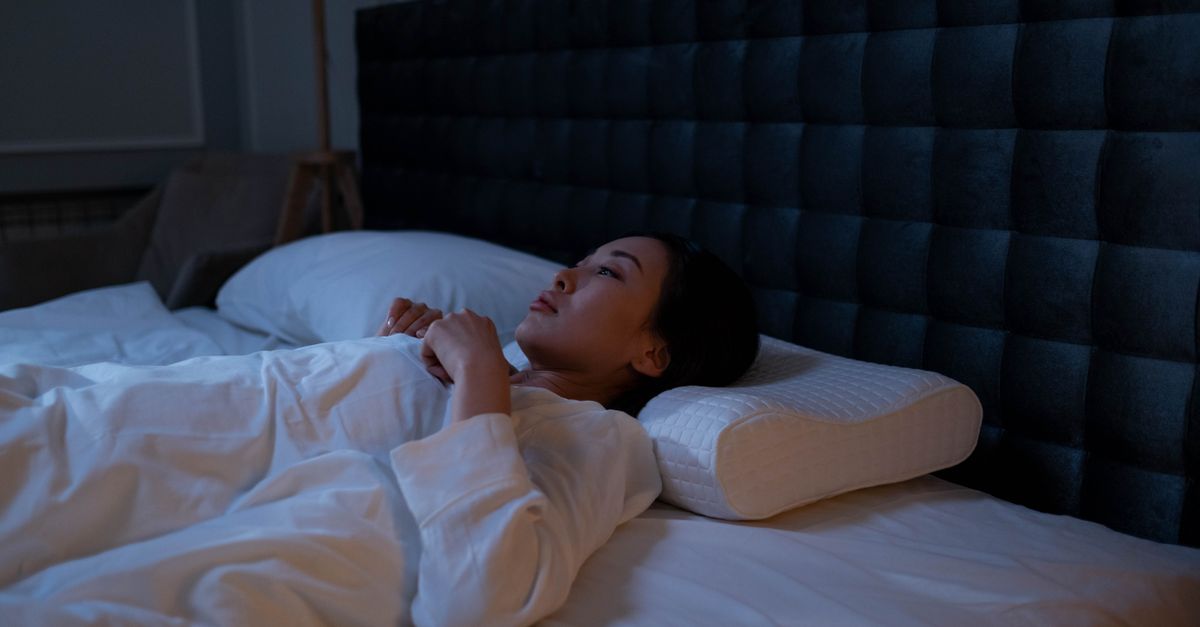
What Causes Insomnia in Perimenopause?
Estrogen and progesterone fluctuations are the primary drivers, but they rarely act alone. Hot flashes, disrupted cortisol rhythms, rising FSH, and declining progesterone's GABA-modulating effects each damage sleep architecture in different ways. The main caveat: identifying which mechanism is dominant in your case requires more than a symptom checklist — targeted lab work changes the protocol significantly. Women with intact progesterone levels but dysregulated cortisol need a completely different approach than those with true estrogen withdrawal.
---
Why Perimenopause Insomnia Is Not Just Hot Flashes
When most clinicians explain perimenopausal insomnia, they default to vasomotor symptoms — the hot flashes and night sweats that jolt women awake at 2 a.m. These are real and well-documented. A 2015 analysis from the Study of Women's Health Across the Nation (SWAN) found that objectively measured sleep disturbance was significantly associated with hot flash frequency and severity (Kravitz et al., Menopause 2015; PMID: 25714236). But the SWAN data also showed that a meaningful proportion of women experienced poor sleep without vasomotor symptoms — meaning something else was disrupting their sleep architecture.
That "something else" turns out to be several things happening simultaneously:
- Progesterone withdrawal removes a key GABA-A agonist, reducing sleep-promoting neuroinhibition
- Estradiol decline destabilizes thermoregulation and alters serotonin metabolism upstream of melatonin synthesis
- Cortisol dysregulation — specifically, blunted evening cortisol decline — keeps the nervous system in a low-grade alert state
- Elevated FSH correlates with reduced REM and slow-wave sleep in some cohort data
Understanding which of these is the loudest signal in your biology is what separates a targeted intervention from another round of trial-and-error supplements.
If you want a broader picture of how sleep disruption evolves beyond perimenopause, the mechanisms shift again — what causes insomnia in postmenopause covers the estrogen-withdrawal-dominant picture that emerges once cycles have stopped entirely.
---
The Progesterone–GABA Connection: The Most Under-Discussed Mechanism
Progesterone doesn't act only on reproductive tissue. Its primary neuroactive metabolite, allopregnanolone, is a potent positive allosteric modulator of GABA-A receptors — the same receptor system targeted by benzodiazepines and alcohol. When progesterone begins its irregular, often precipitous decline in perimenopause, allopregnanolone levels drop with it, and the brain loses a significant source of endogenous sleep pressure.
A 2007 randomized controlled trial by Soares et al. (Sleep 2007; PMID: 17520789) found that oral micronized progesterone (300mg nightly) significantly improved total sleep time and sleep efficiency in perimenopausal and postmenopausal women compared to placebo — effects attributable in part to allopregnanolone's GABA-A activity rather than purely to hormonal restoration.
The clinical implication: if your insomnia pattern is predominantly sleep maintenance failure (falling asleep is fine, but you wake at 1–3 a.m. and can't return), low progesterone is a leading suspect. A serum progesterone drawn in the luteal phase (days 19–21 of a cycle, if cycles are still occurring) and a 24-hour urinary or salivary progesterone panel can confirm this.
Notably, this mechanism also explains why perimenopausal anxiety and insomnia are so tightly coupled — the same GABA-A under-activity that disrupts sleep amplifies baseline anxiety. If that overlap resonates, what causes anxiety in perimenopause maps out how to distinguish hormone-driven from cortisol-driven anxiety.
---
Estradiol, Serotonin, and the Thermoregulatory Cascade
Estradiol has a complex, bidirectional relationship with serotonin synthesis and receptor sensitivity. As estradiol falls, serotonergic tone decreases — and because serotonin is the precursor to melatonin, the downstream effect includes blunted melatonin output and a delayed or flattened circadian dim-light melatonin onset (DLMO).
Simultaneously, the hypothalamic thermostat narrows its comfort zone. Estradiol normally keeps the thermoneutral zone — the temperature range in which the body neither shivers nor sweats — wide and stable. Declining estradiol narrows this zone, so small increases in core body temperature (the kind that naturally occur during normal sleep cycles) trigger sweating episodes that fracture sleep continuity.
A 2011 polysomnography study by Freedman and Roehrs (Menopause 2011; PMID: 20651616) demonstrated that hot flash-related awakenings were preceded by core body temperature rises of less than 0.5°C — a threshold that would not disturb sleep in a reproductively normal woman but reliably triggered full arousal in perimenopausal subjects. This explains why cooling interventions (room temperature, cooling mattress pads) have measurable efficacy even when hormone therapy isn't used.
From a biomarker standpoint: serum estradiol (E2) below approximately 50 pg/mL in the follicular phase, combined with FSH trending above 10–12 mIU/mL, suggests the ovulatory axis is beginning to shift. These thresholds are not diagnostic of perimenopause alone — FSH is variable and a single reading means little — but tracked across multiple cycles they reveal the trajectory.
---
Cortisol Dysregulation: The Overlooked Amplifier
HPA-axis dysregulation is not unique to perimenopause, but the transition amplifies it in two ways. First, declining ovarian hormones remove a degree of negative feedback on the HPA axis, allowing cortisol secretion to become more erratic. Second, the sleep disruption caused by vasomotor symptoms and progesterone withdrawal itself elevates cortisol — creating a feedback loop where poor sleep raises cortisol, which further degrades sleep quality.
The clinical picture: high evening cortisol (failing to complete the normal diurnal decline by 10–11 p.m.) presents as sleep-onset insomnia — the inability to wind down and fall asleep despite exhaustion. This is physiologically distinct from the 2 a.m. progesterone-withdrawal awakening, and conflating them leads to the wrong intervention.
A four-point salivary cortisol panel (morning, noon, evening, bedtime) is the most practical way to map this. Women with elevated bedtime cortisol in the 0.3–0.5 μg/dL range (versus the target of <0.2 μg/dL) have measurable HPA overactivation that will blunt response to any sleep supplement not addressing the upstream stress axis.
Stress as an amplifier is also relevant here — many women report that periods of acute psychological stress reliably worsen sleep, and the biology supports this: even modest psychological stressors produce cortisol spikes that delay sleep onset by 30–60 minutes in susceptible individuals (Âkerstedt et al., Journal of Sleep Research 2012; PMID: 22320122).
For women managing stress-driven insomnia exacerbated by perimenopause, the protocol overlap with postpartum sleep disruption is worth noting — what causes insomnia in the postpartum period describes how cortisol and prolactin interact in similar ways.
---
Brain Fog, Sleep Architecture, and the Slow-Wave Deficit
Perimenopausal insomnia is not only about total sleep hours — it's about what kind of sleep is being lost. Slow-wave sleep (SWS, stages N3) is the most hormonally sensitive phase. Estradiol and progesterone both support SWS; as they decline, the proportion of light, fragmented NREM sleep increases while SWS shrinks.
This matters because SWS is when glymphatic clearance of metabolic waste — including amyloid-beta — peaks, and when growth hormone secretion is highest. Women who wake feeling unrefreshed despite logging 7–8 hours in bed are frequently experiencing SWS deficits, not just reduced total sleep. This is also the physiological bridge between perimenopausal insomnia and the cognitive symptoms many women report — what causes brain fog in perimenopause explains how sleep architecture degradation feeds directly into daytime cognitive performance.
From a testing standpoint, consumer wearables (Oura Ring, WHOOP) now provide reasonable SWS estimates. While not clinical-grade polysomnography, consistent SWS readings below 15% of total sleep time over multiple nights are a meaningful signal worth discussing with a provider.
---
Biomarkers Worth Testing Before You Start Any Protocol
The symptom → biomarker → protocol framework matters here more than almost any other perimenopausal complaint because the mechanism dictates the intervention. The table below maps dominant insomnia patterns to priority labs:
| Insomnia Pattern | Priority Labs | What You're Looking For |
|---|---|---|
| Can't fall asleep / wired at bedtime | 4-point salivary cortisol, DHEA-S | Elevated PM cortisol; low DHEA-S |
| Falls asleep, wakes 1–3 a.m. | Luteal-phase progesterone, allopregnanolone | Progesterone <5 ng/mL luteal |
| Hot flashes fragmenting sleep | Serum E2, FSH | E2 <50 pg/mL + FSH >10 |
| Unrefreshed sleep, brain fog | SWS via wearable, thyroid panel | Low SWS%; subclinical hypothyroidism |
| All of the above | Full panel above + fasting insulin | Insulin resistance worsens all axes |
Note that subclinical hypothyroidism — TSH drifting above 3.0 mIU/L — independently worsens sleep quality and is more prevalent in perimenopausal women. It's worth ruling out before attributing all sleep disruption to ovarian hormone changes alone.
---
Evidence-Based Interventions: What the Research Supports
Cognitive Behavioral Therapy for Insomnia (CBT-I)
CBT-I remains the first-line intervention for chronic insomnia regardless of cause, including perimenopausal insomnia. A 2019 randomized controlled trial by Guthrie et al. (Menopause 2019; PMID: 30649051) demonstrated significant improvements in sleep efficiency and insomnia severity index scores in midlife women following a structured CBT-I program — with effects that outlasted the active treatment period. Sleep restriction therapy, stimulus control, and cognitive restructuring each address the behavioral and hyperarousal components that persist even after hormonal interventions begin.
Hormone and Targeted Supplement Approaches
For progesterone-dominant insomnia: oral micronized progesterone (as reviewed above) has the most direct evidence. For cortisol-dominant insomnia, adaptogenic support has a meaningful evidence base. KSM-66 ashwagandha at 600mg daily reduced cortisol by 27.9% versus placebo and improved sleep quality scores (Pittsburgh Sleep Quality Index) in a 2019 double-blind RCT (Langade et al., Cureus 2019; PMID: 31975514).
For thermoregulatory-dominant insomnia (hot flash-driven awakenings), cooling strategies combined with isoflavone supplementation show modest but real benefit in non-HRT candidates.
---
What This Means for Your Formula
Ones builds personalized supplement formulas from lab data, wearable output, and health history — which makes perimenopause insomnia a particularly well-suited use case, because the intervention depends on which mechanism is dominant.
For cortisol-dominant sleep disruption, Ones includes KSM-66 ashwagandha at the clinically studied 600mg dose — the same formulation used in the Langade 2019 trial showing significant reductions in sleep latency and cortisol. This is not a generic ashwagandha extract; the KSM-66 standardization matters for bioavailability.
For women whose wearable data and labs suggest HPA dysregulation with adrenal involvement, the Adrenal Support System Blend addresses the cortisol-DHEA imbalance that underpins evening hyperarousal. This is particularly relevant when DHEA-S is low alongside elevated evening cortisol — a pattern that is common in perimenopause and often missed when only daytime cortisol is measured.
For sleep architecture quality — particularly SWS deficits — Magnesium Glycinate (included in the Magnesium Complex blend) supports GABA-ergic tone and has been shown to improve subjective sleep quality and early morning awakening in older adults with insomnia (Abbasi et al., Journal of Research in Medical Sciences 2012; PMID: 23853635). Unlike magnesium oxide, the glycinate form crosses into the CNS efficiently and avoids the laxative threshold that limits higher dosing of other forms.
Ones does not guess at which of these you need — the AI practitioner reads your cortisol pattern, progesterone values, and sleep data together to select the relevant ingredients and exclude the irrelevant ones.
---
Key Takeaways
- Perimenopausal insomnia has at least four distinct biological drivers — progesterone withdrawal, estradiol decline, cortisol dysregulation, and thermoregulatory instability — and they frequently coexist.
- The pattern of your insomnia (sleep-onset vs. sleep-maintenance vs. unrefreshed sleep) is a clinically meaningful clue to which mechanism is dominant.
- A four-point salivary cortisol panel, luteal-phase progesterone, serum estradiol, FSH, and TSH are the minimum useful labs before starting a targeted protocol.
- CBT-I has Level A evidence for perimenopausal insomnia and should run alongside, not after, any supplement or hormonal approach.
- KSM-66 ashwagandha (600mg), magnesium glycinate, and adrenal-focused adaptogens address different layers of the sleep disruption — knowing which you need requires knowing which mechanism is driving your symptoms.
- Treating perimenopausal insomnia as a single condition with one fix is why most women stay stuck; matching the intervention to the biomarker is what changes outcomes.
---
This article is for informational purposes only and does not constitute medical advice. Consult a licensed healthcare provider before starting any new supplement or hormonal protocol.