Men's Health
What Causes Low Libido with Adenomyosis?
Adenomyosis doesn't just cause heavy bleeding and pelvic pain — it systematically disrupts the hormonal and neurochemical environment that supports sexual desire. Estrogen dominance, progesterone resistance, chronic inflammation, and heavy-bleeding-driven nutrient depletion each suppress libido through distinct biological pathways that compound over time.
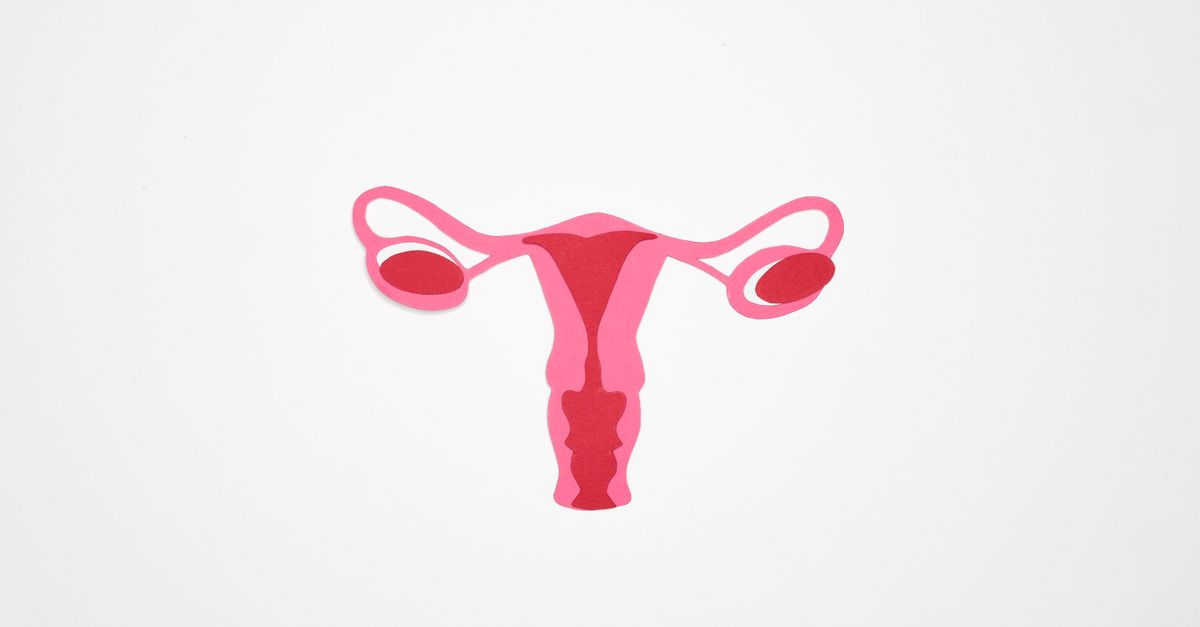
What Causes Low Libido with Adenomyosis?
Yes, low libido is a recognized consequence of adenomyosis — not a side effect of aging or stress. Estrogen dominance, chronic pain signaling, progesterone suppression, and heavy-bleeding-related nutrient losses all suppress desire through distinct biological pathways. The main caveat: severity varies with disease burden, and women with mild adenomyosis and normal labs may notice minimal impact on libido.
---
How Adenomyosis Disrupts Hormonal Balance
Adenomyosis occurs when endometrial tissue grows into the muscular wall of the uterus (myometrium). Unlike a purely structural anomaly, it is a hormonally driven condition — estrogen promotes the ectopic tissue, while progesterone resistance develops in response. This imbalance has direct consequences for sexual desire.
Estrogen dominance and progesterone resistance: In adenomyosis, uterine tissue shows reduced sensitivity to progesterone even when serum progesterone is technically within range (Yin et al., Human Reproduction 2018; PMID: 29385430). Progesterone is not merely a reproductive hormone — it modulates GABA-A receptors in the brain and supports mood stability. When its action is blunted, the neurochemical environment that supports libido deteriorates. Research using immunohistochemistry has shown that progesterone receptor isoform B (PR-B) is significantly downregulated in adenomyotic stromal cells compared to eutopic endometrium in the same patient, meaning the tissue behaves as if progesterone is absent even when circulating levels appear adequate.
This matters for libido because progesterone's metabolite allopregnanolone is a potent positive allosteric modulator of GABA-A receptors. When progesterone signaling is suppressed, allopregnanolone levels drop, anxiety increases, and the neurological baseline necessary for sexual receptivity is compromised. This is the same mechanism implicated in premenstrual dysphoric disorder — if you're navigating low libido with PMDD, the allopregnanolone pathway is worth discussing specifically with your prescriber.
Elevated local prostaglandins: Ectopic endometrial tissue in the myometrium overproduces prostaglandin E2 and prostaglandin F2α. These inflammatory mediators cause dysmenorrhea and dyspareunia (painful intercourse). In a 2020 observational study of women with histologically confirmed adenomyosis, dyspareunia was reported in 55–79% of subjects depending on lesion depth and uterine volume (Martire et al., Journal of Minimally Invasive Gynecology 2020; PMID: 32169575). Painful sex is one of the most consistent predictors of avoidance behavior and reduced desire — not because desire is inherently absent, but because the nervous system begins associating intimacy with pain.
Hypothalamic-pituitary suppression: Chronic inflammation elevates interleukin-6 (IL-6) and TNF-α, cytokines that suppress gonadotropin-releasing hormone (GnRH) pulsatility at the hypothalamus. GnRH is released in pulses every 60–90 minutes under normal conditions; inflammation compresses those pulses and reduces their amplitude. Reduced GnRH pulsatility lowers LH and FSH output, which in turn reduces ovarian estradiol and testosterone production — a downstream hormonal cascade that contributes directly to hypoactive sexual desire (Brann et al., Frontiers in Neuroendocrinology 2011; PMID: 21163278). This neuroendocrine suppression explains why some women with adenomyosis have low-normal or clearly low LH and FSH despite not being in perimenopause.
---
Is Low Libido Normal with Adenomyosis? Understanding the Spectrum
The short answer is that low libido in adenomyosis is common, mechanistically explained, and not inevitable — but it is also frequently under-recognized by clinicians who focus on pain management alone. Population data suggest that sexual dysfunction affects 50–70% of women with adenomyosis, with low desire being the most frequently reported domain affected (ahead of arousal difficulty and orgasm impairment).
The exception group — women with adenomyosis who do not experience significant libido changes — tends to share several features: mild junctional zone thickening on MRI (less than 12mm), no concurrent endometriosis, normal ferritin and vitamin D, and lower pain scores overall. If you fall outside these parameters, particularly if you have focal or diffuse adenomyosis with uterine volume enlargement, the hormonal and inflammatory burden is substantially higher and libido impact becomes far more likely.
Importantly, libido in adenomyosis is not a single-axis problem. Sexual desire researchers now distinguish between spontaneous desire (desire that arises without external trigger) and responsive desire (desire that emerges in response to stimulation or context). Women with adenomyosis more commonly retain some responsive desire while losing spontaneous desire entirely — a distinction that matters when discussing options with a healthcare provider because the intervention targets differ.
---
Chronic Pain, Dyspareunia, and the Libido Loop
Pain is not just a physical symptom — it is a neurological signal the body treats as a threat. Repeated experiences of pelvic pain, especially during or after sex, activate the hypothalamic-pituitary-adrenal (HPA) axis and push the nervous system toward a chronic stress state. Cortisol rises, and elevated cortisol competes with sex hormone precursors at the adrenal level, reducing DHEA-S and downstream androgen production.
Studies on women with chronic pelvic pain conditions — including adenomyosis and endometriosis — consistently show that pain intensity correlates more strongly with sexual distress than any single lab value (Missmer et al., Human Reproduction 2004; PMID: 15117902). This is sometimes called the libido loop: pain leads to avoidance, avoidance reduces intimacy, reduced intimacy lowers oxytocin and dopamine reward signals, and desire falls further. Animal models have confirmed that repeated activation of the HPA axis by visceral pain specifically downregulates dopamine D2 receptor density in reward circuits — the same receptors involved in sexual motivation and anticipation.
Clinically, this means that managing adenomyosis-related pain is not separate from managing libido — it is often the primary lever. NSAIDs that reduce prostaglandin load, combined hormonal contraceptives that suppress ectopic tissue, and physical therapy targeting pelvic floor hypertonicity (a common co-finding in dyspareunia) all have downstream benefits for sexual desire by interrupting the pain-HPA-androgen cascade.
If you are also navigating low libido related to fibroids, which frequently co-occurs with adenomyosis, the inflammatory and mechanical mechanisms overlap significantly and compound each other's impact on pelvic floor function and hormonal status.
---
Low Testosterone and Nutrient Deficiencies in Adenomyosis
Adenomyosis frequently causes heavy menstrual bleeding (menorrhagia). Chronic blood loss depletes iron, but less discussed is its impact on testosterone and micronutrient status — both of which directly influence sexual desire.
Iron and Ferritin Depletion
Heavy bleeding lowers serum ferritin. Ferritin below 30 ng/mL — even when hemoglobin is still technically normal — causes fatigue, cognitive slowing, and reduced motivation, all of which suppress libido independently of hormone levels. This sub-anemic iron depletion is sometimes called iron depletion without anemia, and it can persist for years in women with adenomyosis who are never formally diagnosed with anemia on a standard CBC. A 2012 systematic review confirmed that tissue-level iron deficiency impairs mitochondrial function in skeletal and cardiac muscle, explaining the disproportionate fatigue these women report even at modest blood loss levels. For a broader look at how low micronutrient status presents on labs, the article on low calcium symptoms and lab markers covers how sub-clinical deficiency patterns commonly cluster together.
Testosterone in Women
Women produce testosterone in the ovaries and adrenal glands at roughly 5–10% of male levels, but it is disproportionately important for sexual desire. Free testosterone, not total testosterone, drives libido — and it is frequently low in women with adenomyosis because:
- Chronic inflammation suppresses ovarian androgen output via IL-6 inhibition of theca cell steroidogenesis
- Elevated estrogen (from estrogen-dominant adenomyosis) increases hepatic sex hormone-binding globulin (SHBG) synthesis, binding more free testosterone in circulation
- Adrenal DHEA-S declines with cortisol-driven HPA stress, reducing the precursor pool for peripheral androgen conversion
Free testosterone below 1.0 ng/dL in premenopausal women is associated with significantly impaired sexual motivation in clinical studies. Many women with adenomyosis remain in this range for years without it being tested, because female testosterone panels are not part of standard gynecological screening.
Magnesium and B-Vitamin Losses
Prostaglandin-driven cramping depletes intracellular magnesium. Serum magnesium looks normal until intracellular stores are significantly compromised — which is why red blood cell (RBC) magnesium is a more sensitive test in women with chronic inflammatory gynecological conditions. Magnesium deficiency worsens both pain sensitivity (via NMDA receptor disinhibition) and mood regulation (via its role in serotonin synthesis co-factor activity). B vitamins — particularly B6 and B12 — are consumed rapidly in states of chronic inflammation and are necessary for dopamine and serotonin synthesis, both of which support sexual motivation.
Zinc deserves specific mention: it is a required cofactor for testosterone synthesis via 17β-hydroxysteroid dehydrogenase, and zinc loss is accelerated during menorrhagia. Even marginal zinc depletion (serum zinc 60–70 mcg/dL, technically within range) has been shown in clinical trials to reduce testosterone production and gonadotropin sensitivity.
| Nutrient | Why It Depletes in Adenomyosis | Impact on Libido |
|---|---|---|
| Iron/Ferritin | Heavy menstrual bleeding | Fatigue, reduced motivation |
| Magnesium | Prostaglandin-driven cramping | Poor mood, sleep disruption |
| Zinc | Inflammatory loss, menorrhagia | Lower testosterone synthesis |
| Vitamin D | Systemic inflammation consumes it | Reduced T and mood support |
| B6/B12 | Neurotransmitter demand | Low dopamine, serotonin |
---
Lab Tests for Low Testosterone and Hormonal Assessment
If you suspect adenomyosis is suppressing your libido, targeted lab work is more useful than guesswork. The following panel gives a complete picture:
Hormonal markers:
- Total testosterone and free testosterone (morning draw, ideally days 8–12 of cycle)
- DHEA-S
- Estradiol (E2) — day 3 of cycle
- Progesterone — day 21 of cycle (luteal phase)
- SHBG
- LH and FSH
- Prolactin (elevated prolactin independently suppresses desire by reducing GnRH pulsatility)
- TSH, free T3, free T4 — thyroid dysfunction mimics and compounds adenomyosis-related libido loss; see low libido in perimenopause with hypothyroidism for how these systems interact
Metabolic and nutrient markers:
- Serum ferritin (target >50 ng/mL for symptom resolution, not just >12 ng/mL which is the disease-prevention floor)
- 25-OH Vitamin D (target >40 ng/mL; levels below 20 are associated with significantly lower DHEA-S in reproductive-age women)
- Serum zinc
- Magnesium RBC (more accurate than serum magnesium for functional depletion)
- CRP (hs) and IL-6 as inflammatory load markers
- Complete metabolic panel
- AMH (anti-Müllerian hormone) if ovarian reserve is a concern alongside libido — for context on what drives low AMH, see what causes low anti-Müllerian hormone in women
A word on reference ranges: many standard lab ranges are optimized to detect disease, not to identify the functional deficiency that suppresses libido. Vitamin D at 22 ng/mL is technically