Thyroid
What Happens to Free T4 Levels During Pregnancy?
Free T4 levels shift significantly during pregnancy — and misreading those changes can lead to under- or over-treatment of thyroid function at exactly the wrong time. Most labs still use non-pregnant reference ranges, which means mild hypothyroidism is routinely missed and mild hyperthyroidism is sometimes overtreated. Understanding what's actually happening — and why — matters for both mother and baby.
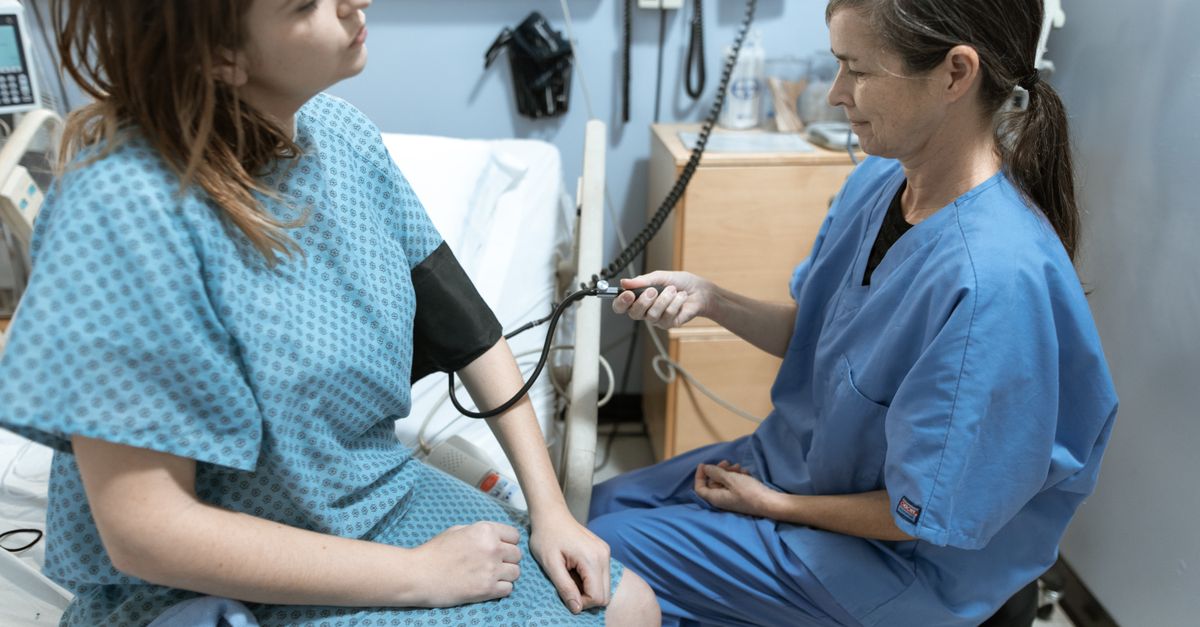
What Happens to Free T4 Levels During Pregnancy?
Free T4 (thyroxine) drops measurably across pregnancy — often by 10–20% from pre-conception baseline — due to rising estrogen, higher thyroid-binding globulin (TBG), and hemodilution. For most women this is physiologically normal and does not require treatment. The exception is women with underlying thyroid disease or iodine deficiency, in whom the same drop can represent clinically significant hypothyroidism that affects fetal neurodevelopment.
---
How Pregnancy Changes Thyroid Physiology
Thyroid hormone metabolism is not a static system during pregnancy — it is actively recalibrated by multiple hormonal shifts happening simultaneously.
Rising TBG. Estrogen surges in the first trimester stimulate the liver to produce more thyroid-binding globulin, the main carrier protein for thyroid hormones. Because more T4 is now bound, the fraction that is "free" and biologically active (free T4, or FT4) appears to fall — even when total T4 production is unchanged or slightly elevated (Glinoer, Endocrine Reviews 1997; PMID: 9101838).
hCG cross-reactivity. Human chorionic gonadotropin (hCG), which peaks around weeks 10–12, shares structural homology with TSH and weakly stimulates the thyroid. This causes a transient TSH dip and a small free T4 rise in the first trimester — occasionally suppressing TSH below 0.1 mIU/L without any pathology. After hCG falls, TSH rises and free T4 settles back toward lower levels (Dashe et al., Obstetrics & Gynecology 2005; PMID: 16135580).
Hemodilution. Plasma volume expands by roughly 40–50% over gestation. This dilutes virtually every measurable serum marker, including free T4. The net effect is that free T4 reference ranges in pregnancy should be trimester-specific and laboratory-specific — and most are not.
Increased peripheral demand. The placenta expresses type III deiodinase, an enzyme that converts T4 to the inactive reverse T3 (rT3) and degrades T3. This creates a true increased demand on maternal thyroid output, not just a redistribution artifact.
The combined result: free T4 trends downward across the three trimesters even in healthy, euthyroid women. A value that looks low on a standard lab report may be entirely appropriate for 28 weeks of gestation.
---
Free T4 Blood Test: What Reference Ranges Actually Mean in Pregnancy
This is where clinical confusion — and real harm — occurs most often.
The standard non-pregnant free T4 reference range is approximately 0.8–1.8 ng/dL (10–23 pmol/L), depending on the assay. During pregnancy, the appropriate lower limit of normal is trimester-dependent:
| Trimester | Approximate FT4 Lower Limit | Notes |
|---|---|---|
| First (weeks 1–13) | 0.86–0.90 ng/dL | hCG effect can mask true deficiency |
| Second (weeks 14–26) | 0.74–0.80 ng/dL | TBG effect most pronounced |
| Third (weeks 27–40) | 0.60–0.70 ng/dL | Hemodilution compounds the drop |
Approximate values — individual lab and assay variation is significant.
The American Thyroid Association (ATA) and Endocrine Society both recommend using trimester-specific reference ranges derived from iodine-sufficient, TPO-antibody-negative pregnant women (Alexander et al., Thyroid 2017; PMID: 28056690). Most hospital laboratories do not have these ranges established, which means the result printout your provider sees may flag a normal pregnant free T4 as low — or fail to flag a genuinely low one.
For context, a 2017 meta-analysis of 31 studies found that hypothyroxinemia (low free T4 with normal TSH) in pregnancy was associated with a significantly elevated risk of adverse neurodevelopmental outcomes in offspring, including lower IQ scores and delayed language development (Chen et al., Clinical Endocrinology 2017). This is why the free T4 number matters independently of TSH during pregnancy — TSH can appear normal while free T4 is functionally insufficient.
For a broader look at how the thyroid changes across pregnancy, what happens to thyroid antibodies during pregnancy explains the antibody dynamics that often accompany these free T4 shifts.
---
Symptoms of Low Free T4 During Pregnancy
Low free T4 — whether due to true hypothyroidism, iodine deficiency, or autoimmune thyroiditis — does not always produce the classic textbook symptoms, especially when the decline is gradual. However, the following symptoms warrant a free T4 blood test rather than assumption:
- Persistent, unexplained fatigue beyond normal first-trimester tiredness
- Cold intolerance or feeling unusually cold when others are comfortable
- Brain fog and concentration difficulty disproportionate to sleep deprivation
- Constipation that does not resolve with adequate hydration and fiber
- Slow pulse or bradycardia (below 60 bpm at rest)
- Weight gain above expected gestational norms
- Edema of the face and hands (myxedema, distinct from ankle swelling)
- Hair thinning or excessive shedding
- Depressed mood or flat affect, which is distinct from typical pregnancy mood changes
Clinically, overt hypothyroidism in pregnancy (elevated TSH + low free T4) occurs in roughly 0.3–0.5% of pregnancies. Subclinical hypothyroidism (elevated TSH, normal free T4) affects approximately 2–3%. Isolated hypothyroxinemia (normal TSH, low free T4) is less well characterized but may be just as clinically important in areas of mild iodine insufficiency.
If you're tracking thyroid function alongside other biomarkers, understanding what happens to free T3 levels during pregnancy provides the complementary picture — free T3 and free T4 don't always move in tandem.
---
When Is a Low Free T4 in Pregnancy Actually a Problem?
Not all low free T4 values require intervention. The clinical picture depends on:
- TSH level — if TSH is also elevated (above trimester-specific upper limit), overt hypothyroidism is confirmed and treatment is indicated.
- TPO antibody status — positive antibodies with low-normal free T4 signal autoimmune thyroiditis and higher risk of postpartum thyroiditis.
- Trimester of measurement — a first-trimester FT4 of 0.85 ng/dL may be early hypothyroidism; the same value in the third trimester may be entirely normal.
- Iodine intake — iodine deficiency is the world's leading cause of preventable intellectual disability. In iodine-insufficient populations, low free T4 is primarily a nutritional problem, not a thyroid disease problem (Zimmermann, Endocrine Reviews 2009; PMID: 19460915).
- Clinical symptoms — symptomatic women with borderline lab values often benefit from treatment even when values fall within "normal" ranges, particularly if TSH is in the high-normal range (2.5–4.0 mIU/L).
Treatment decisions should always be made with a qualified healthcare provider. The ATA guidelines (2017) recommend levothyroxine treatment for:
- Overt hypothyroidism (TSH above trimester upper limit + low FT4)
- TSH above 10 mIU/L regardless of FT4
- TSH 2.5–10 mIU/L in the presence of positive TPO antibodies or symptoms
---
What a Free T4 Blood Test Actually Measures — and Its Limitations
Free T4 assays used in most clinical labs are immunoassays, not the gold-standard equilibrium dialysis method. Immunoassays are affected by:
- High TBG concentrations (common in pregnancy) — most immunoassays progressively underestimate true free T4 as TBG rises
- Albumin abnormalities — hypoalbuminemia in third-trimester pregnancy further skews results
- Biotin supplementation — high-dose biotin (>5 mg/day) interferes with streptavidin-biotin immunoassay platforms, falsely elevating or suppressing results depending on assay design (Trambas et al., Annals of Clinical Biochemistry 2016; PMID: 27098521)
This last point is practically important: many prenatal vitamins and "hair and nail" supplements contain 2–10 mg of biotin. If you are supplementing at those doses and testing free T4, stop biotin at least 48–72 hours before the blood draw. Some clinicians recommend 5–7 days for clearance.
The most accurate method for measuring free T4 in pregnancy is equilibrium dialysis followed by LC-MS/MS, but this is rarely available outside research settings. Most clinicians rely on immunoassays with the understanding that trends over time — and clinical context — matter more than any single result.
---
What This Means for Your Formula
Thyroid function during pregnancy sits at the intersection of several nutritional deficiencies that are both common and correctable. While free T4 problems often require pharmaceutical management (levothyroxine), nutritional support addresses the substrate deficiencies that make thyroid dysregulation more likely — and recovery harder.
Iodine is the rate-limiting nutrient for thyroid hormone synthesis. The recommended intake increases from 150 mcg/day to 220 mcg/day during pregnancy (NIH Office of Dietary Supplements). Many prenatal supplements contain 150 mcg or less. Ones includes iodine in its Thyroid Support system blend, calibrated to help close this gap without overshooting — excess iodine in autoimmune thyroiditis can paradoxically worsen antibody burden.
Selenium is essential for type I deiodinase (the enzyme that converts T4 to active T3) and for selenoprotein-based antioxidant defense in thyroid tissue. A deficiency of selenium allows hydrogen peroxide to accumulate in thyroid follicles, accelerating autoimmune damage. Ones includes selenomethionine in the Thyroid Support blend, aligning with the dose studied in clinical trials of selenium for Hashimoto's thyroiditis (Gärtner et al., Journal of Clinical Endocrinology & Metabolism 2002; PMID: 11932302).
Zinc is a cofactor for thyroid hormone receptor binding and is frequently depleted in pregnancy. Low zinc correlates with lower free T4 and T3 in observational studies. If you want to understand the full scope of zinc's role, zinc deficiency symptoms and blood testing is a useful reference.
Ones analyzes biomarkers — including thyroid panel results when provided — to identify which of these nutritional gaps apply to you specifically, rather than loading every formula with every thyroid-adjacent nutrient.
---
Key Takeaways
- Free T4 naturally declines across pregnancy due to rising TBG, hemodilution, and increased placental T4 degradation — this is expected and often not pathological.
- Standard non-pregnant reference ranges are inappropriate during pregnancy. Always request trimester-specific interpretation from your provider or lab.
- TSH alone is insufficient — isolated hypothyroxinemia (normal TSH, low FT4) carries its own neurodevelopmental risk and can be missed without a full thyroid panel.
- Symptoms of low free T4 — cold intolerance, fatigue, brain fog, constipation — can be subtle in pregnancy and are often attributed to normal gestational changes.
- Biotin supplementation interferes with most FT4 immunoassays — stop at least 48–72 hours before a thyroid blood draw.
- Nutritional cofactors — iodine, selenium, and zinc — support the thyroid hormone production pathway and may reduce deficiency risk when dietary intake is insufficient.
---
This article is for informational purposes only and does not constitute medical advice. Thyroid management during pregnancy should always be supervised by a qualified healthcare provider.