Vitamins
What Supplements Affect B12 Levels in Women?
B12 deficiency affects an estimated 6% of adults under 60 and nearly 20% of those over 60, but the story gets more complicated when you factor in the supplements you're already taking. Some nutrients amplify B12's effects, while others quietly deplete or block it — and most women never hear about either interaction.
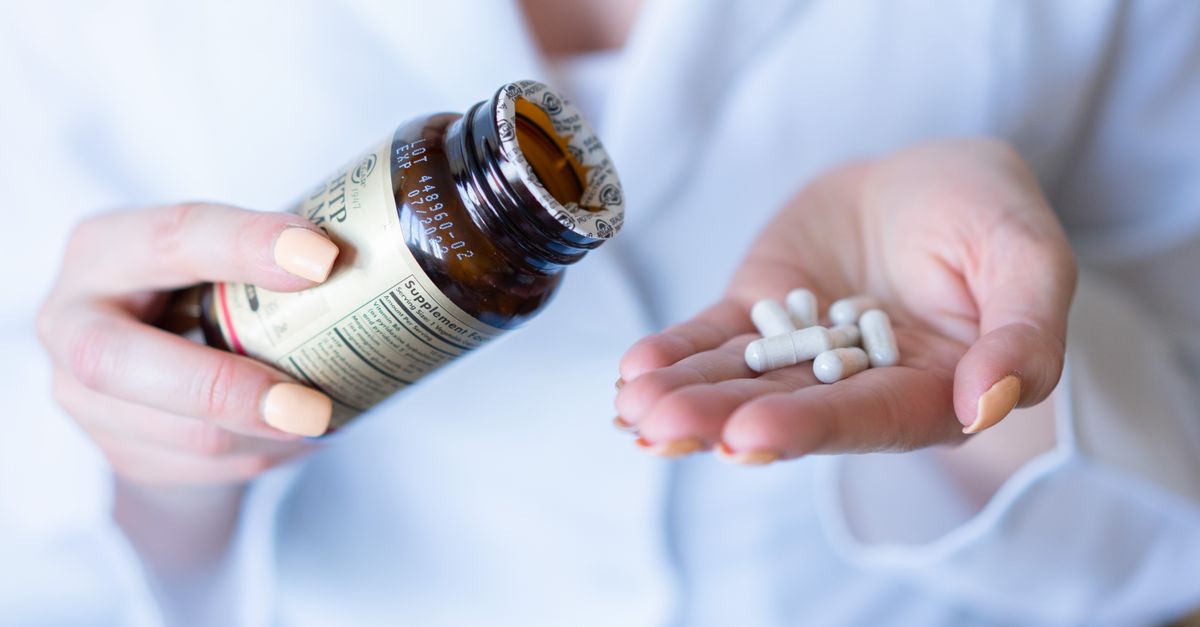
What Supplements Affect B12 Levels in Women?
Yes — several common supplements measurably raise or lower B12 status in women. The most important boosters are active-form B vitamins (methylfolate, methylcobalamin) and the cofactors needed to use B12 in cells: folate, B6, and zinc. The most significant depletors are metformin, proton-pump inhibitors, and high-dose biotin. If you're already on B12 injections, the key variable isn't more B12 — it's whether your cofactors are in place.
---
Why B12 Status Is Especially Complex in Women
Vitamin B12 (cobalamin) doesn't work in isolation. After absorption, it must be converted into two active coenzymes: methylcobalamin (used in the methylation cycle) and adenosylcobalamin (used in mitochondrial energy metabolism). Both conversions depend on other micronutrients acting as cofactors — and if those cofactors are missing, even high serum B12 can coexist with functional B12 deficiency at the cellular level.
Women face specific risk factors that men typically don't:
- Hormonal contraceptives lower serum B12 by an estimated 15–40% through altered binding-protein dynamics (Palmery et al., Eur Rev Med Pharmacol Sci 2013; PMID: 23852908)
- Pregnancy and breastfeeding dramatically increase demand; fetal neural tube formation depends on maternal B12 and folate
- Vegan and vegetarian diets, more prevalent in women, eliminate dietary B12 almost entirely
- Autoimmune gastritis (the root of pernicious anemia) has a female preponderance
Serum B12 testing also has a known blind spot: roughly 10–25% of people with "normal" serum B12 have elevated methylmalonic acid (MMA) or homocysteine, both functional markers of intracellular deficiency (Stabler, NEJM 2013; PMID: 23301733).
---
Supplements That Raise or Support B12 in Women
Methylfolate (5-MTHF)
Folate and B12 are locked in a biochemical partnership inside the methylation cycle. Methylfolate donates a methyl group to homocysteine, producing methionine — a reaction that simultaneously regenerates active methylcobalamin. Without adequate folate, the "methyl trap" phenomenon stalls this cycle even when B12 is plentiful.
Women with MTHFR polymorphisms (C677T and A1298C, carried by roughly 40–60% of the population) convert folic acid to 5-MTHF poorly, making pre-formed methylfolate supplementation especially important. A randomized trial found that combined methylfolate + methylcobalamin supplementation reduced homocysteine by 27% versus placebo over 12 weeks in women with elevated cardiovascular risk (Nazki et al., Gene 2014; PMID: 24091065).
Vitamin B6 (Pyridoxal-5-Phosphate, P5P)
B6 in its active P5P form is required for transsulfuration, the pathway that converts homocysteine downstream into cysteine and eventually glutathione. Insufficient B6 causes homocysteine to accumulate even when both B12 and folate are adequate. Many women starting supplements that affect their cortisol notice B-vitamin interactions because the stress response accelerates B6 turnover.
Zinc
Zinc supports methionine synthase, the enzyme that re-methylates homocysteine using B12. Low zinc status — common in women with heavy menstrual losses — can blunt the functional benefit of B12 supplementation. For a detailed breakdown of zinc's broader role, see our article on what supplements affect zinc levels in women. Zinc also stabilizes intrinsic factor, the glycoprotein secreted in the stomach that is required for B12 absorption in the terminal ileum.
Riboflavin (B2)
Riboflavin activates MTHFR enzyme activity. In women homozygous for the MTHFR 677TT variant, riboflavin supplementation at 1.6 mg/day significantly lowered homocysteine — an effect that is upstream of and complementary to B12/folate therapy (McNulty et al., Circulation 2006; PMID: 16982939).
Vitamin D3
The connection between vitamin D and B12 is indirect but clinically relevant. Vitamin D receptors are found on the parietal cells of the stomach that produce intrinsic factor; animal data suggest vitamin D deficiency may reduce intrinsic factor secretion, impairing B12 absorption. Epidemiological data in older women show that low vitamin D and low B12 frequently co-occur. If you're investigating how vitamin D interacts with other nutrients in women, what supplements affect vitamin D levels in women covers the full picture.
---
B12 Injections and Cofactors: Why You Might Still Feel Off
One of the most common experiences reported by women who begin B12 injections is initial soreness, muscle cramps, or paradoxical fatigue — and this is almost always a cofactor story, not a B12 story.
When you flood the body with cobalamin via injection, the methylation cycle accelerates sharply. This rapid upregulation has downstream consequences:
- Potassium redistribution: Rapid red blood cell production following B12 repletion drives potassium into cells, sometimes causing transient hypokalemia and associated muscle cramping. This is well-documented in cases of pernicious anemia reversal and is a recognized clinical phenomenon (Lam et al., Case Reports in Medicine 2020).
- Folate depletion: A sudden surge in B12 activity can exhaust cellular folate stores if methylfolate isn't co-supplemented, stalling the very cycle you're trying to restart.
- Magnesium draw-down: Magnesium is a cofactor in ATP production and is consumed faster during cellular repair. Low magnesium can cause muscle cramps that mimic — or compound — B12-injection soreness.
Practical protocol if you are on B12 injections and experiencing soreness or cramping:
- Add a food-form or supplemental potassium source (bananas, coconut water, or a potassium-containing electrolyte)
- Ensure methylfolate (400–800 mcg of 5-MTHF) is in your stack
- Consider magnesium glycinate 200–400 mg at night — the glycinate form is highly bioavailable and least likely to cause GI distress
- Have your B6 (P5P), zinc, and riboflavin levels assessed if symptoms persist beyond 4–6 weeks
---
Supplements That Deplete or Interfere with B12
Biotin (High-Dose)
High-dose biotin — defined as ≥5 mg/day, used for hair/nail support or MS symptom management — does not lower actual B12 in the body, but it creates a serious laboratory interference problem. Most modern B12 immunoassays use biotin-streptavidin technology, and excess biotin competes with the assay's binding reagents, artificially inflating reported serum B12 values. The FDA issued a safety communication on this in 2017 (FDA Safety Communication, 2017).
Practical consequence: if you take high-dose biotin and get bloodwork, stop biotin for at least 72 hours before the draw, or your B12 result will be falsely high and may mask a real deficiency. For more on biotin's role in women's health specifically, this is worth discussing with a practitioner who can order MMA and homocysteine alongside serum B12.
Metformin
Metformin reduces B12 absorption by interfering with calcium-dependent ileal membrane action required for the B12–intrinsic factor complex uptake. Studies show that 10–30% of long-term metformin users develop B12 deficiency, with women in polycystic ovary syndrome (PCOS) treatment particularly at risk. The American Diabetes Association now recommends periodic B12 monitoring for all metformin users. This also intersects with what supplements affect fasting insulin in women, since insulin-sensitizing strategies in PCOS often involve metformin.
Proton-Pump Inhibitors (PPIs) and H2 Blockers
Gastric acid is required to cleave B12 from dietary proteins. PPIs and H2 blockers reduce acid production, limiting this cleavage and reducing food-bound B12 absorption by up to 70% with long-term use (Lam et al., JAMA 2013; PMID: 24190651). Crystalline B12 in supplements is not protein-bound and is less affected, which is why supplementation form matters in acid-suppressed individuals.
Vitamin C (Mega-Dose Timing)
Vitamin C taken simultaneously with B12-containing foods or supplements can oxidize cobalamin in the gut and reduce absorption. Separating high-dose vitamin C (>500 mg) from B12 supplementation by at least 2 hours eliminates this interaction in practical terms.
---
Vanadium and B12: What Women Should Know
Vanadium is a trace mineral with insulin-mimetic properties sometimes marketed for blood sugar regulation. While it doesn't directly deplete B12, it is worth noting in the context of women's B-vitamin status because:
- Vanadium salts (vanadyl sulfate) at high doses interfere with gut mineral absorption broadly, potentially including B12 co-transport mechanisms
- Women using vanadium for metabolic support often overlap with populations already at B12 risk (insulin resistance, metformin use, poor diet variety)
- No human RCT has demonstrated vanadium safety at therapeutic doses long-term, and the NIH Office of Dietary Supplements classifies evidence for vanadium supplementation in humans as insufficient
The practical guidance: if you are supplementing vanadium, do not do so without concurrent monitoring of B12 (ideally MMA and homocysteine, not just serum B12) and consult a practitioner who can assess your full metabolic picture.
---
What This Means for Your Formula
For women managing B12 status — whether through injections, oral methylcobalamin, or dietary optimization — supplementing B12 alone is rarely the complete answer. The nutrients that make B12 work are just as important as B12 itself.
Ones builds personalized formulas by analyzing your actual blood work, including markers like homocysteine, MMA (when ordered), and serum B12 alongside other key panels. Based on those findings, a formula might include:
- Methylcobalamin at clinically effective doses, prioritized over cyanocobalamin for superior tissue retention and nervous system uptake
- Zinc (as zinc bisglycinate or zinc picolinate), dosed to clinical range based on serum zinc — relevant not only for B12 metabolism but also for the broader picture of what supplements affect hemoglobin in women, since zinc and B12 both support red blood cell maturation
- Vitamin B6 (P5P form) to support transsulfuration and reduce homocysteine independently of B12/folate
Because Ones formulas are calibrated to your specific lab findings rather than a generic stack, you won't receive B12 support if your levels are already optimal — and you won't receive an artificially low dose if your functional markers suggest cellular-level deficiency despite a "normal" serum number.
---
Key Takeaways
- Methylfolate, B6, zinc, and riboflavin are essential cofactors that determine whether B12 actually works at the cellular level — deficits in any of them limit B12's function regardless of injection frequency
- Soreness and cramping after B12 injections are most commonly caused by potassium redistribution, folate depletion, or low magnesium — not a sign to stop treatment
- High-dose biotin (≥5 mg/day) falsifies B12 blood tests — stop at least 72 hours before any lab draw
- Metformin and PPIs are the two most common pharmaceutical depletors of B12 in women, with long-term use carrying meaningful deficiency risk
- Serum B12 alone is an incomplete test — methylmalonic acid and homocysteine give a truer picture of functional status
- Personalized assessment matters: the right cofactor stack depends on your lab values, genetics (MTHFR status), medications, and diet — not a one-size formula
---
This article is for informational purposes only and does not constitute medical advice. Consult a qualified healthcare provider before making changes to your supplement regimen, especially if you are receiving B12 injections or managing a diagnosed deficiency.