Thyroid
What Supplements Affect Thyroid Function in Women?
Thyroid dysfunction affects roughly 1 in 8 women during their lifetime, yet many common supplements quietly shift TSH, T3, and T4 in ways most people never expect. Some accelerate conversion of T4 to active T3; others block iodine uptake or inflate lab readings. Knowing which supplements help — and which to avoid — can be the difference between feeling sharp and feeling foggy.
What Supplements Affect Thyroid Function in Women?
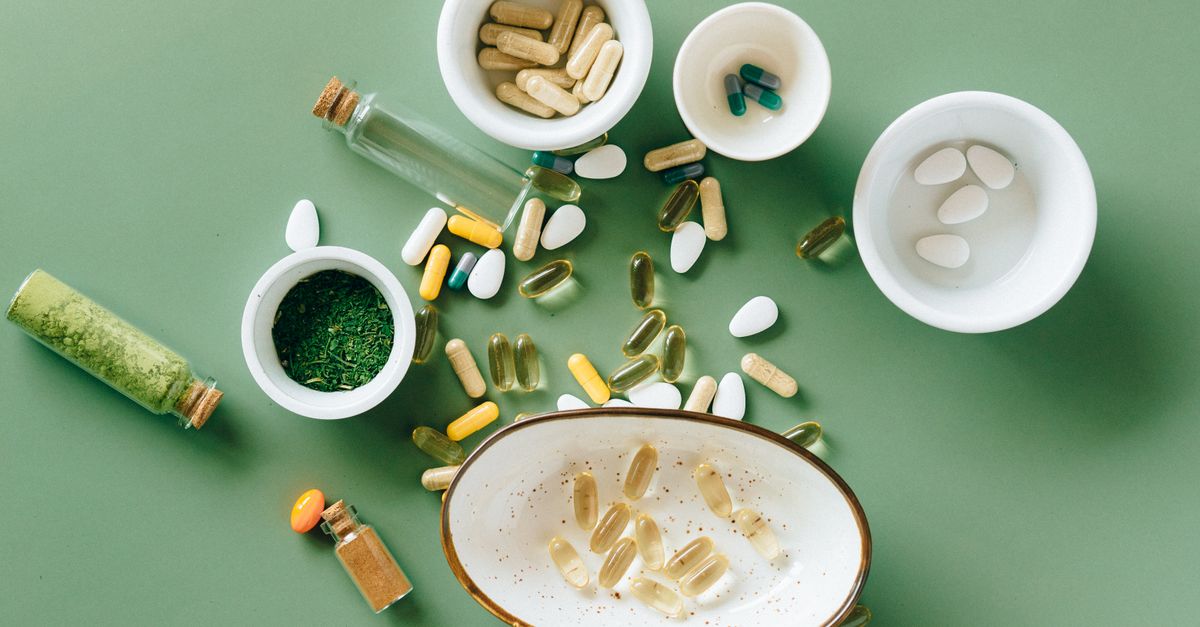
Several supplements meaningfully shift thyroid hormone levels in women — some beneficially, some harmfully. Selenium and iodine are the most evidence-backed for supporting output and conversion, while biotin can falsify lab results and high-dose iodine can paradoxically suppress the gland. Women with Hashimoto's thyroiditis or subclinical hypothyroidism are most likely to notice supplement effects; women with normal thyroid function see smaller changes.
---
Why Women's Thyroids Are More Supplement-Sensitive
The thyroid gland produces thyroxine (T4), which peripheral tissues convert into the active form triiodothyronine (T3). Women carry a higher lifetime burden of autoimmune thyroid disease — Hashimoto's thyroiditis alone is 7–10 times more common in women than men — which means the gland is often already operating under oxidative stress or immune attack (Wiersinga et al., Thyroid 2013; PMID: 23848445). That immune pressure makes female thyroids more responsive to micronutrient shifts than a healthy male gland would be.
Hormonal fluctuations across the menstrual cycle, pregnancy, and menopause also modulate thyroid-binding globulin (TBG), the protein that carries thyroid hormones through the bloodstream. When TBG changes, so does the fraction of free (active) T3 and free T4 — meaning the same supplement dose can have different effects at different life stages. If you're tracking what supplements affect free T3 levels in women, these hormonal interactions explain much of the variability you'll read about in the literature.
Finally, nutrient deficiencies common in women — iodine, selenium, iron, and zinc — sit directly in the biosynthesis and conversion pathway of thyroid hormones. Correcting a genuine deficiency often produces a clinically measurable result; supplementing when status is already adequate usually does not.
---
Selenium: The Most Evidence-Backed Thyroid Supplement
The thyroid contains more selenium per gram of tissue than any other organ in the body, and for good reason: the enzymes that convert T4 to active T3 (deiodinases) are selenoproteins. Selenium also anchors glutathione peroxidase, the antioxidant enzyme that protects thyroid cells from the hydrogen peroxide generated during hormone synthesis.
In women with Hashimoto's thyroiditis, supplementing 200 mcg/day of selenomethionine reduced thyroid peroxidase antibodies (TPO-Ab) by roughly 49% over 12 months in a landmark controlled trial (Gärtner et al., Journal of Clinical Endocrinology & Metabolism 2002; PMID: 11932302). A subsequent Cochrane-style meta-analysis of 16 RCTs confirmed that selenium supplementation significantly reduced TPO-Ab and thyroglobulin antibodies at the 200 mcg dose range, though effects on TSH were modest in euthyroid participants (Winther et al., Cochrane Database 2020; PMID: 31978256).
For women who are euthyroid (normal thyroid function), the benefit is more about protection than correction. Selenium intake above the RDA (55 mcg/day for adults) up to the tolerable upper limit of 400 mcg/day appears safe; doses above 800 mcg/day carry selenosis risk.
---
Iodine: Essential in Deficiency, Risky in Excess
Iodine is the structural backbone of thyroid hormones — T4 contains four iodine atoms, T3 contains three. In iodine-deficient populations, even modest supplementation normalizes TSH and restores hormone output. The WHO estimates that iodine deficiency remains the most preventable cause of thyroid dysfunction worldwide.
The paradox is the Wolff-Chaikoff effect: acute iodine loading actually suppresses thyroid hormone synthesis as a protective reflex. In women with pre-existing autoimmune thyroid disease, high-dose iodine supplementation (above ~500 mcg/day from all sources including kelp and seaweed supplements) can trigger or worsen hypothyroidism (Leung & Braverman, Nature Reviews Endocrinology 2014; PMID: 25266265).
Practical guidance: most women in the US get adequate iodine from iodized salt and dairy. A prenatal multivitamin providing 150–220 mcg iodine during pregnancy is appropriate. Standalone high-dose iodine supplements (12.5 mg+, often marketed for "thyroid support") are not recommended without confirmed deficiency.
---
Biotin for Women: The Lab-Distorting Supplement
Biotin (vitamin B7) doesn't directly alter thyroid hormone production — but it can make your labs look like it does. Many thyroid immunoassays use a biotin-streptavidin capture system, and high circulating biotin interferes with the assay, producing falsely low TSH and falsely elevated free T4 and free T3 readings. This can mimic hyperthyroidism on paper while the patient is clinically hypothyroid.
The interference threshold is well below the doses sold in hair-and-nail supplements. Studies show that biotin doses as low as 10 mg/day — sold routinely in beauty supplements — can produce clinically misleading thyroid panels (Katzman & Llano 2019; PMID: 31225688). The FDA issued a safety communication on this issue in 2017, noting misdiagnoses had occurred.
For women who rely on regular thyroid panels — particularly those managing Hashimoto's or titrating levothyroxine — the practical rule is to stop biotin supplementation for at least 48–72 hours before blood draw. Since many women take biotin for hair growth and many also monitor what supplements affect TSH in women, this interaction deserves far more attention than it typically gets from prescribers.
---
Vanadium for Women: Emerging Data, Real Caution
Vanadium is a trace mineral that has attracted attention primarily for its insulin-mimetic properties — it activates insulin signaling pathways and improves glucose disposal, which is relevant because thyroid dysfunction and insulin resistance frequently co-occur, especially in women with PCOS. Some researchers hypothesized that vanadium might indirectly support thyroid function by improving metabolic context.
The direct thyroid evidence is thin and mixed. Animal studies show that vanadium compounds can modulate iodine uptake and thyroid peroxidase activity, but human data is limited to small trials focused on glycemic control rather than thyroid endpoints specifically. One area of genuine concern: vanadium has a narrow therapeutic window, and doses above 1.8 mg/day used in some diabetes trials produced gastrointestinal toxicity (Goldfine et al., Metabolism 2000; PMID: 10647068). The tolerable upper intake for vanadium has not been formally established by the NIH.
Bottom line for women: vanadium may be worth monitoring in research, but it is not a supplement to self-administer for thyroid support based on current evidence. If blood glucose management is the underlying concern, more evidence-backed options (berberine, inositol, magnesium) are available — and understanding what supplements affect fasting glucose in women provides better context for that conversation.
---
Korean Ginseng for Women: Adaptogen With Thyroid Interactions
Korean red ginseng (Panax ginseng) is one of the most studied botanical adaptogens, with documented effects on cortisol regulation, immune modulation, and energy metabolism. For women, it has also been studied in menopause for hot flash reduction and cognitive support. But its interaction with the thyroid is nuanced.
Ginsenosides — the active compounds in Panax ginseng — appear to influence the hypothalamic-pituitary-thyroid (HPT) axis. In animal studies, ginseng extract increased T3 and T4 levels and stimulated thyroid gland activity. Human data is more limited, but a 2013 RCT in Korean postmenopausal women showed that red ginseng supplementation improved fatigue and quality-of-life scores, with hormonal changes that included mild shifts in thyroid markers (Kim et al., Menopause 2013; PMID: 23652084).
For women on levothyroxine, the concern is bidirectional: ginseng may either amplify thyroid hormone effects or alter hepatic metabolism of synthetic T4. Anyone managing a diagnosed thyroid condition should discuss ginseng use with a prescriber before starting. That said, for healthy women using ginseng as an adaptogen for stress and energy, the risk appears low at standard doses (200–400 mg standardized extract daily).
Because ginseng influences the HPA axis (adrenal-pituitary) as well as thyroid signaling, it overlaps considerably with how stress hormones interact with thyroid function — an area covered in depth in our guide on what supplements affect cortisol in women.
---
Other Supplements That Influence Thyroid Function in Women
Zinc
Zinc is required for the synthesis of TSH and for the conversion of T4 to T3 via 5'-deiodinase enzymes. In zinc-deficient women, supplementation has been shown to normalize TSH and improve thyroid hormone ratios. Zinc and selenium work synergistically — deficiency in either impairs the conversion pathway. For more on zinc's broader hormonal effects, see what supplements affect zinc levels in women.
Iron
Iron deficiency blunts the activity of thyroid peroxidase, the enzyme that incorporates iodine into thyroglobulin. Women with iron deficiency anemia frequently show elevated TSH and blunted T4 response to iodine supplementation — and correcting iron status alone can normalize these values without changing iodine intake (Zimmermann et al., American Journal of Clinical Nutrition 2002; PMID: 11815326). Since iron deficiency is the most common nutritional deficiency in women of reproductive age, this connection is clinically important.
Vitamin D
Vitamin D receptors are expressed in thyroid tissue, and multiple observational studies link low 25-OH vitamin D with higher TPO-Ab titers in Hashimoto's. A 2019 meta-analysis of RCTs found that vitamin D supplementation significantly reduced TPO-Ab in patients with Hashimoto's thyroiditis (Xu et al., Medicine 2020; PMID: 32011459). For more detail on D3 optimization, see what supplements affect vitamin D levels in women.
Ashwagandha (KSM-66)
Ashwagandha root extract has demonstrated direct thyroid-stimulating effects in one small but notable RCT: 600 mg/day of root extract over 8 weeks produced significant increases in serum T3 and T4 compared to placebo in subclinically hypothyroid adults (Sharma et al., Journal of Alternative and Complementary Medicine 2018; PMID: 29942595). The mechanism likely involves HPT axis modulation and reduced oxidative stress at the thyroid gland level. For women with subclinical hypothyroidism who are not yet on medication, this is a meaningful data point — though it should not replace prescribed treatment.
---
What This Means for Your Formula
Thyroid support is one of the more nuanced areas in personalized supplementation because the same ingredient can help one woman and harm another depending on her autoimmune status, iodine intake, current medications, and baseline nutrient levels. Generic thyroid supplement blends that combine iodine + selenium + zinc + ashwagandha in fixed doses ignore all of that context.
Ones approaches this differently. When a user's blood work — including TSH, free T3, free T4, and antibody markers — shows thyroid stress signals alongside micronutrient gaps, the AI practitioner can include:
- Selenomethionine at 200 mcg, matching the dose used in the Gärtner 2002 trial that demonstrated TPO-Ab reduction in Hashimoto's patients
- Ashwagandha KSM-66 at 600 mg, aligned with the Sharma 2018 trial showing T3/T4 elevation in subclinical hypothyroidism
- Ones Thyroid Support, a proprietary System Blend formulated to address the cofactor network that thyroid hormone synthesis depends on — calibrated to the individual's findings rather than applied as a catch-all
If a user's biotin intake is elevated (visible from health history intake), that context also informs lab interpretation timing recommendations. The goal is a formula that responds to what your bloodwork actually shows, not what a label says is "good for thyroid."
---
Key Takeaways
- Selenium (200 mcg/day as selenomethionine) is the most evidence-backed thyroid supplement for women with Hashimoto's, reducing TPO antibodies by up to 49% in controlled trials
- Iodine is essential in deficiency but can trigger or worsen autoimmune hypothyroidism at high doses — doses above 500 mcg/day from supplements carry real risk
- Biotin at doses ≥10 mg/day falsifies thyroid lab results by interfering with immunoassay capture systems — stop it 48–72 hours before any thyroid blood draw
- Vanadium has insufficient human thyroid data and a narrow safety margin; it is not recommended for self-directed thyroid support
- Korean red ginseng may mildly stimulate thyroid hormone output and should be used cautiously by women on levothyroxine
- Iron, zinc, and vitamin D deficiencies each impair thyroid function through distinct mechanisms — correcting them often improves thyroid labs independent of thyroid-specific supplements