Supplements
Can Diet Change ESR?: Who Actually Benefits — and Who Should Skip It
Elevated ESR is one of the most overlooked signals on a standard blood panel — a slow-rising tide of systemic inflammation that most doctors only flag when it crosses 30 mm/hr or higher. Yet emerging research shows that targeted dietary changes can meaningfully shift ESR, CRP, and related cardiovascular markers within weeks, not years. The catch: what works depends heavily on your specific inflammatory profile, and a blanket anti-inflammatory diet doesn't move the needle for everyone.
Can Diet Change ESR? Who Actually Benefits — and Who Should Skip It
Erythrocyte sedimentation rate — ESR — is one of the oldest inflammatory markers in clinical medicine, and also one of the most misunderstood. Labs report it in millimeters per hour, and many practitioners only intervene when it climbs well past 40 or 50 mm/hr. But a growing body of research suggests that even mildly elevated ESR (above 20 mm/hr in men or 30 mm/hr in women) can signal chronic low-grade inflammation that raises long-term cardiovascular and metabolic risk.
The question most people want answered: can diet actually change ESR in any meaningful, clinically relevant way? And if so, how quickly, how much, and for whom?
This article unpacks the evidence — including what diet can do for ESR's companion markers like CRP, ApoB, and cholesterol ratio — so you know what interventions are worth prioritizing.
---
What ESR Actually Measures — and Why Diet Has Leverage
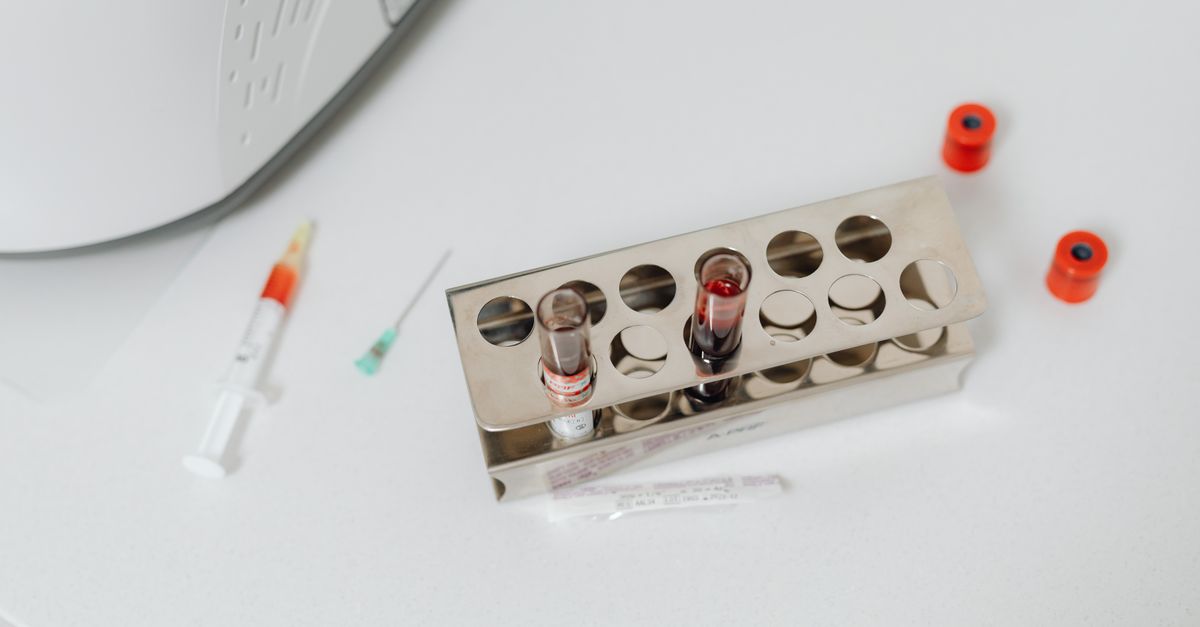
ESR measures how quickly red blood cells sink to the bottom of a test tube over one hour. When inflammatory proteins (fibrinogen, immunoglobulins, acute-phase reactants) are elevated, red blood cells clump together and fall faster. That's why ESR rises with infection, autoimmune flares, and chronic metabolic inflammation.
Diet influences ESR primarily through three pathways:
- Reducing pro-inflammatory cytokine production (TNF-α, IL-6, IL-1β)
- Lowering fibrinogen and acute-phase reactants driven by visceral adiposity and insulin resistance
- Modulating the gut microbiome, which regulates systemic inflammatory tone via short-chain fatty acid production
Because ESR is a downstream readout of multiple upstream processes, diet can genuinely shift it — but the effect size and timeline depend on what's driving your ESR in the first place.
---
Can Diet Change CRP? The Closely Linked Evidence
C-reactive protein (CRP) is often discussed alongside ESR because both are acute-phase inflammatory markers, though CRP responds faster to dietary changes (days to weeks vs. 2–6 weeks for ESR). The dietary interventions with the strongest CRP evidence tend to carry over to ESR as well.
Mediterranean diet: A 2020 systematic review and meta-analysis of 30 randomized controlled trials (n = 2,878 participants) found that adherence to a Mediterranean dietary pattern was associated with a statistically significant reduction in CRP (mean difference −0.42 mg/L, 95% CI: −0.67 to −0.17) (Schwingshackl et al., Advances in Nutrition 2020; PMID: 31915848). The anti-inflammatory effect was driven largely by olive oil polyphenols, omega-3 fatty acids from fatty fish, and dietary fiber from legumes.
Omega-3 fatty acids: EPA and DHA directly compete with arachidonic acid in the cyclooxygenase and lipoxygenase pathways, reducing prostaglandin E2 and leukotriene B4 synthesis. A 2012 meta-analysis of 68 randomized trials (n > 4,600) demonstrated that omega-3 supplementation significantly lowered CRP (−0.16 mg/L) and other inflammatory cytokines (Calder, British Journal of Nutrition 2012; PMID: 22571896). Because CRP is one of the acute-phase proteins that elevates ESR, consistent omega-3 intake creates a measurable ESR-lowering environment over 4–8 weeks.
Ultra-processed food reduction: A prospective cohort analysis from the NutriNet-Santé study (n = 104,980) found that each 10% increase in ultra-processed food consumption was associated with a 12% higher risk of elevated CRP and related inflammatory markers (Srour et al., BMJ 2019; PMID: 31092410). Cutting these foods — refined seed oils, added sugars, emulsifiers — is arguably the highest-leverage single dietary intervention for systemic inflammatory load.
For people with ESR in the 25–50 mm/hr range without an identified autoimmune driver, dietary CRP reduction is usually mirrored in ESR reduction within 6–10 weeks of sustained changes.
---
Can Diet Change Cholesterol Ratio? Inflammation and Lipids Are Linked
The total cholesterol to HDL ratio is a better cardiovascular risk predictor than total cholesterol alone, and it's more diet-responsive than many patients expect. More importantly, elevated ESR and unfavorable cholesterol ratios frequently co-occur because visceral fat drives both systemic inflammation and dyslipidemia.
Dietary interventions that reliably improve cholesterol ratio:
- Replacing saturated fat with mono- and polyunsaturated fats: Substituting saturated fatty acids with unsaturated sources raises HDL and lowers LDL, improving ratio. The PREDIMED trial (n = 7,447) showed that Mediterranean diet supplemented with extra-virgin olive oil reduced major cardiovascular events by 30% and improved lipid profiles compared to a low-fat control diet (Estruch et al., NEJM 2013; PMID: 23432189).
- Soluble fiber: Oats, psyllium, and legumes lower LDL-C through bile acid sequestration, improving the cholesterol ratio without touching HDL.
- Reducing refined carbohydrates: Carbohydrate-driven triglyceride elevation lowers HDL. Reducing added sugar and refined starches reliably improves the TG/HDL sub-ratio within 4–8 weeks.
The inflammation-lipid connection matters here: IL-6 (which ESR partially reflects) directly inhibits lipoprotein lipase activity, reducing HDL synthesis. When you lower inflammatory load through diet, HDL often rises as a secondary effect — improving cholesterol ratio without any specific lipid drug.
---
Can Diet Change ApoB? The Most Actionable Cardiovascular Marker
Apolipoprotein B (ApoB) has overtaken LDL-C as the preferred marker of atherogenic particle burden. Every atherogenic lipoprotein particle — VLDL, IDL, LDL, Lp(a) — carries exactly one ApoB molecule, making ApoB the most direct measure of cardiovascular risk.
Can diet change ApoB? Yes — and more directly than ESR.
- Saturated fat reduction: Meta-analyses confirm that replacing saturated fatty acids with polyunsaturated fatty acids reduces ApoB by approximately 5–8% (Mensink et al., American Journal of Clinical Nutrition 2003; PMID: 12716665). This translates to meaningful particle count reduction.
- Dietary cholesterol: Though less impactful than saturated fat for most people, high dietary cholesterol does elevate ApoB in hyper-responders (~30% of the population).
- Low-glycemic eating: Reducing postprandial glucose spikes lowers VLDL secretion from the liver, directly reducing ApoB particle output.
The ESR–ApoB relationship is indirect but real: when visceral adiposity and insulin resistance are the root cause of elevated ESR, the same dietary changes that lower ESR (anti-inflammatory, lower glycemic load) also reduce hepatic ApoB secretion. You're treating the same metabolic dysfunction from two measurement angles.
---
Can Diet Change Total Cholesterol? What the Numbers Actually Mean
Total cholesterol is the bluntest of the cardiovascular markers. While diet can shift it, a falling total cholesterol number isn't always favorable — it depends on which fractions are moving.
What diet reliably lowers total cholesterol:
- Reducing saturated and trans fats
- Increasing soluble fiber (psyllium husk, beta-glucan from oats)
- Plant sterols and stanols (2g/day lowers LDL-C by 10–15% per NIH ODS guidance)
What diet raises HDL (which raises total cholesterol favorably):
- Olive oil and monounsaturated fats
- Moderate physical activity (diet-adjacent but critical)
- Omega-3 supplementation modestly raises HDL-C while lowering TG
For ESR management, the total cholesterol number is less useful than the ratio or ApoB. What you want to see in a metabolically driven elevated ESR case is: total cholesterol stable or falling, HDL rising, TG falling — a pattern that reflects improving insulin sensitivity and reduced hepatic inflammatory output.
---
Who Doesn't Benefit: When Diet Has Limited ESR Impact
Diet works best on ESR driven by metabolic inflammation — obesity, insulin resistance, poor dietary quality, and sedentary lifestyle. For these people, intervention is high leverage.
Diet has much weaker ESR impact in:
- Active autoimmune disease: Rheumatoid arthritis, lupus, polymyalgia rheumatica, and similar conditions elevate ESR through immune-mediated mechanisms that dietary changes can support but not reverse. Medical management is primary.
- Occult malignancy or chronic infection: ESR above 100 mm/hr warrants urgent investigation — dietary optimization is not a substitute for diagnosis.
- Monoclonal gammopathy: Elevated immunoglobulins physically accelerate RBC sedimentation regardless of inflammatory diet.
- Anemia: Low red blood cell count independently speeds sedimentation, creating ESR elevation that diet can't meaningfully address.
Always consult a healthcare provider before attributing elevated ESR solely to diet and lifestyle factors.
---
What This Means for Your Formula
For people with elevated ESR in the metabolic-inflammatory range, targeted supplementation can complement — and in some cases accelerate — the dietary changes above.
Omega-3 (EPA/DHA): Ones includes pharmaceutical-grade omega-3 in clinically relevant EPA/DHA doses, calibrated based on your biomarker data. The anti-inflammatory mechanism is direct — EPA competes with arachidonic acid to reduce prostaglandin E2, measurably lowering CRP and downstream ESR within 6–8 weeks of consistent use (Calder, British Journal of Nutrition 2012; PMID: 22571896).
Vitamin D3 + K2 (MK-7): Vitamin D insufficiency (25-OH-D below 30 ng/mL) is independently associated with elevated CRP and ESR. D3 supplementation at 2,000–5,000 IU, co-formulated with MK-7 for cardiovascular safety, addresses a deficiency that blunts every other anti-inflammatory dietary intervention. Ones doses this pair based on your actual serum D levels, not a generic one-size recommendation.
Ones' Heart Support blend: For users whose ESR elevation coexists with lipid abnormalities — elevated ApoB, poor cholesterol ratio — the Heart Support System Blend draws on ingredients with demonstrated lipid-modulating and vascular anti-inflammatory activity, layered into a formula calibrated to your lab results.
The Ones AI analyzes your full blood panel — including ESR, CRP, ApoB, and lipid ratios together — and builds a formula that addresses your specific inflammatory pattern rather than defaulting to a generic anti-inflammatory stack. You can learn more about how omega-3 EPA and DHA reduce inflammation and what an elevated CRP means for cardiovascular risk in related articles.
If you're also exploring the broader role of anti-inflammatory supplements for metabolic health, understanding how ESR, CRP, and ApoB interact as a cluster — rather than isolated numbers — is the starting point for any precision protocol.
---
Key Takeaways
- Diet can meaningfully lower ESR when the driver is metabolic inflammation — visceral fat, insulin resistance, and poor dietary quality. Effect size is moderate; timeline is 6–10 weeks of consistent intervention.
- CRP responds faster than ESR to dietary changes, making it a useful short-term feedback marker. Mediterranean dietary patterns and omega-3 supplementation have the strongest evidence bases.
- ApoB and cholesterol ratio often improve alongside ESR when the root cause is metabolic — replacing saturated fat, reducing refined carbohydrates, and increasing soluble fiber address all three simultaneously.
- Total cholesterol is a blunt tool; focus on the ratio (total:HDL), TG/HDL, and ApoB for cardiovascular risk assessment when ESR is also elevated.
- Diet has limited ESR impact in active autoimmune disease, malignancy, chronic infection, or anemia — medical evaluation is primary in these cases.
- Personalized supplementation — dosed to your lab results — can accelerate dietary anti-inflammatory gains, particularly omega-3 and vitamin D correction, which Ones calibrates directly to your biomarker profile.