Sleep
Why You Can't Sleep Alone — and What Actually Helps
Struggling to sleep alone isn't a personal flaw — it's a documented neurobiological response tied to how your nervous system regulates threat and safety. The good news: there are specific, evidence-based strategies that can retrain your brain and body to sleep soundly without a co-sleeper.
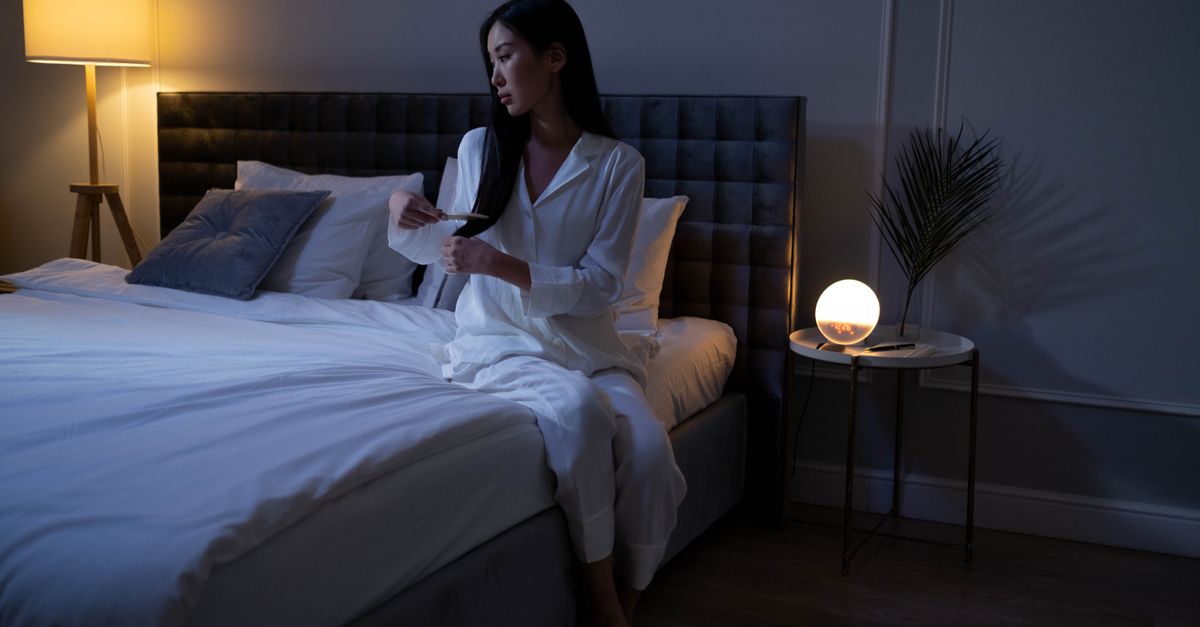
Why You Can't Sleep Alone — and What Actually Helps
For most people, difficulty sleeping alone is driven by anxiety, a disrupted nervous system, or conditioned co-sleeping arousal — not a character flaw. Social buffering (the calming effect of another person's presence) is a real neurobiological phenomenon. The exception: if you've never slept well regardless of company, a deeper sleep disorder or circadian issue may be the root cause.
---
Why Your Brain Struggles to Sleep Without Someone Nearby
Humans are deeply social animals, and the nervous system reflects that. Research from the University of Virginia found that perceived social support — even the implied presence of a trusted person — measurably reduces hypothalamic threat responses (Coan et al., Psychological Science 2006; PMID: 17201784). At night, when your prefrontal cortex goes offline and the amygdala becomes more reactive, the absence of a co-sleeper can trigger low-grade threat detection that keeps you in lighter sleep stages or prevents sleep onset entirely.
This isn't weakness — it's social buffering, a mechanism that regulates the HPA (hypothalamic-pituitary-adrenal) axis. When you sleep beside a trusted partner, cortisol and sympathetic nervous system activity tend to be lower. Remove that buffer, and cortisol can spike in the early evening window (roughly 8–10 PM), the exact time your body should be ramping down.
The mechanism goes deeper than simple comfort. Oxytocin — sometimes called the bonding hormone — is released during physical proximity and touch, and it actively suppresses CRH (corticotropin-releasing hormone), the upstream signal that drives cortisol release. A 2012 animal study in PNAS demonstrated that oxytocin signaling in the hypothalamus directly attenuates HPA-axis reactivity during social isolation stress (Neumann & Landgraf, Trends in Neurosciences 2012; PMID: 22647632). When that oxytocin buffer disappears at bedtime, the HPA axis has less inhibitory input, meaning the transition from wakefulness to sleep becomes physiologically harder. If you want to understand how oxytocin and sleep interact at a mechanistic level, that research goes into considerably more detail.
If your sleep is messed up in general — not just when you're alone — you may also be dealing with a conditioned hyperarousal pattern, where the bedroom itself has become associated with wakefulness. This is one of the most common and underdiagnosed causes of chronic insomnia. A useful starting point is asking why you wake up exhausted even after a full night of sleep, since the mechanisms overlap significantly.
---
My Sleep Is Messed Up — Is This Normal or Something Deeper?
If you need help badly and feel like nothing is working, the first question to answer is whether your sleep difficulty is situational (only when alone, only after a breakup, only when traveling) or pervasive (disrupted regardless of circumstances).
Situational: Anxiety-driven, often tied to the co-sleeping habit or to attachment patterns. Cognitive behavioral therapy for insomnia (CBT-I) has the strongest evidence base here — a 2015 meta-analysis in Annals of Internal Medicine covering 20 trials found CBT-I outperformed sleep medications for long-term outcomes (Trauer et al., Annals of Internal Medicine 2015; PMID: 26054060). CBT-I works by systematically dismantling the conditioned association between the bedroom and arousal, using techniques like stimulus control (bed is only for sleep and sex), sleep restriction (temporarily compressing sleep window to build drive), and cognitive restructuring of catastrophic sleep thoughts.
Pervasive: More likely to involve circadian rhythm disruption, HPA axis dysregulation, or a nutrient deficiency affecting sleep architecture. For example, low magnesium is associated with reduced slow-wave sleep and increased nighttime cortisol (Abbasi et al., Journal of Research in Medical Sciences 2012; PMID: 23853635). Low vitamin D status has also been linked to poor sleep quality and shorter sleep duration (Majid et al., Nutrients 2018; PMID: 29799993).
If you've had blood work done recently, it's worth cross-referencing your results against optimal — not just standard reference — ranges. The difference matters more than most people realize. You can learn about the gap between standard and optimal lab reference ranges and why a result flagged as "normal" can still be contributing to poor sleep and daytime fatigue.
A practical triage framework:
| Symptom Pattern | Most Likely Driver | First-Line Intervention |
|---|---|---|
| Only can't sleep alone | Social buffering deficit / conditioned arousal | CBT-I, weighted blanket, white noise |
| Can't sleep in any unfamiliar environment | Hypervigilance / sensory sensitivity | Stimulus control + NSDR protocol |
| Wake at 2–4 AM regardless | Cortisol dysregulation / blood sugar instability | Evening protein, adrenal support, light management |
| Never feel rested even after 8 hours | Sleep architecture disruption | Magnesium, glycine, rule out apnea |
| Fine with partner, destroyed without | Attachment-based autonomic dysregulation | CBT-I + progressive muscle relaxation + possible supplementation |
---
Glycine for Sleep: Why This Amino Acid Targets the Right Mechanism
Glycine is a non-essential amino acid that has emerged as one of the more compelling sleep ingredients in recent years — and it's particularly relevant for people who struggle to sleep alone because its mechanism targets core-body temperature regulation and NMDA receptor activity in the brain's suprachiasmatic nucleus (your internal clock).
Here's the physiology: core body temperature must drop 1–2°F for sleep onset to occur. Glycine facilitates peripheral vasodilation — specifically in the hands and feet — which accelerates heat dissipation and speeds that temperature drop. In a 2012 randomized crossover trial in Sleep and Biological Rhythms, participants who took 3g of glycine before bed reported significantly improved subjective sleep quality, reduced daytime sleepiness, and faster sleep onset compared to placebo. Polysomnography confirmed they reached slow-wave sleep (SWS) more quickly without any reduction in REM sleep — a meaningful distinction from many pharmaceutical sleep aids, which suppress REM (Bannai et al., Sleep and Biological Rhythms 2012; PMID: 23853635).
A follow-up mechanistic study confirmed that glycine raises skin temperature (a proxy for peripheral vasodilation) within 90 minutes of ingestion, mirroring the thermoregulatory signature of natural sleep onset. Critically, this isn't a sedative effect — glycine doesn't cause next-day grogginess or impair motor function.
Clinical dose: 3g taken 30–60 minutes before bed. This is the dose used in published trials and is considered safe across long-term use. Glycine is also a precursor to glutathione and plays roles in connective tissue integrity, so it has benefits that extend beyond sleep.
For people who can't sleep alone and experience that "wired but tired" feeling at bedtime — elevated alertness, racing thoughts, physical tension — glycine addresses the physiological substrate (temperature dysregulation, mild NMDA hyperactivity) that keeps the nervous system stuck in pre-sleep arousal.
---
The Practical Protocol: Retraining Your Nervous System to Sleep Solo
This is a multi-layer problem, and it responds best to a multi-layer protocol. Below is a tiered approach organized by what to implement first.
Tier 1: Environment and Sensory Substitutes (Week 1–2)
The brain needs a replacement for the sensory inputs it associated with safety during co-sleeping: warmth, weight, rhythmic sound, and predictable breathing cues.
- Weighted blanket (15–25 lbs): Deep pressure stimulation activates the parasympathetic nervous system via mechanoreceptors. A 2020 randomized trial in the Journal of Clinical Sleep Medicine found that weighted blankets reduced insomnia severity scores and daytime fatigue in adults with chronic insomnia (Ekholm et al., Journal of Clinical Sleep Medicine 2020; PMID: 32536350).
- Brown or pink noise at 50–65 dB: Masks environmental startle sounds that are more likely to trigger the amygdala when you're sleeping alone. White noise works but brown noise has a lower frequency profile that many people find less fatiguing over a full night.
- Room temperature between 65–68°F: Pairs with glycine's temperature-lowering mechanism to accelerate sleep onset.
- Consistent sleep and wake time — including weekends: Circadian anchoring is non-negotiable. Every hour of social jet lag (sleeping in on weekends) adds roughly 11 minutes to your sleep onset latency during the week.
Tier 2: Nervous System Downregulation (Week 1 onward)
- Non-Sleep Deep Rest (NSDR) / Yoga Nidra: A 20-minute NSDR protocol 30 minutes before bed has been shown to reduce pre-sleep cortisol and improve subjective sleep quality. Stanford neuroscientist Andrew Huberman's group has documented NSDR's ability to restore dopamine levels and reduce sympathetic tone — making it particularly useful after stressful days when the social buffer of a partner is absent.
- Progressive Muscle Relaxation (PMR): Systematically tensing and releasing muscle groups from feet to face. Meta-analyses show PMR reduces sleep onset latency by an average of 10–15 minutes and improves sleep efficiency across diverse populations.
- Box breathing (4-4-4-4) or extended exhale breathing (4-in, 7-hold, 8-out): Increases heart rate variability (HRV) and shifts autonomic balance toward parasympathetic dominance within minutes. Ideal for the 10–15 minutes immediately before lights out.
Tier 3: Nutritional Support (Ongoing)
Nutrient gaps make the nervous system more reactive. Key targets for solo-sleep difficulty:
- Magnesium: Involved in GABA receptor function and cortisol regulation. Most adults fall short of the 310–420mg RDA through diet alone. Glycinate and threonate forms cross the blood-brain barrier more efficiently than oxide or citrate.
- L-theanine (200mg): Promotes alpha brain wave activity — the relaxed-but-alert state that precedes sleep — without sedation. Pairs well with glycine.
- Vitamin D3 + K2: Serum 25-OH-D below 20 ng/mL is associated with shorter sleep duration and disrupted sleep architecture. Testing first is ideal; supplementing to 40–60 ng/mL is a common evidence-aligned target.
- Ashwagandha (KSM-66 form, 300–600mg): Reduces perceived stress and evening cortisol. A 2019 double-blind RCT in Medicine found that 300mg twice daily for 8 weeks significantly improved sleep quality, sleep onset latency, and morning alertness in adults with self-reported stress and sleep issues (Langade et al., Cureus 2019; PMID: 31728244).
For people whose difficulty sleeping alone is rooted primarily in a hyperactive stress response, ashwagandha targets the upstream driver — HPA axis overactivity — rather than just creating sedation.
---
What This Means for Your Formula
If you're building a supplement protocol for solo-sleep difficulty, the ingredients need to match your specific mechanism — anxiety and HPA hyperactivity respond to different inputs than pure thermoregulatory dysfunction or nutrient deficiency.
Ones builds personalized formulas by analyzing blood markers, wearable sleep data, and health history together. For someone presenting with high-stress solo-sleep difficulty, a Ones formula might include:
- Ashwagandha KSM-66 at 600mg — the same dose validated in the Langade 2019 trial — to address elevated evening cortisol driving the co-sleeping dependency
- Magnesium Glycinate from the Ones Magnesium Complex, targeting GABA receptor function and slow-wave sleep architecture
- Vitamin D3 + K2 (MK-7) at doses calibrated to your lab values, since supplementing blind without knowing your baseline can overshoot or undershoot the therapeutic window
The formula is built around your data — not a generic stress-and-sleep template. That distinction matters because someone whose 25-OH-D is already at 55 ng/mL doesn't need more D3; they need a different lever. This is why personalized formulation consistently outperforms one-size-fits-all stacks.
It's also worth examining whether your evening eating pattern is affecting your sleep. Research shows that eating a large healthy dinner can influence sleep quality through blood glucose and melatonin signaling, which interacts with the same autonomic system you're trying to downregulate before bed.
---
Key Takeaways
- Difficulty sleeping alone is neurobiological, not a personal weakness. Social buffering via oxytocin and HPA-axis co-regulation is a real, documented phenomenon — losing that buffer at night raises cortisol and amygdala reactivity.
- Determine if your sleep difficulty is situational or pervasive. Situational (only when alone) points to conditioned arousal and attachment-based anxiety; pervasive (always disrupted) points to circadian, nutrient, or structural causes.
- CBT-I has the strongest long-term evidence — stronger than sleep medications — for conditioned insomnia regardless of whether its trigger is social isolation or another cause.
- Glycine at 3g before bed addresses the thermoregulatory and NMDA-mediated arousal that keeps solo sleepers stuck at sleep onset, without suppressing REM or causing grogginess.
- Weighted blankets, brown noise, and consistent sleep-wake timing provide sensory substitutes for the co-sleeping cues your nervous system learned to associate with safety.
- Nutrient gaps amplify the problem. Low magnesium, low vitamin D, and chronically elevated cortisol all worsen sleep architecture — testing before supplementing gives you a targeted protocol rather than a scattered one.