Lab Results
What Does High Ferritin Mean if Iron is Normal? Inflammation vs Iron Overload
Your ferritin came back elevated, but your serum iron and transferrin saturation look perfectly normal — so what does that actually mean? This disconnect is more common than most people realize, and it usually points to inflammation, metabolic dysfunction, or liver stress rather than true iron overload. Understanding the difference could change how you and your provider approach the next steps.
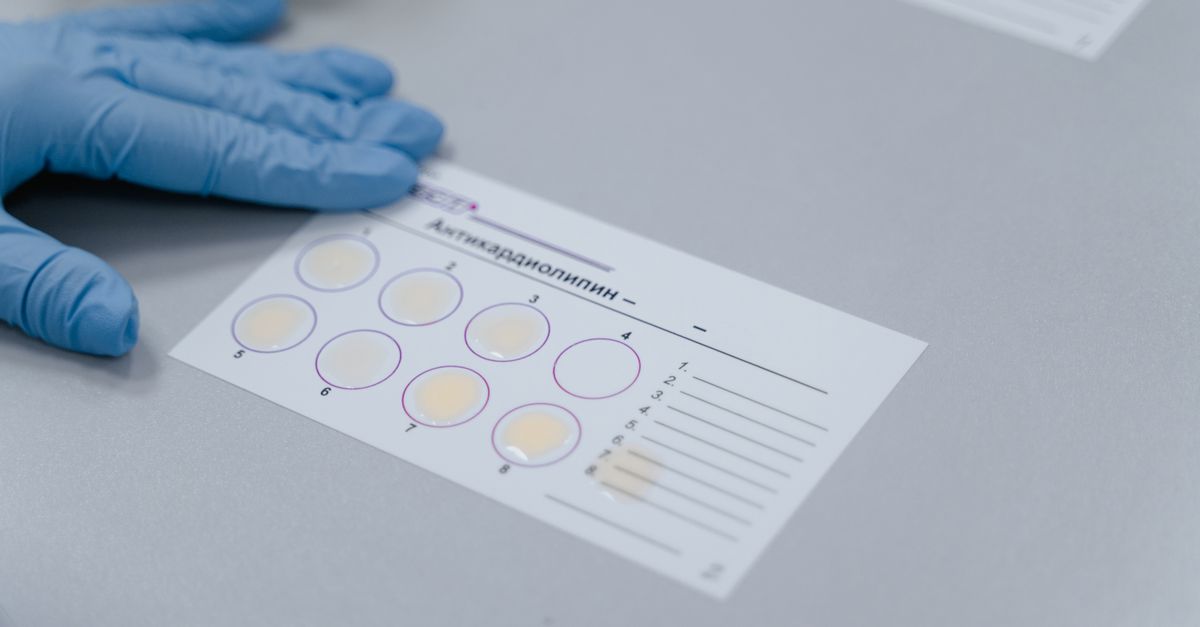
What Does High Ferritin Mean if Iron is Normal?
Ferritin is often described simply as your body's "iron storage protein," but that framing misses something critical: ferritin is also an acute phase reactant — a protein the liver releases in larger quantities during inflammation, infection, tissue damage, and metabolic stress. This means a high ferritin level does not automatically mean you have too much iron. In fact, when ferritin rises while serum iron and transferrin saturation remain normal or low, the elevation is almost always driven by something other than iron accumulation.
Unpacking what elevated ferritin is telling you requires looking at the full iron panel, your CRP, liver enzymes, metabolic markers, and even your wearable data trends. The answer is rarely found in a single lab value.
---
Reference Ranges and What "High" Actually Means
Standard laboratory reference ranges for serum ferritin vary by sex and age:
| Population | Standard Reference Range | Functional Optimal Range |
|---|---|---|
| Adult men | 24–336 ng/mL | 70–150 ng/mL |
| Premenopausal women | 11–307 ng/mL | 50–100 ng/mL |
| Postmenopausal women | 11–307 ng/mL | 70–150 ng/mL |
The "standard" reference range is wide enough that a ferritin of 280 ng/mL in a man technically reads as normal on a lab report — yet integrative clinicians often flag anything above 150–200 ng/mL as worth investigating, particularly when paired with metabolic or inflammatory markers.
For context, ferritin values above 300 ng/mL in men or 200 ng/mL in women are commonly cited thresholds where providers begin evaluating for hemochromatosis, inflammatory conditions, liver disease, or malignancy.
---
Ferritin as an Acute Phase Reactant
The liver produces ferritin as part of the acute phase response — the same cascade that raises C-reactive protein (CRP), fibrinogen, and interleukin-6 during systemic inflammation. During this response, ferritin synthesis increases while the body simultaneously sequesters iron away from circulation, a defense mechanism that denies iron to pathogens and damaged cells.
This creates a biochemical paradox: you can have a ferritin of 400 ng/mL with serum iron in the low-normal range (60–80 mcg/dL) and a transferrin saturation of 18–22%, because the iron is being locked inside ferritin molecules rather than freely circulating. In this scenario, your iron status is not actually elevated — your inflammatory burden is.
A landmark analysis of ferritin biology published in Frontiers in Pharmacology confirmed that serum ferritin functions as both an iron-storage and immune-signaling molecule, with secreted ferritin levels correlating strongly with inflammatory cytokine activity independent of iron stores (Knovich et al., Blood Reviews 2009; PMID: 19362760).
Practically, this means that when you see elevated ferritin with normal iron and normal transferrin saturation, the first question should not be "do I have iron overload?" but rather "where is the inflammation coming from?"
---
Hemochromatosis vs Inflammation: How to Tell the Difference
Hereditary hemochromatosis (HH) is the most widely feared cause of high ferritin, and for good reason — untreated iron overload damages the liver, pancreas, heart, and joints. But it is also commonly over-suspected when elevated ferritin is found in isolation.
The key distinguishing tests are:
| Marker | Hemochromatosis Pattern | Inflammatory Pattern |
|---|---|---|
| Serum ferritin | Elevated (often >500 ng/mL) | Elevated |
| Serum iron | Elevated | Normal or low |
| Transferrin saturation | High (>45–55%) | Normal or low |
| TIBC (Total Iron Binding Capacity) | Low | Normal or elevated |
| CRP / ESR | Usually normal | Elevated |
| HFE gene mutation | Present (C282Y, H63D) | Absent |
Hemochromatosis typically presents with a transferrin saturation above 45% — often 60–80% — alongside elevated serum iron and low TIBC. The liver is manufacturing less transferrin because iron stores are already saturated. In contrast, inflammation-driven ferritin elevation usually shows a completely different iron panel: transferrin saturation is normal or even suppressed, TIBC may be normal or slightly elevated, and serum iron is unremarkable.
A 2019 clinical review in Hepatology emphasized that transferrin saturation is the single most useful screening discriminator between hemochromatosis and non-iron-overload causes of hyperferritinemia, with sensitivity exceeding 90% when the cutoff of ≥45% is applied (Bacon et al., Hepatology 2011; PMID: 21452290).
If your iron panel looks normal alongside elevated ferritin, genetic testing for HFE mutations is still reasonable to rule out early-stage HH — but the clinical picture is far more suggestive of an inflammatory or metabolic driver.
---
High Ferritin Causes Beyond Iron Overload
Once hemochromatosis is ruled out, the differential diagnosis for elevated ferritin with normal iron opens considerably. The most clinically significant causes include:
1. Chronic low-grade inflammation
Conditions like rheumatoid arthritis, lupus, inflammatory bowel disease, obesity-related systemic inflammation, and chronic infections consistently elevate ferritin as part of the acute phase response. A study of 2,450 participants in the NHANES III dataset found that elevated CRP and ferritin co-occurred significantly more often than ferritin elevation in isolation, supporting the inflammatory interpretation (Mainous et al., PMID: 25560876).
2. Non-alcoholic fatty liver disease (NAFLD)
This is one of the most underappreciated drivers of elevated ferritin. The liver cells involved in fat accumulation (hepatocytes) release ferritin as cellular stress increases, even without significant iron loading. Ferritin elevation in NAFLD also reflects oxidative stress and hepatic inflammation independent of iron stores.
3. Metabolic syndrome and insulin resistance
Hyperinsulinemia stimulates hepatic ferritin synthesis. Multiple studies have identified elevated ferritin as a component of metabolic syndrome, correlating with triglycerides, waist circumference, and fasting glucose even after controlling for iron stores.
4. Alcohol use
Alcohol directly stimulates ferritin synthesis in the liver and can cause moderate-to-significant ferritin elevation (200–600+ ng/mL) without iron accumulation.
5. Thyroid dysfunction
Both hypothyroidism and hyperthyroidism can disrupt ferritin metabolism through different pathways.
6. Malignancy
Certain cancers — particularly lymphoma, leukemia, and hepatocellular carcinoma — produce ferritin at very high levels. Extreme ferritin elevations (>1,000 ng/mL) with no clear inflammatory explanation warrant malignancy screening.
7. Hemophagocytic lymphohistiocytosis (HLH)
A rare but life-threatening immune dysregulation syndrome characterized by ferritin values that can exceed 10,000 ng/mL.
The takeaway: elevated ferritin is a signal, not a diagnosis. Context is everything.
---
Ferritin and NAFLD: A Closer Look at the Liver Connection
The relationship between elevated ferritin and non-alcoholic fatty liver disease deserves special attention because it is so frequently missed in standard clinical workups.
In NAFLD, fat accumulation in liver cells (hepatic steatosis) triggers oxidative stress and a local inflammatory response. Kupffer cells — the liver's resident immune cells — release cytokines including TNF-alpha and IL-6, which in turn upregulate ferritin synthesis in hepatocytes. The result is elevated serum ferritin that reflects hepatic stress, not iron excess.
A prospective study published in Gut found that hyperferritinemia was present in 30–50% of patients with biopsy-confirmed NAFLD, and that ferritin levels correlated with histological severity — including the degree of liver fibrosis — independent of iron staining (Kowdley et al., Hepatology 2012; PMID: 22183980). This makes ferritin a meaningful non-invasive marker for NAFLD progression risk, even when the iron panel is entirely normal.
If ferritin is elevated and your liver enzymes (ALT, AST, GGT) are also trending upward, and especially if metabolic markers like triglycerides, fasting insulin, or HbA1c are out of range, NAFLD becomes a high-probability explanation that warrants further imaging and metabolic intervention.
For individuals curious about how liver health markers connect to supplement support, this is an area where targeted nutritional strategies — combined with lifestyle changes — have meaningful clinical backing.
---
A Diagnostic Framework: How to Investigate High Ferritin
If your ferritin is elevated and iron is normal, work through this logical sequence with your provider:
- Confirm the full iron panel — serum iron, TIBC, transferrin saturation. If transferrin saturation is <30%, iron overload is unlikely.
- Check inflammatory markers — CRP (high-sensitivity), ESR, WBC differential.
- Evaluate liver health — ALT, AST, GGT, ALP, and consider hepatic ultrasound for steatosis.
- Assess metabolic status — fasting glucose, insulin, HbA1c, lipid panel including triglycerides.
- Review alcohol intake history — even moderate but consistent use can raise ferritin substantially.
- Consider HFE gene testing — especially if there is a family history of hemochromatosis or if ferritin is >300 ng/mL with unexplained cause.
- Rule out thyroid dysfunction — TSH, Free T3, Free T4.
- If ferritin is extremely elevated (>1,000 ng/mL) — hematology referral to rule out malignancy or HLH.
This is exactly the kind of multi-marker pattern recognition that benefits from an integrated view of your lab data rather than looking at individual values in isolation.
---
What This Means for Your Formula
If your elevated ferritin is being driven by inflammation, oxidative stress, or liver dysfunction rather than iron overload, the supplement question becomes: what supports the underlying driver?
At Ones, the AI health practitioner cross-references ferritin values against your CRP, liver enzymes, metabolic markers, and health history before making any recommendations — precisely because the interpretation depends on the full picture, not a single number.
For inflammation-driven ferritin elevation, a few ingredients in the Ones catalog are particularly relevant:
- Liver Support (proprietary blend): Ones includes a Liver Support system blend designed to address hepatic oxidative stress and support detoxification pathways. For individuals with elevated ferritin alongside elevated GGT or ALT, liver-targeted support addresses the source rather than the symptom.
- Omega-3 (EPA/DHA): High-dose omega-3s have demonstrated clinically meaningful reductions in inflammatory cytokines including IL-6 and TNF-alpha — the same cytokines that upregulate ferritin synthesis during the acute phase response. A meta-analysis of 68 randomized trials confirmed omega-3 supplementation significantly reduced CRP and IL-6 (Calder et al., Nutrition 2013; PMID: 23298461). Ones doses EPA+DHA to clinically relevant ranges based on your lab-confirmed inflammatory load.
- Vitamin D3 + K2 (MK-7): Vitamin D deficiency is independently associated with elevated inflammatory markers and NAFLD risk. Correcting suboptimal D levels — common in individuals with metabolic syndrome — supports the immune regulation pathway that moderates ferritin synthesis. Ones includes D3 with MK-7 to optimize absorption and direct calcium appropriately, calibrated to your actual 25-OH-D level.
If your ferritin elevation is pointing toward potential iron overload pending HFE testing, it is worth noting that Ones formulas do not add supplemental iron unless there is a confirmed deficiency — a deliberate design choice that avoids inadvertently worsening iron accumulation in susceptible individuals.
For a broader look at how interpreting blood work shapes personalized supplement plans, understanding ferritin in context is one of the clearest examples of why single-marker thinking falls short.
---
Key Takeaways
- High ferritin with normal serum iron and transferrin saturation is almost never true iron overload. The pattern points strongly toward an inflammatory, metabolic, or hepatic driver.
- Ferritin is an acute phase reactant. The liver upregulates ferritin production during inflammation, infection, and oxidative stress — independent of how much iron you actually have.
- Transferrin saturation is the critical discriminating marker. A saturation below 30% with elevated ferritin essentially rules out hemochromatosis as the cause.
- NAFLD is one of the most underrecognized causes of elevated ferritin. Ferritin correlates with histological liver severity in fatty liver disease, even when iron stores are normal.
- Always investigate the cause, not just the number. Full iron panel, inflammatory markers, liver enzymes, and metabolic labs together give the picture that a standalone ferritin result cannot.
- Supplement strategy should target the underlying driver. If inflammation or liver stress is pushing ferritin up, addressing those pathways — not adding iron chelation or restriction without evidence — is the appropriate response.