Supplements
Is Dry Eyes Normal with PMDD?
Dry eyes with PMDD catch most people off guard — this isn't a common symptom listed on standard fact sheets, yet emerging research links luteal-phase hormone swings directly to tear film instability. Understanding why it happens is the first step toward targeted relief.
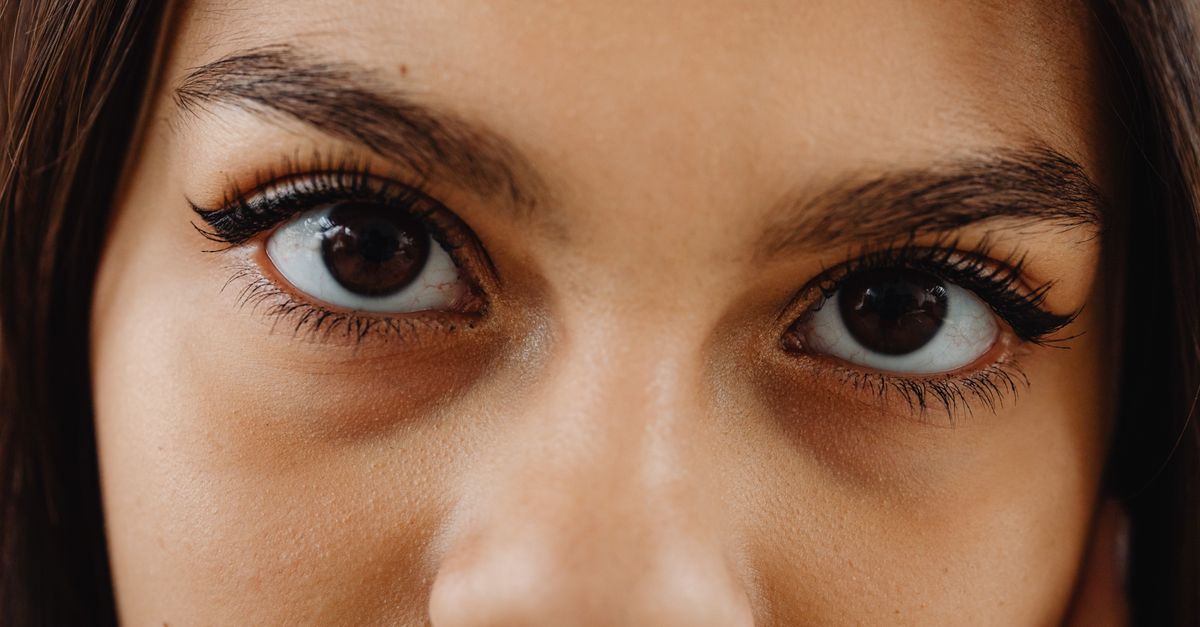
Is Dry Eyes Normal with PMDD?
Yes, dry eyes can be a legitimate PMDD symptom for many people. Fluctuating estrogen and progesterone in the luteal phase directly affect tear film production and meibomian gland function, so ocular dryness often tracks with other PMDD symptoms. The main caveat: not everyone with PMDD experiences this, and severity varies widely based on baseline hormonal sensitivity and nutritional status.
---
Why PMDD Affects More Than Your Mood
Premenstrual Dysphoric Disorder is classified in the DSM-5 as a depressive disorder tied to the luteal phase of the menstrual cycle. Most people associate it with intense mood symptoms — irritability, anxiety, depression, and emotional dysregulation. But the luteal phase triggers a whole-body hormonal cascade that extends well beyond the brain. Physical symptoms including joint aches, bloating, headaches, and fatigue are all documented. Lesser-known manifestations, like tinnitus with PMDD and migraines tied to PMDD, are also increasingly recognized in clinical literature.
Dry eyes sit in this same category of underreported but physiologically explainable PMDD symptoms. To understand why, you need to look at what sex hormones actually do at the level of the eye.
---
The Hormone–Tear Film Connection
The lacrimal glands, meibomian glands, and conjunctival goblet cells — all structures essential to a stable tear film — are hormone-sensitive tissues. They express receptors for estrogen, progesterone, and androgens. Research confirms that hormonal fluctuations have measurable effects on tear production and composition.
Estrogen's role in tear film is complex and somewhat paradoxical. Although estrogen generally supports mucous membrane hydration, acute drops in estrogen (which occur just before menstruation) are associated with reduced aqueous tear production. A study in the journal Cornea found that women reported significantly more dry eye symptoms in the late luteal and early menstrual phases compared with the follicular phase, correlating with falling estradiol levels (Sullivan et al., 2004; PMID: 15220729).
Progesterone may independently reduce meibomian gland secretion. The meibomian glands produce the lipid layer of the tear film, which prevents evaporation. When this lipid layer is compromised, tears evaporate faster even if baseline aqueous production is normal — the hallmark of evaporative dry eye disease. A 2013 review in The Ocular Surface highlighted the role of sex steroids in meibomian gland dysfunction, noting that androgen deficiency is a primary driver but that progesterone fluctuations also alter lipid secretion patterns (Knop et al., 2011; PMID: 21791321).
For someone with PMDD, these hormonal swings are not just larger in amplitude but seem to provoke exaggerated downstream responses in sensitive tissues — including the glands that keep eyes lubricated.
---
What the Research Actually Says About Dry Eyes and Hormonal Cycles
Cycle-related dry eye is not a fringe idea. Several peer-reviewed studies document the menstrual cycle's effect on ocular surface health:
- A prospective study of 40 women tracked tear break-up time (TBUT) — a standard clinical marker of tear film stability — across a full menstrual cycle. TBUT was significantly shorter in the late luteal phase, indicating less stable tear films precisely when PMDD symptoms peak (Versura et al., 2007; PMID: 17251841).
- Research published in Current Eye Research identified that women with higher estrogen variability across the cycle had more frequent self-reported dry eye episodes, suggesting individual hormonal sensitivity matters (Ablamowicz & Nichols, 2016; PMID: 26726928).
- Prolactin, which rises in the luteal phase, has also been shown to modulate lacrimal gland function. Elevated prolactin can suppress aqueous tear secretion, adding another hormonal layer to the picture (Saldanha et al., 2021; PMID: 33497459).
These findings collectively support what many people with PMDD already experience: eyes that feel gritty, stinging, or blurry in the days before menstruation, then improve as the cycle resets.
---
Is This Dry Eye or Something Else?
Some PMDD-related symptoms mimic dry eye but have different origins. It's worth distinguishing them:
| Symptom | Possible Cause | Key Distinction |
|---|---|---|
| Gritty, stinging eyes | Evaporative dry eye (meibomian gland dysfunction) | Worse in wind, air conditioning, screens |
| Blurry vision that clears with blinking | Tear film instability | Clears momentarily after blink |
| Light sensitivity | Ocular surface inflammation | May accompany headache |
| Watery, overflowing eyes | Reflex tearing from dry eye | Paradoxical; caused by irritation |
| Eye fatigue or aching | Digital eye strain + dry eye | Worsened by screen time |
If symptoms appear only or mainly in the 7–14 days before your period and resolve after menstruation begins, hormonal dry eye is the most likely explanation. Persistent dry eye across the entire cycle warrants evaluation by an eye care professional for other causes including Sjögren's syndrome, thyroid dysfunction, or medication side effects.
It's also worth noting that conditions like dry eyes with endometriosis and dry eyes with adenomyosis follow similar estrogen-driven mechanisms, since those conditions involve systemic hormonal dysregulation as well.
---
Nutritional Factors That Amplify or Reduce Cyclical Dry Eye
Beyond hormones themselves, nutritional deficiencies can make the eye's response to hormonal fluctuation worse. Several nutrients have direct roles in tear film integrity:
Omega-3 Fatty Acids
Omega-3s (EPA and DHA) are the most evidence-backed nutrients for dry eye. They reduce meibomian gland inflammation, improve lipid layer quality, and modulate the prostaglandin pathways that regulate ocular surface inflammation. A randomized controlled trial of 518 participants found that high-dose omega-3 supplementation (EPA 2,000mg + DHA 1,000mg daily) significantly improved TBUT and reduced dry eye symptoms over 12 months (Asbell et al., DREAM Study, NEJM 2018; PMID: 29652559). Note: this large trial used very high doses; clinical benefit in lower-dose trials is more modest but still observed in populations with low baseline omega-3 intake.
Vitamin D
Vitamin D deficiency is associated with increased inflammatory cytokines on the ocular surface. A 2020 meta-analysis found that dry eye disease patients had significantly lower serum vitamin D levels compared with controls, and supplementation produced measurable improvements in Schirmer's test scores and TBUT (Yıldırım et al., Cornea 2020; PMID: 31688167). Women with PMDD frequently present with suboptimal vitamin D, compounding the effect.
Magnesium
Magnesium plays a lesser-known but important role here. Magnesium deficiency exacerbates hormonal sensitivity and is documented in women with PMS and PMDD. Low magnesium also promotes systemic inflammation, which can worsen ocular surface disease. Magnesium glycinate, in particular, is well-absorbed and does not cause the gastrointestinal side effects associated with magnesium oxide.
Zinc
Zinc is essential for vitamin A metabolism, and vitamin A deficiency is a classic cause of ocular surface dryness. Even suboptimal zinc intake can impair retinol transport to the lacrimal glands, reducing mucin production by goblet cells. A dietary intake study found that zinc adequacy correlated with reduced dry eye symptom scores in a sample of 2,168 adults (Choi et al., 2015; PMID: 26043316).
---
Managing Cyclical Dry Eye: A Practical Protocol
If your dry eyes track your menstrual cycle, a tiered approach works better than treating it as a standalone eye condition:
- Track your cycle and symptoms — Use a symptom diary or wearable data to confirm the luteal phase pattern. If symptoms peak days 21–28 and resolve by day 3–5 of your next cycle, hormonal dry eye is highly probable.
- Address nutritional gaps first — Get blood work to check vitamin D (aim for 40–60 ng/mL), omega-3 index, zinc, and magnesium RBC levels before adding supplements.
- Use preservative-free artificial tears — These can manage acute discomfort without disrupting the tear film microbiome. Apply frequently during the luteal phase.
- Reduce evaporation triggers — Humidifiers, reduced screen time with regular 20-20-20 breaks, and wrap-around glasses outdoors all help during vulnerable phases.
- Optimize omega-3 intake — Food sources include sardines, mackerel, and salmon. If supplementing, look for products with combined EPA + DHA above 1,000mg per serving and molecular distillation for purity.
- Discuss hormonal strategies with your provider — In severe PMDD cases, SSRIs prescribed for luteal-phase use, hormonal contraception, or GnRH agonists may reduce both mood and physical symptoms including dry eye. This is a clinical decision, not a supplement one.
---
Other Physical Symptoms Worth Tracking Alongside Dry Eyes
Dry eyes rarely travel alone in PMDD. Tracking related physical symptoms can give your healthcare provider a clearer picture of your luteal-phase burden:
- Restless legs with PMDD — linked to dopamine and iron/magnesium dynamics in the luteal phase
- Hair thinning — hair thinning with PMDD may reflect estrogen-driven follicle cycle disruption
- Skin changes including dryness and sensitivity
- 3am waking and disrupted sleep architecture
Documenting all of these patterns together — not just mood symptoms — gives a much richer diagnostic picture and helps identify which body systems are most affected by your particular hormonal profile.
---
What This Means for Your Formula
If luteal-phase dry eyes are part of your symptom pattern, targeted nutritional support makes more sense than a generic women's multivitamin. The most relevant evidence-backed nutrients for this specific issue are:
Omega-3 (EPA/DHA): Ones includes pharmaceutical-grade omega-3 in formulas where lab results or symptom profiles indicate need. The clinical dose range for dry eye benefit in trials starts around 1,000mg combined EPA+DHA, and Ones doses to this range based on your omega-3 index data if available from wearables or blood work.
Vitamin D3 + K2 (MK-7): Ones pairs D3 with MK-7 for synergistic calcium handling and to reach the serum target range relevant to immune and ocular surface health. If your blood work shows deficiency — common in women with PMDD — the formula adjusts the D3 dose accordingly rather than defaulting to a one-size-fits-all 1,000 IU.
Zinc: Ones includes chelated zinc at doses calibrated to support vitamin A transport and immune function without exceeding the tolerable upper intake. This is particularly relevant if your diet is low in zinc-rich animal proteins or if blood work shows marginal status.
The Ones AI also reviews your full hormonal and symptom picture, so if dry eyes are noted alongside other PMDD physical symptoms, the formula can be built to address the underlying inflammatory and nutritional patterns — not just a single complaint in isolation.
---
Key Takeaways
- Dry eyes during the luteal phase of the menstrual cycle are a physiologically explainable PMDD symptom, not a coincidence.
- Falling estrogen and progesterone fluctuations reduce tear production and lipid layer quality in the days before menstruation.
- Nutritional deficiencies in omega-3s, vitamin D, zinc, and magnesium can amplify the eye's sensitivity to these hormonal changes.
- Tracking your symptom pattern across the cycle is the most important diagnostic step — luteal-phase onset and resolution after menstruation strongly implicates hormonal dry eye.
- Preservative-free artificial tears and targeted nutrient repletion are first-line management; discuss hormonal therapies with your provider for severe cases.
- Dry eyes often co-occur with other underreported PMDD physical symptoms, and treating them in an integrated, data-driven way produces better outcomes than isolating each symptom.
---
This article is for informational purposes only and does not constitute medical advice. Always consult a qualified healthcare provider before starting any supplement regimen or making changes to your treatment plan.