Comparisons
Choosing Between Liquid Vitamins vs Pills: What Bioavailability and Cost Tell Us
The supplement aisle promises faster absorption from liquids and better convenience from pills — but the science tells a more nuanced story. Bioavailability differences between liquid vitamins and capsules are smaller than most brands admit, and cost-per-dose math often flips the narrative entirely. Here's what the clinical evidence actually says before you spend another dollar on the wrong format.
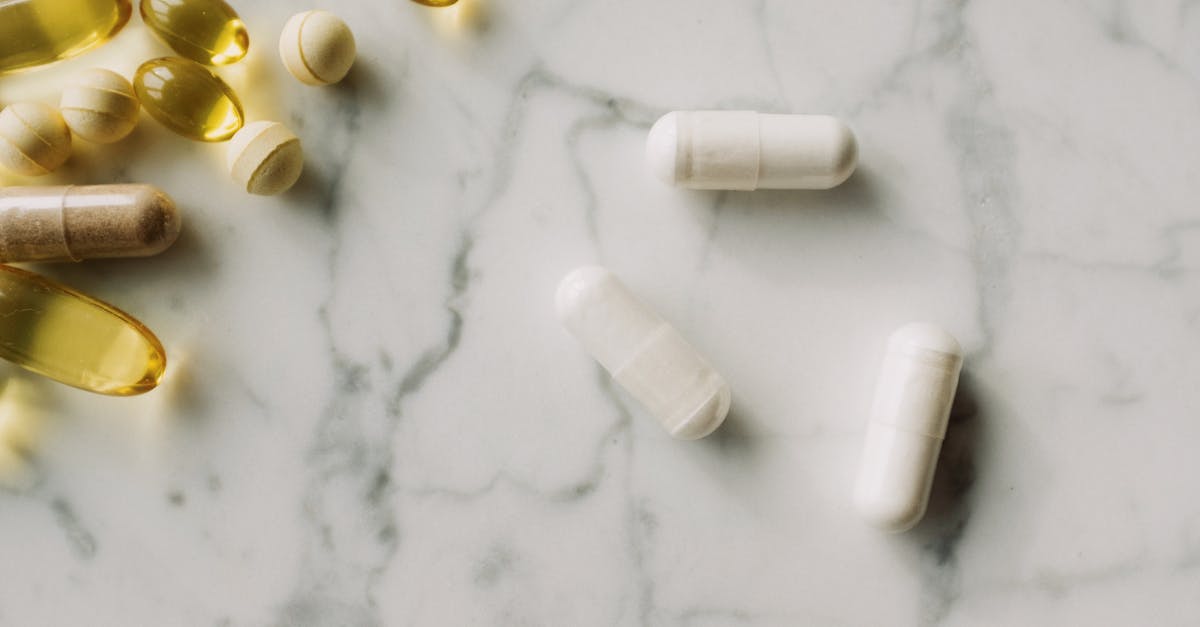
Choosing Between Liquid Vitamins vs Pills: What Bioavailability and Cost Tell Us
Walk into any health food store and you'll find liquid vitamins marketed with language like "superior absorption" and "10x more bioavailable." It sounds compelling — and for a handful of nutrients, there's real science behind it. But for the majority of commonly supplemented vitamins and minerals, the format difference matters far less than ingredient quality, dose accuracy, and whether the formula was built for your actual physiology in the first place.
This guide breaks down the real bioavailability data, the hidden cost trade-offs, and the practical considerations that should drive your decision — whether you're choosing a standalone supplement or building a personalized daily supplement formula.
---
What Does Bioavailability Actually Mean?
Bioavailability refers to the proportion of a nutrient that enters circulation and is available for use by the body after administration. It is not simply "how much you absorb" — it accounts for absorption, first-pass metabolism in the liver, and the rate at which a nutrient reaches target tissues.
For oral supplements, bioavailability is influenced by:
- Dosage form (liquid, capsule, tablet, softgel, chewable)
- Ingredient form (e.g., magnesium glycinate vs. magnesium oxide; methylcobalamin vs. cyanocobalamin)
- Co-ingested nutrients (fat-soluble vitamins need dietary fat; calcium competes with magnesium)
- Individual gut health (low stomach acid, dysbiosis, and mucosal integrity all affect uptake)
- Manufacturing quality (disintegration time, excipients, and coating matter enormously for tablets)
The critical insight: ingredient form often matters more than dosage form. A high-quality magnesium glycinate capsule will outperform a magnesium oxide liquid almost every time — because the chelated glycinate form is more bioavailable regardless of delivery vehicle (Schuette et al., Journal of Parenteral and Enteral Nutrition, 1994; PMID: 8133535).
---
Liquid Vitamins: Where the Evidence Supports Faster Absorption
Liquid supplements do have legitimate advantages in specific contexts:
1. Sublingual and Mucoadhesive Delivery
Sublingually administered nutrients — held under the tongue — bypass first-pass liver metabolism and absorb directly through the oral mucosa. This is clinically meaningful for vitamin B12, where intrinsic factor deficiency or low gastric acid (common in older adults and people on proton pump inhibitors) limits gut absorption. A 2003 study published in Blood confirmed that high-dose oral B12 (1,000–2,000 mcg daily) achieves repletion equivalent to intramuscular injection even in patients with pernicious anemia, though sublingual delivery has also shown comparable results in repleting deficiency (Bolaman et al., Clinical Therapeutics, 2003; PMID: 14693299).
2. Pediatric and Dysphagia Populations
For children, elderly individuals with difficulty swallowing, or patients recovering from surgery, liquid formats are a practical necessity. This is not a bioavailability argument — it's a compliance argument. A supplement that isn't taken delivers zero bioavailability regardless of format.
3. Colloidal and Liposomal Formulations
Liposomal vitamin C encapsulates ascorbic acid in phospholipid vesicles that may enhance intracellular delivery. A small 2016 study (n=11) found liposomal vitamin C produced higher plasma ascorbate levels than standard oral supplements at equivalent doses (Davis et al., Nutrition and Metabolic Insights, 2016; doi.org/10.4137/NMI.S39764). However, liposomal delivery requires careful manufacturing and refrigeration, and many over-the-counter "liposomal" products contain poorly formed vesicles that provide minimal advantage.
---
Where Pills, Capsules, and Softgels Win
For the vast majority of supplements taken by healthy adults, high-quality capsules or softgels match or exceed liquid bioavailability — with substantial practical advantages.
Stability: Liquids Degrade Faster
Water-based solutions accelerate oxidation, hydrolysis, and microbial growth for several key nutrients:
- Vitamin D oxidizes more rapidly in aqueous liquid than in oil-filled softgels or capsules with fat-soluble carriers
- B vitamins (especially B1 and B6) degrade in liquid solution at room temperature
- Omega-3 fatty acids in liquid form are highly susceptible to lipid peroxidation, producing rancid, potentially pro-inflammatory oxidation products if not refrigerated and consumed quickly
A 2012 analysis in JAOCS found that omega-3 concentrates in ethyl ester form showed significantly higher oxidation markers in liquid form compared to encapsulated product under equivalent storage conditions (Jackowski et al., Journal of the American Oil Chemists' Society, 2015; doi.org/10.1007/s11746-015-2633-z).
Dose Precision
Capsules and tablets deliver a fixed, manufacturer-verified dose every time. Liquid vitamins require accurate measurement with a dropper or measuring spoon — and user studies consistently show liquid self-dosing introduces 10–30% variance compared to unit-dose capsules (NIH Office of Dietary Supplements, Dietary Supplement Label Database considerations). This is particularly relevant for nutrients with narrow therapeutic windows, such as vitamin D, iodine, and fat-soluble vitamins A and E.
Fat-Soluble Vitamins in Softgels
Vitamin D3 paired with vitamin K2 (MK-7) is a case where softgel capsules — not liquid drops — often represent the optimal format. Fat-soluble vitamins absorb most efficiently when delivered in an oil-based carrier, which is exactly what a softgel provides. Understanding vitamin D3 and K2 synergy is critical here: D3 upregulates calcium absorption and K2 (as MK-7) directs that calcium to bone rather than arterial tissue. A 2013 randomized controlled trial (n=244) found MK-7 at 180 mcg/day over three years significantly reduced arterial stiffness in healthy postmenopausal women (Knapen et al., Thrombosis and Haemostasis, 2015; PMID: 25694037). That dose requires precise delivery — exactly what encapsulation provides.
---
Bioavailability Comparison by Nutrient
| Nutrient | Liquid Advantage? | Best Format | Notes |
|---|---|---|---|
| Vitamin B12 | Modest (sublingual) | Sublingual tablet or methylcobalamin capsule | Intrinsic factor issues may warrant high-dose oral or sublingual |
| Vitamin D3 | No | Oil-filled softgel or capsule with fat carrier | Must be taken with dietary fat for absorption |
| Vitamin K2 (MK-7) | No | Softgel or capsule | Highly fat-soluble; oil carrier essential |
| Magnesium | No | Capsule (glycinate, malate, or threonate) | Form matters far more than liquid vs. pill |
| Vitamin C | Marginal (liposomal) | Capsule (buffered) or liposomal | Standard liquid vs. capsule difference is negligible |
| Omega-3 (EPA/DHA) | No | Enteric-coated softgel | Liquid fish oil oxidizes quickly; enteric coating reduces fishy burps |
| Zinc | Minimal | Capsule (bisglycinate or picolinate) | Liquid sulfate forms can irritate GI mucosa |
| Iron | Possible in deficiency | Liquid bisglycinate or capsule | Liquid may reduce GI side effects; form is the key variable |
| CoQ10/Ubiquinol | Yes (softgel) | Oil-based softgel | Fat-soluble; absorption 3x higher with lipid carrier (Bhagavan & Chopra, 2006; [PMID: 16753568](https://pubmed.ncbi.nlm.nih.gov/16753568/)) |
---
The Real Cost-Per-Dose Comparison
Liquid vitamins are frequently priced at a premium — marketed as higher quality or more sophisticated. Let's run the actual math.
A typical 16 oz liquid multivitamin retails for $35–$55 and provides 32 servings at 1 tablespoon (15 mL) per dose. That's $1.09–$1.72 per serving.
A high-quality capsule multivitamin from a practitioner-grade brand provides 60–90 servings for $25–$45, or $0.28–$0.75 per serving.
The liquid format costs 2–4x more per dose — and delivers less precise dosing, shorter shelf life, and requires refrigeration after opening. For consumers who don't have a swallowing difficulty or a specific absorption need (like sublingual B12), the premium is difficult to justify on evidence.
For personalized formulas, the cost-efficiency argument becomes even stronger. A platform like Ones builds custom capsule formulas from your actual lab values, wearable data, and health history — meaning every capsule in your formula targets a documented gap rather than delivering generic doses of nutrients you may not need at all. When each ingredient is clinically justified, cost-per-dose becomes cost-per-outcome, which is a fundamentally different calculation.
---
Liquid vs. Pills: Special Populations and Use Cases
Children under 4: Liquid drops or chewables are appropriate. Standard capsule swallowing develops around ages 4–6 for most children.
Older adults with achlorhydria: Reduced gastric acid impairs B12, iron, calcium carbonate, and magnesium absorption from solid forms. Sublingual B12 and chelated mineral capsules or liquids may both be appropriate.
Post-bariatric surgery patients: Bypassed intestinal segments reduce absorption surface area. Liquid or chewable formats are often clinically recommended in the first 12–18 months post-surgery (American Society for Metabolic and Bariatric Surgery guidelines). After recovery, practitioners often transition patients back to capsules with monitored bloodwork.
Athletes and high-output individuals: For creatine, electrolytes, and branched-chain amino acids, powder-in-water formats can be convenient — but these are not vitamins. For micronutrient supplementation (B complex, zinc, D3), capsules remain the standard.
---
How Ones Addresses This: Format Decisions Built Into the Formula
Ones doesn't make you choose between formats arbitrarily. The platform's AI practitioner evaluates your bloodwork, wearable biometrics, and health history to determine which ingredients belong in your formula — and the catalog is built around ingredients in their highest-bioavailability forms, delivered in precisely dosed capsules.
Three standout examples:
1. Vitamin D3 + K2 (MK-7): Ones includes D3 and K2 as MK-7 in an oil-based capsule format that mirrors the softgel delivery mechanism shown to optimize fat-soluble vitamin absorption. The pairing directly addresses the arterial calcification risk associated with D3 supplementation without K2 co-administration — a clinically validated concern supported by the Knapen et al. 2015 trial cited above.
2. Magnesium Glycinate: Ones uses the bisglycinate chelate form — the same form studied by Schuette et al. for superior absorption vs. inorganic magnesium salts. Additionally, Ones offers a Magnesium Complex blend that combines glycinate, malate, and threonate forms for multi-system support (sleep, muscle recovery, cognitive function). This is not available in any equivalent liquid format from the major players in the personalized supplement space.
3. CoQ10/Ubiquinol (200 mg): Ones includes ubiquinol — the reduced, active form of CoQ10 — at 200 mg, the dose shown in cardiovascular research to meaningfully impact mitochondrial function and reduce oxidative stress markers. Ubiquinol requires a lipid environment for absorption; it is delivered in an oil-based capsule carrier within the Ones formula. If you've been taking a liquid CoQ10 in an aqueous suspension without a fat carrier, you may be receiving a fraction of the labeled dose. Learning more about CoQ10 and mitochondrial energy support can help clarify why the form and carrier matter as much as the dose.
Ones formulas come in 6, 9, or 12-capsule daily plans — calibrated to your capsule budget and the number of clinically justified ingredients your data supports. Unlike Ritual (which offers fixed-formula multis) or Thorne (practitioner supplements chosen manually), Ones builds the formula from your data up, not from a product catalog down.
---
A Note on Personalization Platforms and Format
The personalized supplement market — including Viome (gut microbiome-based recommendations), Function Health (advanced lab testing), and Ones — has largely standardized on capsule delivery for precision formulas. There are good reasons for this: capsules allow individual ingredient stacking in verified doses, enable shelf-stable formulas without preservatives, and make it possible to build a 9-ingredient custom formula that a liquid equivalent simply cannot replicate without enormous volume and stability trade-offs.
The "liquids are better" narrative persists largely because it justifies higher price points — not because the bioavailability evidence, across the full range of commonly supplemented nutrients, supports it.
---
Key Takeaways
- Ingredient form outweighs delivery format for most nutrients — magnesium glycinate beats magnesium oxide regardless of whether it's liquid or capsule
- Liquid vitamins have genuine advantages in narrow use cases: sublingual B12 for absorption impairment, pediatric compliance, and post-bariatric recovery
- Fat-soluble vitamins (D3, K2, CoQ10/Ubiquinol) absorb best in oil-based capsules or softgels — not aqueous liquid solutions
- Cost-per-dose math favors capsules by 2–4x in most product categories, with better shelf stability and more precise dosing
- Stability is a hidden variable: omega-3s and B vitamins in liquid form degrade faster, especially without refrigeration
- Personalized capsule formulas — like those built by Ones from bloodwork and wearable data — represent the highest-value format decision: clinically justified ingredients in bioavailable forms, dosed to your actual gaps
Always consult a qualified healthcare provider before starting, stopping, or changing any supplement regimen, especially if you have a diagnosed medical condition or take prescription medications.