Supplements
Is Omega-3 Absorption Worth It? What the Clinical Trials Show
Most people taking omega-3 supplements never get the full benefit — not because the science is weak, but because absorption is the bottleneck. Studies show bioavailability can differ by more than 70% depending on the form you take and what you eat alongside it. Here's what the clinical evidence actually says.
Why Omega-3 Absorption Matters More Than the Dose on the Label
You can swallow a 1,000 mg fish oil capsule and absorb a fraction of the EPA and DHA it contains, or you can absorb nearly all of it. The difference comes down to molecular form, meal composition, and timing — variables that most supplement labels ignore entirely.
Omega-3 fatty acids, primarily eicosapentaenoic acid (EPA) and docosahexaenoic acid (DHA), drive measurable reductions in triglycerides, inflammation markers, and cardiovascular risk when blood levels are adequate. The operative phrase is blood levels. Dose and bioavailability are not the same thing, and the clinical trials make that distinction clear.
---
How the Body Absorbs Omega-3: The Mechanism
Dietary fats — including omega-3s — require bile salts and pancreatic lipase for digestion. Once broken down, free fatty acids and monoglycerides are packaged into micelles in the small intestine and transported into enterocytes. From there they enter the lymphatic system as chylomicrons before reaching systemic circulation.
This process creates an important constraint: omega-3s are fat-soluble, so they need dietary fat present to stimulate bile release and drive micellar solubilization. A fasted state, or a very low-fat meal, dramatically limits absorption.
The molecular form of the omega-3 itself also matters. Fish oil is sold in three primary forms:
| Form | Bioavailability vs. Natural Triglyceride | Notes |
|---|---|---|
| Natural triglyceride (rTG) | ~Baseline (100%) | Found in whole fish; re-esterified in some supplements |
| Ethyl ester (EE) | ~60–73% of rTG | Most common in cheaper supplements |
| Free fatty acid (FFA) | ~91–95% of rTG | Highly bioavailable but unstable |
| Phospholipid (krill oil) | ~85–95% of rTG | Water-dispersible; absorbed via different pathway |
A 2010 randomized crossover study by Dyerberg et al. directly compared these forms in healthy volunteers and found that the re-esterified triglyceride form produced 124% the bioavailability of ethyl esters — a clinically significant gap that purely label-dose comparisons miss (Dyerberg et al., Prostaglandins, Leukotrienes and Essential Fatty Acids 2010; PMID: 20638827).
---
Omega-3 Before or After Workout: Does Timing Change Absorption?
Athletes and active individuals often ask whether taking omega-3 around exercise changes its effectiveness. The short answer: timing relative to a meal matters far more than timing relative to exercise.
What the research does show about omega-3 and exercise context is meaningful. A 2011 randomized controlled trial by Smith et al. found that omega-3 supplementation (4 g/day EPA+DHA for 8 weeks) significantly enhanced the muscle protein synthetic response to amino acids and insulin in older adults, suggesting a direct anabolic synergy with resistance training stimuli (Smith et al., American Journal of Clinical Nutrition 2011; PMID: 21159787).
For absorption specifically, a post-workout meal containing 20–35% of calories from fat is the ideal co-administration window — not because exercise itself changes gut kinetics, but because athletes typically eat their largest fat-containing meals in the post-training period. Taking your omega-3 capsule dry before a fasted morning workout is a reliable way to cut absorption by roughly 30–50% compared to taking it with a fat-containing meal (Beckermann et al., European Journal of Clinical Pharmacology 1990; PMID: 2391188).
Practical protocol:
- Take omega-3 with your largest meal of the day.
- Ensure the meal contains at least 10–15 g of fat (avocado, olive oil, eggs, nuts).
- If training fasted, save your omega-3 for your post-workout meal rather than pre-workout.
---
Natural Sources of Omega-3: Food vs. Supplement Bioavailability
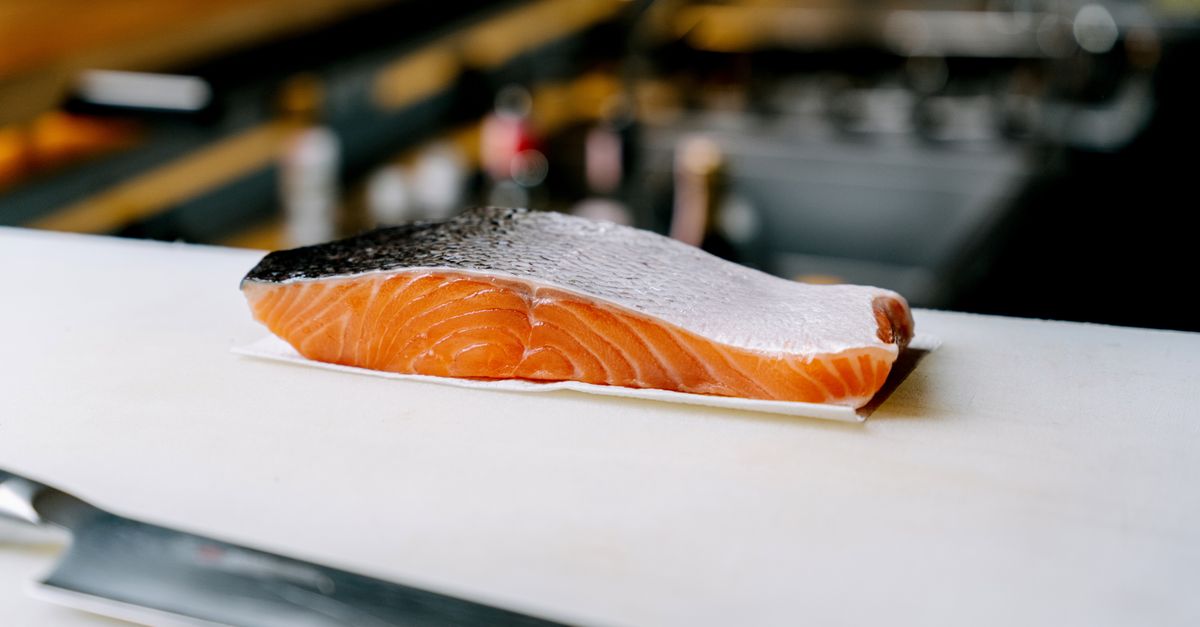
Whole-food omega-3 sources deliver EPA and DHA in the natural triglyceride form — the gold standard for bioavailability. Fatty fish also co-deliver phospholipids, which further enhance absorption through a bile-independent transport pathway.
Top Food Sources of EPA + DHA (per 3 oz / 85 g cooked serving)
| Food | EPA + DHA (mg) |
|---|---|
| Wild Atlantic salmon | ~1,800 mg |
| Sardines (canned in oil) | ~1,400 mg |
| Mackerel | ~1,000 mg |
| Herring | ~1,700 mg |
| Rainbow trout | ~800 mg |
| Anchovies | ~900 mg |
Plant sources — flaxseed, chia, hemp, walnuts — provide alpha-linolenic acid (ALA), a short-chain omega-3. ALA must be converted to EPA and then to DHA by the body's desaturase enzymes. Conversion efficiency is low: studies estimate only 5–10% of ALA becomes EPA, and less than 0.5% reaches DHA (Brenna et al., Prostaglandins, Leukotrienes and Essential Fatty Acids 2009; PMID: 19269799). For people relying solely on plant sources, supplementing with algae-derived DHA is a direct and far more efficient route.
For those who want to learn more about maximizing micronutrient absorption from food and supplements together, the clinical evidence on vitamin C absorption and its cofactor role in metabolic processes is a useful companion read.
---
Foods High in Omega-3: Building a Diet That Supports Adequate Levels
Meeting the clinical dose purely through food requires consistent effort. Most research-backed cardiovascular and anti-inflammatory benefits appear at 1,000–4,000 mg/day EPA+DHA — the upper end is what's used in statin-adjunct trials and hypertriglyceridemia protocols.
Eating salmon three times per week provides roughly 5,400 mg EPA+DHA across those meals — adequate for general cardiovascular maintenance but potentially insufficient if inflammation markers remain elevated or omega-3 index testing shows low red blood cell incorporation (target omega-3 index: ≥8%).
Strategies for building omega-3-rich eating patterns:
- Prioritize fatty cold-water fish (salmon, sardines, mackerel, herring) 2–3×/week
- Use flaxseed oil or chia seeds on salads — they contribute ALA even if conversion is limited
- Cook with walnut oil for cold applications (it oxidizes easily at heat)
- Avoid deep-frying omega-3-rich fish — oxidized polyunsaturated fats lose their benefit and may cause harm
- Pair fish meals with antioxidant-rich vegetables to reduce lipid oxidation in the gut
For people managing broader micronutrient gaps, understanding which supplements are essential for women over 60 — including omega-3 context — can help prioritize the full stack.
---
Omega-3 for Men: Cardiovascular, Hormonal, and Performance Implications
Omega-3 research in men encompasses three primary domains: cardiovascular risk reduction, testosterone and reproductive health, and exercise recovery.
Cardiovascular: The REDUCE-IT trial (PMID: 30345906) — a landmark 8,179-patient RCT — demonstrated that 4 g/day of icosapentaenoic acid (EPA-only, as icosapentaenoic acid ethyl ester/Vascepa) reduced major adverse cardiovascular events by 25% in statin-treated patients with elevated triglycerides. While this used a prescription-grade pure EPA product, it underscores that dose and form specificity matter.
Testosterone and reproductive health: A cross-sectional study published in JAMA Network Open (Priskorn et al., 2020; PMID: 32459329) found that men who took fish oil supplements had significantly higher testicular volume, sperm count, and total testosterone compared to non-users. Mechanistically, omega-3s reduce aromatase activity and modulate luteinizing hormone (LH) release, creating a favorable hormonal environment.
Exercise recovery and muscle protein synthesis: Beyond the Smith et al. study cited earlier, omega-3 supplementation has been shown to reduce delayed onset muscle soreness (DOMS) and markers of exercise-induced inflammation (IL-6, TNF-α) in multiple trials. A 2009 study found 3 g/day fish oil significantly attenuated post-exercise inflammation compared to placebo (Tartibian et al., Journal of Sports Science & Medicine 2009 — referenced via NIH ODS omega-3 fact sheet).
If you're also evaluating other men's health-adjacent ingredients like zinc — which interacts with testosterone synthesis and immune function — the data on who should not take zinc and at what doses is worth reviewing before stacking.
---
What the Clinical Trials Show: Dosing and Effect Sizes
Summarizing the strongest clinical evidence on omega-3 outcomes:
| Outcome | Dose Used | Effect Size | Study Design |
|---|---|---|---|
| Triglyceride reduction | 2–4 g EPA+DHA/day | 20–30% reduction | Multiple RCTs, meta-analyses |
| Cardiovascular event reduction | 4 g EPA (REDUCE-IT) | 25% relative risk reduction | RCT, n=8,179 |
| Muscle protein synthesis | 4 g EPA+DHA/day | Significant increase in MPS rate | RCT, n=older adults |
| Depression/mood (adjunct) | 1–2 g EPA/day | Moderate effect (SMD ~0.49) | Cochrane meta-analysis |
| Inflammation (CRP/IL-6) | 1.8–3 g EPA+DHA/day | Significant reductions | Multiple RCTs |
The consistent theme across trials: effects are dose-dependent and form-dependent. Studies using ethyl ester forms at lower doses produce weaker outcomes than those using triglyceride or phospholipid forms at adequate clinical doses.
---
What This Means for Your Formula
Omega-3 bioavailability is where most off-the-shelf fish oil supplements fail — not through bad ingredients but through poor formulation choices and zero personalization around a user's actual omega-3 index, triglyceride levels, or inflammatory load.
Ones approaches this differently. When you share your blood work and health goals with the Ones AI health practitioner, it can identify whether your triglycerides, inflammatory markers, or omega-3 index suggest a deficiency worth addressing in your custom capsule formula. Rather than defaulting to a fixed 1,000 mg dose, the formula is calibrated to your findings.
For users where omega-3 is indicated, Ones includes Omega-3 (EPA/DHA) sourced to support clinical dose ranges consistent with the cardiovascular and anti-inflammatory evidence base. This is paired, where relevant, with ingredients that operate in complementary pathways — for example:
- Vitamin D3 + K2 (MK-7): D3 and omega-3s share overlapping anti-inflammatory and cardiovascular cardioprotective mechanisms, and many people deficient in one are deficient in the other. Co-formulating them addresses synergistic gaps.
- Ones Heart Support blend: A proprietary System Blend that supports cardiovascular function alongside omega-3 when the user's data suggests broader heart-health needs — rather than piecemeal single-ingredient stacking.
For anyone curious about how different nutrient forms and dosing strategies interact with real lab data, platforms like Ones represent a meaningful shift away from generic one-size-fits-all fish oil.
---
Key Takeaways
- Form is everything: Re-esterified triglyceride and phospholipid (krill) forms deliver up to 70% better bioavailability than ethyl esters — the most common supplement form.
- Always take omega-3 with fat: A fat-containing meal can increase EPA/DHA absorption by 50% or more compared to fasted intake.
- Clinical doses matter: Most health benefits in trials appear at 1,000–4,000 mg EPA+DHA daily; standard 1,000 mg total fish oil capsules often deliver only 300–600 mg EPA+DHA.
- Plant sources (ALA) are poor substitutes: Less than 10% of ALA from flaxseed or chia converts to EPA, and virtually none reaches DHA in meaningful amounts — algae oil is a better option for plant-based individuals.
- Omega-3 for men has strong hormonal and cardiovascular data: The REDUCE-IT trial (25% cardiovascular event reduction) and reproductive health research both support adequate EPA+DHA levels in men.
- Personalized dosing beats generic supplementation: Your omega-3 needs depend on your omega-3 index, triglyceride levels, and inflammatory markers — variables that a blood-work-informed approach like Ones can actually account for.
---
Always consult a qualified healthcare provider before beginning any supplementation protocol, particularly if you are on anticoagulant medications or have a diagnosed cardiovascular condition.