Supplements
Passionflower: Anxiety, Insomnia, and the Flavonoid Mechanism
Nearly one in three adults will experience a clinical anxiety disorder at some point in their lives, yet many remain wary of pharmaceutical sedatives and their side effects. Passionflower — a climbing vine long used in traditional herbalism — has quietly accumulated a credible body of clinical evidence showing it can reduce anxiety and improve sleep quality through a specific flavonoid-driven mechanism. Understanding exactly how it works, and at what dose, determines whether you get real results or just an expensive tea.
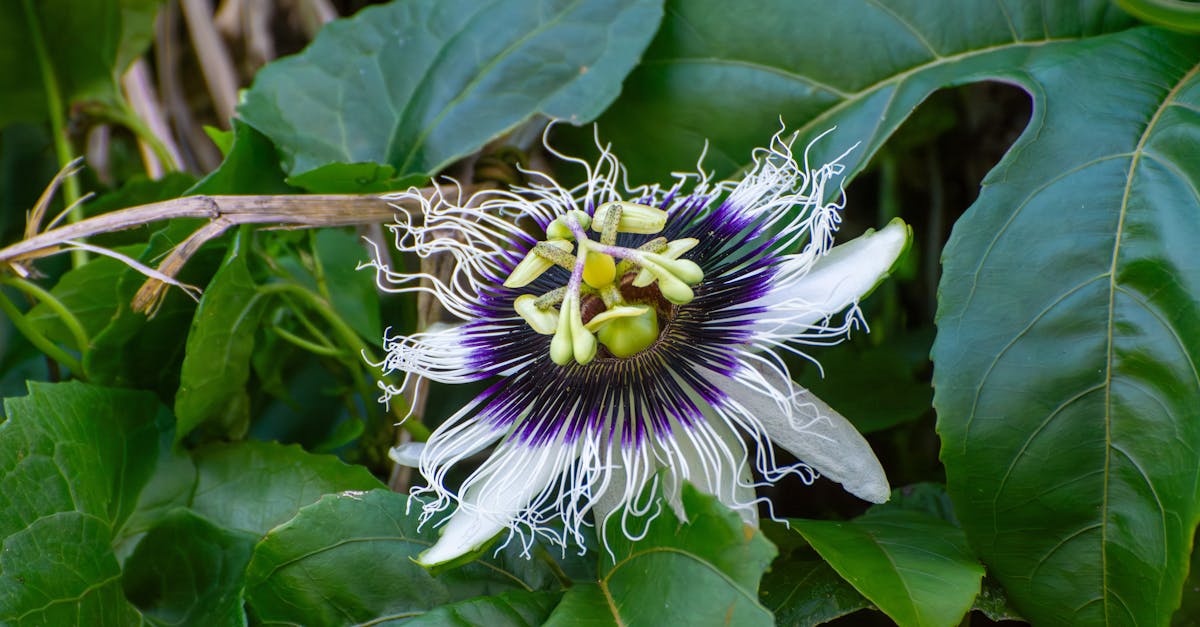
Why Passionflower Deserves a Second Look
Passionflower (Passiflora incarnata) is one of those botanicals that sits at an awkward intersection: too well-studied to dismiss as folk medicine, yet not mainstream enough to appear in most primary care conversations. Native to the southeastern United States and Central America, it was adopted by European settlers and later incorporated into the pharmacopeias of Germany and France — a meaningful endorsement in regulatory contexts that require evidence of efficacy and safety before formal recognition.
Today, the passionflower supplement market is growing alongside broader consumer interest in adaptogens and nervine herbs, but most products on the shelf offer little clarity about which part of the plant matters, which compounds are standardized, and what dose actually moves the needle clinically. This article unpacks the flavonoid mechanism, reviews the human trial data, and explains how personalized formulas — calibrated to your own biology — can outperform generic over-the-counter blends.
---
Passionflower Anxiety: What the Clinical Evidence Shows
The most rigorously studied application of passionflower is generalized anxiety. In a randomized, double-blind trial published in the Journal of Clinical Pharmacy and Therapeutics, Akhondzadeh et al. compared Passiflora incarnata extract (45 drops/day) against oxazepam (a benzodiazepine) in 36 adults with generalized anxiety disorder over four weeks. Both groups showed equivalent reductions on the Hamilton Anxiety Rating Scale (HAM-A), but the passionflower group reported significantly lower rates of job performance impairment — a clinically meaningful difference for anyone who needs to function cognitively during the day (Akhondzadeh et al., Journal of Clinical Pharmacy and Therapeutics 2001; PMID: 11679026).
A separate 2011 study examined preoperative anxiety in surgical patients. Sixty adults were randomized to receive oral passionflower extract (500 mg) or placebo 90 minutes before surgery. The passionflower group showed significantly lower anxiety scores on the Amsterdam Preoperative Anxiety and Information Scale without any significant difference in sedation scores, psychomotor performance, or vital signs — suggesting anxiolytic effect without meaningful sedation at that dose (Movafegh et al., Anesthesia & Analgesia 2008; PMID: 18931208).
This dissociation between anxiolysis and sedation is pharmacologically important. It suggests passionflower's primary action is not nonselective CNS depression (as with alcohol or barbiturates) but something more targeted. That target, as the mechanistic research suggests, is the GABAergic system — specifically, potentiation of GABA-A receptor activity by the plant's flavonoid constituents.
For those also exploring other botanical options for stress and HPA axis regulation, the clinical evidence for ashwagandha provides a useful comparison — ashwagandha works primarily on cortisol and the adrenal axis, while passionflower acts more directly on inhibitory neurotransmission.
---
Chrysin Passionflower: The Flavonoid at the Center of the Mechanism
When researchers ask why passionflower reduces anxiety and promotes sleep, the answer points to a family of flavonoids — particularly chrysin (5,7-dihydroxyflavone) and related compounds such as vitexin, isovitexin, and orientin.
Chrysin's anxiolytic properties were first characterized in rodent models, where it was shown to bind to the benzodiazepine site on the GABA-A receptor complex and produce diazepam-like anxiolytic effects without producing ataxia at lower doses (Zanoli et al., Pharmacology Biochemistry and Behavior 2000; PMID: 10942875). The benzodiazepine site on GABA-A receptors is a well-validated anxiolytic target — it's the same site where drugs like alprazolam and clonazepam bind. A phytochemical occupying this site with lower intrinsic efficacy (partial agonism) is a plausible explanation for passionflower's gentler clinical profile.
However, chrysin has poor oral bioavailability in isolation due to rapid intestinal metabolism — something that makes standardized whole-plant extracts, where multiple flavonoids may act synergistically and influence each other's metabolism, potentially superior to isolated chrysin supplements. This is one reason why clinical trials consistently use Passiflora incarnata extracts standardized to total flavonoid content rather than isolated chrysin.
Vitexin and isovitexin, the C-glycoside flavones most abundant in Passiflora incarnata aerial parts, have also demonstrated GABAergic activity and may modulate adenosine receptors — offering a second pathway that could contribute to the plant's sedative effects at higher doses (NIH National Center for Complementary and Integrative Health, Passiflora monograph).
For individuals whose anxiety intersects with histamine dysregulation — a pattern sometimes seen in mast cell activation — it is worth noting that chrysin has also been investigated as a mast cell stabilizer, which could make passionflower a dual-action option in that subgroup.
---
Passionflower Sleep: Mechanisms and Trial Data
Insomnia and anxiety are deeply intertwined physiologically — hyperarousal at bedtime involves both elevated cortisol and insufficient GABAergic inhibition of the ascending arousal system. Passionflower appears to address the GABAergic side of this equation.
In a randomized crossover trial published in Phytotherapy Research, 41 healthy adults consumed passionflower tea (1 cup/day, standardized Passiflora incarnata leaf) or parsley tea (placebo) for one week each, with a washout period in between. Sleep diary data showed significant improvements in overall sleep quality, sleep onset latency, total sleep time, and waking after sleep onset in the passionflower condition compared to placebo (Ngan & Conduit, Phytotherapy Research 2011; PMID: 21294203). The effect sizes were modest but statistically significant in a healthy non-clinical population — an important benchmark, since therapeutic effects in diagnosably disordered populations are often larger.
At the neurological level, GABAergic potentiation reduces the firing of orexin/hypocretin neurons in the lateral hypothalamus, which are primary drivers of wake-state maintenance. A compound that nudges GABA activity upward without fully suppressing it (as benzodiazepines do) may support the natural transition into sleep architecture without the rebound insomnia and tolerance that characterize pharmaceutical GABA modulators.
If you are working on sleep from multiple angles, optimal magnesium glycinate dosage is another well-evidenced approach — magnesium regulates NMDA receptor activity and has independent effects on sleep architecture that may complement passionflower's GABAergic action.
It's also worth noting that Ones' Magnesium Complex system blend uses fully chelated glycinate forms, which have superior CNS bioavailability compared to oxide or citrate salts — a meaningful consideration when combining sleep-support ingredients.
---
Passionflower Dosage: What Ranges Are Supported by Evidence
One of the most common reasons botanical supplements fail to work is under-dosing. Here is a structured breakdown of the dose ranges used in the clinical literature:
| Form | Dose Used in Studies | Duration | Primary Outcome |
|---|---|---|---|
| Liquid extract (drops) | 45 drops/day (~450–600 mg equivalent) | 4 weeks | Anxiety (HAM-A) |
| Dry extract capsule | 400–500 mg standardized extract | Single dose or 4 weeks | Preoperative anxiety, GAD |
| Herbal tea (1 cup) | ~2 g dried leaf | 7 days | Sleep quality (diary-rated) |
| Standardized tablet | 90 mg extract (2.6% flavonoids) | Acute | Preoperative anxiety |
Most human trials have used extract standardized to 2–6% total flavonoid content, with effective doses in the range of 400–600 mg dry extract per day for anxiety and sleep. Single-dose studies have used 90–500 mg for acute anxiolytic applications such as pre-procedural stress.
Key dosing principles:
- Standardization matters: Look for extracts standardized to total flavonoid content (minimum 2%), not just raw herb weight.
- Timing for sleep: Take 30–60 minutes before bed when the primary goal is sleep onset.
- Continuous use for anxiety: The Akhondzadeh GAD trial used 4 weeks of continuous administration — short-term acute use may be less effective for generalized anxiety than sustained daily dosing.
- Combination formulas: Passionflower is frequently combined with valerian, lemon balm, and magnesium in clinical research; synergistic effects are plausible but not yet fully characterized.
- Avoid high doses during pregnancy: Passionflower has uterotonic alkaloid constituents in some preparations; pregnant individuals should consult a healthcare provider.
Safety profile across studies is favorable at recommended doses. No significant drug interactions have been established, though theoretical additive effects with pharmaceutical GABA modulators (benzodiazepines, gabapentinoids) warrant clinical monitoring.
---
Passionflower vs. Other Botanical Anxiolytics: A Comparison
| Ingredient | Primary Mechanism | Onset | Best Evidence For | Sedation Risk |
|---|---|---|---|---|
| Passionflower | GABA-A potentiation (flavonoids) | 30–90 min | Anxiety, sleep onset | Low |
| Ashwagandha (KSM-66) | HPA axis / cortisol reduction | 4–8 weeks | Chronic stress, cortisol | Very low |
| Valerian | GABA-A / adenosine | 30–60 min | Sleep latency | Low-moderate |
| Lemon balm | GABA transaminase inhibition | 60 min | Acute anxiety, mood | Low |
| L-Theanine | AMPA modulation / alpha-wave | 30–60 min | Alert calmness | Very low |
| Rhodiola Rosea | Monoamine / adaptogen | 2–4 weeks | Fatigue-related anxiety | None |
This comparison illustrates an important point: different botanicals address anxiety through different neurochemical pathways, at different timescales. For individuals with both chronic background anxiety (cortisol-driven) and acute sleep-onset difficulties (GABAergic), a multi-ingredient approach may outperform any single botanical. This is precisely the logic behind personalized supplement formulas that combine complementary mechanisms rather than hoping one herb covers all bases.
For those interested in the adaptogen side of this equation, Rhodiola Rosea for fatigue and stress covers how this Siberian root complements GABAergic botanicals without overlapping their mechanism.
---
What This Means for Your Formula
At Ones, the AI health practitioner analyzes your reported symptoms, sleep data from wearables (such as sleep latency and HRV trends), and where available, lab markers like cortisol and inflammatory cytokine proxies, to determine whether your anxiety and sleep concerns have more of a GABAergic, adrenal, or inflammatory driver — and builds your formula accordingly.
For the GABAergic pattern — difficulty falling asleep, racing thoughts at bedtime, low-grade daytime anxiety without overt cortisol excess — a formula may include:
- Passionflower extract (standardized to ≥2% flavonoids, 400–500 mg): Matching the dose range validated in the Akhondzadeh and Ngan & Conduit trials for anxiety and sleep quality respectively.
- Magnesium Glycinate (from the Ones Magnesium Complex): Fully chelated form with superior CNS availability; magnesium deficiency directly impairs GABA receptor sensitivity, making it a foundational co-factor for any GABAergic botanical to work properly.
- Ashwagandha KSM-66 (600 mg): For the cortisol and adrenal component that frequently runs alongside sleep-onset anxiety, dosed to match the KSM-66 trials that demonstrated significant reductions in serum cortisol and perceived stress scale scores (Chandrasekhar et al., Indian Journal of Psychological Medicine 2012; PMID: 23439798).
Unlike generic sleep blends that combine six to eight botanical extracts at sub-clinical doses, Ones calibrates each ingredient to the dose range that produced meaningful outcomes in controlled trials — and adjusts the capsule count (6, 9, or 12 capsule plans) to fit your specific formula complexity without exceeding safe total daily loads.
For individuals on pharmaceutical sleep aids or anxiolytics, all ingredient selections are flagged for interaction review — always consult your prescribing provider before combining botanical GABA modulators with prescribed medications.
---
Key Takeaways
- Passionflower's anxiolytic and sleep effects are primarily driven by flavonoids — particularly chrysin, vitexin, and isovitexin — that potentiate GABA-A receptor activity at the benzodiazepine binding site without producing the tolerance or rebound effects of pharmaceutical agents.
- Clinical trials support 400–600 mg standardized extract daily for generalized anxiety, and modest but significant sleep quality improvements with as little as a standardized herbal tea dose — but standardization to flavonoid content is essential for predictable dosing.
- Passionflower compares favorably to oxazepam in a randomized GAD trial, with equivalent HAM-A reductions and fewer side effects on daytime job performance (PMID: 11679026).
- The dissociation between anxiolysis and sedation at lower doses makes passionflower a viable daytime anxiety option, while higher doses or evening timing add meaningful sleep-onset benefits.
- Combining passionflower with magnesium glycinate and ashwagandha addresses the GABAergic, adrenal, and cortisol-mediated components of anxiety simultaneously — a multi-mechanism approach validated by individual ingredient trials.
- Personalized dosing through Ones ensures you receive passionflower at clinically supported concentrations rather than the sub-threshold amounts common in mass-market blends, calibrated alongside complementary ingredients that address your specific sleep and anxiety phenotype.