Supplements
Should I Worry About My A1C Result?: Evidence-Backed Benefits and Realistic Expectations
An A1C result sitting between 5.7% and 6.4% — the prediabetes zone — affects roughly 96 million American adults, yet most receive little guidance beyond 'watch your diet.' Understanding what your number actually signals, and what evidence-backed steps can shift it, is the difference between anxiety and informed action.
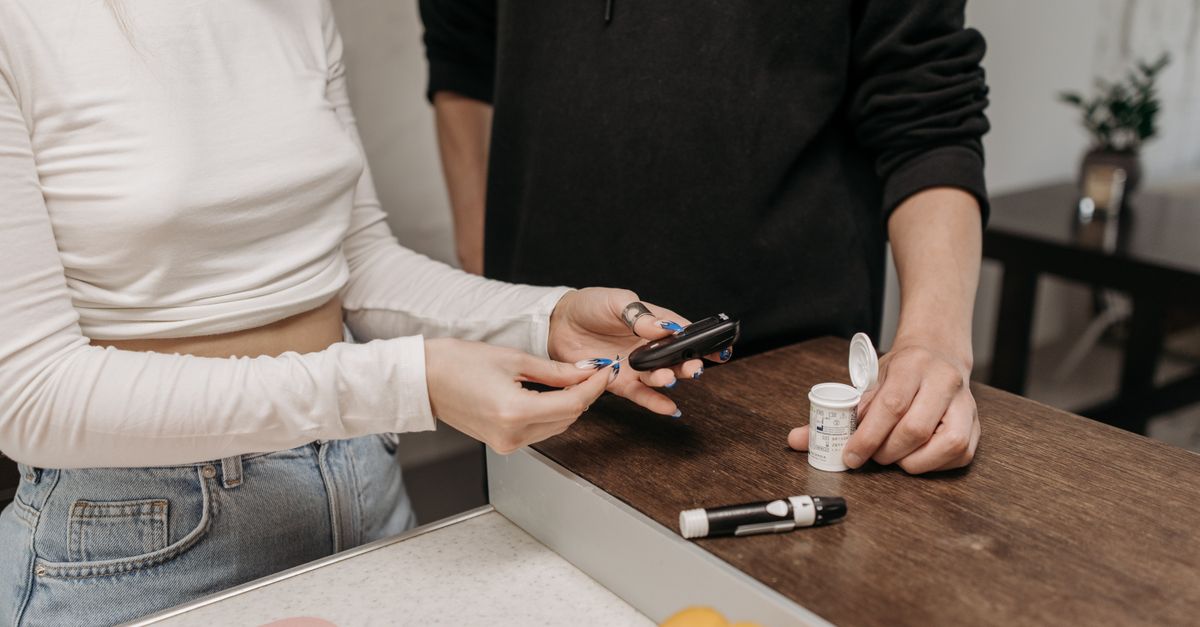
Should I Worry About My A1C Result? Evidence-Backed Answers and Realistic Expectations
Your lab report lands in your patient portal, and there it is: an A1C of 5.9%. The reference range flags it in yellow. Your doctor's note says "borderline — recheck in three months." Now you're asking the very reasonable question millions of Americans ask every year: Should I worry about my A1C result?
The short answer is: not panic, but absolutely pay attention. A1C — glycated hemoglobin — is one of the most clinically meaningful single numbers in preventive medicine, and understanding what it measures, what genuinely moves it, and what realistic improvement looks like will help you turn a yellow flag into a concrete plan.
---
What Does Your A1C Number Actually Measure?
A1C reflects the percentage of hemoglobin molecules in your red blood cells that have glucose attached to them. Because red blood cells live roughly 90 to 120 days, the test captures your average blood sugar over that window — not just what you ate for breakfast. That's what makes it more informative than a single fasting glucose.
The American Diabetes Association (ADA) defines the ranges as follows:
| A1C Range | Classification |
|---|---|
| Below 5.7% | Normal |
| 5.7% – 6.4% | Prediabetes |
| 6.5% and above (confirmed on repeat) | Diabetes |
If you're in the prediabetes band, you're not alone — the CDC estimates 96 million U.S. adults fall there, and approximately 80% of them don't know it (CDC National Diabetes Statistics Report, 2022). More critically, prediabetes is not a sentence: the landmark Diabetes Prevention Program (DPP) trial demonstrated that structured lifestyle intervention reduced progression to type 2 diabetes by 58% over three years in high-risk participants, compared to 31% for metformin (Knowler et al., NEJM 2002; PMID: 11832527).
That single trial should reframe how you think about a borderline A1C. It is one of the most actionable findings in modern preventive medicine.
---
How Much Can Lifestyle Changes Realistically Lower A1C?
One of the most common sources of frustration is unrealistic expectations. People make significant dietary changes for six weeks and feel discouraged when their A1C drops only 0.2 percentage points. Here's the evidence-based reality:
Diet and physical activity are the most powerful levers. A 2014 meta-analysis of randomized controlled trials found that structured dietary interventions reduced A1C by an average of 0.81% in adults with type 2 diabetes, with low-glycemic and Mediterranean-style diets performing consistently well (Ajala et al., American Journal of Clinical Nutrition 2013; PMID: 23364002). In prediabetic populations, reductions tend to be smaller — typically 0.2% to 0.5% — but clinically meaningful when your starting point is 5.9%.
Aerobic exercise independently improves insulin sensitivity. A 2011 meta-analysis of 23 randomized controlled trials involving over 900 patients with type 2 diabetes found that structured exercise training reduced A1C by 0.67% (Umpierre et al., JAMA 2011; PMID: 21540423). The effect was strongest when participants accumulated at least 150 minutes of moderate-intensity activity per week — directly mirroring the DPP protocol.
Sleep quality is an underappreciated driver. Chronic sleep restriction of fewer than six hours per night is associated with elevated fasting glucose and impaired insulin sensitivity, with one controlled study finding a 40% reduction in insulin sensitivity after six days of sleep restriction to four hours (Spiegel et al., Sleep 1999; PMID: 10543671). If your wearable data shows fragmented or short sleep, your A1C trajectory is likely affected.
Key lifestyle factors and their estimated A1C impact:
| Intervention | Estimated A1C Reduction |
|---|---|
| Mediterranean or low-GI diet | 0.4% – 0.8% |
| 150+ min/week aerobic exercise | 0.5% – 0.7% |
| 5–7% body weight loss | 0.5% – 1.0% |
| Improved sleep (6–8 hrs) | Variable, 0.2% – 0.5% est. |
| Stress reduction (cortisol management) | Variable |
Note that A1C changes are cumulative. Combining diet, exercise, and weight management in the DPP produced results no single intervention achieved alone.
---
Should I Worry About My TSH Result if My A1C Is Also Elevated?
This is a question more patients should ask — and most don't. Thyroid function and glucose metabolism are intimately connected. TSH (thyroid-stimulating hormone) is the pituitary's signal to the thyroid gland, and when thyroid output is suboptimal, downstream metabolic effects accumulate quickly.
Hypothyroidism — even in its subclinical form, defined as TSH above the reference range with normal free T4 — is associated with insulin resistance, higher fasting glucose, and unfavorable lipid profiles (Biondi & Kahaly, NEJM 2010). If your TSH sits above 3.0 mIU/L and your A1C is creeping upward, discussing thyroid optimization with your provider is warranted. The two biomarkers don't sit in separate silos — they're part of the same metabolic picture.
Ones integrates both thyroid markers and A1C context from uploaded lab results into its AI analysis, which is why users sometimes see thyroid-focused blends recommended alongside glucose-relevant nutrients in the same formula.
---
Should I Worry About My Free T4 Result Alongside A1C?
Free T4 (thyroxine, unbound) reflects how much active thyroid hormone is available to tissues. A low-normal or suppressed free T4 — even when TSH appears acceptable — can blunt mitochondrial efficiency, slow glucose disposal in muscle tissue, and promote fat accumulation around the viscera, all of which worsen insulin sensitivity.
The relationship isn't always dramatic. Many people with free T4 in the lower third of the reference range feel functional but notice that weight loss stalls, energy is chronically flat, and blood sugar trends upward despite reasonable diet choices. If your free T4 is below 1.0 ng/dL and your A1C is elevated, these findings may be mechanistically linked rather than coincidental.
For people whose Ones analysis flags thyroid markers, the platform's Thyroid Support blend includes selenium (as selenomethionine) and iodine — nutrients critical to T4 synthesis and conversion. Selenomethionine at 200 mcg mirrors the dose used in landmark Hashimoto's intervention trials and directly supports the enzyme responsible for converting T4 to the more active T3.
---
Should I Worry About My Free T3 Result in the Context of Blood Sugar?
Free T3 (triiodothyronine) is the metabolically active thyroid hormone — the form that actually enters cells and drives glucose uptake, thermogenesis, and mitochondrial function. Low free T3, even with normal TSH and adequate free T4, indicates poor peripheral conversion and is sometimes called "low T3 syndrome."
Research has linked low free T3 with higher fasting insulin and worsened HOMA-IR scores (a surrogate measure of insulin resistance). In clinical settings, patients with low-normal T3 and prediabetes often improve both markers when thyroid conversion is supported nutritionally — through adequate selenium, zinc, and iron — rather than pharmaceutical intervention alone.
You can explore how thyroid hormones interact with energy metabolism in more detail in our guide to thyroid support nutrients and energy metabolism.
---
Should I Worry About My Thyroid Antibodies Result If My A1C Is High?
Thyroid antibodies — specifically TPO (thyroid peroxidase) and anti-thyroglobulin antibodies — signal autoimmune activity against thyroid tissue. Elevated antibodies indicate Hashimoto's thyroiditis even when TSH and thyroid hormones still appear within range.
This matters for A1C for two reasons. First, autoimmune thyroid disease is associated with systemic low-grade inflammation, and chronic inflammation is an independent driver of insulin resistance. Second, Hashimoto's tends to progress over years toward hypothyroidism, meaning that a high-antibody result today predicts declining thyroid function — and worsening metabolic markers — down the line if not addressed.
Selenium supplementation has demonstrated meaningful reductions in TPO antibody levels in multiple randomized trials. Gärtner et al. (2002) found a significant reduction in TPO antibodies in patients receiving 200 mcg of selenomethionine daily for three months (PMID: 11932302). This is not a cure for Hashimoto's, but it is one of the best-evidenced nutritional interventions in autoimmune thyroid disease.
For a deeper look at how antibody markers fit into a comprehensive thyroid picture, see our overview of Hashimoto's thyroiditis and autoimmune nutrition.
---
What This Means for Your Formula
If your A1C is in the prediabetes range and your lab results also show any thyroid irregularities, you're dealing with a genuinely interconnected metabolic picture — not two separate problems requiring two separate lists of supplements.
Ones is built to recognize that overlap. When users upload blood work showing elevated A1C alongside suboptimal TSH, low free T3, or elevated thyroid antibodies, the AI considers those findings together rather than in isolation.
Depending on the full pattern of findings, a Ones formula addressing this intersection might include:
- Berberine — one of the most studied natural compounds for glucose regulation. A 2008 randomized trial in 116 patients with type 2 diabetes found berberine reduced A1C by 2.0% over three months, comparable to metformin in that cohort (Zhang et al., Metabolism 2008; PMID: 18442638). Ones includes berberine in its individual actives catalog for users where glucose biomarkers warrant it.
- Chromium Picolinate — supports insulin receptor signaling and glucose uptake. Included in Ones' Endocrine Support blend, which addresses broader endocrine dysregulation including thyroid-metabolic crossover.
- Selenomethionine (200 mcg) — critical for thyroid hormone synthesis, T4-to-T3 conversion, and TPO antibody reduction. Included in the Thyroid Support blend at the clinically validated dose from the Gärtner 2002 trial.
The 6 or 9-capsule daily plan your Ones formula arrives in is determined by the AI based on the number and severity of findings — not by a menu you choose from. This matters because someone with prediabetes and Hashimoto's has a very different capsule need than someone with prediabetes alone.
For more on how blood sugar and metabolic biomarkers interact with supplement protocols, see our article on chromium and insulin sensitivity in metabolic syndrome.
---
Key Takeaways
- An A1C between 5.7% and 6.4% is prediabetes — a meaningful warning that is also one of the most reversible conditions in preventive medicine when caught early.
- Lifestyle interventions are the most powerful tools: the DPP trial showed 58% reduced diabetes progression through diet and exercise alone (Knowler et al., PMID: 11832527).
- Thyroid health and A1C are metabolically linked — elevated TSH, low free T3, or high thyroid antibodies can each worsen insulin sensitivity, and reviewing both sets of markers together gives a more complete picture.
- Selenium (200 mcg as selenomethionine) is the best-evidenced nutritional intervention for reducing TPO antibodies and supporting thyroid-metabolic crossover.
- Berberine has demonstrated A1C reductions comparable to metformin in randomized trials and is one of the most promising natural actives for glucose regulation.
- A personalized formula that accounts for your full biomarker profile — not a generic multi — is the most rational supplement strategy when both metabolic and thyroid findings are present. Always work with a healthcare provider for clinical interpretation and treatment decisions.