Women's Health
What Causes Dry Skin in PCOS?
Dry, flaky skin is one of PCOS's least-discussed symptoms, yet it affects a substantial portion of people with the condition. Contrary to popular belief, it isn't just about oily skin and breakouts — hormonal swings in PCOS can swing in the opposite direction, leaving your skin barrier chronically compromised. Understanding why requires looking at your specific hormone and metabolic panel, not just a PCOS diagnosis alone.
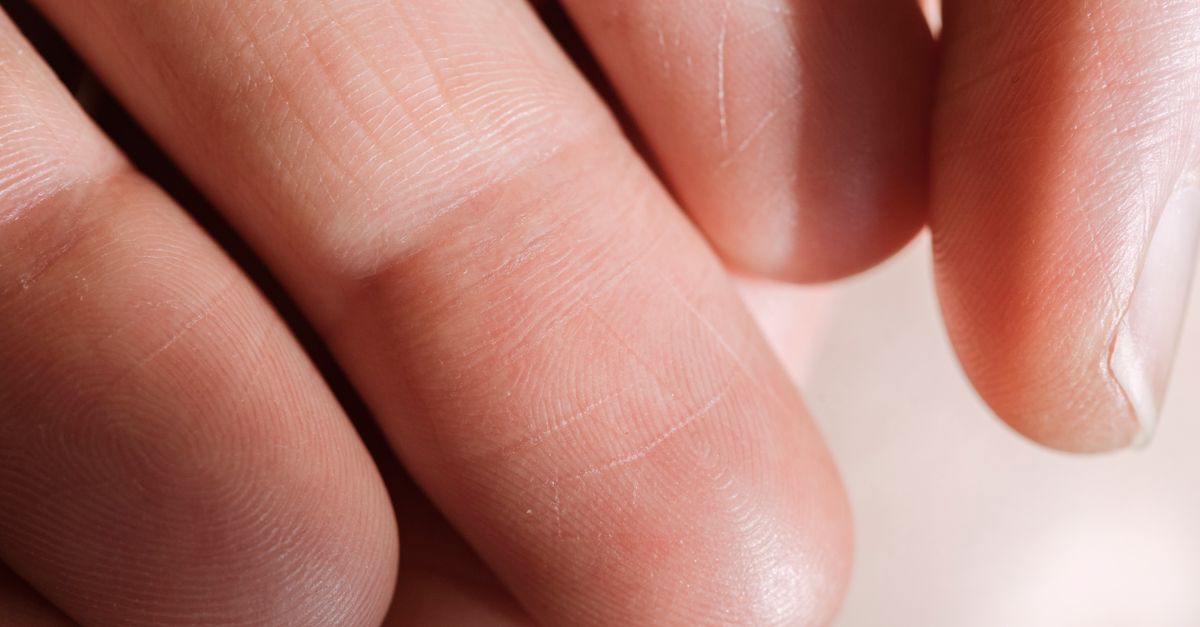
What Causes Dry Skin in PCOS?
Dry skin in PCOS is primarily driven by estrogen fluctuations, insulin resistance, and androgen imbalance — all of which impair ceramide production and transepidermal water loss (TEWL). The main caveat: the direction of your androgen and estrogen levels matters enormously, so dry skin and oily skin can both appear under the PCOS umbrella. People with low-estrogen PCOS phenotypes or those transitioning off hormonal contraception are most prone to persistent dryness.
---
How PCOS Disrupts the Skin Barrier
Polycystic ovary syndrome is not a single-hormone problem. It is a complex endocrine disorder characterized by irregular ovulation, elevated androgens, and often insulin resistance. These three axes interact directly with skin physiology in ways that most dermatology guides understate.
Estrogen and ceramide synthesis. Estrogen upregulates enzymes responsible for ceramide production — the lipid molecules that act as the mortar between skin cells. When estrogen is relatively low (which can occur in certain PCOS phenotypes, particularly lean PCOS or anovulatory cycles with prolonged low-estrogen phases), ceramide levels fall and TEWL rises. A 2018 review in the Journal of Lipid Research confirmed that estrogen receptor signaling directly modulates epidermal lipid lamellar body secretion, the mechanism by which the skin seals in moisture (Kendall & Nicolaou, J Lipid Res 2018; PMID: 29025914).
Androgens and sebum quality. Elevated androgens like testosterone and DHEAS are classically associated with oily skin in PCOS. However, when androgens are disproportionately high relative to estrogen — and particularly when progesterone is low — the result can be a paradoxically disrupted barrier. Dihydrotestosterone (DHT) drives sebocyte proliferation, but dysfunctional sebum composition (rich in squalene peroxidation products) has been shown to impair rather than restore skin barrier integrity (Picardo et al., Dermatoendocrinol 2009; PMID: 20224686).
Insulin resistance and skin inflammation. Approximately 50–70% of women with PCOS have some degree of insulin resistance, even at a healthy body weight. Elevated insulin stimulates IGF-1, which activates mTORC1 — a pathway that disrupts normal keratinocyte differentiation and interferes with filaggrin expression. Filaggrin is the structural protein responsible for holding the skin's outermost layer together; reduced filaggrin function is directly linked to increased dryness and sensitivity (Elias, J Invest Dermatol 2012; PMID: 22011913).
Chronic low-grade inflammation. PCOS is associated with elevated high-sensitivity CRP and inflammatory cytokines such as IL-6 and TNF-α. These inflammatory signals degrade barrier lipids and accelerate skin aging. If you've ever wondered what causes high CRP on your lab panel alongside PCOS symptoms, this inflammatory connection is a major reason to investigate it alongside your sex hormone results.
---
What Causes Dry Skin When Coming Off the Pill?
Many people with PCOS are prescribed oral contraceptives (OCPs) as a first-line management tool — they suppress androgens and regulate cycles. When OCPs are discontinued, a predictable hormonal rebound occurs that frequently manifests as sudden, severe skin dryness.
The mechanism: combined OCPs raise sex hormone-binding globulin (SHBG), which mops up circulating androgens and estrogen. When the pill is removed, SHBG levels can remain elevated for months while endogenous hormone production is still ramping back up. This creates a transient low-estrogen window — sometimes called "post-pill hypoestrogen" — during which the skin loses its primary ceramide-synthesis signal.
A 2014 study in Contraception found that SHBG levels remained significantly elevated for up to 6 months after OCP discontinuation compared to never-users, with downstream effects on free estrogen availability (Zimmermann et al., Contraception 2014; PMID: 24331860). For someone with PCOS re-entering an anovulatory state post-pill, this window can be prolonged, making dry skin a persistent transitional symptom rather than a brief adjustment.
Nutritional support during this period matters: zinc and omega-3 fatty acids help re-establish sebum quality and barrier lipid composition while the hypothalamic-pituitary-ovarian (HPO) axis recalibrates.
---
What Causes Dry Skin in Perimenopause — and How PCOS Complicates It?
Perimenopause — the 4–10 year transition preceding the final menstrual period — involves erratic estrogen fluctuations, declining progesterone, and often a relative androgen excess as ovarian function winds down. For someone who has managed PCOS for years, entering perimenopause can feel like a dramatic worsening of existing skin symptoms.
In perimenopause, estradiol begins to decline in an irregular pattern: some months are high, others are very low, and this volatility means the skin's ceramide production oscillates rather than simply declining steadily. The result is unpredictable dryness that can shift week to week.
Insulin resistance, already common in PCOS, often worsens in perimenopause. Estrogen normally sensitizes tissues to insulin; as estrogen becomes erratic, glycemic control deteriorates. This worsening insulin resistance compounds the filaggrin and barrier disruption described earlier. Tracking fasting glucose and fasting insulin together gives a much clearer picture of where metabolic stress is hitting your skin — you can explore what causes high fasting glucose in more detail to understand the lab context.
For PCOS + perimenopause overlap, the inflammatory burden is also cumulative. Chronic PCOS-related inflammation does not resolve with age; it typically intensifies in the absence of the (modest) anti-inflammatory effect of regular ovulation.
---
What Causes Dry Skin in Menopause and Postmenopause?
At menopause — defined as 12 consecutive months without a menstrual period — estradiol drops to roughly 10–20 pg/mL from a reproductive-age average of 50–400 pg/mL depending on cycle phase. This precipitous decline has well-documented consequences for skin hydration and thickness.
A landmark histological study published in Maturitas found that skin collagen content decreases approximately 2% per year in the first postmenopausal decade, with skin thickness declining at a similar rate (Verdier-Sévrain & Bonté, Maturitas 2007; PMID: 17275192). For someone with PCOS who may have had suboptimal estrogen signaling for decades, the menopausal drop arrives on an already-compromised baseline.
In postmenopause, androgen levels (primarily adrenal DHEAS) also decline, but the estrogen-to-androgen ratio shifts further toward relative androgen excess compared to premenopause — a familiar pattern for long-term PCOS patients. Paradoxically, despite this relative androgen dominance, postmenopausal skin is overwhelmingly dry rather than oily, confirming that it is estrogen deficiency, not androgen levels alone, that governs hydration status.
Triglycerides and lipid metabolism also intersect with skin at menopause: elevated triglycerides impair the lipid composition of the stratum corneum. Understanding what causes triglycerides to be out of range is a useful corollary if you're noticing skin dryness alongside abnormal lipid panels in the postmenopausal years.
Key supportive strategies at this stage include:
- Prioritizing omega-3 fatty acids (EPA + DHA) at clinically studied doses to restore membrane fluidity
- Addressing vitamin D status, which modulates keratinocyte differentiation and skin barrier repair
- Supporting adrenal function if DHEAS is declining faster than expected (adrenal androgen production is the primary estrogen precursor source postmenopause)
---
Biomarkers Worth Checking Alongside PCOS-Related Dry Skin
Dry skin in PCOS rarely occurs in isolation. The following panel gives the most complete picture:
| Biomarker | Why It Matters for Skin | Functional Target |
|---|---|---|
| Estradiol (E2) | Drives ceramide synthesis; low E2 = high TEWL | 50–150 pg/mL mid-follicular |
| Free Testosterone | Androgen burden on sebocytes and barrier quality | Below mid-range of lab normal |
| SHBG | Low SHBG → high free androgens; post-pill SHBG elevation | 60–120 nmol/L |
| Fasting Insulin | Insulin resistance → filaggrin disruption | < 8 µIU/mL |
| hsCRP | Systemic inflammation degrading barrier lipids | < 1.0 mg/L |
| 25-OH Vitamin D | Keratinocyte differentiation, barrier repair | 50–80 ng/mL |
| Omega-3 Index | Membrane fluidity; EPA/DHA status | > 8% |
| Zinc (serum or RBC) | Cofactor for sebum regulation and wound repair | > 90 µg/dL |
For a deeper look at how inflammatory markers connect to skin barrier dysfunction, the article on dry skin and hair: nutritional deficiencies behind poor skin barrier function provides additional context on the nutrient-deficiency side of the equation.
---
What This Means for Your Formula
Ones builds personalized supplement formulas by analyzing lab results, wearable data, and health history — which makes PCOS-related dry skin a particularly good use case, because the drivers are so individual. Three ingredients are especially relevant:
Omega-3 (EPA + DHA). Ones includes pharmaceutical-grade omega-3 at clinically studied doses. A 12-week randomized trial of women with PCOS found that omega-3 supplementation significantly reduced inflammatory markers and improved skin hydration parameters compared to placebo (Vargas et al., J Clin Endocrinol Metab 2011; PMID: 21450988). For someone coming off the pill or in perimenopause, restoring omega-3 index is often the fastest-acting skin intervention available.
Vitamin D3 + K2 (MK-7). Keratinocytes express vitamin D receptors, and vitamin D directly regulates the genes controlling skin barrier differentiation. PCOS is associated with significantly higher rates of vitamin D insufficiency than the general population. Ones pairs D3 with MK-7 to optimize calcium handling alongside the skin benefits — a combination relevant to the bone and vascular concerns that emerge in postmenopause as well.
Zinc. Ones includes zinc as an individual active at a dose calibrated to your baseline zinc status. Zinc is a cofactor for 5-alpha reductase modulation, collagen cross-linking, and wound repair — all directly relevant to PCOS-related skin dysfunction. Critically, Ones only adds zinc when your labs indicate insufficiency, avoiding the copper depletion risk that comes with indiscriminate zinc supplementation.
Depending on your full panel, the Ones AI might also recommend its Endocrine Support or Adrenal Support blends to address the upstream hormonal drivers of dry skin — particularly in the perimenopause and post-pill recovery contexts.
---
Key Takeaways
- Dry skin in PCOS is primarily driven by estrogen fluctuations, insulin resistance, and androgen imbalance — not acne-type oiliness, which is a separate phenotype
- Coming off the pill can create a prolonged low-estrogen window (elevated SHBG for up to 6 months) that worsens skin dryness during the transition
- Perimenopause compounds PCOS-related dry skin through erratic estrogen swings and worsening insulin resistance — two systems that both impair barrier integrity
- At menopause and postmenopause, estrogen deficiency dominates: collagen declines ~2% per year, and TEWL increases significantly on an already-compromised PCOS baseline
- The most informative lab panel includes estradiol, free testosterone, SHBG, fasting insulin, hsCRP, vitamin D, omega-3 index, and serum zinc — not just a standard hormone panel
- Omega-3 (EPA/DHA), vitamin D3 + K2, and zinc are the three most evidence-supported supplement targets for PCOS-related skin dryness, and Ones calibrates all three to your actual lab findings rather than generic population doses
---
This article is for informational purposes only and does not constitute medical advice. Consult a qualified healthcare provider before starting any supplement protocol, particularly if you have an existing condition or are taking medications.