Skin & Beauty
What Causes Hair Thinning During a Heavy Period?
Heavy menstrual bleeding is one of the most overlooked drivers of hair thinning in women of reproductive age. Each heavy cycle depletes iron stores, disrupts estrogen-to-progesterone balance, and elevates cortisol — a triple hit that can push hair follicles into premature shedding. Understanding which biomarker is driving your thinning is the first step toward getting it back.
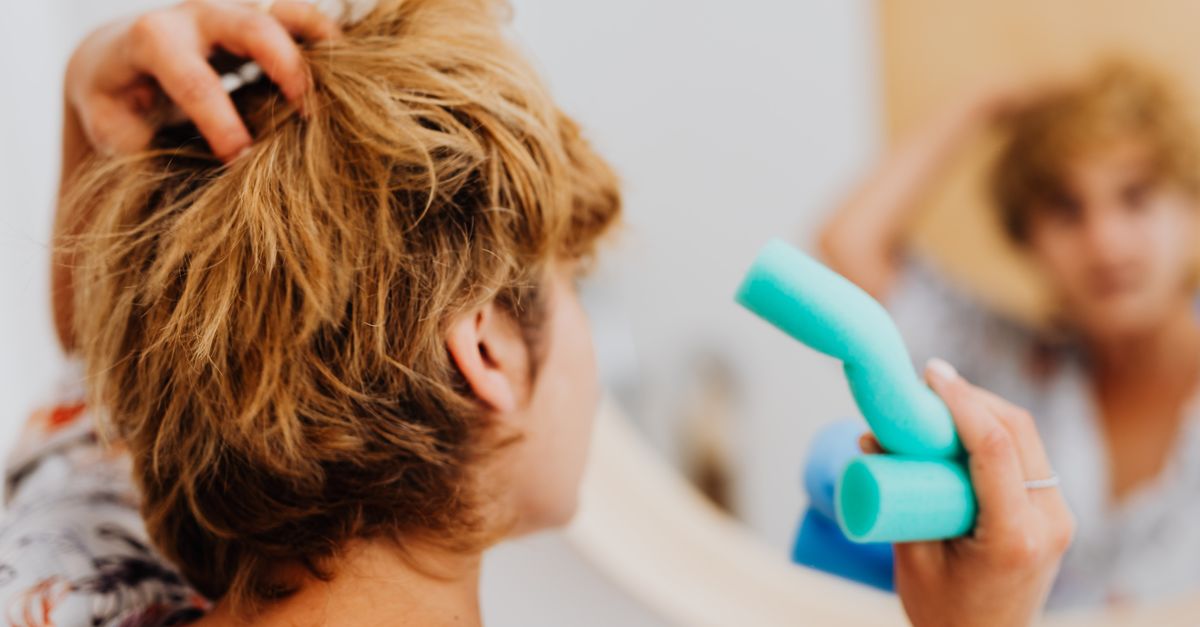
What Causes Hair Thinning During a Heavy Period?
Heavy menstrual bleeding causes hair thinning primarily by depleting ferritin (stored iron), which follicles need to produce new hair. The secondary driver is the post-bleed drop in estrogen and progesterone that shifts more follicles into the shedding phase. The exception: if your ferritin is already optimal and your hormones are balanced, heavy bleeding alone is unlikely to cause significant thinning.
---
Why Your Period Is Draining the Nutrients Your Hair Depends On
Hair follicles are among the most metabolically active structures in the body. They require a continuous supply of iron, protein, and micronutrients to sustain the anagen (growth) phase. During a heavy period — clinically defined as losing more than 80 mL of blood per cycle — the body prioritizes replenishing circulating red blood cells over delivering nutrients to non-essential tissue, including hair follicles.
The critical nutrient here is ferritin, the storage form of iron. A landmark study by Rushton et al. found that women experiencing diffuse hair loss had significantly lower serum ferritin levels than controls, and that ferritin below 40 ng/mL was associated with impaired hair cycling even in the absence of overt anemia (Rushton et al., Clinical and Experimental Dermatology 2002; PMID: 11896791). That threshold matters: many clinicians flag ferritin as normal above 12 ng/mL, but hair follicles appear to need levels closer to 40–70 ng/mL to function optimally.
Zinc is the second nutrient most reliably depleted by heavy bleeding. Zinc is required for DNA synthesis in the rapidly dividing cells of the hair matrix, and low zinc is associated with telogen effluvium — the diffuse shedding that typically appears 2–3 months after a stressful physiological event (Karashima et al., British Journal of Dermatology 2012; PMID: 22103665). Because zinc is lost both in menstrual blood and in the inflammatory response that follows tissue breakdown, heavy bleeders can develop subclinical zinc insufficiency even when dietary intake seems adequate.
Biotin and B12 round out the nutrient story. B12 is essential for red blood cell maturation, and its demand spikes when the body is recovering from blood loss. When B12 is redirected toward hematopoiesis, hair follicle cell division takes a secondary hit.
---
The Hormonal Cascade That Pushes Follicles Into Shedding
Heavy bleeding is rarely just a volume problem — it is almost always accompanied by an underlying hormonal imbalance, most commonly estrogen dominance relative to progesterone or elevated prostaglandins. These hormonal shifts directly affect the hair growth cycle.
Progesterone has a mild androgen-blocking effect at the follicle level. When progesterone is low (a pattern common in anovulatory cycles that often produce heavier bleeding), androgens like DHT have greater access to follicle receptors. In genetically predisposed women, this accelerates miniaturization of scalp follicles — the same mechanism responsible for androgenetic alopecia in men (Sinclair et al., Journal of the American Academy of Dermatology 2011; PMID: 21496740).
Estrogen, meanwhile, prolongs the anagen phase of hair growth. The post-bleed drop in estrogen that occurs in the late luteal and early follicular phase is a physiological trigger for follicles to transition toward telogen. In women with already-shortened cycles or inadequate estrogen production, this transition is more pronounced. You may notice increased shedding in the shower 6–10 weeks after your heaviest bleed — that delayed timing is the hallmark of telogen effluvium and explains why many women don't connect their hair loss to their period.
Cortisol is the third hormonal player. Blood loss is a genuine physiological stressor. The HPA axis responds to heavy bleeding by elevating cortisol, which suppresses the immune environment around follicles and can prematurely terminate anagen. If you already carry a high allostatic load — poor sleep, chronic inflammation, blood sugar dysregulation — a heavy period stacks on top of an already-stressed system. Understanding what causes anxiety during a heavy period and what causes insomnia during a heavy period can help you see how these cortisol-driven symptoms often arrive together with hair thinning, because they share the same upstream driver.
---
The Biomarkers to Test Before You Try Anything
Guessing at the cause of hair thinning is expensive and slow. A targeted lab panel gives you the data to act precisely. Here is what to request from your provider, and what the functional ranges look like:
| Biomarker | Standard Lab Range | Functional Range for Hair Health |
|---|---|---|
| Serum Ferritin | >12 ng/mL | 40–70 ng/mL |
| Serum Zinc | 60–120 mcg/dL | 80–110 mcg/dL |
| Vitamin B12 | 200–900 pg/mL | 500–900 pg/mL |
| Vitamin D (25-OH) | 30–100 ng/mL | 50–80 ng/mL |
| Free T3 / TSH | Lab-specific | TSH 1.0–2.5 mIU/L |
| Progesterone (Day 21) | >3 ng/mL | >10 ng/mL (ovulatory) |
| DHEA-S | Age-variable | Mid-range for age |
Thyroid function deserves a dedicated mention. Both hypothyroidism and subclinical low T3 cause hair thinning and heavy periods simultaneously — they are two symptoms of the same root problem. If your TSH is above 2.5 and you experience heavy bleeding with hair loss, thyroid optimization may resolve both without any other intervention. Similarly, DHEA-S influences the androgen milieu at the follicle, and its decline — whether from chronic stress or aging — can tip follicles toward shedding. You can read more about DHEA's broader effects if low adrenal output is part of your picture.
Do not stop at ferritin. Many women who test ferritin alone, find it marginally low, supplement iron, and see no improvement — because zinc or vitamin D was the rate-limiting nutrient the whole time.
---
The Stress-Inflammation Connection Most Clinicians Miss
Chronic stress is one of the most underappreciated amplifiers of period-related hair loss. Psychological and physiological stress elevates pro-inflammatory cytokines — particularly IL-1β and TNF-α — which directly inhibit hair follicle cycling (Peters et al., FASEB Journal 2006; PMID: 16418286). Heavy bleeding, by triggering an inflammatory repair response in the uterus, may spill over into systemic low-grade inflammation, especially in women who are already operating at the edge of their inflammatory threshold.
This matters because inflammation is not always visible or obvious. You may not have joint pain or a diagnosed autoimmune condition — but if your CRP or hs-CRP is consistently elevated, your follicles are operating in a hostile biochemical environment. Understanding what causes joint pain during a heavy period illustrates how heavy-period inflammation can manifest across multiple body systems simultaneously.
Stress management is therefore not a soft recommendation — it is a physiological intervention. Adaptogens, sleep, and blood sugar stability all reduce the cortisol-cytokine load on follicles. But adaptogens work over weeks to months, not overnight, and they work best when the underlying nutrient depletions have been corrected first.
---
Hair Recovery: What the Evidence Says About Timeline and Protocol
Hair recovery after telogen effluvium is predictable but slow. The follicle cycle is 3–6 months from anagen entry to visible emergence at the scalp surface. This means:
- Correct the root deficiency (ferritin, zinc, thyroid, hormonal) — this is the essential first step.
- Expect no visible change for 8–12 weeks after correction.
- Shedding may briefly increase in weeks 6–10 as new anagen hairs push out the telogen hairs — this is normal and signals recovery, not failure.
- Visible density improvement typically appears at months 4–6 of consistent nutrient repletion.
- Full recovery for diffuse telogen effluvium takes 9–12 months in most cases.
For women with an androgenetic component (miniaturized hairs at the crown, family history), the timeline extends and the protocol needs to address the DHT-progesterone axis more directly, not just iron repletion. Finasteride is occasionally used off-label in women, but the evidence base in premenopausal women is limited, and it is generally reserved for post-menopausal cases or those with confirmed hyperandrogenism.
Topical minoxidil (2% in women) remains the most evidence-supported intervention for androgenetic hair loss, with clinical trials demonstrating statistically significant hair count improvement over 32 weeks versus placebo (Olsen et al., Journal of the American Academy of Dermatology 2002; PMID: 12196747). However, it does not address the underlying nutrient or hormonal cause — it is a downstream adjunct, not a root fix.
For purely nutrition-driven effluvium from heavy periods, aggressive iron repletion is the intervention with the strongest evidence base. Oral iron supplementation (targeting ferritin above 70 ng/mL) combined with vitamin C to enhance absorption is the standard approach. Zinc supplementation at 25–40 mg elemental zinc per day also shows benefit in clinical trials of telogen effluvium patients with low zinc status (Karashima et al., British Journal of Dermatology 2012; PMID: 22103665).
---
What This Means for Your Formula
The nutrient gaps driving period-related hair thinning are precisely the kind of deficiencies that a data-driven supplement formula can address with clinical accuracy — because the dose that moves the needle is rarely the dose on a grocery store shelf.
Ones builds personalized daily capsule formulas by analyzing your lab results and health history to identify which depletions are actually present. For someone with low ferritin, suboptimal zinc, and elevated cortisol from heavy-period stress, a relevant formula might include:
- Zinc (as zinc bisglycinate, 25–40 mg) — the chelated form with superior absorption, matched to clinical dosing used in telogen effluvium trials
- Vitamin D3 + K2 (MK-7) — vitamin D influences hair follicle cycling through vitamin D receptors in dermal papilla cells; a dose of 2,000–5,000 IU D3 is calibrated to your 25-OH-D level, not guessed at
- Ones Adrenal Support — a proprietary blend formulated to modulate cortisol output, relevant when HPA-axis dysregulation is amplifying follicle stress signals from heavy-period blood loss
The platform also tracks wearable data — sleep quality, HRV, resting heart rate — which are indirect proxies for the cortisol and inflammatory burden on your follicles. If your formula needs adjustment as your labs improve, the AI recalibrates accordingly.
If you are also experiencing cognitive symptoms alongside your cycle, what causes brain fog during a heavy period explores the overlapping iron and hormonal mechanisms — the same biomarker corrections often address both.
---
Key Takeaways
- Heavy periods cause hair thinning primarily through ferritin depletion — the functional threshold for hair health is 40–70 ng/mL, far above the standard lab cutoff of 12 ng/mL.
- Zinc, vitamin B12, and vitamin D are co-depletions that frequently worsen the picture and must be tested alongside ferritin.
- The hormonal mechanism — low progesterone, post-bleed estrogen drop, and elevated cortisol — pushes follicles into premature telogen and amplifies nutrient-driven shedding.
- Thyroid dysfunction is a common root cause that produces both heavy bleeding and hair thinning simultaneously; TSH alone is insufficient for full thyroid evaluation.
- Hair recovery after correcting the underlying cause takes 4–12 months; a temporary increase in shedding at weeks 6–10 is a normal sign of recovery, not treatment failure.
- Personalized lab-guided supplementation — addressing the specific depletions present in your bloodwork — is more effective than broad-spectrum hair supplements with unverified doses.
---
Always consult a qualified healthcare provider before starting any new supplement protocol, particularly if you are experiencing significant hair loss or heavy menstrual bleeding.