Skin & Beauty
Is Hair Thinning Normal in Postmenopause?
More than half of women notice measurable hair thinning after menopause — and unlike the temporary shedding that can follow major hormonal shifts, postmenopausal hair loss often follows a slow, progressive pattern driven by falling estrogen, rising androgen sensitivity, and nutritional gaps that standard checkups rarely catch. Understanding what's driving it is the first step toward doing something about it.
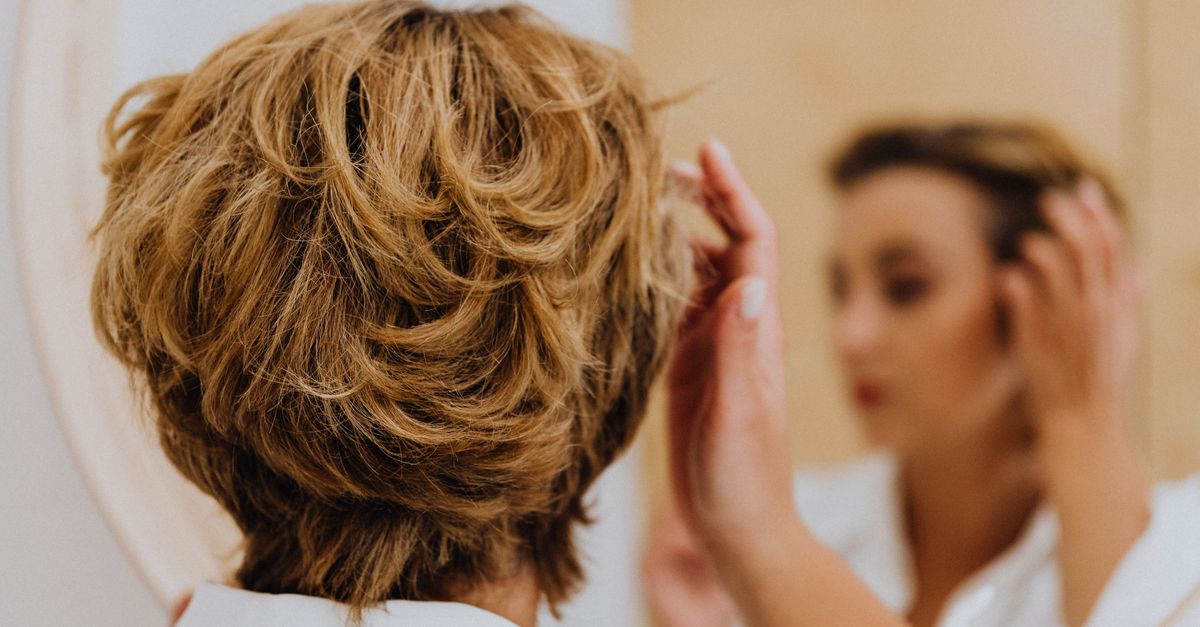
Is Hair Thinning Normal in Postmenopause?
Yes — hair thinning is extremely common after menopause, affecting more than 50% of postmenopausal women to some degree. It is driven primarily by the steep drop in estrogen and progesterone that shortens the anagen (growth) phase of the hair cycle, combined with increased sensitivity to androgens at the follicle level. The main caveat: "common" does not mean untreatable, and the degree of loss varies enormously depending on nutrition, genetics, thyroid function, and how long the hormonal shift has gone unaddressed.
Why Postmenopausal Hair Thinning Happens
Estrogen and progesterone both play protective roles at the hair follicle. Estrogen prolongs the anagen (growth) phase and has been shown to upregulate aromatase activity locally in scalp skin, converting androgens before they can bind to follicle receptors (Thornton, Journal of Investigative Dermatology 2002; PMID: 12028218). When those hormones fall sharply after the final menstrual period, two things happen simultaneously: the growth phase shortens, and residual androgens — particularly dihydrotestosterone (DHT) — meet less estrogen-mediated opposition at the follicle.
The result is a diffuse thinning pattern, most visible at the crown and along the part line, clinically termed female pattern hair loss (FPHL) or androgenetic alopecia in women. Unlike male pattern baldness, the frontal hairline is usually preserved. Women often first notice increased shedding in the shower, reduced ponytail diameter, or more scalp visible under overhead lighting.
Additional contributing factors that compound hormonal changes include:
- Iron and ferritin depletion — ferritin below 30 ng/mL is associated with diffuse hair shedding independent of anemia
- Thyroid dysfunction — both hypothyroidism and subclinical hypothyroidism impair the hair cycle; postmenopausal women have elevated thyroid disease risk
- Zinc deficiency — zinc is required for 5-alpha reductase regulation and keratinocyte proliferation
- Vitamin D insufficiency — vitamin D receptors are expressed in hair follicles, and low levels correlate with FPHL severity (Rasheed et al., International Journal of Dermatology 2013; PMID: 23278159)
- Chronic low-grade inflammation — postmenopause brings a pro-inflammatory shift that can disrupt follicle cycling
If you're also navigating skin changes alongside hair concerns, itchy skin in postmenopause shares many of the same hormonal and nutritional drivers and is worth reading alongside this article.
What Bloodwork Should You Check First
Before reaching for supplements, it is worth ruling out the correctable causes. A targeted panel typically includes:
| Marker | Optimal Range for Hair | Notes |
|---|---|---|
| Serum ferritin | ≥ 70 ng/mL | Below 30 ng/mL is associated with shedding |
| Thyroid (TSH, free T4, free T3) | TSH 0.5–2.5 mIU/L | Subclinical hypothyroidism is underdiagnosed postmenopause |
| Vitamin D (25-OH) | 40–60 ng/mL | Under 20 ng/mL is strongly associated with FPHL |
| Zinc | 75–120 mcg/dL serum | Hair loss appears before frank deficiency |
| DHEA-S, free testosterone | Varies by lab | Elevated androgens accelerate FPHL |
| B12, folate | B12 > 400 pg/mL | Deficiency linked to telogen effluvium |
Personalized platforms like Ones analyze these values when you upload lab results, then cross-reference them with your symptoms and wearable data to flag which deficits are most likely driving your hair changes — rather than recommending a generic multi.
Vitamin D3 for Hair Growth After Menopause
Vitamin D3 is one of the most evidence-supported nutritional interventions for postmenopausal hair thinning. A 2019 controlled study found significantly lower serum 25(OH)D in women with FPHL compared to controls, reinforcing vitamin D receptor activity as a meaningful regulator of the hair cycle (Alizadeh et al., Skin Pharmacology and Physiology 2020; doi.org/10.1159/000504587). For a deeper look at who benefits most from supplementation, vitamin D3 for hair growth covers the clinical evidence and who is most likely to see results.
The clinically relevant dose for replenishing deficiency is typically 2,000–5,000 IU D3 daily, ideally paired with vitamin K2 (MK-7) to direct calcium appropriately and avoid soft-tissue deposition. Ones formulas that include D3 use it at doses calibrated to your actual 25-OH-D level — not a one-size-fits-all 1,000 IU.
Vitamin K2 for Hair Growth
Vitamin K2's connection to hair health is less direct than vitamin D3's, but it is mechanistically coherent and increasingly recognized in the literature. K2 (as MK-7) activates matrix Gla protein (MGP), a vitamin K-dependent protein that inhibits arterial and soft-tissue calcification. Scalp vascularity is critical to hair follicle perfusion: calcification of the superficial temporal and scalp arteries is documented in androgenetic alopecia and may contribute to follicle miniaturization (Trueb, Dermatology 2002; PMID: 12444337).
By keeping scalp microvasculature more flexible and perfused, K2 creates a more favorable environment for follicle survival — though it is not a direct hair-growth stimulant. Doses studied for vascular outcomes typically range from 90–180 mcg MK-7 daily. For a full breakdown of K2's effects and lab markers to watch, see vitamin K2 side effects, causes, and lab markers.
Ones pairs D3 with K2 (MK-7) in formulas where both deficiencies are flagged, because the two nutrients work synergistically — D3 increases calcium absorption and K2 directs it away from arterial walls.
Molybdenum for Hair Growth
Molybdenum is a trace mineral that rarely appears on mainstream hair-supplement labels, yet it plays a specific enzymatic role that matters for hair: it is a cofactor for sulfite oxidase, the enzyme that converts sulfite to sulfate. Sulfate is required for the sulfation of proteoglycans in the hair follicle's extracellular matrix — a structural scaffold the follicle depends on for normal cycling (Bhattacharyya et al., Journal of Biological Chemistry 2009; PMID: 19196711).
When sulfite oxidase activity is impaired — whether from low molybdenum status, high sulfite-containing food intake, or genetic variation in the SUOX gene — sulfate availability in skin tissue drops, potentially impairing follicle matrix integrity. Deficiency is uncommon in the general population but can be unmasked by diets low in organ meat and legumes, or by high sulfite exposure from wine, dried fruit, or food preservatives.
Relevant lab markers include plasma molybdenum (reference range 0.1–1.0 mcg/L) and urinary sulfite, which rises when oxidase function is low. The RDA for molybdenum is 45 mcg/day, and tolerable upper intake is 2,000 mcg/day — meaning therapeutic supplementation has a wide safety margin. For a complete look at molybdenum status markers, molybdenum side effects and lab markers is a useful reference.
Vanadium for Hair Growth
Vanadium is another trace element occasionally discussed in hair-thinning contexts, though its evidence base is narrower than molybdenum's. Vanadium exerts insulin-mimetic effects — it improves cellular glucose uptake by activating insulin receptor signaling — which is relevant because insulin resistance is strongly associated with androgenetic alopecia in both men and women (Mancuso et al., Journal of Cosmetic Dermatology 2021; PMID: 33319439).
Postmenopause is associated with an increase in central adiposity and a modest but measurable rise in insulin resistance, both of which can elevate androgens through hyperinsulinemia-driven suppression of sex hormone-binding globulin (SHBG). Lower SHBG means more free testosterone available for conversion to DHT at the follicle. Vanadium's insulin-sensitizing action — while studied primarily in the context of type 2 diabetes at doses of 50–100 mg vanadyl sulfate daily — may help modulate this androgen pathway indirectly.
However, vanadium at high supplemental doses carries toxicity risk, and clinical evidence specific to hair loss is limited. It is best viewed as a supporting consideration for women whose bloodwork shows elevated fasting insulin or HOMA-IR alongside FPHL, not as a standalone hair treatment.
What Happens to Hair After Stopping Finasteride
Finasteride 1 mg (brand name Propecia) is a 5-alpha reductase inhibitor approved for male pattern hair loss and used off-label in postmenopausal women. It works by blocking the conversion of testosterone to DHT, reducing the androgen signal at the follicle. Clinical trials in women show modest but real benefits, with one randomized controlled trial demonstrating increased hair density after 12 months (Price et al., Journal of the American Academy of Dermatology 2000; PMID: 10694584).
Women who stop finasteride — for instance, those who were exploring it as a bridge while considering a hair transplant — often experience a rebound shedding phase beginning roughly 3–6 months after discontinuation as DHT levels normalize and follicles that were suppressed resume their miniaturization trajectory. The timeline varies significantly by individual. Recovery of whatever baseline density existed before treatment generally stabilizes within 9–12 months, though for women with significant FPHL at the time of stopping, the pre-treatment trajectory resumes.
Importantly, women who tolerated finasteride 1 mg with no side effects observed are in the majority: the most commonly cited adverse effects (libido changes, mood, liver enzyme elevation) occur in a minority of users, and for many postmenopausal women the drug is reasonably well tolerated. If canceling hair transplant plans based on finasteride response is the goal, most dermatologists recommend at least 12–18 months of treatment before drawing conclusions about efficacy, since the hair cycle requires multiple full cycles to show a meaningful response.
If your thinning began or worsened during the hormonal transition before final menopause, hair thinning in perimenopause covers the earlier-stage picture and how it connects to the postmenopausal pattern.
What This Means for Your Formula
Hair thinning in postmenopause is multifactorial — addressing it with a single supplement is rarely effective. The most evidence-supported nutritional targets, based on the mechanisms above, are:
- Vitamin D3 + K2 (MK-7): Ones formulas that include this combination use D3 at doses calibrated to your 25-OH-D lab result, paired with K2 at 90–180 mcg MK-7, the range shown to support arterial flexibility and scalp perfusion in vascular outcome studies.
- Zinc: Ones includes zinc in formulas where bloodwork or symptom patterns suggest insufficiency, at doses in the 15–30 mg range — enough to support 5-alpha reductase regulation without inducing copper displacement at higher doses.
- Molybdenum: Where sulfite metabolism markers or dietary patterns suggest impaired sulfite oxidase function, Ones can incorporate molybdenum to support the sulfate pathway that underpins follicle matrix health.
Because Ones cross-references your lab results, wearable data, and symptom history, the formula you receive reflects your actual nutritional status — not a population-average assumption about what postmenopausal women generally need.
Key Takeaways
- Hair thinning affects more than half of postmenopausal women and is driven by falling estrogen, increased androgen sensitivity at the follicle, and common nutritional deficits — it is common but not inevitable to leave unaddressed.
- Before supplementing, check ferritin, thyroid markers, vitamin D, zinc, and free testosterone; identifying the root cause determines which intervention actually works.
- Vitamin D3 paired with K2 (MK-7) supports both the hair cycle directly (via vitamin D receptors in follicles) and scalp vascularity (via MGP activation by K2).
- Molybdenum supports sulfite oxidase function and scalp follicle matrix health via the sulfate pathway — a mechanism relevant for women with high sulfite exposure or SUOX variants.
- Vanadium's insulin-mimetic properties may modulate the androgen pathway indirectly in women with insulin resistance, but evidence specific to hair loss remains limited.
- Women who stop finasteride 1 mg should expect a rebound shedding phase 3–6 months post-discontinuation; the drug is well tolerated by most postmenopausal women when no side effects are observed during use, and 12–18 months of treatment is the minimum meaningful trial period.