Cardiovascular
What Causes High Blood Pressure?
High blood pressure is the leading modifiable risk factor for heart disease and stroke, yet nearly half of people with hypertension don't know what's driving it. Understanding the root causes—from chronic inflammation to key nutrient gaps—is the first step to actually moving the number.
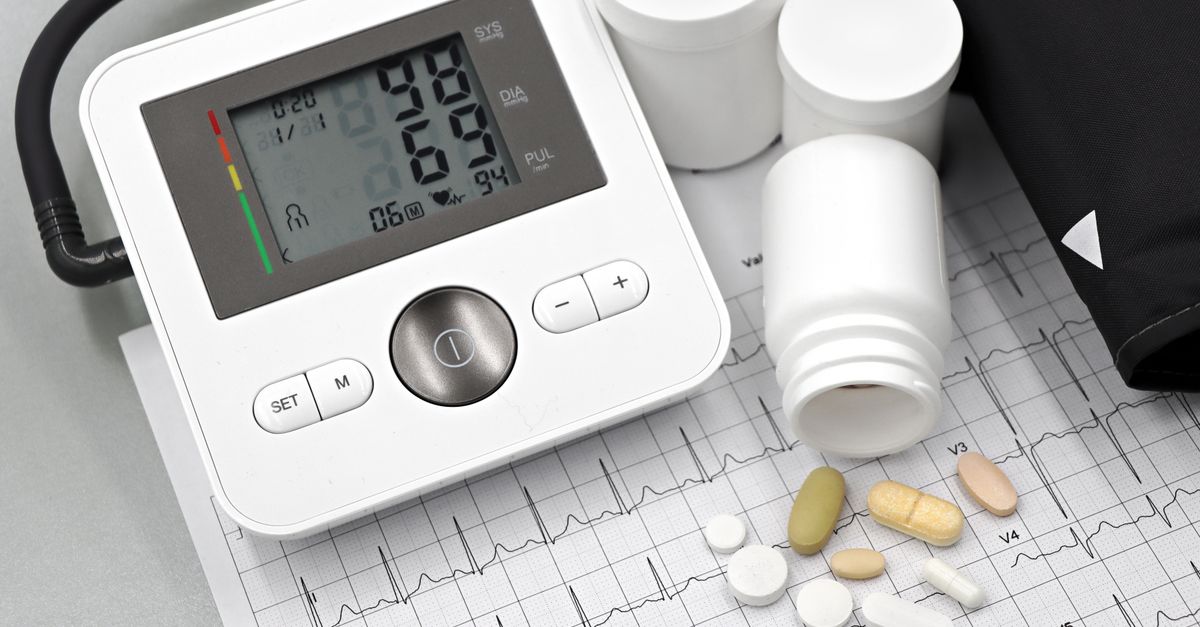
What Causes High Blood Pressure?
High blood pressure is caused by a combination of vascular resistance, cardiac output, and regulatory failures that include sodium retention, arterial stiffness, chronic low-grade inflammation, and specific nutrient deficiencies. The most common drivers are excess dietary sodium, obesity, chronic stress, sedentary lifestyle, and low intake of magnesium, potassium, and omega-3 fatty acids. The exception: a minority of cases (~10%) have a clear secondary cause such as renal artery stenosis or primary aldosteronism that requires medical workup before any supplement protocol.
---
How Blood Pressure Actually Gets Too High
Blood pressure is the product of cardiac output (how much blood your heart pumps per minute) multiplied by systemic vascular resistance (how hard your arteries push back). When either rises without a compensating drop in the other, pressure climbs.
The renin-angiotensin-aldosterone system (RAAS) is the master regulator. When sodium intake is chronically high, the RAAS suppresses renin, but sodium still drives fluid retention and vascular stiffening over time. Meanwhile, the sympathetic nervous system (SNS) amplifies the problem: chronic stress raises norepinephrine, constricts arterioles, and increases heart rate — all of which sustain elevated pressure even at rest.
Endothelial dysfunction is the third pillar. When the inner lining of blood vessels loses its ability to produce nitric oxide (NO), arteries can't dilate on demand. Oxidative stress, elevated blood glucose, and inflammation all impair NO synthesis. This is why blood pressure and metabolic health are so tightly coupled — if you're also tracking high fasting glucose or elevated CRP, those findings belong in the same clinical picture.
Primary vs. Secondary Hypertension
| Type | Prevalence | Common Drivers |
|---|---|---|
| Primary (essential) | ~90% | Genetics, diet, inactivity, stress, nutrient gaps |
| Secondary | ~10% | Renal disease, primary aldosteronism, thyroid dysfunction, sleep apnea |
If you have resistant hypertension (blood pressure that doesn't respond to three medications), or if you have unexpectedly high or low potassium alongside elevated blood pressure, ask your doctor to rule out secondary causes before assuming lifestyle factors are the only issue.
---
High Blood Pressure and Nutrient Deficiencies
This is one of the most underappreciated drivers of persistent hypertension — and one of the most actionable. Three nutrients stand out in the evidence.
Magnesium acts as a natural calcium channel blocker: it competes with calcium in smooth muscle cells, promoting vasodilation. A 2012 meta-analysis of 22 trials found that magnesium supplementation reduced systolic blood pressure by 3–4 mmHg and diastolic by 2–3 mmHg, with larger effects in people who were deficient at baseline (Kass et al., European Journal of Clinical Nutrition 2012; PMID: 22318649). Because roughly 45–48% of Americans don't meet the dietary reference intake for magnesium, this gap is widespread.
Potassium counterbalances sodium in the RAAS feedback loop and promotes renal sodium excretion. A Cochrane review of 22 RCTs found that higher potassium intake reduced systolic BP by 3.49 mmHg and diastolic by 1.96 mmHg in people with hypertension (Aburto et al., BMJ 2013; PMID: 23558164). Most Americans consume roughly half the recommended 4,700 mg/day.
Vitamin D regulates RAAS activity — low D3 status is associated with higher renin and aldosterone. A 2014 meta-analysis found an inverse association between vitamin D status and hypertension risk, though the intervention data are more mixed and effects tend to be modest in people with normal baseline D levels (Burgaz et al., Journal of Hypertension 2011; PMID: 21045737).
Nutrient deficiencies don't show up in a standard blood pressure reading — you need lab work. That's precisely why a personalized approach, where your formula is calibrated to your actual biomarker profile, tends to outperform generic supplement stacks.
---
Natural Remedies for High Blood Pressure
The phrase "natural remedies" covers a wide spectrum, from well-validated lifestyle changes to marginally evidenced herbal products. Here's how to distinguish them.
Tier 1: Strong Evidence
Dietary changes (DASH diet): The Dietary Approaches to Stop Hypertension (DASH) pattern — high in fruits, vegetables, low-fat dairy, and reduced sodium — reduces systolic BP by 8–14 mmHg in clinical trials. This is the single highest-effect non-pharmacological intervention in the literature.
Aerobic exercise: 150 minutes of moderate-intensity cardio per week produces reductions of 4–9 mmHg systolic in people with hypertension.
Sodium restriction: Cutting sodium from ~3,500 mg/day to the recommended <2,300 mg/day can lower systolic BP by 5–6 mmHg.
Stress reduction: Chronic activation of the sympathetic nervous system is a direct cause of elevated pressure. Structured mindfulness-based stress reduction (MBSR) showed a significant reduction in ambulatory systolic blood pressure in a randomized trial (Hughes et al., Psychosomatic Medicine 2013; PMID: 24077184).
Tier 2: Meaningful but Modest
- Garlic extract: Kyolic-aged garlic has reduced systolic BP by approximately 10 mmHg in some trials, though results are inconsistent.
- Hibiscus tea: Three cups daily reduced systolic BP by 7 mmHg vs. placebo in an RCT.
- Coenzyme Q10 (CoQ10/Ubiquinol): A meta-analysis of 12 trials found a mean reduction of 16.6 mmHg systolic and 8.2 mmHg diastolic, though methodology varies across studies.
- Omega-3 fatty acids (EPA/DHA): Dose-dependent reductions in blood pressure, particularly above 2g/day EPA+DHA, especially in hypertensive and older populations.
For a deeper look at how these stack up with clinical dosing, see our guide on supplements for blood pressure benefits and dosage.
---
Supplements for High Blood Pressure: What Research Shows
Not all supplements are created equal. The table below maps the ingredient to its mechanism, the evidence quality, and a realistic effect size.
| Supplement | Mechanism | Evidence Level | Typical BP Reduction (Systolic) |
|---|---|---|---|
| Magnesium Glycinate | Vasodilation via Ca²⁺ antagonism | Moderate–Strong | 3–4 mmHg |
| Omega-3 (EPA/DHA) | Reduces vascular inflammation, improves endothelial function | Strong | 2–5 mmHg |
| CoQ10/Ubiquinol | Antioxidant, improves endothelial NO production | Moderate | 11–17 mmHg (selected trials) |
| Vitamin D3 + K2 | RAAS modulation, arterial stiffness | Moderate | 2–4 mmHg |
| Potassium | Renal sodium excretion | Strong | 3–5 mmHg |
| Aged Garlic Extract | H₂S-mediated vasodilation | Moderate | 5–10 mmHg |
| Hibiscus | ACE inhibition, diuretic effect | Moderate | 5–7 mmHg |
These are not additive in a simple linear sense — some pathways overlap, and results depend heavily on baseline deficiency status. That's why stacking 7 supplements without a biomarker baseline often underdelivers.
If elevated triglycerides or high ApoB are also present alongside elevated blood pressure, you're likely looking at a broader cardiometabolic picture rather than isolated hypertension. Treating just one variable often leaves the risk profile largely intact.
---
Best Supplements for High Blood Pressure
If you're choosing between the most evidence-backed options for a personalized blood pressure protocol, these three have the strongest combined evidence across mechanisms:
1. Omega-3 Fatty Acids (EPA + DHA)
Omega-3s reduce systolic blood pressure through at least three mechanisms: suppressing inflammatory eicosanoids, improving endothelial nitric oxide availability, and reducing arterial stiffness. A dose-response meta-analysis published in the Journal of the American Heart Association (Miller et al., JAHA 2014; PMID: 24866493) found that doses above 2g/day EPA+DHA produced clinically meaningful reductions, particularly in hypertensive subjects. This makes dosing critical — fish oil capsules providing only 300–500 mg EPA+DHA are unlikely to move the number.
2. Magnesium (Glycinate or Malate Form)
Magnesium glycinate is preferred over oxide for cardiovascular endpoints because glycine chelation dramatically improves absorption. The Kass 2012 meta-analysis noted above found that 370 mg/day or more was associated with the most consistent blood pressure reductions. The glycinate form also avoids the gastrointestinal side effects that cause people to abandon magnesium oxide mid-protocol.
3. CoQ10 / Ubiquinol
CoQ10 is concentrated in cardiac mitochondria. Its antioxidant effects protect endothelial cells from oxidative stress, restoring their capacity to produce nitric oxide. The ubiquinol form (the reduced, active form) is better absorbed, especially in people over 40 where conversion from standard CoQ10 declines. At 200 mg/day, ubiquinol has demonstrated reductions in both systolic and diastolic pressure in controlled trials.
---
What This Means for Your Formula
Ones uses lab results and, where available, wearable data to determine which of these mechanisms is most relevant for you — rather than guessing based on symptoms alone.
If your blood work shows low magnesium or high inflammatory markers (elevated CRP, for instance), Magnesium Complex — Ones' proprietary blend using a highly bioavailable form — is a candidate inclusion. If your omega-3 index is low (detectable on expanded lipid panels), Omega-3 (EPA/DHA) is dosed at clinically relevant levels rather than the nominal amounts in generic multivitamins. For people with evidence of mitochondrial or endothelial strain, CoQ10/Ubiquinol at 200 mg matches the dosing used in intervention trials.
Ones also includes Heart Support, a proprietary System Blend calibrated to cardiovascular function. The AI practitioner selects which of these — and in what combination — fits within your 6 or 9 capsule daily plan based on priority findings. You don't build the stack yourself; the formula is built around your biomarker gaps.
Because blood pressure is downstream of multiple systems — adrenal, endocrine, inflammatory — the relevant protocol often spans more than one ingredient category. That's exactly the kind of multi-variable optimization that a static supplement routine doesn't handle well.
---
Key Takeaways
- High blood pressure in ~90% of cases is primary (essential) hypertension driven by diet, lifestyle, stress, and nutrient gaps — not a single identifiable disease cause.
- Magnesium, potassium, omega-3s, and vitamin D3 are the most evidence-backed nutrients for supporting healthy blood pressure; deficiency in any of them makes lifestyle-only approaches less effective.
- The DASH diet and regular aerobic exercise remain the highest-effect non-pharmacological interventions, each capable of reducing systolic pressure by 5–14 mmHg.
- CoQ10/Ubiquinol and omega-3 EPA/DHA are the two supplement categories with the most consistent cardiovascular trial data, but dose matters — most over-the-counter products underdose both.
- If blood pressure is elevated alongside high triglycerides, high CRP, or high fasting glucose, you're likely dealing with cardiometabolic syndrome — address all biomarkers, not just one.
- Always consult a healthcare provider before changing or stopping blood pressure medications; supplements are adjuncts to, not replacements for, evidence-based medical care.