Supplements
What Causes Hormonal Acne?
Hormonal acne affects up to 50% of adult women and a significant portion of adult men, yet most treatments only address the surface. Understanding the androgen, insulin, and stress hormone pathways driving breakouts is the first step toward clearing them for good.
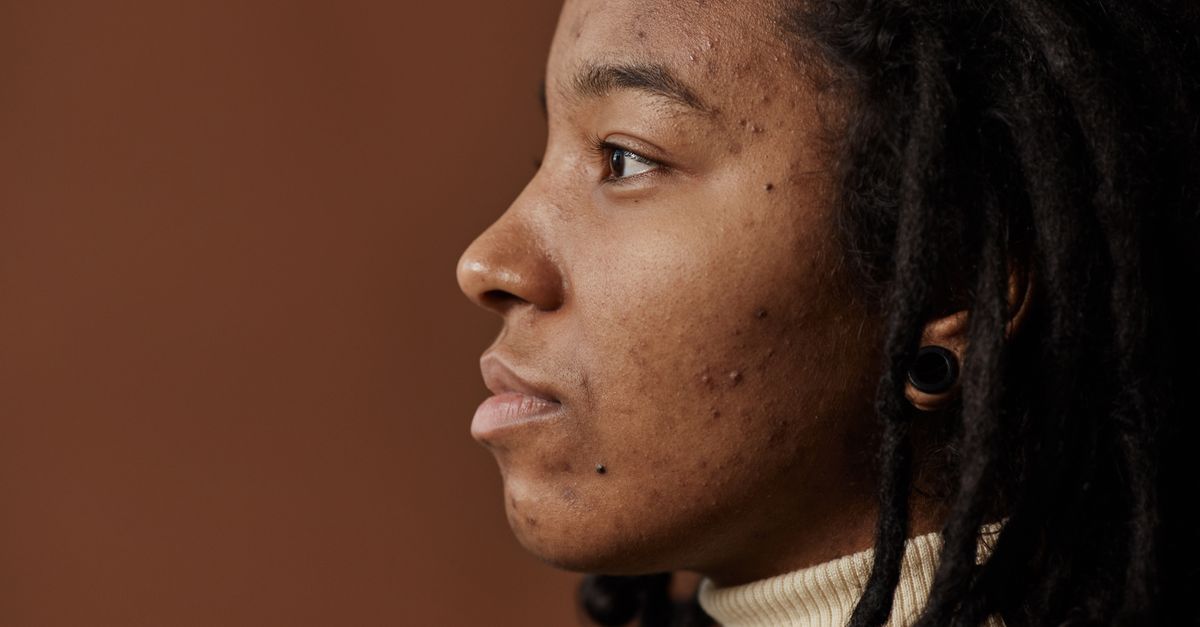
What Causes Hormonal Acne?
Hormonal acne is caused by excess androgens — primarily testosterone and its more potent derivative DHT — stimulating sebaceous glands to overproduce oil. Insulin spikes and elevated cortisol amplify the effect. The main caveat: "hormonal" acne is a spectrum, and the dominant driver varies by person. Adults with insulin resistance respond differently than those with high cortisol or elevated androgens from PCOS.
---
The Androgen–Sebum Pathway: The Core Mechanism
Sebaceous glands — the oil-producing structures attached to hair follicles — are densely packed with androgen receptors. When androgens bind to these receptors, they trigger a signaling cascade that upregulates sebum synthesis. Excess sebum creates an anaerobic, lipid-rich environment where Cutibacterium acnes (formerly Propionibacterium acnes) proliferates and triggers an inflammatory immune response.
The two androgens most implicated are:
- Free testosterone — the unbound fraction that crosses cell membranes and activates androgen receptors directly
- Dihydrotestosterone (DHT) — converted from testosterone by the enzyme 5-alpha reductase; DHT binds androgen receptors roughly 5× more potently than testosterone itself
In a landmark study of 207 women with adult acne, Carmina et al. found that 72% had biochemical evidence of hyperandrogenism — elevated free testosterone, DHEAS, or androstenedione — even when total testosterone appeared normal (Carmina et al., Journal of the American Academy of Dermatology 2006; PMID: 16443048). This is why standard testosterone panels miss the picture: free androgen index and DHEAS matter more than total T.
SHBG: The Underrated Regulator
Sex hormone-binding globulin (SHBG) is a liver-produced protein that binds testosterone and estradiol, rendering them biologically inactive. Low SHBG means more free testosterone is circulating and available to bind sebaceous androgen receptors. SHBG is suppressed by insulin — which is why diet matters enormously for hormonal acne, independent of androgen production itself.
---
Insulin, IGF-1, and Blood Sugar: The Dietary Amplifier
Carbohydrate-driven insulin spikes don't just affect weight — they directly drive acne through two parallel pathways:
- SHBG suppression — high insulin reduces SHBG synthesis in the liver, freeing more androgens to reach sebaceous glands
- IGF-1 upregulation — insulin stimulates hepatic IGF-1 production, which independently activates androgen receptors and promotes keratinocyte proliferation (pore-clogging)
A controlled trial by Smith et al. in 43 young men found that a low-glycemic-load diet for 12 weeks significantly reduced total acne lesion count and improved insulin sensitivity compared to a high-glycemic diet — with the acne improvement correlating closely with the reduction in free androgen index (Smith et al., American Journal of Clinical Nutrition 2007; PMID: 17616769).
This connects directly to conditions like PCOS, where insulin resistance drives elevated LH, suppressed SHBG, and excess ovarian androgen production — a triple hit on acne-prone skin. For a deeper look at how hormonal acne responds to zinc and inositol supplementation, the PCOS–insulin–acne axis is especially relevant.
| Dietary Factor | Effect on Acne Risk | Mechanism |
|---|---|---|
| High glycemic index foods | ↑ | ↑ Insulin → ↓ SHBG, ↑ IGF-1 |
| Dairy (especially skim) | ↑ | Contains IGF-1 precursors, whey spikes insulin |
| Low glycemic diet | ↓ | ↓ Free androgens, ↑ SHBG |
| Omega-3 fatty acids | ↓ | ↓ Inflammatory eicosanoids, ↓ IGF-1 |
---
Cortisol and Stress: The Overlooked Trigger
The adrenal glands produce DHEAS — dehydroepiandrosterone sulfate — a precursor androgen that peripheral tissues convert to testosterone and DHT. Under chronic psychological stress, cortisol and DHEAS both rise. Elevated DHEAS is one of the most common hormonal abnormalities found in adult acne patients.
Cortisol also:
- Upregulates sebaceous gland activity directly
- Promotes gut permeability, contributing to systemic inflammation that worsens inflammatory acne lesions
- Disrupts sleep, which further elevates cortisol in a feedback loop
For adults noticing that breakouts worsen during high-stress periods, testing serum DHEAS alongside cortisol (morning and evening to assess diurnal rhythm) provides far more actionable data than a single testosterone panel. Mood swings and irritability linked to hormonal and nutritional imbalances often co-occur with stress-driven hormonal acne — these aren't separate problems.
---
Key Biomarkers to Test for Hormonal Acne
If topical treatments aren't resolving adult acne, these lab markers help pinpoint the root cause:
| Biomarker | What It Reveals | Optimal Range |
|---|---|---|
| Free Testosterone | Active androgen burden | Lower third of ref range |
| DHEAS | Adrenal androgen overload | Age-appropriate midrange |
| SHBG | Androgen buffering capacity | 40–130 nmol/L (women) |
| Fasting Insulin | Insulin resistance | <5 µIU/mL |
| IGF-1 | Growth factor–acne link | Age-appropriate midrange |
| hs-CRP | Systemic inflammation | <1.0 mg/L |
| Free Androgen Index | Testosterone/SHBG ratio | <5 (women) |
Blood work alone doesn't tell the full story. Wearable-derived sleep data and HRV patterns can flag chronic cortisol dysregulation that won't show on a single morning cortisol draw — this is exactly the kind of multi-signal analysis that precision health platforms are designed to interpret.
---
The Gut–Skin Axis: Microbiome Contributions
An emerging body of research links gut dysbiosis to inflammatory skin conditions, including acne. The proposed mechanisms include:
- Increased intestinal permeability ("leaky gut") allowing lipopolysaccharides (LPS) from gram-negative bacteria to enter systemic circulation, activating toll-like receptors and amplifying cutaneous inflammation
- Altered estrogen metabolism — the gut microbiome regulates estrogen recirculation via beta-glucuronidase activity; dysbiosis can shift estrogen–androgen ratios unfavorably
- Short-chain fatty acid depletion — reduced butyrate producers correlate with higher systemic inflammatory markers
A 2021 meta-analysis of seven studies found significantly lower gut microbiome diversity in acne patients compared to controls, with enrichment of inflammatory species and depletion of Lactobacillus and Bifidobacterium (Yan et al., Journal of Dermatology 2022; PMID: 34558754). Understanding what causes leaky gut is relevant for anyone whose acne has an inflammatory or cystic presentation that doesn't respond to androgen-focused interventions alone.
---
Natural Interventions Supported by Clinical Evidence
Zinc
Zinc inhibits 5-alpha reductase (reducing DHT conversion), suppresses C. acnes proliferation, and has direct anti-inflammatory effects on sebaceous glands. A meta-analysis of 17 randomized controlled trials found that oral zinc was significantly more effective than placebo for inflammatory acne, though less potent than oral antibiotics as monotherapy (Yee et al., Dermatologic Therapy 2020; PMID: 32860489). Clinically effective doses range from 25–45 mg elemental zinc daily as zinc gluconate or zinc glycinate.
Inositol (Myo-Inositol)
In women with PCOS-related hormonal acne, myo-inositol improves insulin sensitivity and lowers free testosterone. A 2012 randomized trial in 46 PCOS patients found that 4g myo-inositol daily for six months significantly reduced acne score, free testosterone, and fasting insulin versus placebo (Zacchè et al., Gynecological Endocrinology 2009; PMID: 19462513). The insulin-sensitizing mechanism is the primary driver — myo-inositol acts as a second messenger in insulin signaling cascades.
Omega-3 Fatty Acids
Omega-3s (EPA and DHA) compete with arachidonic acid for incorporation into membrane phospholipids, shifting eicosanoid production away from pro-inflammatory prostaglandins toward anti-inflammatory resolvins. A 10-week randomized trial found that omega-3 supplementation significantly reduced inflammatory and non-inflammatory acne lesions, with effects correlating with the increase in erythrocyte EPA/AA ratio (Khayef et al., Lipids in Health and Disease 2012; PMID: 22265537).
Spearmint Tea / Anti-Androgen Botanicals
Spearmint has documented anti-androgenic properties. A small but well-designed RCT by Grant found that two cups of spearmint tea daily for 30 days significantly reduced free testosterone and total testosterone in women with hirsutism (Grant, Phytotherapy Research 2010; PMID: 19585478). While this study examined hirsutism, the androgen-lowering mechanism is directly relevant to hormonally-driven acne.
For a broader review of natural remedies for hormonal acne and what the evidence actually supports, the androgen-focused botanicals warrant closer attention.
---
What This Means for Your Formula
Hormonal acne has multiple biochemical drivers — and effective supplementation needs to match the driver identified through testing, not follow a one-size-fits-all stack.
Ones addresses the androgen–sebum–inflammation axis with several targeted actives:
- Zinc (as zinc glycinate, 25–30 mg elemental) — dosed at the range shown effective in RCTs for inflammatory acne; Ones includes zinc as a standalone active calibrated to your serum zinc and free androgen index, not as a trace element in a broad multi
- Omega-3 (EPA/DHA) — Ones sources high-concentration triglyceride-form omega-3 to achieve the EPA levels associated with reduced inflammatory eicosanoids; EPA dose is adjusted based on your Omega-3 Index from blood work, not a fixed default
- Endocrine Support (proprietary blend) — Ones' Endocrine Support system blend is formulated for users whose AI assessment flags androgen excess or SHBG dysregulation, incorporating botanicals with documented 5-alpha reductase inhibitory and insulin-sensitizing activity
For users whose acne pattern correlates with stress and elevated DHEAS, Ones' Adrenal Support blend targets the HPA axis, addressing the cortisol–DHEAS–androgen cascade at the upstream source rather than treating the skin symptom directly.
The key difference between a personalized formula and a supplement you pick off a shelf is that Ones builds your stack from your lab values — not from a generic "hormonal acne" product template.
---
Key Takeaways
- Hormonal acne is driven by androgen excess, insulin spikes, cortisol dysregulation, and gut inflammation — often in combination, not in isolation
- Free testosterone, DHEAS, SHBG, and fasting insulin are the most informative biomarkers; total testosterone alone misses most cases
- Insulin suppresses SHBG, freeing more androgens regardless of androgen production — which is why high-glycemic diets worsen hormonal acne even without elevated total testosterone
- Zinc, omega-3s, and myo-inositol have randomized trial evidence for reducing inflammatory acne lesions through distinct mechanisms (DHT inhibition, eicosanoid shift, and insulin sensitization respectively)
- Gut dysbiosis and leaky gut contribute to inflammatory acne through systemic LPS exposure and altered estrogen metabolism — skin-only treatments miss this pathway entirely
- Matching the intervention to the driver — identified through lab testing rather than symptom pattern alone — is what separates effective supplementation from guesswork
---
Always consult a licensed healthcare provider before beginning any supplement protocol, particularly if you have PCOS, an endocrine disorder, or are taking hormonal medications.