Women's Health
What Is a Normal Free Testosterone Level in PCOS?
Free testosterone is often the most telling androgen marker in PCOS — yet most standard panels only report total testosterone, missing the whole picture. Understanding where your free T falls, and why the reference range alone doesn't tell the full story, is essential for anyone managing PCOS symptoms.
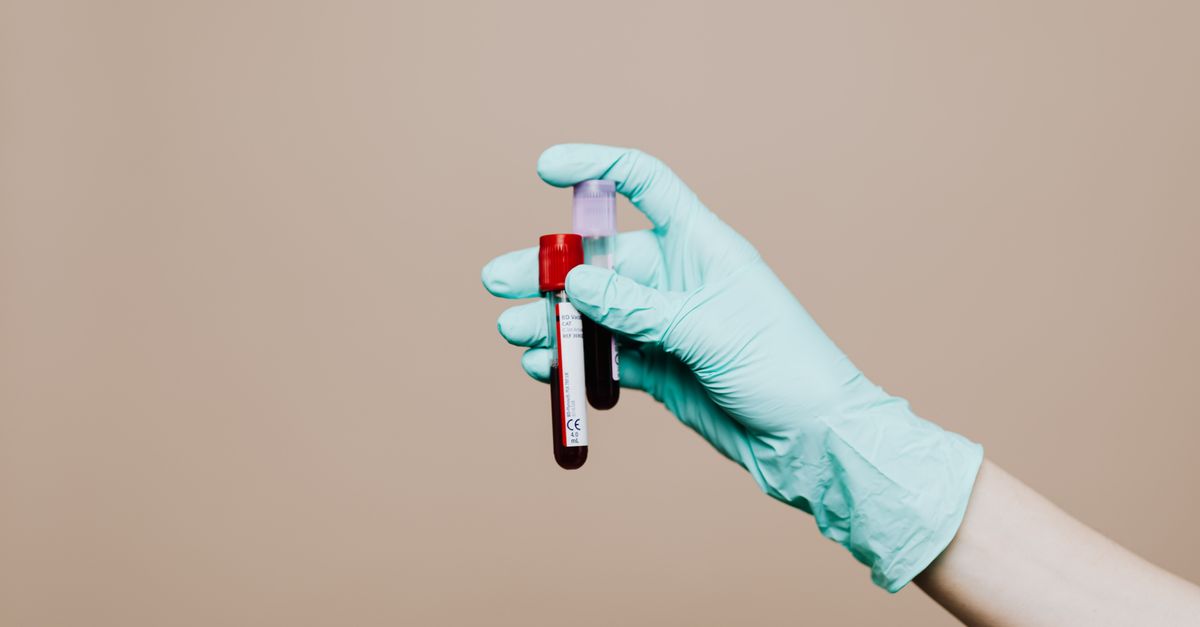
What Is a Normal Free Testosterone Level in PCOS?
For most women with PCOS, a "normal" free testosterone sits between 0.3 and 1.9 pg/mL (or 1–6.4 pmol/L), but this reference range was built on averages across all cycling women — many of whom also have mild androgen excess. If your free T exceeds 2.0 pg/mL alongside irregular cycles and clinical signs like acne or hirsutism, that is considered elevated for diagnostic purposes. The exception: women on hormonal contraceptives often show falsely suppressed free T because the pill raises sex hormone-binding globulin (SHBG), which binds free testosterone and pulls it out of circulation.
---
Why Free Testosterone Matters More Than Total Testosterone in PCOS
Total testosterone measures the entire pool of testosterone in blood — the fraction bound tightly to SHBG, the fraction loosely bound to albumin, and the small unbound fraction. Only the unbound (free) portion and the albumin-bound fraction can enter cells and exert biological effects. In PCOS, total testosterone may appear within the lab's normal range even when free testosterone is significantly elevated, because insulin resistance — a hallmark of many PCOS subtypes — suppresses SHBG production in the liver. Lower SHBG means more testosterone is unbound and biologically active.
This is not a rare edge case. A 2010 analysis published in the Journal of Clinical Endocrinology & Metabolism found that up to 25% of women with PCOS and normal total testosterone had elevated free androgen index or free testosterone when calculated correctly (Goodman et al., JCEM 2011; PMID: 21289270). Relying solely on total testosterone misses a substantial portion of clinically relevant androgen excess.
For a broader look at how testosterone reference ranges apply in PCOS, see what is a normal testosterone level in PCOS — that article walks through total T ranges in detail and complements the free T discussion here.
---
Reference Ranges: What Labs Report vs. What Clinicians Target
Lab reference ranges for free testosterone in women are notoriously inconsistent across laboratories, assay methods, and even time of day. Here is a general framework based on current clinical guidance:
| Measurement Method | Reference Range (Women, Premenopausal) | Elevated in PCOS Context |
|---|---|---|
| Equilibrium dialysis (gold standard) | 0.3 – 1.9 pg/mL | > 2.0 pg/mL |
| Calculated free T (Vermeulen formula) | 1.0 – 8.5 pg/mL | > 9.0 pg/mL |
| Free androgen index (FAI = total T / SHBG × 100) | < 5 | > 5–6 |
| Immunoassay (direct, less accurate) | Varies widely by lab | Interpret cautiously |
Equilibrium dialysis is the reference standard recommended by the Endocrine Society for measuring free testosterone, but it is expensive and rarely used in routine practice. Most labs instead calculate free testosterone from total testosterone and SHBG using the Vermeulen formula — this is considered a clinically acceptable and reasonably accurate surrogate (Vermeulen et al., JCEM 1999; PMID: 10523012).
The free androgen index (FAI) is widely used in PCOS research and clinical practice precisely because it captures the SHBG-driven dynamic. An FAI above 5 in a symptomatic woman is a meaningful signal even when total testosterone looks normal.
---
How PCOS Drives Free Testosterone Elevation: The Mechanism
Understanding why free testosterone rises in PCOS helps clarify why the range isn't a simple cut-off.
Step 1 — Insulin resistance suppresses SHBG. The liver reduces SHBG synthesis when insulin signaling is chronically elevated. This is why women with the insulin-resistant PCOS phenotype (often characterized by central adiposity and elevated fasting insulin) tend to show the most dramatic free T elevation despite only modest total T increases.
Step 2 — LH hypersecretion stimulates ovarian androgen production. In PCOS, the pulsatile LH:FSH ratio is frequently elevated, driving theca cells in the ovary to overproduce androgens — primarily androstenedione and testosterone (Balen, Human Reproduction 1993; PMID: 8395401).
Step 3 — Adrenal contribution in some subtypes. A subset of PCOS presentations involve elevated DHEA-S from the adrenal glands, adding to the androgenic burden. DHEA-S is a useful complementary marker; if it is elevated alongside free T, an adrenal component is likely.
This multi-pathway mechanism is exactly why a single free T number without context — SHBG, LH, FSH, DHEA-S, fasting insulin, and clinical symptoms — can be misleading. For the relationship between iron metabolism and PCOS hormonal patterns, what is a normal iron level in PCOS provides useful context, as iron dysregulation and androgen excess frequently co-occur.
---
What "Normal" Actually Looks Like Across PCOS Phenotypes
The Rotterdam criteria recognize four PCOS phenotypes (A through D), and free testosterone elevation is not present — or equally elevated — in all of them.
| PCOS Phenotype | Key Features | Typical Free T Pattern |
|---|---|---|
| Phenotype A (classic) | Hyperandrogenism + anovulation + PCO morphology | Most elevated free T |
| Phenotype B | Hyperandrogenism + anovulation, no PCO morphology | Elevated free T |
| Phenotype C | Hyperandrogenism + PCO morphology, ovulatory | Mildly elevated free T |
| Phenotype D (ovulatory) | Anovulation + PCO morphology, no hyperandrogenism | Free T often normal |
This means a woman with Phenotype D PCOS may have free testosterone squarely within population reference ranges and still carry a PCOS diagnosis. Conversely, someone with Phenotype A may have free T at 2.5–3.5 pg/mL with debilitating symptoms while technically only sitting just above the upper reference limit.
If you are postpartum and trying to interpret shifted hormone values, what is a normal free testosterone level postpartum covers how the postpartum period alters androgen baselines and what to expect as levels normalize.
---
Common Symptoms Linked to Elevated Free Testosterone in PCOS
Free testosterone acts at the androgen receptor in tissues throughout the body. The clinical manifestations reflect where androgen sensitivity is highest in a given individual — which is partly genetic (CAG repeat length in the androgen receptor gene influences sensitivity).
Common symptoms associated with elevated free T in PCOS:
- Hirsutism — unwanted terminal hair growth on the face, chest, abdomen, or back; graded by the modified Ferriman-Gallwey score
- Acne — especially jawline or cystic acne that tracks with the menstrual cycle (or its absence)
- Androgenic alopecia — diffuse thinning at the crown (female-pattern hair loss), sometimes confused with thyroid-related hair loss
- Clitoral enlargement (rarely, in severe cases)
- Mood changes — some research links androgen excess to irritability and anxiety in PCOS populations, though this is confounded by sleep disruption and metabolic stress (Jedel et al., Psychoneuroendocrinology 2010; PMID: 19828255)
- Insulin resistance and weight gain — elevated androgens and insulin resistance are bidirectionally reinforcing in PCOS
Note that symptom severity does not always correlate linearly with free T levels. A woman with high androgen receptor sensitivity may be symptomatic at 1.8 pg/mL, while another with lower receptor sensitivity shows fewer symptoms at 2.5 pg/mL. This is why clinicians use symptom pattern alongside lab values, not in isolation.
For those wondering why symptoms persist even when labs look acceptable, why is my free testosterone normal but I still feel awful addresses receptor sensitivity, tissue-level androgen conversion, and other mechanisms that explain the discrepancy.
---
How to Correctly Time and Interpret Your Free Testosterone Test
Free testosterone levels fluctuate significantly within the menstrual cycle, within a single day, and across testing methodologies. Getting the timing and context right matters.
Timing within the cycle: Androgens peak in the mid-follicular to periovulatory phase (days 7–12 of a 28-day cycle). Testing in this window captures peak values and is most likely to reveal elevation. Luteal phase testing tends to underestimate androgen levels.
Time of day: Testosterone follows a diurnal pattern — highest between 7–10 AM, declining through the afternoon. Morning fasting blood draws are standard for this reason.
Medication interactions: Oral contraceptive pills dramatically suppress free testosterone by raising SHBG; waiting at least 2–3 months after stopping the pill is generally recommended before interpreting free T values as reflective of your true baseline.
What to request alongside free T:
- Total testosterone (to calculate free androgen index)
- SHBG (required for calculated free T)
- LH and FSH (ratio pattern is informative)
- DHEA-S (flags adrenal contribution)
- Fasting insulin and glucose (for HOMA-IR)
- AMH — a sensitive PCOS marker; what is a normal AMH level in PCOS covers expected ranges in detail
Without this panel, free testosterone alone can be difficult to interpret. Many clinicians will also check a thyroid panel, since hypothyroidism can suppress SHBG and mimic some PCOS hormonal patterns — what is a normal free T4 level in PCOS explains that intersection.
---
Treatment Approaches That Lower Free Testosterone in PCOS
Managing elevated free testosterone in PCOS is approached differently depending on whether the driver is predominantly insulin resistance, ovarian androgen overproduction, adrenal excess, or reduced SHBG. Evidence-based options include:
Lifestyle and metabolic interventions:
- Weight loss of 5–10% of body weight in overweight women with PCOS consistently reduces free T and raises SHBG (Kiddy et al., Clinical Endocrinology 1992; PMID: 1424163)
- Low-glycemic-index dietary patterns reduce insulin-driven SHBG suppression
- Resistance training improves insulin sensitivity and modulates androgen levels
Pharmacological options:
- Combined oral contraceptives — raise SHBG and suppress LH, the most common first-line approach for symptom management
- Metformin — reduces insulin resistance, indirectly lowers free T by raising SHBG
- Spironolactone — androgen receptor blocker; reduces symptoms of hyperandrogenism without strongly affecting serum levels
- GnRH agonists — reserved for severe cases under specialist supervision
Nutritional and supplement-level support:
Several micronutrients and botanicals have documented effects on the PCOS androgen axis:
| Nutrient / Botanical | Mechanism | Evidence Quality |
|---|---|---|
| Inositol (myo + D-chiro blend) | Improves insulin signaling, raises SHBG | Multiple RCTs, Cochrane review |
| Magnesium | Improves insulin sensitivity, may reduce androgen synthesis | Observational + small RCTs |
| Zinc | Inhibits 5-alpha reductase; may reduce hirsutism | Small RCTs |
| Spearmint tea / extract | Anti-androgenic effect via LH suppression | Small RCT (Grant, Phytotherapy Research 2010; PMID: 19585478) |
| N-acetylcysteine (NAC) | Improves insulin sensitivity, comparable to metformin in some trials | Several RCTs |
Consult a healthcare provider before initiating any pharmacological treatment or significant supplement protocol, as PCOS management requires individualized assessment.
---
What This Means for Your Formula
If your PCOS workup shows elevated free testosterone — particularly in the context of reduced SHBG and elevated fasting insulin — the hormonal picture involves intersecting systems: insulin signaling, inflammation, adrenal function, and androgen metabolism. Supplement support, when it is evidence-based and dosed correctly, works best when it targets the actual drivers your labs reveal.
Ones analyzes your blood work (including androgen panel, insulin markers, and nutrient status) alongside wearable data to identify which of these systems needs support in your specific case. For someone with insulin-driven SHBG suppression, Ones may include Magnesium Glycinate (the same form shown in insulin-sensitizing trials, dosed within the clinically relevant 300–400 mg elemental range) to address magnesium insufficiency — a common finding in insulin-resistant PCOS given magnesium's role as a cofactor in over 300 enzymatic reactions including glucose metabolism. The formula may also incorporate Zinc (typically as zinc bisglycinate, 15–25 mg elemental), reflecting trial data on 5-alpha reductase inhibition and modest free T reduction. If inflammatory or adrenal markers are elevated — DHEA-S, cortisol, or inflammatory CRP alongside androgen findings — Adrenal Support (Ones' proprietary blend) may be incorporated, since chronic adrenal stress can amplify androgen output in a subset of PCOS presentations.
The key distinction is that Ones doesn't apply a standard PCOS formula to every user. The AI reads the specific pattern — which androgens are elevated, what the SHBG looks like, what the metabolic markers show — and builds a capsule formula calibrated to that actual profile, not to a PCOS diagnosis as a category.
---
Key Takeaways
- Free testosterone is a more sensitive androgen marker than total T in PCOS because insulin resistance suppresses SHBG, increasing the biologically active fraction even when total testosterone appears normal.
- The reference range (0.3–1.9 pg/mL by equilibrium dialysis) has significant limitations — symptom pattern, SHBG, FAI, and PCOS phenotype must all be considered alongside the number.
- Free T elevation is not uniform across PCOS phenotypes — Phenotype D (ovulatory) commonly shows normal free T, while Phenotype A (classic) tends to show the most significant elevation.
- Testing timing matters — morning, fasting, early follicular phase, and off hormonal contraceptives for 2–3 months gives the most interpretable result.
- Elevated free T is a symptom of underlying drivers (insulin resistance, LH hypersecretion, adrenal excess), not the primary cause — treatment that addresses the driver produces more durable results than symptom suppression alone.
- Individualized analysis of the full androgen + metabolic panel — not a single free T number — is what clinicians and tools like Ones use to make meaningful supplement or lifestyle recommendations.
---
This article is for informational purposes only and does not constitute medical advice. Consult a qualified healthcare provider for diagnosis and treatment of PCOS or any hormonal condition.