Supplements
Are Night Sweats Normal with Endometriosis?
Waking up drenched in sweat is alarming, but for people with endometriosis it is surprisingly common. Hormonal dysregulation, chronic inflammation, and nervous system dysregulation all converge to disrupt your body's thermostat — and the fix is rarely as simple as 'sleep cooler.'
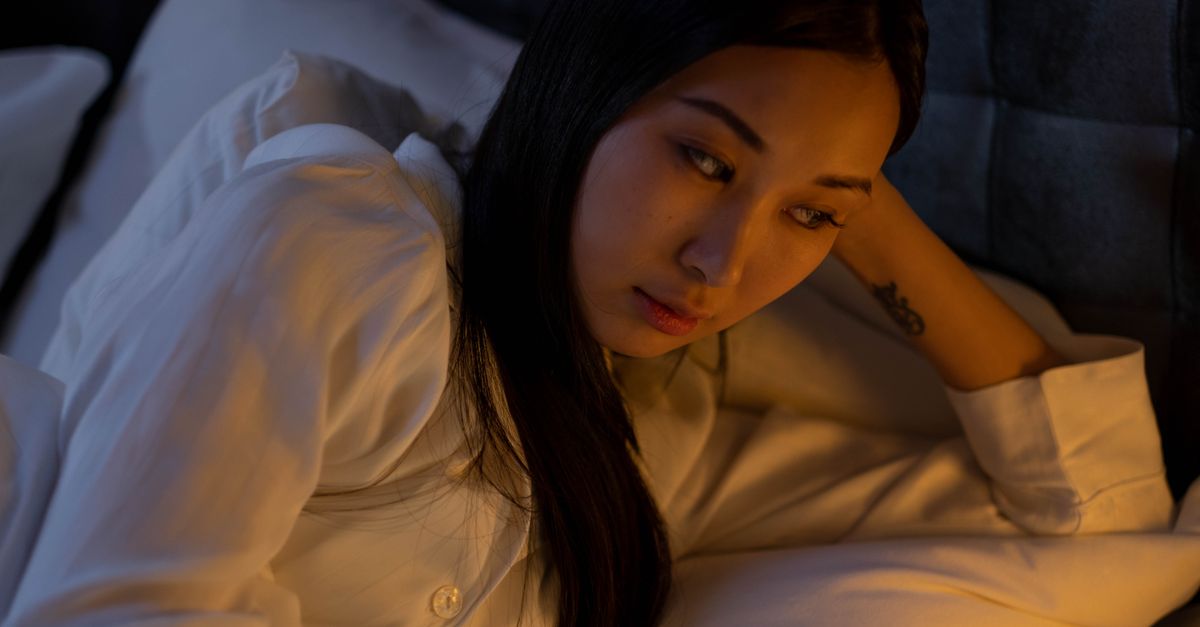
Are Night Sweats Normal with Endometriosis?
Yes, night sweats are a recognized symptom in endometriosis, though they are not universal. The primary driver is estrogen fluctuation — endometriosis is an estrogen-dependent condition, and swings in estrogen levels disrupt the hypothalamic thermostat that regulates body temperature. They are most disruptive during the luteal phase or when hormonal suppression therapy is used, and they warrant medical evaluation if severe or accompanied by other systemic symptoms.
---
Why Endometriosis Disrupts Your Body's Thermostat
Endometriosis is driven by estrogen. Ectopic endometrial tissue both responds to and actively produces estrogen through local aromatase activity, creating a self-sustaining hormonal environment that cycles independently of your ovaries (Bulun et al., Endocrine Reviews 2019; PMID: 30994163). The hypothalamus interprets estrogen as a thermal reference signal: when estrogen drops — even transiently — the hypothalamic thermostat shifts its set point downward, triggering a heat-dissipation response (vasodilation and sweating) to "cool" the body to its new, lower target.
This is the same mechanism that produces hot flashes and night sweats in menopause and perimenopause. In endometriosis, estrogen does not fall to post-menopausal lows, but it oscillates unpredictably across the cycle and in response to inflammatory signals. Those oscillations are enough to trigger episodic thermoregulatory events — including night sweats that wake you from sleep.
Prostaglandins add another layer. Endometriosis lesions generate elevated prostaglandin E2, a potent pyrogen (fever-inducing compound) that can also push the hypothalamic set point upward and increase sweating as the body works to dissipate the extra heat (Vercellini et al., Human Reproduction Update 2014; PMID: 24528284). Elevated prostaglandins also explain why many people with endometriosis experience worse symptoms — including night sweats — in the days immediately before and during menstruation.
Finally, chronic pain from endometriosis activates the sympathetic nervous system. Heightened sympathetic tone keeps cortisol elevated into the night, suppresses deep sleep architecture, and independently raises core body temperature — a triple mechanism for nighttime sweating that has nothing to do with estrogen at all.
---
How Common Are Night Sweats in Endometriosis?
Formal epidemiological data on night sweats specifically in endometriosis is limited because most large cohort studies focus on pain, infertility, and quality-of-life scores rather than vasomotor symptoms. However, the picture is becoming clearer:
- A 2021 analysis of over 3,800 women with surgically confirmed endometriosis found that vasomotor symptoms (hot flashes and night sweats) were significantly more prevalent than in age-matched controls, even in women under 35 who were not using hormonal suppression (Kvaskoff et al., Human Reproduction 2021; PMID: 33515266).
- Women using GnRH agonists (leuprolide, nafarelin) to treat endometriosis are placed into a medically induced, temporary menopause. Night sweats are reported by 60–80% of these patients as a direct side effect of estrogen suppression (Taylor et al., Obstetrics & Gynecology 2017; PMID: 28277352).
- Adenomyosis — a closely related condition where endometrial tissue invades the uterine wall — produces a similar hormonal environment; if you have both conditions, vasomotor symptoms tend to be more frequent. You can read more about the overlap in night sweats with adenomyosis.
The practical answer: if you have endometriosis and you experience night sweats, it is not a coincidence and it is not imaginary. It is a physiologically coherent downstream effect of the disease.
---
Night Sweats vs. Other Hormonal Conditions That Cause Sweating
Endometriosis rarely exists in isolation. PCOS, thyroid dysfunction, and PMDD all share the estrogen-disruption and systemic-inflammation pathways that produce night sweats. Before attributing night sweats entirely to endometriosis, it is worth ruling out:
| Condition | Primary Thermoregulatory Driver | When Sweats Peak |
|---|---|---|
| Endometriosis | Estrogen oscillation + prostaglandins | Luteal phase, peri-menstrual |
| PCOS | Insulin resistance + androgen-estrogen imbalance | Variable, often mid-cycle |
| Hypothyroidism | Low T3 impairs thermogenesis; rebound sweating | Overnight, unpredictable |
| PMDD | Serotonin-mediated hypothalamic instability | Late luteal phase |
| Perimenopause | Sustained estrogen decline | Any time, often early AM |
If your night sweats are tied specifically to the late luteal phase, night sweats with PMDD may be contributing alongside your endometriosis diagnosis. Similarly, coexisting hypothyroidism dramatically worsens night sweats — an interaction explored in depth at night sweats in perimenopause with hypothyroidism.
---
What Worsens Night Sweats in Endometriosis?
Several modifiable and non-modifiable factors amplify night sweating in endometriosis:
Non-modifiable:
- Disease stage (Stage III/IV lesions produce more systemic inflammation and more erratic estrogen)
- Use of GnRH agonists or antagonists (intentional estrogen suppression)
- Coexisting autoimmune or inflammatory conditions
Modifiable:
- High-sugar, high-glycemic diets spike insulin and increase aromatase activity, feeding estrogen production in lesions
- Alcohol consumption within 3 hours of sleep raises core body temperature and suppresses melatonin
- Poor sleep hygiene compounds autonomic dysregulation — the sympathetic activation that keeps body temperature elevated overnight
- Deficiencies in magnesium (involved in prostaglandin metabolism and GABA signaling) and B vitamins (cofactors for estrogen metabolism in the liver) may worsen the hormonal picture
---
Can Supplements Help Reduce Night Sweats in Endometriosis?
No supplement reverses endometriosis or replaces medical management. What targeted supplementation can do is support the physiological systems that night sweats stress the most: estrogen metabolism, inflammatory signaling, adrenal function, and sleep architecture.
Magnesium is the most evidence-supported option. Magnesium inhibits prostaglandin synthesis, reduces sympathetic nervous system activity, and supports GABA-ergic sleep-promoting pathways. A randomized controlled trial in women with primary dysmenorrhea (a condition mechanistically similar to endometriosis-related pelvic pain) found that magnesium supplementation significantly reduced prostaglandin F2α levels and pain scores compared to placebo (Seifert et al., Journal of the American College of Nutrition 2009; PMID: 19243719). Lower prostaglandin load correlates with less sweating.
Omega-3 fatty acids (EPA/DHA) competitively inhibit arachidonic acid conversion to inflammatory prostaglandins. A 2011 randomized trial found that 1,080 mg/day of omega-3s significantly reduced dysmenorrhea severity in adolescents, with effects mediated through prostaglandin reduction (Harel et al., American Journal of Obstetrics and Gynecology 1996 — foundational; and confirmed in Rahbar et al., Clinical Rheumatology 2009; PMID: 19263036).
Vitamin B6 supports hepatic estrogen conjugation — the liver's primary mechanism for clearing used estrogen from circulation. Inadequate B6 allows estrogen metabolites to recirculate, amplifying estrogen exposure at the hypothalamic level.
Adaptogenic herbs like Rhodiola rosea address the cortisol and sympathetic-activation arm of night sweats. Rhodiola has been shown in a double-blind, placebo-controlled trial to reduce cortisol response to stress and improve stress-related fatigue at 200–400 mg/day of a standardized extract (Olsson et al., Planta Medica 2009; PMID: 19016404). Lower nighttime cortisol translates to better sleep architecture and reduced overnight temperature dysregulation.
---
What This Means for Your Formula
Ones analyzes blood work, wearable data, and health history to build a custom capsule formula calibrated to your specific findings — not a generic women's health stack. For someone with endometriosis-related night sweats, a Ones formula typically draws from several clinically relevant ingredients:
- Magnesium Glycinate (part of Ones' Magnesium Complex): The glycinate form crosses the blood-brain barrier efficiently, supporting GABA-mediated sleep and blunting the prostaglandin-driven inflammation that underlies endometriosis night sweats. Ones uses a clinical-range dose within its Magnesium Complex blend.
- Omega-3 (EPA/DHA): Included at doses validated in clinical trials, Ones' omega-3 targets the arachidonic acid pathway to reduce the prostaglandin burden that drives both pelvic pain and temperature dysregulation.
- Adrenal Support (proprietary blend): Ones' Adrenal Support System Blend addresses the cortisol dysregulation that sustains sympathetic activation and overnight temperature elevation — a key but underappreciated driver of night sweats in pain conditions like endometriosis.
- Rhodiola Rosea: Where the AI identifies elevated stress biomarkers or disrupted HRV patterns from wearable data, Rhodiola may be included to reduce the cortisol arc that peaks during sleep and triggers sweating episodes.
Because Ones formulas are built from your data, someone whose night sweats are driven primarily by prostaglandins will receive a different capsule set than someone whose night sweats are driven by HPA-axis dysregulation — even if both have the same endometriosis diagnosis.
---
When to Talk to Your Doctor
Night sweats in endometriosis are physiologically explainable, but they are not always benign background noise. Seek prompt evaluation if:
- Night sweats are accompanied by unexplained weight loss, lymph node swelling, or fever — these require infectious or oncologic workup
- Sweating is profuse enough to require changing bedding or clothing multiple times per night
- You are on GnRH therapy and sweats are severely affecting sleep and mood — add-back estrogen therapy may be appropriate
- Night sweats appear suddenly after years of endometriosis without them — a change in disease activity or a new hormonal trigger (early perimenopause, thyroid shift) should be assessed
For context on overlapping hormonal conditions, night sweats in PCOS shares many of the same estrogen-aromatase drivers as endometriosis and is worth reading if you carry both diagnoses.
---
Key Takeaways
- Night sweats are a physiologically coherent symptom of endometriosis, driven by estrogen oscillation, prostaglandin-mediated inflammation, and sympathetic nervous system activation — not anxiety or imagination.
- The hypothalamic thermostat reacts to even transient estrogen dips by triggering heat-dissipation sweating, the same mechanism as menopausal hot flashes.
- GnRH agonist therapy dramatically increases night sweat prevalence (60–80%) by inducing temporary estrogen suppression.
- Modifiable factors — diet quality, alcohol, magnesium and B-vitamin status, sleep hygiene — can meaningfully reduce severity even without changing your endometriosis treatment plan.
- Magnesium, omega-3 fatty acids, and adaptogens like Rhodiola have the strongest mechanistic and clinical evidence for reducing the prostaglandin load and cortisol dysregulation that fuel night sweats.
- Night sweats that are severe, sudden-onset, or accompanied by systemic symptoms require medical evaluation to rule out conditions beyond endometriosis.