Skin & Beauty
Does Collagen Help with Nails?
Brittle, slow-growing nails affect millions of adults, yet most nail-strengthening products address the surface rather than the structural root. Collagen peptides have emerged as one of the few oral supplements with actual clinical trial data behind them — but the evidence comes with important nuances about dose, duration, and who benefits most.
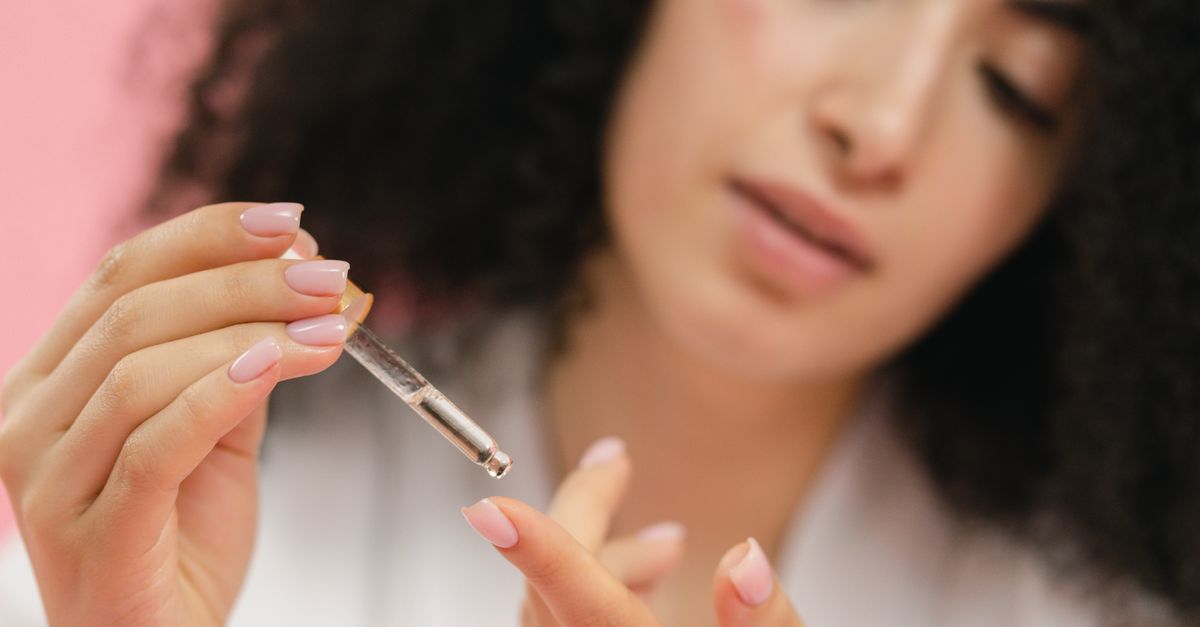
Does Collagen Help with Nails?
Yes, for most people — but only with the right form and enough time. Randomized controlled trials show that oral collagen peptides taken at 2.5–5 g daily for at least 24 weeks meaningfully reduce nail brittleness and increase growth rate. The catch: results are modest for people with already adequate protein intake, and nail improvements are typically among the last benefits to appear.
What Nails Are Actually Made Of — and Where Collagen Fits
Fingernails are composed primarily of a hard protein called alpha-keratin, not collagen. This distinction matters because it is sometimes used to dismiss collagen supplementation as irrelevant to nail health. The dismissal is too fast.
The nail matrix — the living tissue beneath the nail bed that generates new nail cells — is richly embedded in a collagen-dense extracellular matrix. Type I collagen fibrils form the structural scaffolding of the dermis underlying the nail unit, providing mechanical support and the vascular network that delivers nutrients to proliferating nail cells. When collagen synthesis declines (as it does at roughly 1–1.5% per year after your mid-20s), the nail bed loses structural integrity, capillary density drops, and nail plate formation can become irregular or brittle.
Oral collagen peptides, once digested, circulate as small bioactive fragments — particularly the dipeptide Pro-Hyp (proline-hydroxyproline) — that have been shown to stimulate resident fibroblasts to produce new collagen and hyaluronic acid (Shigemura et al., Journal of Agricultural and Food Chemistry 2009; PMID: 19919168). This fibroblast-stimulating mechanism is the theoretical bridge between supplementation and nail improvement.
What the Clinical Evidence Actually Shows
The most cited trial specific to nail outcomes is a 24-week, placebo-controlled study published in the Journal of Cosmetic Dermatology by Hexsel et al. (2017; PMID: 28786550). Participants took 2.5 g of specific bioactive collagen peptides (VERISOL®) daily. At 24 weeks:
- Nail growth rate increased by 12%
- Nail brittleness decreased by 42%
- 64% of participants showed global clinical improvement
- 88% reported improvement in brittle nails at follow-up
Crucially, these benefits persisted at a 4-week follow-up after stopping supplementation, suggesting structural changes rather than temporary surface effects.
A second relevant trial by Proksch et al. (Skin Pharmacology and Physiology 2014; PMID: 24401291) examined skin collagen density after 8 weeks of 2.5 g daily collagen peptide supplementation and found a statistically significant increase in dermal collagen density — the same connective tissue that underlies the nail matrix. While this was a skin-focused study, the dermal layer is continuous with the nail bed, making the findings biologically relevant.
It is worth being transparent about what the research does not yet show: no large-scale, multi-site RCT has been published specifically in people with nail pathologies like onychoschizia (lamellar splitting) or onychorrhexis (longitudinal ridging). Most trials use self-reported brittleness scales or investigator assessments rather than quantitative nail spectrometry. That said, the mechanistic plausibility plus two well-conducted trials is a stronger evidence base than most beauty supplements can claim.
Does Collagen Type Matter for Nails?
Not all collagen supplements are equivalent. The nail-specific evidence clusters around hydrolyzed collagen peptides — collagen that has been enzymatically broken into short-chain fragments with molecular weights typically under 5,000 daltons, enabling intestinal absorption and systemic bioavailability.
| Form | Bioavailability | Nail Evidence | Notes |
|---|---|---|---|
| Hydrolyzed collagen peptides | High | Yes (RCT data) | Pro-Hyp dipeptides reach circulation |
| Gelatin / unhydrolyzed collagen | Low | Limited | Poor absorption of large chains |
| Collagen + Vitamin C | High | Indirect | Vitamin C is cofactor for hydroxylation |
| Topical collagen creams | Negligible | None | Molecule too large to penetrate |
Vitamin C deserves a special mention: it is an essential cofactor for prolyl hydroxylase and lysyl hydroxylase, the enzymes that cross-link collagen chains and make them structurally strong. Without adequate Vitamin C, your body cannot fully utilize dietary or supplemental collagen precursors. If your diet is low in fresh produce, collagen supplementation alone may underperform.
How Long Until You See Results?
Nail biology sets a hard timeline. The average fingernail grows approximately 3–3.5 mm per month, meaning a full nail plate replacement takes 4–6 months. Any structural improvement from collagen supplementation has to grow out with the nail.
A practical timeline based on the Hexsel et al. data:
- Weeks 1–4: No visible nail changes; fibroblast activity may be upregulating in the nail matrix
- Weeks 4–12: Some users notice reduced peeling at the free edge
- Weeks 12–24: Measurable reduction in brittleness; growth rate changes become visible
- Week 24+: Peak benefit window; gains appear to persist for at least 4 weeks post-cessation
This is longer than most people expect, and it is the primary reason collagen supplementation gets abandoned early — often just before results would have appeared.
Dosing Recommendations and Bioactive Peptide Research
The clinical consensus for nail-relevant outcomes sits at 2.5 g of specific bioactive collagen peptides per day, taken consistently. Higher doses (5–10 g) are commonly used for joint and gut applications and have not been shown to produce meaningfully better nail outcomes, though they are not harmful.
Key dosing considerations:
- Form: Hydrolyzed (collagen peptide powder or capsule), not whole gelatin
- Daily dose: 2.5 g minimum; most trials used 2.5 g
- Duration: Minimum 24 weeks; 12 weeks is insufficient for nail matrix turnover
- Co-factors: Vitamin C (75–90 mg daily minimum; more if smoker or high oxidative stress), Zinc (supports keratinocyte proliferation), Biotin (though evidence for biotin + nails is weaker than commonly believed)
- Timing: Not critical; with or without food is fine
Biotin: The Supplement Nails Are Actually Famous For — And Why Collagen Is Different
Biotin became the go-to nail supplement largely because of a few small studies in the 1990s and heavy marketing pressure. The honest picture: biotin deficiency does cause brittle nails, but overt deficiency is rare in adults eating a varied diet. For most people supplementing biotin at doses of 2.5–10 mg, the benefit is marginal unless they had a baseline deficiency.
Collagen peptides work through a completely different mechanism — structural extracellular matrix support — and the Hexsel et al. trial specifically enrolled participants with pre-existing brittle nails, making the effect size more applicable to real-world users than biotin studies conducted in diverse populations.
If you are curious about how your own blood work might reveal deficiencies driving nail problems — protein status, zinc levels, ferritin — understanding the personalized supplements vs generic vitamins approach explains why the same supplement protocol rarely works identically for two different people.
Nails as a Symptom: When Collagen Is Not the Whole Answer
Brittle or slow-growing nails can be a downstream signal of systemic issues:
- Low ferritin / iron deficiency: Koilonychia (spoon nails) and brittleness are classic signs
- Thyroid dysfunction: Both hypothyroidism and hyperthyroidism alter nail plate formation
- Protein malnutrition: Leukonychia (white bands) can reflect albumin fluctuations
- Biotin deficiency: Usually from prolonged raw egg white consumption or certain medications
- Zinc deficiency: Beau's lines and white spots have been associated with low zinc
Collagen supplementation addresses structural support in the nail bed, but it will not correct an iron deficiency or hypothyroidism. If your nails have changed significantly in color, texture, or shape, a blood panel — covering ferritin, TSH, albumin, zinc, and B12 — is worth running before committing to a supplement protocol.
For anyone navigating hormonal changes that affect skin and nails, the guide on collagen during perimenopause covers the interplay between declining estrogen and connective tissue quality in useful depth.
What Collagen Does for Skin — and Why That Matters for Nails
Because the nail bed is an extension of the skin's dermal architecture, improvements in dermal collagen density directly support the environment in which new nail cells form. The Proksch et al. 2014 trial (PMID: 24401291) demonstrated that 2.5 g/day of collagen peptides for 8 weeks significantly increased skin elasticity and dermal collagen density. Separate work by Asserin et al. (Journal of Cosmetic Dermatology 2015; PMID: 26362110) found 10 g/day for 8 weeks increased dermal collagen density by 6% as measured by high-frequency ultrasound.
These skin-matrix findings reinforce the nail mechanism: collagen peptides support the connective tissue environment systemically, and the nail bed benefits alongside the surrounding dermis.
For those wondering about collagen's broader role during life transitions affecting skin and nail quality, the article on collagen and postpartum recovery addresses how nutrient demands shift dramatically during the postpartum period and why nails often suffer in that window.
What This Means for Your Formula
At Ones, formulas are built from an analysis of your actual lab data, wearable signals, and health history — not a generic ingredient checklist. For nail and skin structural support, the specific Ones ingredients most relevant to this topic are:
Vitamin C (as ascorbic acid, dosed to clinical ranges): The enzymatic cofactor that makes collagen cross-linking physiologically possible. Without it, collagen precursor peptides cannot be fully hydroxylated into stable triple-helix structures. Ones formulas include Vitamin C at doses calibrated to your dietary intake data and stress markers — people with high oxidative load or low fruit/vegetable intake often need more than the 75–90 mg RDA.
Zinc (as zinc bisglycinate or zinc picolinate, typically 15–25 mg): Zinc supports the keratinocyte proliferation that drives nail plate formation and is required for the activity of matrix metalloproteinases that remodel the collagen scaffolding of the nail bed. Low zinc is one of the more common micronutrient gaps flagged in blood panels, particularly in people following plant-based diets.
Ones' Ligament Support blend: This proprietary system blend is designed for connective tissue integrity and includes collagen-supporting co-factors. For users whose AI health assessment flags joint laxity, frequent soft tissue injuries, or connective tissue fragility alongside brittle nails, this blend addresses the shared extracellular matrix pathway.
Because personalized supplement formulas match dose and combination to your specific gaps rather than a fixed multi, the ingredients above are only included when your data justifies them — not as a default stack added to every formula.
Key Takeaways
- Yes, collagen peptides help nails — a 24-week RCT (Hexsel et al. 2017; PMID: 28786550) showed a 42% reduction in nail brittleness and a 12% increase in growth rate at 2.5 g/day of specific bioactive collagen peptides
- Form matters: Hydrolyzed collagen peptides (under 5,000 daltons) are absorbed and bioactive; topical collagen and unhydrolyzed gelatin are not meaningfully effective
- Minimum duration is 24 weeks — nail matrix turnover is slow, and stopping at 8–12 weeks misses the window where structural changes become visible
- Vitamin C is non-negotiable: Collagen cannot be properly cross-linked without it; co-supplementation is particularly important if your diet is low in fresh produce
- Brittle nails can signal deeper issues — ferritin, thyroid function, zinc, and protein status should be checked before attributing the problem solely to collagen deficiency
- Collagen is one layer of the answer: It addresses structural support in the nail bed, not deficiencies in iron, thyroid hormones, or zinc — a complete picture requires knowing your actual starting point
---
Always consult a qualified healthcare provider before starting any supplement protocol, especially if nail changes are sudden, significant, or accompanied by other symptoms.