Skin & Beauty
Is Hair Thinning Normal with Endometriosis?
Hair thinning affects a significant number of women with endometriosis, yet it rarely appears on the standard symptom checklist. Hormonal imbalance, chronic inflammation, and nutrient depletion all converge to disrupt the hair growth cycle. Understanding why this happens is the first step toward doing something about it.
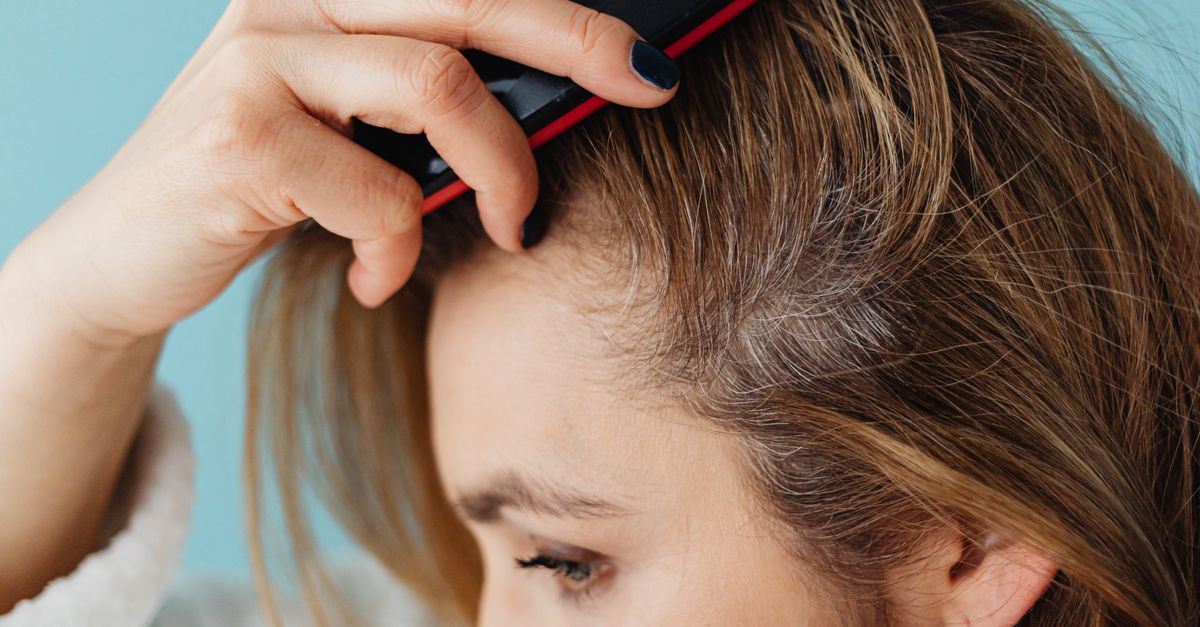
Is Hair Thinning Normal with Endometriosis?
Yes, hair thinning is a recognized — though underreported — feature of endometriosis. Excess estrogen relative to progesterone, systemic inflammation, and the nutrient deficiencies that often accompany the condition all interfere with the hair follicle cycle. The exception is women whose endometriosis is well-managed hormonally and whose inflammatory markers are low; in those cases, hair loss tends to normalize.
---
Why Endometriosis Disrupts Hair Growth
Hair follicles are exquisitely sensitive to hormonal signals. In endometriosis, estrogen dominance — where estrogen is high relative to progesterone — is a central pathological feature. Progesterone normally supports the anagen (growth) phase of the hair cycle; when it is low relative to estrogen, follicles shift prematurely into telogen (resting/shedding) phase. This is the same mechanism that causes postpartum hair loss, which makes sense: both states involve a sudden relative drop in progesterone signaling.
But hormones alone don't tell the whole story. Endometriosis is classified as a chronic inflammatory condition, and research has found that pro-inflammatory cytokines — particularly IL-6, IL-1β, and TNF-α — are elevated in peritoneal fluid and systemic circulation (Osuga et al., Fertility and Sterility 2011; PMID: 21047633). These same cytokines have been shown to shorten the anagen phase in cultured human hair follicles, suggesting that the body's inflammatory state directly suppresses hair growth at the follicle level.
A third contributor is iron deficiency. Heavy menstrual bleeding is a hallmark symptom of endometriosis, and chronic blood loss depletes ferritin — the body's iron storage protein. Ferritin below 30 ng/mL is consistently associated with telogen effluvium in premenopausal women (Rasheed & Mahgoub, Journal of American Academy of Dermatology 2013; PMID: 23159179). Many women with endometriosis fall well below this threshold without ever receiving a formal anemia diagnosis, because hemoglobin levels can remain normal even while ferritin is critically low.
If you are also experiencing hair thinning alongside a heavy period, the iron-ferritin connection deserves immediate attention before attributing loss purely to hormones.
---
The Inflammation-Follicle Connection in More Detail
The link between systemic inflammation and hair loss is more mechanistic than many people realize. Hair follicles cycle through anagen, catagen, and telogen phases under tight molecular control. Nuclear factor-kappa B (NF-κB), a master regulator of inflammation, is expressed in follicular keratinocytes. When NF-κB is chronically activated — as it is in endometriosis — it promotes premature catagen entry and follicle miniaturization over time (Paus & Cotsarelis, New England Journal of Medicine 1999; PMID: 10511125).
Oxidative stress compounds this. Women with endometriosis show measurably higher reactive oxygen species (ROS) and lower antioxidant capacity compared to healthy controls (Szczepańska et al., Human Reproduction 2003; PMID: 12648272). Oxidative stress in the follicle microenvironment damages the dermal papilla cells responsible for sustaining hair growth signals. This is why antioxidant strategies — discussed below — are increasingly studied as supportive tools in inflammatory hair loss.
For women dealing with related hormonal conditions, it is worth noting that hair changes appear across the reproductive health spectrum. Hair thinning in PCOS, for example, follows a different androgenic pathway, while hair thinning in perimenopause involves declining estrogen rather than estrogen dominance — a reminder that the mechanism matters as much as the symptom.
---
Quercetin for Hair Growth and Endometriosis
Quercetin is a flavonoid polyphenol with well-documented anti-inflammatory and anti-estrogenic properties. In the context of endometriosis, quercetin has been shown to suppress NF-κB activation, reduce IL-6 and TNF-α production, and inhibit aromatase — the enzyme that converts androgens to estrogens within endometriotic tissue (Shen et al., Phytomedicine 2016; PMID: 27912869). Reducing local estrogen production and systemic inflammation simultaneously addresses two of the major drivers of hair loss described above.
For hair specifically, quercetin's antioxidant capacity helps protect dermal papilla cells from oxidative damage. In vitro studies on hair follicle cells suggest that flavonoids in this class reduce ROS-induced apoptosis in the dermal papilla, which is critical for maintaining follicle viability during the anagen phase. Quercetin also inhibits 5-alpha reductase activity to some degree, which may reduce dihydrotestosterone (DHT) conversion at the follicle level — relevant for women whose endometriosis co-occurs with androgen sensitivity.
Typical research doses range from 500 mg to 1,000 mg daily, often in divided doses. Bioavailability is significantly improved when quercetin is combined with bromelain or taken as a phytosome formulation.
---
Alpha Lipoic Acid for Hair Growth
Alpha lipoic acid (ALA) is a potent endogenous antioxidant that is both fat-soluble and water-soluble — a unique property that allows it to neutralize free radicals in both the cell membrane and the cytoplasm. In endometriosis research, ALA has been studied for its ability to reduce peritoneal oxidative stress, suppress inflammatory signaling, and potentially limit lesion progression.
For hair health, ALA's most relevant action is its role in mitochondrial energy production. Hair follicles are among the most metabolically active structures in the body; each follicle consumes substantial ATP during the anagen phase to drive keratin synthesis. Mitochondrial dysfunction — which is elevated in endometriosis tissue (Kvaskoff et al., Nature Reviews Disease Primers 2015; doi.org/10.1038/nrdp.2015.11) — can reduce ATP availability in follicle cells and shorten the growth phase. ALA supports mitochondrial function by acting as a cofactor for key enzymatic complexes and by recycling other antioxidants, including vitamins C and E and glutathione.
ALA also has modest anti-androgenic activity and may reduce the conversion of androgens to DHT, making it potentially useful in mixed hormonal presentations. Research doses in clinical trials typically range from 300 mg to 600 mg of R-ALA (the biologically active isomer) or 600 mg of racemic ALA daily.
---
PQQ for Hair Growth
Pyrroloquinoline quinone (PQQ) is a redox-active compound that functions as a cofactor for mitochondrial biogenesis — the process by which cells generate new mitochondria. This makes PQQ particularly interesting in the context of endometriosis-related hair loss, where mitochondrial insufficiency in follicle cells may be limiting growth capacity.
PQQ activates PGC-1α, a transcriptional coactivator that drives the expression of genes involved in mitochondrial proliferation and oxidative phosphorylation. In a randomized, placebo-controlled trial, 20 mg of PQQ daily for 8 weeks significantly improved mitochondrial-related biomarkers and reduced markers of oxidative stress compared to placebo (Harris et al., Journal of Nutritional Biochemistry 2013; PMID: 23647726). For hair follicles under chronic inflammatory stress, restoring mitochondrial capacity could mean extending anagen duration and reducing premature telogen entry.
PQQ is not yet a mainstream hair supplement, but its upstream effect on follicle energy metabolism makes it a mechanistically logical candidate for inflammatory hair loss — particularly in conditions like endometriosis where systemic oxidative burden is measurably elevated. Standard research doses are 10–20 mg daily, and it is often combined with CoQ10 because of their complementary roles in the mitochondrial electron transport chain.
---
Resveratrol for Hair Growth
Resveratrol is a stilbene polyphenol found in red grape skin, berries, and Japanese knotweed. Its relevance to endometriosis is unusually strong: multiple preclinical and clinical studies have found that resveratrol inhibits the proliferation of endometriotic cells, suppresses VEGF-mediated angiogenesis in lesions, and downregulates the NF-κB and COX-2 inflammatory pathways that sustain lesion growth (Ricci et al., Journal of Clinical Endocrinology & Metabolism 2013; PMID: 23533239).
For hair, resveratrol works through several mechanisms. First, it activates SIRT1 — a sirtuin deacetylase that promotes the survival and proliferation of dermal papilla cells. Second, resveratrol has anti-estrogenic effects in peripheral tissue (acting as a selective estrogen receptor modulator), which may help modulate the estrogen dominance driving the hormonal arm of hair loss in endometriosis. Third, it reduces oxidative stress in follicle tissue, complementing the actions of quercetin and ALA described above.
A clinical pilot study found that resveratrol at 30 mg daily significantly reduced dysmenorrhea pain and inflammatory markers in women with endometriosis over a 60-day period, suggesting therapeutic doses can be low relative to what is often sold commercially (Ricci et al., 2013; PMID: 23533239). For hair-specific applications, doses in the 100–200 mg range are more commonly studied, though optimal dosing for follicular benefit has not been established in large randomized trials.
These polyphenol strategies — quercetin, resveratrol, and others — share a mechanism with broader anti-inflammatory nutritional approaches. Women dealing with overlapping conditions such as hair thinning in endometriosis alongside skin changes may find that what causes the hair changes also affects skin integrity, as explored in thinning skin and endometriosis.
---
What This Means for Your Formula
Endometriosis-related hair thinning sits at the intersection of hormonal imbalance, chronic inflammation, and oxidative stress — meaning a single-ingredient approach rarely achieves much. Ones addresses this by building personalized formulas from lab results and health history rather than offering one-size-fits-all products.
For women with documented inflammatory load and hormone dysregulation, a Ones formula may include:
- Endocrine Support — Ones' proprietary Endocrine Support blend is designed for women with hormonal imbalance patterns including estrogen dominance, providing botanical compounds that help modulate estrogen metabolism through liver glucuronidation and gut enterohepatic cycling. This directly targets the upstream hormonal driver of endometriosis-associated hair loss.
- CoQ10/Ubiquinol at 200 mg — Ones includes CoQ10 in its ubiquinol form (the reduced, more bioavailable version) at 200 mg, a dose consistent with research showing mitochondrial support in tissues with high oxidative burden. Given PQQ and CoQ10's complementary roles in electron transport, CoQ10 is the most clinically validated way Ones currently addresses mitochondrial insufficiency in follicle cells.
- Histamine Support — Mast cell activation and histamine dysregulation are increasingly recognized in endometriosis. Ones' Histamine Support blend includes quercetin alongside diamine oxidase (DAO) cofactors, addressing one of the inflammatory mediators that contributes to follicle disruption and systemic inflammation simultaneously.
Because Ones analyzes blood work alongside health history and wearable data, its AI health practitioner can identify whether ferritin, inflammatory markers, or hormonal ratios are the dominant driver of hair changes for a specific person — and weight the formula accordingly. This level of specificity is what distinguishes a personalized formula from a generic women's health supplement.
---
Key Takeaways
- Hair thinning in endometriosis is driven by at least three concurrent mechanisms: estrogen dominance suppressing progesterone's protective effect on follicles, chronic systemic inflammation shortening the anagen phase, and iron/ferritin depletion from heavy menstrual bleeding.
- Elevated oxidative stress — measurably higher in endometriosis — damages dermal papilla cells and reduces follicle viability; antioxidant strategies targeting this pathway are mechanistically well-supported.
- Quercetin (500–1,000 mg) addresses NF-κB-driven inflammation and aromatase activity; resveratrol (100–200 mg) activates SIRT1 in dermal papilla cells and provides anti-estrogenic modulation; alpha lipoic acid (300–600 mg R-ALA) supports mitochondrial ATP production in follicles; PQQ (10–20 mg) drives mitochondrial biogenesis via PGC-1α.
- Ferritin should be tested independently of hemoglobin — normal hemoglobin does not rule out follicle-relevant iron depletion; a target of ≥50 ng/mL is generally recommended for hair preservation.
- Hair loss patterns differ significantly across hormonal conditions — the mechanisms in endometriosis (estrogen dominance, inflammation) are distinct from those in PCOS (androgens) or perimenopause (estrogen decline), which is why condition-specific approaches matter.
- Always consult a healthcare provider before starting a supplement protocol, particularly when managing a chronic condition like endometriosis that may involve pharmaceutical hormone therapies with potential interactions.
---
This article is for informational purposes only and does not constitute medical advice. Supplement strategies should be discussed with your healthcare provider, especially when managing a diagnosed condition.