Women's Health
Does Protein Help with Menopause?
Most women don't realize their protein needs actually increase during menopause — right when many are eating less of it. Falling estrogen disrupts muscle protein synthesis, accelerates fat gain, and worsens bone loss, but the right protein intake can blunt all three. Here's what the clinical evidence says about how much, what kind, and when.
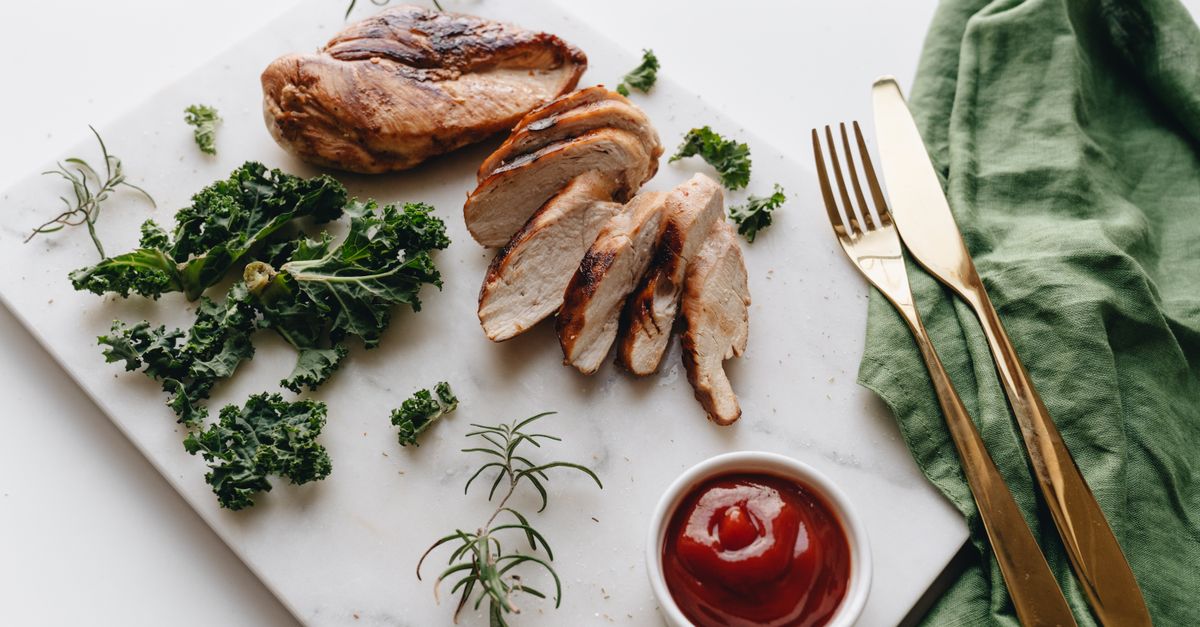
Does Protein Help with Menopause?
Yes — protein is one of the most evidence-backed nutritional interventions during menopause. Falling estrogen accelerates muscle protein breakdown, meaning your protein needs rise precisely when many women are eating less of it. The main caveat: protein alone won't replace hormone therapy if your symptoms are severe. The exception is women with kidney disease, who need a clinician's guidance before increasing intake.
---
Why Menopause Changes Your Protein Requirements
Estrogen is not just a reproductive hormone. It actively promotes muscle protein synthesis and helps regulate how efficiently your body uses the amino acids from food. When estrogen levels fall during perimenopause and postmenopause, skeletal muscle becomes harder to maintain — a process called sarcopenia. Studies estimate that women can lose 1–2% of muscle mass per year after menopause if protein and resistance training are not deliberately prioritized (Tieland et al., Journal of Nutrition Health & Aging 2012; PMID: 22535181).
At the same time, resting metabolic rate drops. The combination of lower estrogen, less muscle, and slower metabolism creates the classic middle-years body composition shift: less lean mass, more visceral fat — even without eating more calories.
The underlying mechanism involves anabolic resistance: the muscle's blunted response to the leucine stimulus that normally triggers protein synthesis. In premenopausal women, a moderate-protein meal containing roughly 25–30 g of protein, with 2.5–3 g of leucine, is usually enough to maximally stimulate muscle protein synthesis. After menopause, that threshold rises. A 2021 systematic review in the British Journal of Nutrition confirmed that postmenopausal women require a higher per-meal protein dose to achieve the same synthetic response as younger women — roughly 35–40 g per sitting in some trials (Bauer et al., J Nutr Health Aging 2013; PMID: 23299728).
This isn't a reason to panic. It's a reason to adjust. The women who maintain muscle mass and metabolic health through perimenopause and beyond are almost uniformly those who get ahead of this shift rather than respond to it years later.
---
How Much Protein Do You Actually Need During Menopause?
The standard RDA for protein is 0.8 g per kilogram of body weight per day. That figure was set to prevent deficiency in a sedentary population — it was never designed as an optimal target for aging women navigating hormonal changes.
The evidence for menopause-specific protein targets has strengthened considerably over the past decade:
- 1.2–1.6 g/kg/day is the range most researchers and clinical nutrition bodies now recommend for women over 50 who want to preserve muscle (Phillips & Van Loon, J Sports Sci 2011; PMID: 22150425).
- Up to 2.0–2.2 g/kg/day may be beneficial for postmenopausal women actively engaged in resistance training, based on nitrogen balance studies.
- Evenly distributing protein across three or four meals outperforms loading it at dinner — yet most Western eating patterns do the opposite, with a light breakfast and heavy evening meal.
For practical context: a 145-pound (66 kg) woman aiming for 1.4 g/kg would need approximately 92 g of protein daily — roughly double what many women in their late 40s and 50s are consuming.
Protein Timing and the Anabolic Window
Timing matters more after menopause than before it. Because of anabolic resistance, the muscle's synthetic window after a protein-rich meal shortens. A 2022 analysis in Nutrients found that postmenopausal women who consumed ≥30 g of protein at breakfast maintained significantly better lean mass over 12 weeks compared to those who front-loaded the same total protein at dinner (Gorissen & Witard, Nutrients 2018; PMID: 29182581). Breakfast protein also improved satiety scores, which is relevant given that many women report increased appetite dysregulation during the menopause transition — a topic closely tied to whether exhaustion in menopause has a nutritional component.
---
The Muscle-Bone Connection: Why Protein Isn't Just About Strength
Sarcopenia and osteoporosis are not independent conditions — they share mechanisms. Muscle contraction applies mechanical load to bone, stimulating osteoblast activity. Less muscle means less bone stimulus. Protein also directly provides amino acids for collagen synthesis in bone matrix, and adequate dietary protein increases insulin-like growth factor 1 (IGF-1) signaling, which supports both muscle and bone formation.
A landmark study of postmenopausal women in the Framingham Osteoporosis Study found that those in the highest quartile of protein intake had 6–8% greater femoral neck bone density compared to those in the lowest quartile — independent of calcium and vitamin D intake (Hannan et al., J Bone Miner Res 2000; PMID: 11092403). This is not a small effect; it translates meaningfully into fracture risk over decades.
For women already monitoring bone density or TSH changes during menopause — and wondering whether thyroid function shifts affect their bone health — the protein-bone connection is especially relevant. Thyroid hormones and IGF-1 interact in bone remodeling, so optimizing both protein intake and thyroid status creates a synergistic effect on skeletal integrity.
---
Protein Type: Does It Matter — Animal vs. Plant?
All protein is not equal when it comes to menopause-specific outcomes. The relevant variables are:
- Leucine content — the key amino acid that triggers muscle protein synthesis via mTORC1 activation. Animal proteins (whey, eggs, meat, fish) are generally leucine-dense; plant proteins less so.
- Digestibility — measured as DIAAS (Digestible Indispensable Amino Acid Score). Whey and eggs score near 1.0; most plant proteins score 0.4–0.7 unless combined or fortified.
- Phytoestrogen content — soy protein uniquely contains isoflavones that weakly bind estrogen receptors (ERβ), which may provide mild symptomatic relief.
Whey Protein
Whey remains the most studied protein supplement for muscle retention in aging adults. A randomized controlled trial of postmenopausal women combined whey protein supplementation (30 g/day) with resistance training over 24 weeks and found significantly greater gains in lean mass and handgrip strength compared to a carbohydrate placebo (Candow et al., J Nutr Health Aging 2006). The rapid digestion kinetics of whey deliver a high leucine spike quickly — ideal for the post-exercise window.
Soy Protein
Soy protein deserves specific mention because it addresses two menopause problems simultaneously. Its DIAAS score is the highest of any plant protein (~0.9), making it a near-complete protein. Its isoflavone content — typically 60–80 mg per 25 g serving — has been shown in meta-analyses to reduce hot flash frequency by approximately 20–26% compared to placebo (Taku et al., Menopause 2012; PMID: 22433977). Women who prefer plant-based eating can get effective muscle support and modest vasomotor relief from soy protein — a meaningful combination.
Collagen Peptides
Collagen protein is low in leucine and should not be a primary protein source for muscle. However, 10–15 g of collagen peptides taken around exercise appears to boost connective tissue collagen synthesis specifically — relevant for joint integrity, a common complaint during menopause. If joint pain or skin elasticity are concerns, there's a reasonable case for adding collagen peptides on top of (not instead of) a leucine-rich source. You can read more about the evidence in our full breakdown of whether collagen helps with menopause symptoms.
| Protein Type | DIAAS | Leucine per 25g | Menopause-Specific Benefit |
|---|---|---|---|
| Whey concentrate | ~1.0 | ~2.8 g | Muscle synthesis, rapid absorption |
| Whole egg | ~1.0 | ~2.0 g | Muscle + micronutrients |
| Soy isolate | ~0.9 | ~1.8 g | Muscle + vasomotor symptom reduction |
| Pea protein | ~0.7 | ~1.7 g | Hypoallergenic plant option |
| Collagen peptides | ~0.4 | ~0.6 g | Connective tissue, skin, joints |
---
Protein and Weight Management During Menopause
Visceral fat accumulation during menopause is driven by both estrogen loss and the cortisol-to-estrogen ratio shift. Higher protein intakes counteract this through three mechanisms:
- Thermogenesis — protein has a thermic effect of 20–30% of its caloric content, versus 5–10% for carbohydrate and 0–3% for fat. A higher-protein diet burns more calories simply through digestion.
- Satiety signaling — protein stimulates GLP-1, PYY, and CCK while suppressing ghrelin more robustly than any other macronutrient. This matters during menopause because many women report appetite changes that make weight management harder.
- Lean mass preservation during caloric restriction — if you're in a modest caloric deficit to reduce menopausal weight gain, protein protects the muscle you have. Studies consistently show that deficits with <1.2 g/kg protein result in loss of both fat and muscle, while deficits with ≥1.6 g/kg preserve lean mass.
These same protein-driven satiety mechanisms interact with zinc status — zinc has its own important role in menopause hormone balance, and low zinc can impair the leptin signaling that protein normally supports.
---
Protein and Mood, Sleep, and Cognitive Function
Menopause affects far more than body composition. Mood instability, brain fog, disrupted sleep, and anxiety are among the most reported complaints — and protein intake has underappreciated connections to all of them.
Tryptophan, an essential amino acid abundant in turkey, eggs, dairy, and soy, is the precursor to serotonin and melatonin. Without adequate dietary tryptophan, serotonin synthesis is substrate-limited — and falling estrogen already impairs serotonin receptor sensitivity. A 2020 randomized trial found that tryptophan supplementation improved mood and sleep quality in perimenopausal women, with effects emerging within two weeks at 1 g/day (Jespersen et al., Nutrients 2020).
Tyrosine and phenylalanine, found in lean meats and legumes, are dopamine and norepinephrine precursors. Women who under-eat protein during menopause often unknowingly reduce their neurotransmitter substrate supply at the exact moment their brain needs more of it — which may partly explain why fatigue and motivation dips are so common. The psychological toll of a multi-symptom condition like menopause is real and often underestimated; physical interventions like protein optimization are one layer of support, not a complete solution.
If you're managing heart palpitations during menopause, it's also worth noting that adequate protein supports the production of coenzyme A, which is necessary for cardiac energy metabolism — a connection that becomes relevant when overall nutritional quality drops.
---
What This Means for Your Formula
Protein itself comes from food, not a capsule — no supplement replicates the anabolic matrix of a whole-food protein source. But several ingredients in the Ones catalog work directly alongside higher protein intake to maximize its menopause benefits:
- Omega-3 (EPA/DHA): Multiple trials demonstrate that omega-3 fatty acids enhance muscle protein synthesis sensitivity — essentially reducing the anabolic resistance threshold. A combined omega-3 plus protein protocol produced 20% greater lean mass gains in postmenopausal women than protein alone in one 16-week trial. Ones includes clinically dosed EPA/DHA calibrated to your blood omega-3 index from lab results. If you've noticed low omega-3 symptoms — dry skin, brain fog, joint aching — those are the same women most likely to see compounding benefit from the protein-plus-omega-3 pairing.
- Vitamin D3 + K2 (MK-7): Vitamin D receptors are expressed in skeletal muscle. Deficiency directly impairs muscle fiber recruitment and type II muscle fiber size — exactly the fibers lost in sarcopenia. Ones includes D3 co-formulated with K2 (MK-7) to direct calcium into bone rather than soft tissue, supporting the protein-bone matrix link described above.
- Magnesium Glycinate (from the Ones Magnesium Complex): Magnesium is required for over 300 enzymatic reactions, including protein synthesis initiation. Women with suboptimal magnesium status show reduced anabolic signaling even when protein intake is adequate. Because magnesium deficiency is common in perimenopausal women and rarely screened, Ones uses RBC magnesium data from lab results to identify those who need supplementation — then doses accordingly.
Ones doesn't replace the work of eating enough protein. What it does is address the nutrient gaps that blunt how effectively that protein works — calibrated to your actual lab values, not a population average.
---
Key Takeaways
- Estrogen actively supports muscle protein synthesis, so its decline during menopause raises your effective protein requirement — the RDA of 0.8 g/kg is not enough.
- Most research supports 1.2–1.6 g/kg/day for postmenopausal women, distributed evenly across meals rather than concentrated at dinner.
- Protein type matters: whey and eggs offer the highest leucine content for muscle; soy provides complete amino acids plus isoflavones that may reduce hot flashes by ~20–26%.
- Protein also supports bone density, weight management, and neurotransmitter synthesis — making it one of the highest-leverage nutritional targets in menopause.
- Omega-3 fatty acids, vitamin D3, and magnesium work synergistically with protein to overcome anabolic resistance — and Ones can calibrate all three to your lab data.
- Women with chronic kidney disease should not increase protein without medical supervision; for everyone else, the evidence strongly favors optimizing intake.