Women's Health
How Much Maca Should You Take for PCOS?
Most women with PCOS searching for maca dosing get vague forum answers instead of clinical data. The evidence-supported range is 1,500–3,000 mg of gelatinized maca daily — but maca's benefit is narrower than its reputation suggests, and knowing exactly what it does (and doesn't) correct is what makes the difference between a useful addition and wasted money.
How Much Maca Should You Take for PCOS?
For most women with PCOS, the evidence-supported dose of maca is 1,500–3,000 mg of gelatinized maca root powder daily, typically split across two doses. Effects on mood, sexual function, and energy are better documented than direct hormone correction — maca does not reliably lower androgens or raise LH on its own, so it works best as an adjunct, not a standalone treatment.
---
What Maca Actually Does in the Body
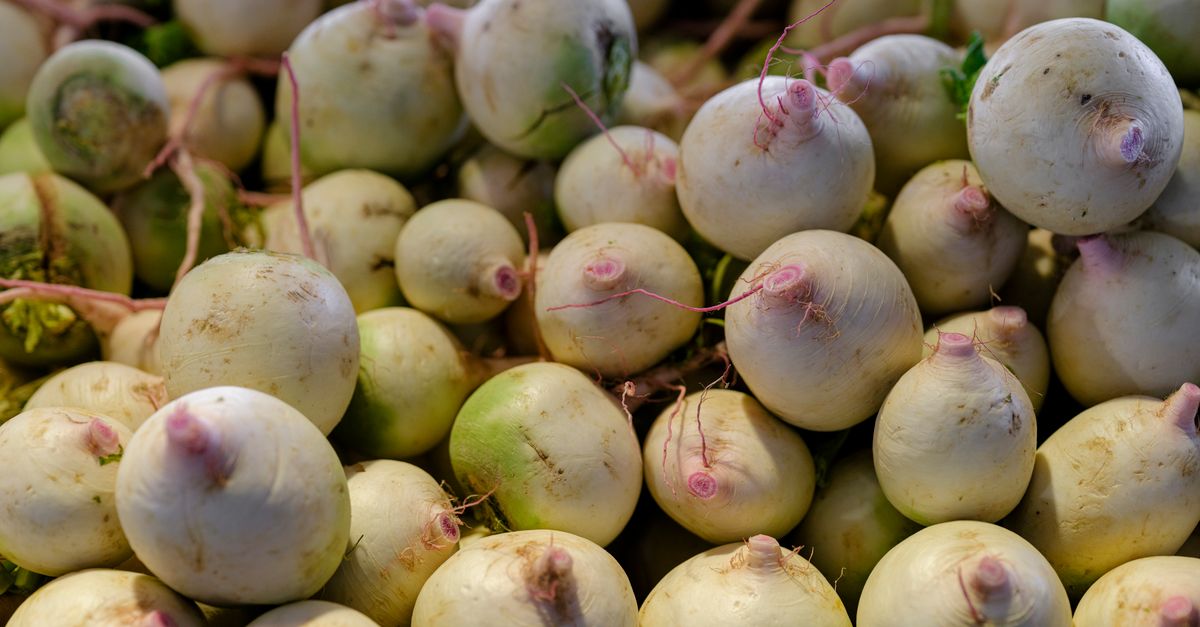
Maca (Lepidium meyenii) is a Peruvian root vegetable that belongs to the adaptogen category — meaning it modulates physiological stress responses rather than acting as a direct hormone agonist. Unlike phytoestrogens (soy isoflavones, red clover), maca does not bind estrogen receptors. Instead, it appears to work through the hypothalamic-pituitary axis, influencing the signaling cascade that regulates cortisol, FSH, and LH without introducing exogenous hormone-like molecules.
For women with PCOS, this distinction matters. Because PCOS already involves dysregulated LH-to-FSH ratios, elevated androgens, and often insulin resistance, an herb that acts on the hypothalamic-pituitary axis rather than flooding receptors has a different risk-benefit profile than a phytoestrogen would.
The bioactive compounds responsible for most of maca's documented effects are macamides and glucosinolates, which are concentrated in the hypocotyl (the fleshy root). Macamides are unique fatty acid amides that inhibit fatty acid amide hydrolase (FAAH), the enzyme that degrades endocannabinoids like anandamide. This FAAH-inhibition pathway may partly explain maca's consistent effects on mood and sexual arousal independent of estrogen receptor binding (Meissner et al., Menopause 2006; PMID: 16923354). Gelatinization — a heat-processing step that breaks down starches — significantly improves bioavailability and reduces the risk of digestive discomfort from raw maca's high fiber content.
Animal studies have shown that macamide concentrations vary substantially between root colors, between growing altitudes, and between harvest seasons. This variability is one reason that standardized extracts — where macamide content is assayed and declared on the label — produce more consistent results than uncharacterized whole-root powders in clinical settings.
---
The Clinical Dose Range for PCOS and Hormonal Symptoms
The most frequently cited clinical doses in human trials fall between 1,500 mg and 3,500 mg per day. Here is how the research breaks down:
| Trial | Population | Dose | Duration | Key Outcome |
|---|---|---|---|---|
| Brooks et al., 2008 (PMID: 18784609) | Postmenopausal women | 3,500 mg/day | 6 weeks | Reduced psychological symptoms, no change in serum estrogen or FSH |
| Meissner et al., 2006 (PMID: 16923354) | Perimenopausal women | 2,000 mg/day | 4 months | Improved FSH, LH, and reduced hot flash frequency |
| Dording et al., 2008 (PMID: 18801111) | Adults with SSRI-induced sexual dysfunction | 3,000 mg/day | 12 weeks | Significant improvement in sexual function scores |
| Stojanovska et al., 2015 (PMID: 25954318) | Postmenopausal women | 3,500 mg/day | 6 weeks | Improved blood pressure and mood vs. placebo |
None of these trials were conducted exclusively in PCOS populations, which is an honest limitation of the literature. However, because PCOS-related hormonal symptoms — irregular mood, fatigue, low libido, and subclinical anxiety from cortisol dysregulation — overlap substantially with perimenopausal complaints, the data is reasonably applicable.
It is worth unpacking the Meissner 2006 finding more carefully. That trial used a pre-gelatinized maca preparation at 2,000 mg/day and found statistically significant reductions in follicle-stimulating hormone alongside improvements in subjective hot flash frequency, but the FSH change was modest in absolute terms and did not normalize values in women with severely dysregulated levels. The implication for PCOS: maca may nudge FSH/LH signaling at the margins without fundamentally correcting a deeply dysregulated axis. That is useful as an adjunct but should not be treated as equivalent to a medical intervention.
For women with PCOS specifically, 1,500–2,000 mg/day is a practical starting dose, rising to 3,000 mg if well tolerated after 4–6 weeks. Going above 3,500 mg daily has not demonstrated additional benefit in any published trial and increases the risk of GI upset.
---
Does Maca Directly Lower Androgens in PCOS?
This is the question most women searching this topic actually want answered, and the honest answer is: probably not in a clinically meaningful way on its own.
Maca's effects on circulating testosterone, DHEA-S, and SHBG in women with PCOS have not been rigorously tested in randomized controlled trials. The Brooks 2008 study found no significant change in serum hormones despite significant symptom improvement — suggesting maca influences how the brain processes hormonal signals rather than altering the hormone levels themselves.
For symptoms that are direct consequences of elevated androgens — hirsutism, acne, hair thinning — maca alone is unlikely to produce noticeable change. Women dealing with what causes muscle loss in PCOS or what causes brain fog in PCOS may find maca more useful for the neurological and energy-related dimensions of those symptoms than for the androgen-driven ones.
One additional mechanistic note: some preclinical data suggests maca's glucosinolate metabolites (particularly indole-3-carbinol precursors) may modestly influence 2-hydroxyestrone versus 16-hydroxyestrone ratios, which relates to estrogen metabolism rather than androgen load. This is an interesting area of ongoing research but has not been validated in human PCOS populations, so it should not drive clinical decisions at this time.
---
Which Form of Maca Is Best for PCOS?
Maca is sold in several forms, and the differences are meaningful:
- Raw maca powder: Lowest cost, but poorly digested; glucosinolates remain partially intact, which can be mildly goitrogenic at very high doses — a consideration for anyone with thyroid involvement (common in PCOS).
- Gelatinized maca powder: Starches broken down by heat, improving absorption; the form used in most clinical studies; preferred for daily use.
- Maca extract (standardized): Concentrated for macamides and glucosinolates; useful when capsule count needs to stay low, but standardization ratios vary by brand.
- Red, yellow, or black maca: Color variants differ in glucosinolate profiles. Black maca has the most data for libido and cognitive function; red maca has been studied for prostate health in animal models; yellow maca is the most common and the form used in most human trials.
For PCOS, gelatinized yellow or black maca at 1,500–3,000 mg/day is the most evidence-aligned choice.
---
Managing PCOS Symptoms: Where Maca Fits In
Maca is one piece of a larger picture. PCOS produces a cluster of overlapping symptoms — weight gain around the middle, heart palpitations, hormonal headaches, and mood instability — that require different mechanisms to address. No single adaptogen resolves all of them.
A practical symptom-to-mechanism map for maca in PCOS:
| Symptom | Maca's Evidence Level | Better-Supported Alternatives |
|---|---|---|
| Fatigue and low energy | Moderate (adaptogenic HPA support) | B vitamins, iron, CoQ10 |
| Low libido | Strong (multiple RCTs) | — |
| Mood instability / subclinical anxiety | Moderate | Ashwagandha (KSM-66), magnesium |
| Irregular cycles | Weak | Inositol, zinc |
| Hirsutism / acne | Very weak | Spearmint, saw palmetto |
| Hot flashes (in PCOS) | Limited | Evening primrose oil, black cohosh |
For anyone exploring what helps with PCOS symptoms without hormones, maca is a reasonable addition for mood and libido specifically — but should be matched with ingredients that address insulin signaling and androgen load more directly.
Women who experience night sweats in PCOS — a symptom driven by a mix of cortisol dysregulation, insulin resistance, and sometimes subclinical hypothyroidism — may notice modest benefit from maca via the HPA-modulation pathway, but the evidence for this specific symptom in PCOS is anecdotal rather than trial-supported.
---
How to Take Maca: Timing, Cycling, and Practical Notes
Timing: Most clinical trials administered maca in divided doses with meals. Splitting 3,000 mg into a 1,500 mg morning dose and 1,500 mg midday dose is well-tolerated and mirrors study protocols.
Cycling: There is no strong evidence that maca requires cycling (taking breaks), unlike some adaptogens. However, many practitioners recommend a 5-day-on, 2-day-off pattern or a monthly break simply as a precautionary principle.
Duration before evaluating: Maca's effects on mood and sexual function in trials typically emerged after 6–12 weeks of consistent use. Stopping at 3 weeks because you haven't noticed a change is too early.
Thyroid caution: Because raw maca contains glucosinolates, women with hypothyroidism (which co-occurs in a meaningful subset of PCOS patients) should use the gelatinized form and avoid very high doses (>4,000 mg/day) until more data exists. This is a precautionary note, not a contraindication. Gelatinization degrades a significant proportion of glucosinolates, which is another reason it is the preferred form for daily supplementation.
Who is the exception? Women with concurrent hypothyroidism or Hashimoto's thyroiditis should be especially conservative with raw maca and should confirm thyroid panel stability (TSH, free T4) after 8–10 weeks of use. Women who are pregnant or breastfeeding should avoid maca entirely, as no adequate safety data exists for those populations.
Interactions: No significant drug interactions have been documented in human studies, but maca's HPA-modulating effects mean it should be mentioned to any prescribing provider if you are on oral contraceptives, metformin, or thyroid medication.
What to track: Because maca's primary measurable effects in PCOS are on mood, energy, and libido rather than on lab values, self-tracking with a daily symptom log is more informative than re-running hormonal panels after 6 weeks. If a standardized extract with declared macamide content is being used, look for 0.6% macamides or higher as a quality benchmark — below that level, the dose of active compound may be insufficient regardless of the labeled milligram weight.
---
What This Means for Your Formula
Maca is not currently in Ones' catalog of clinically validated ingredients, partly because standardization across manufacturers is inconsistent and the PCOS-specific RCT evidence is still emerging. But several Ones ingredients address the overlapping mechanisms that maca is attempting to reach:
- Ashwagandha (KSM-66, 600 mg): The most rigorously studied adaptogen for HPA-axis regulation and cortisol reduction. A 2012 RCT (Chandrasekhar et al.; PMID: 23439798) in chronically stressed adults showed a 27.9% reduction in serum cortisol versus placebo over 60 days — directly relevant to the cortisol-driven component of PCOS symptom burden. Ones formulas that include ashwagandha for perimenopause and hormonal support use this exact KSM-66 form and dose.
- Inositol (Myo-Inositol): Where maca has weak evidence for cycle regularity, myo-inositol has strong trial support for improving insulin sensitivity and restoring ovulatory function in PCOS. A meta-analysis published in the European Review for Medical and Pharmacological Sciences found that myo-inositol at 4,000 mg/day significantly improved menstrual regularity and androgen markers in PCOS relative to placebo. Ones uses inositol where labs indicate insulin-driven cycle disruption — which is a far more direct intervention for the androgen excess and anovulation that maca cannot reliably address.
- B Vitamins (Folate, B6, B12): These support neurotransmitter synthesis and homocysteine regulation, addressing the mood and energy symptoms maca is often taken for. Perimenopause B-vitamin dosing has direct relevance for PCOS because the metabolic demands overlap substantially.
Ones' AI practitioner reviews blood work and wearable data to determine which of these mechanisms is actually limiting your function — rather than defaulting to the most-searched adaptogen on a forum. If your cortisol markers and sleep data indicate HPA dysregulation, the formula will prioritize that. If insulin resistance dominates your labs, inositol and targeted B-vitamin support become more central than any adaptogen. This is the practical difference between a formula built from your data and a supplement chosen from a list.
---
Key Takeaways
- The evidence-based dose of maca for hormonal and mood symptoms is 1,500–3,000 mg/day of gelatinized maca root, split across two doses with meals.
- Maca does not reliably lower androgens or correct LH/FSH ratios in published trials — its benefit is primarily mood, energy, and libido via HPA modulation and possible FAAH inhibition.
- Gelatinized maca is the preferred form for daily use; raw maca can cause GI issues and carries a theoretical concern for thyroid function at very high doses — especially relevant for the subset of PCOS patients with concurrent Hashimoto's.
- Effects take 6–12 weeks to become apparent — evaluating at 3 weeks is premature, and tracking symptoms (not just lab values) is the most practical way to assess response.
- Maca works best as an adjunct to ingredients that address PCOS mechanisms more directly: inositol for insulin signaling, zinc and spearmint for androgen activity, ashwagandha for cortisol.
- Personalized supplement formulas based on your labs and symptom data are more likely to match the right ingredients to your specific PCOS phenotype than any single adaptogen taken at a population average dose.
---
This article is for informational purposes only and does not constitute medical advice. Consult a qualified healthcare provider before starting any new supplement, particularly if you have a diagnosed condition or are taking prescription medications.