Women's Health
How Much Creatine Do You Need in Menopause?
Most women never think about creatine until menopause — and by then, declining estrogen has already cut the body's own creatine synthesis. The research is clear: 3–5 g daily can meaningfully protect muscle, bone, and even cognitive performance during this transition. The catch is that dose, timing, and your baseline status all matter.
How Much Creatine Do You Need in Menopause?
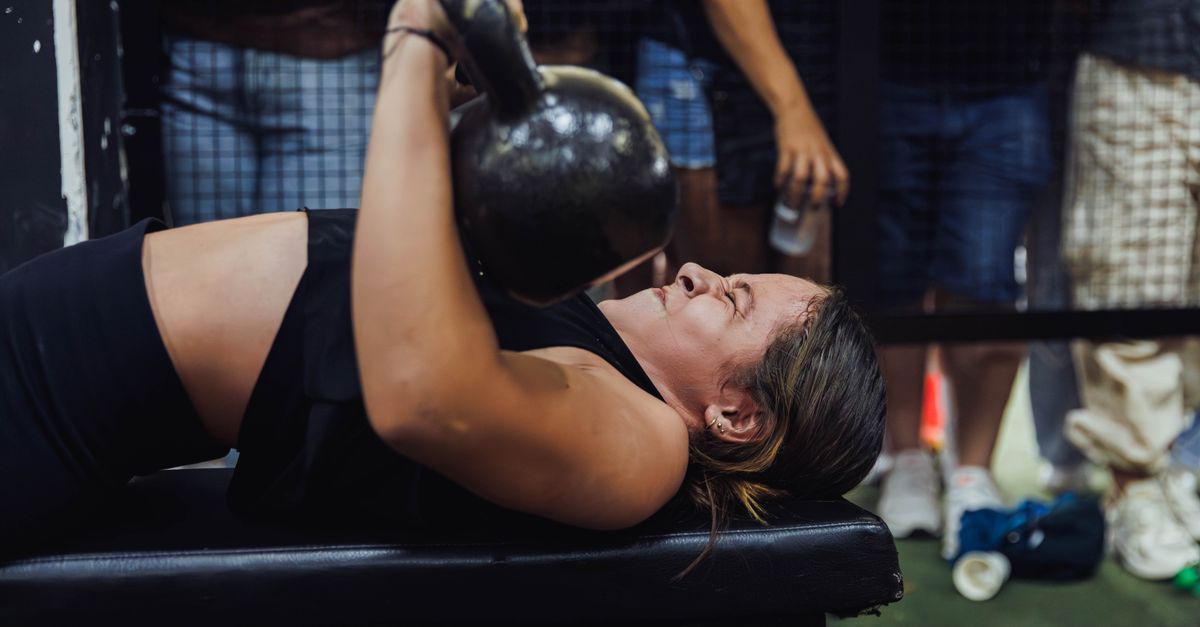
For most women in menopause, 3 g of creatine monohydrate per day is the evidence-supported minimum, with studies using 5 g daily showing the strongest effects on lean mass and strength. The main caveat: creatine works best when combined with resistance training — supplementation alone produces modest results. Women who are vegetarian or vegan benefit most, since they start with the lowest muscle creatine stores.
---
Why Menopause Changes Your Creatine Needs
Estrogen is not just a reproductive hormone — it actively regulates creatine metabolism. Research shows that estrogen upregulates the enzymes responsible for endogenous creatine synthesis, particularly arginine:glycine amidinotransferase (AGAT), which catalyzes the rate-limiting step in the liver and kidney (Ellery et al., Amino Acids 2016; PMID: 26748688). When estrogen drops during perimenopause and menopause, so does this enzymatic activity, leaving skeletal muscle with less phosphocreatine to fuel contraction and cellular energy.
The practical consequence is accelerated sarcopenia — the age-related loss of muscle mass — which in women tends to sharpen after the final menstrual period. By age 65, women can lose up to 1–2% of muscle mass per year if diet and exercise are not optimized. Creatine supplementation directly counters this by replenishing intramuscular phosphocreatine stores, increasing the capacity to sustain high-intensity muscle contractions during resistance training.
For context on other key nutrients that shift during this life stage, see how much omega-3 you need in menopause — estrogen's exit also disrupts lipid metabolism and cardiovascular protection.
---
The Clinical Dose: What the Trials Say
The most relevant trial for menopausal women is Smith-Ryan et al. (2021), which examined creatine supplementation in postmenopausal women performing resistance training. Participants taking 5 g/day of creatine monohydrate for 12 weeks demonstrated significantly greater gains in lean mass and upper-body strength compared to placebo (Smith-Ryan et al., Medicine & Science in Sports & Exercise 2021; PMID: 33900185).
A systematic review and meta-analysis by Chilibeck et al. (2017) pooled data from older adults (mean age ~65) and found creatine supplementation combined with resistance training produced 1.37 kg greater lean mass gains than training plus placebo, with women showing comparable benefits to men in relative terms (Chilibeck et al., Open Access Journal of Sports Medicine 2017; PMID: 29138605).
For bone health — a critical concern post-menopause — Chilibeck et al. (2015) found that women taking creatine (0.1 g/kg/day, roughly 5–7 g for most women) had significantly less bone mineral density loss at the femoral neck over a 52-week resistance training program compared to placebo (Chilibeck et al., Medicine & Science in Sports & Exercise 2015; PMID: 25386713).
The cognitive angle is equally compelling. Rae et al. (2003) showed that 5 g/day of creatine for six weeks significantly improved working memory and intelligence test scores in young adults, and emerging data suggest the brain's demand for creatine rises when estrogen — itself neuroprotective — declines (Rae et al., Proceedings of the Royal Society B 2003; PMID: 14561278).
| Goal | Dose | Duration | Evidence Level |
|---|---|---|---|
| Lean mass preservation | 3–5 g/day | ≥ 12 weeks | Strong (RCT) |
| Strength gains with training | 5 g/day | ≥ 8 weeks | Strong (RCT) |
| Bone density protection | ~0.1 g/kg/day | 52 weeks | Moderate (RCT) |
| Cognitive support | 5 g/day | ≥ 6 weeks | Moderate (RCT) |
No loading phase is required for women prioritizing long-term health outcomes over athletic performance. A flat 3–5 g daily produces full muscle saturation within 3–4 weeks without the GI discomfort that loading (20 g/day split into four doses) can cause.
If you want a deeper look at the broader performance and safety profile of this ingredient, the creatine benefits and side effects overview covers lab markers and mechanisms in detail.
---
Signs of Creatine Monohydrate Deficiency
The body does not produce a "creatine deficiency" in the strict clinical sense the way it does with iron or B12 — but chronically low creatine availability has recognizable patterns, especially in menopausal women:
- Accelerated muscle fatigue during moderate exercise, out of proportion to fitness level
- Difficulty maintaining strength between training sessions, even with adequate protein
- Brain fog and poor short-term memory, particularly under cognitive load
- Low dietary intake: vegetarians and vegans synthesize roughly half the creatine meat-eaters obtain from diet, leaving muscle stores 20–30% below omnivore levels
- Low phosphocreatine on muscle biopsy (rarely measured clinically, but used in research settings)
If you identify with several of these patterns alongside the hormonal changes of menopause, creatine supplementation is one of the lowest-risk, highest-evidence interventions available. For comparison, how much magnesium you need in menopause addresses a similarly underrecognized gap that overlaps with muscle and sleep complaints.
---
Natural Sources of Creatine Monohydrate
Creatine is found almost exclusively in animal muscle tissue. Understanding food sources helps you gauge your dietary baseline before deciding on a supplement dose:
| Food Source | Creatine Content (per 100 g raw) |
|---|---|
| Herring | 6.5–10 g |
| Pork | 5.0 g |
| Beef | 4.5 g |
| Salmon | 4.5 g |
| Tuna | 4.0 g |
| Chicken breast | 3.4 g |
| Milk | 0.1 g |
| Plant foods | ~0 g |
Important caveat: cooking destroys a significant portion of creatine through heat-mediated conversion to creatinine. A 150 g cooked salmon fillet delivers roughly 2–3 g of usable creatine — enough to maintain baseline stores in an omnivore but not enough to maximize muscle phosphocreatine or produce the therapeutic effects seen in trials.
For menopausal women eating mixed omnivore diets, typical dietary creatine intake is approximately 1–2 g/day — well below the 3–5 g studied for muscle and bone benefits. This gap is what supplementation addresses.
---
Creatine Monohydrate Before or After Workout
Timing matters less than consistency, but there is a small evidence advantage to post-workout creatine. Antonio & Ciccone (2013) found that men consuming creatine immediately after resistance training gained more lean mass and lost more fat mass over four weeks than those consuming it immediately before (Antonio & Ciccone, Journal of the International Society of Sports Nutrition 2013; PMID: 23919405).
The proposed mechanism: post-exercise, muscle blood flow is elevated and GLUT4 transporters are upregulated, potentially improving creatine uptake into muscle cells alongside the post-workout insulin response.
For practical purposes:
- If you train: Take 3–5 g within 30 minutes after your session, mixed into a protein shake or with a small carbohydrate source.
- If you don't train on a given day: Take it at any consistent time — with a meal is fine. What matters most is daily adherence.
- If you exercise in the evening: Post-workout still applies; creatine does not disrupt sleep at standard doses.
For more on supplement timing around exercise, thiamine before or after workout covers another B-vitamin with exercise-specific timing considerations. For magnesium specifically, magnesium citrate before or after a workout unpacks similar questions.
---
Creatine Monohydrate Long-Term Side Effects
Creatine monohydrate is among the most studied supplements in existence, with a safety record spanning over three decades of research. The most commonly cited concerns — and what the evidence actually says:
Kidney stress: The most persistent myth. A comprehensive review by Rawson & Volek (2003) found no evidence of renal impairment in healthy individuals at doses up to 5 g/day for up to five years. One important nuance: creatine supplementation raises serum creatinine (a metabolic byproduct) — this can falsely suggest reduced kidney function on standard panels. If your lab work shows elevated creatinine while you're supplementing, discuss it with your provider before assuming pathology.
Water retention: Creatine increases intramuscular water content (not subcutaneous), which can add 0.5–2 kg on the scale initially. This is intracellular fluid — a functional adaptation, not bloating in the cosmetic sense.
GI discomfort: Rare at 3–5 g/day. Loading protocols (20 g/day) cause more GI side effects; skipping the loading phase eliminates this for most women.
Hair loss / DHT: One small trial (van der Merwe et al., 2009) in young rugby players showed a loading dose raised DHT levels — this was in young men, at loading doses, and has not been replicated in women at maintenance doses. Current evidence does not support creatine causing hair loss at 3–5 g/day.
For women with pre-existing kidney disease, polycystic kidney disease, or who are on medications that affect renal function, consult a healthcare provider before supplementing.
---
What This Means for Your Formula
Creatine is not a "one size fits all" add-on — how much you need depends on your dietary baseline, whether you train, your creatine synthesis capacity (which declines with estrogen), and what other aspects of metabolic health you're managing.
At Ones, the AI health practitioner evaluates your bloodwork, wearable data, and health history together. For menopausal women showing markers of reduced lean mass, elevated fatigue scores, or dietary patterns consistent with low creatine intake, the platform can include creatine monohydrate at 3–5 g per day — the clinically validated range from the trials cited above — within a personalized daily capsule formula calibrated to your specific physiological findings.
Creatine rarely acts in isolation. Ones formulas for women in this life stage often pair creatine with:
- Omega-3 (EPA/DHA): Synergistic anti-inflammatory effects on muscle protein synthesis, particularly relevant when estrogen is no longer providing that protection
- Magnesium Complex (Magnesium Glycinate base): Creatine and magnesium share pathways in ATP regeneration; magnesium deficiency blunts the energetic benefits of creatine
If you're curious about the perimenopause-specific creatine picture — the transitional window before menopause when estrogen begins to fluctuate — how much creatine you need in perimenopause addresses that phase directly.
---
Key Takeaways
- 3–5 g of creatine monohydrate daily is the evidence-supported range for menopausal women; 5 g/day shows the strongest effects on lean mass and bone density in trials.
- Estrogen actively supports creatine synthesis — its decline at menopause creates a physiological gap that diet alone rarely fills, especially for women eating less than 150 g of meat or fish per day.
- Vegetarian and vegan women start with 20–30% lower baseline muscle creatine stores and are the highest-priority group for supplementation.
- Timing is secondary to consistency; post-workout is a small edge, but any daily routine works.
- Long-term use at 3–5 g/day has an excellent safety record; raised serum creatinine on labs is a measurement artifact, not kidney damage.
- Creatine is most effective when combined with resistance training — supplementation without exercise produces meaningful but smaller improvements.
---
Always consult your healthcare provider before starting any new supplement, particularly if you have kidney disease, take medications affecting renal function, or have other complex health conditions.