Supplements
How Often Should Prolactin Be Tested?
Elevated prolactin affects fertility, libido, bone density, and mood — yet most people are tested once and never again. Understanding how often to recheck prolactin can mean the difference between catching a treatable imbalance early and spending years with unexplained symptoms.
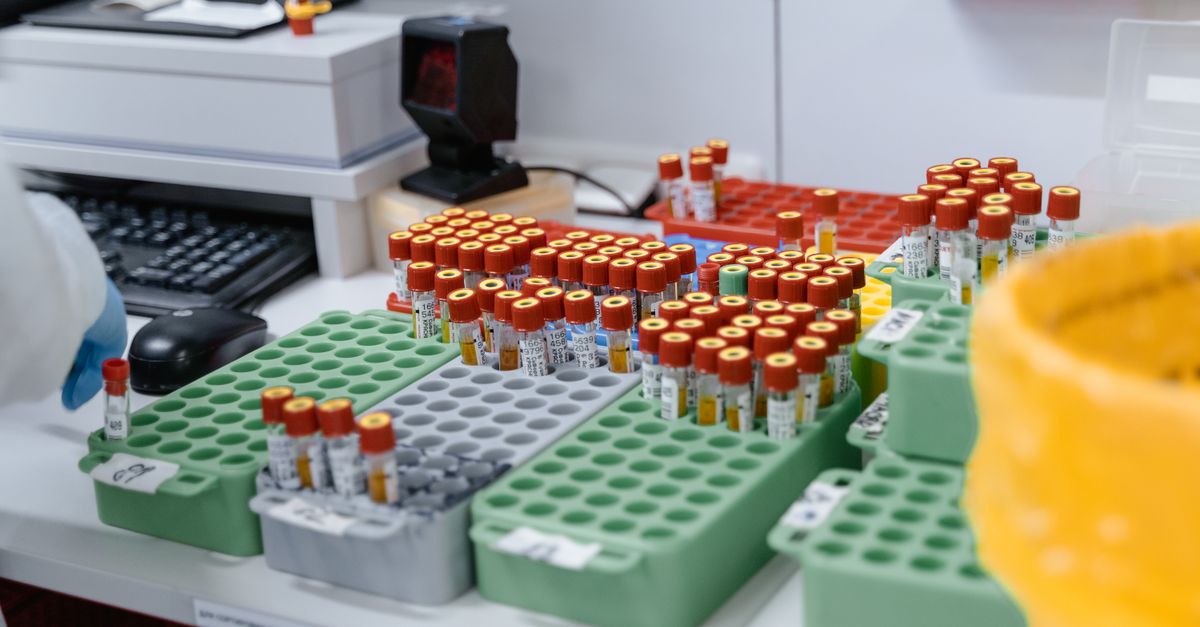
How Often Should Prolactin Be Tested?
For most healthy adults with no symptoms, prolactin testing once every one to two years is sufficient during routine hormone panels. If you have confirmed hyperprolactinemia, a pituitary adenoma, or are taking medications that raise prolactin, retesting every 3–6 months is standard practice. The exception: if you're actively adjusting treatment, testing as frequently as every 4–8 weeks may be warranted.
---
What Is Prolactin and Why Does It Matter?
Prolactin is a peptide hormone secreted by the anterior pituitary gland. Its most recognized function is stimulating milk production after childbirth, but its role extends well beyond lactation. Prolactin receptors are found in the brain, immune system, liver, kidneys, adrenal glands, and reproductive organs, which means chronically elevated levels can produce a wide spectrum of symptoms that don't obviously point to a hormone problem.
In men and non-pregnant women, serum prolactin typically ranges from 2 to 29 ng/mL, though reference ranges vary slightly by laboratory. Levels above 25–30 ng/mL in non-pregnant women, or above 15–20 ng/mL in men, are generally flagged for further investigation.
Prolactin is tightly regulated by dopamine. The hypothalamus releases dopamine into the portal blood vessels, and dopamine binds to D2 receptors on lactotroph cells in the pituitary, suppressing prolactin release. Any disruption to dopamine signaling — whether from a pituitary tumor, dopamine-blocking medications, chronic stress, or hypothyroidism — can push prolactin higher.
---
Symptoms of High Prolactin
Hyperprolactinemia is often asymptomatic in its early stages, which is part of why it's underdiagnosed. When symptoms do appear, they vary substantially between men and women.
In women, the most common presentations include:
- Irregular or absent menstrual cycles (oligomenorrhea or amenorrhea)
- Galactorrhea (spontaneous milk production unrelated to breastfeeding)
- Infertility due to suppressed ovulation
- Decreased libido and vaginal dryness
- Bone loss, since chronic estrogen suppression accelerates osteoporosis
In men, symptoms include:
- Erectile dysfunction and reduced libido
- Low testosterone (prolactin inhibits GnRH and LH secretion)
- Infertility due to reduced sperm quality
- Gynecomastia in some cases
- Fatigue and mood disturbances
A 2018 review in Endocrine Reviews reported that prolactinomas — benign pituitary tumors secreting prolactin — account for about 40% of all pituitary adenomas, with an estimated prevalence of 10–50 per 100,000 people (Melmed et al., Endocrine Reviews 2011; PMID: 21051587). Most are microadenomas (under 10 mm) and are highly treatable with dopamine agonists.
Beyond tumors, drug-induced hyperprolactinemia is surprisingly common. Antipsychotics, antidepressants (particularly SSRIs and tricyclics), metoclopramide, domperidone, and some antihypertensives can all raise prolactin. If you're on any of these medications, understanding your full hormone picture through regular lab testing becomes especially important.
---
Prolactin Blood Test: What You Need to Know Before Drawing
Prolactin is a notoriously labile hormone — levels fluctuate throughout the day, spike with physical activity, stress, sexual activity, nipple stimulation, and even a large meal. This variability means a single elevated reading doesn't confirm hyperprolactinemia, and proper collection technique matters enormously.
Optimal blood draw conditions:
- Collect blood in the morning, ideally between 8 and 10 AM, after the peak nocturnal surge has passed.
- Fast for at least 2 hours prior to the draw.
- Avoid vigorous exercise for 24 hours before the test.
- Arrive at the lab 30–60 minutes early and rest quietly — even venipuncture-related anxiety can transiently spike prolactin.
- Disclose all medications to your ordering clinician.
One important technical caveat: a phenomenon called macroprolactinemia can cause lab results to appear elevated. Macroprolactin is a high-molecular-weight form that is biologically less active but detected by standard assays. Gel filtration chromatography or polyethylene glycol (PEG) precipitation can distinguish macroprolactin from bioactive monomeric prolactin. If your prolactin is elevated but you have no symptoms, ask your clinician about macroprolactin screening.
---
How Often Should Prolactin Be Tested? A Frequency Guide by Situation
The right testing interval depends heavily on context. Here is a practical framework:
| Clinical Situation | Recommended Testing Frequency |
|---|---|
| Healthy adult, no symptoms | Once every 1–2 years within a comprehensive hormone panel |
| Mildly elevated (25–50 ng/mL), no adenoma confirmed | Retest in 3 months to confirm; then every 6 months |
| Confirmed microprolactinoma, stable on treatment | Every 6–12 months |
| Confirmed macroprolactinoma, active treatment | Every 3–6 months; MRI annually |
| Initiating or adjusting dopamine agonist dose | Every 4–8 weeks until stable |
| Drug-induced hyperprolactinemia, medication change | 4–6 weeks after the medication switch |
| Fertility workup | At baseline; repeat if initial cycle-based interventions fail |
| Unexplained amenorrhea or low testosterone | Include in initial panel; retest if other findings are abnormal |
This aligns with guidance from the Endocrine Society Clinical Practice Guidelines on hyperprolactinemia (Melmed et al., Journal of Clinical Endocrinology & Metabolism 2011; PMID: 21296991), which recommend monitoring serum prolactin and pituitary MRI at regular intervals based on tumor size and treatment response.
If you're tracking related cardiovascular or metabolic markers alongside hormones, understanding how often to test cholesterol-related biomarkers can help you build a cohesive annual lab schedule rather than testing each marker ad hoc.
---
Prolactin and the HPA-HPG Axis: Why Stress Testing Matters
One of the most underappreciated drivers of mildly elevated prolactin is chronic psychological stress. Cortisol and prolactin share regulatory pathways through the hypothalamic-pituitary-adrenal (HPA) and hypothalamic-pituitary-gonadal (HPG) axes. Chronic stress dysregulates dopamine tone in the tuberoinfundibular dopaminergic (TIDA) pathway, which is the primary inhibitory brake on prolactin secretion.
A study in Psychoneuroendocrinology demonstrated that prolactin responses to standardized psychological stressors varied significantly between individuals with high and low perceived chronic stress scores, independent of cortisol levels (Lennartsson et al., Psychoneuroendocrinology 2012; PMID: 21944864). This suggests that prolactin can serve as a secondary stress biomarker.
This interplay also explains why persistent low-grade elevations in prolactin — say, 25–40 ng/mL with no detectable pituitary adenoma — are often seen alongside elevated inflammatory markers. Research published in Autoimmunity Reviews has documented prolactin's role as a proinflammatory cytokine mimic; it activates Jak2/STAT signaling pathways similar to cytokines, potentially exacerbating autoimmune conditions (Legorreta-Haquet et al., Autoimmunity Reviews 2012; PMID: 22525670). If you're monitoring inflammation, regular CRP testing alongside prolactin can provide a more complete picture of inflammatory burden.
For women with irregular LH pulses and elevated prolactin, testing both biomarkers in tandem — especially across different phases of the menstrual cycle — provides far more actionable data than a single snapshot. How often LH should be tested is a related question worth exploring if you're investigating fertility or cycle irregularities.
---
Prolactin, Bone Density, and Long-Term Health
One of the most clinically serious consequences of chronic hyperprolactinemia is bone loss. Prolactin suppresses estrogen in women and testosterone in men by inhibiting GnRH secretion from the hypothalamus, which in turn reduces LH and FSH pulsatility. The resulting hypogonadism accelerates bone resorption.
A longitudinal study in Osteoporosis International found that women with untreated hyperprolactinemia had significantly lower lumbar spine bone mineral density compared to age-matched controls, and that bone density recovered partially — but not completely — after dopamine agonist treatment normalized prolactin (Di Somma et al., Osteoporosis International 1998; PMID: 9797906). This underscores the importance of not leaving elevated prolactin unchecked for years.
If you are managing hyperprolactinemia and monitoring bone health, ensuring adequate vitamin D3 and K2 intake is well supported by evidence. Vitamin D3 (ideally paired with MK-7 K2) supports calcium absorption and osteocalcin carboxylation, two mechanisms that partially offset the bone resorption driven by hypogonadism.
---
What This Means for Your Formula
Ones doesn't treat hyperprolactinemia — that requires medical management, typically with dopamine agonists like cabergoline or bromocriptine. But the downstream consequences of elevated prolactin — hormonal imbalance, stress dysregulation, inflammation, and bone density loss — are areas where targeted nutritional support plays a meaningful complementary role.
Depending on what your lab results and health history show, Ones may include:
- Vitamin D3 + K2 (MK-7): Clinically validated for bone mineral density support and immune regulation. The D3+K2 combination in Ones formulas targets the same osteocalcin and calcium-handling pathways that hyperprolactinemia disrupts. Doses are calibrated to your serum 25(OH)D levels, not arbitrary population averages.
- Ashwagandha (KSM-66, 600 mg): Adaptogenic support for the HPA axis. A double-blind RCT published in Medicine (Chandrasekhar et al., 2012; PMID: 23439798) found KSM-66 at 300 mg twice daily reduced serum cortisol by 27.9% and improved stress scores significantly. Since chronic stress dysregulates the same TIDA dopaminergic pathway that controls prolactin, reducing cortisol burden is a rational adjunct strategy.
- Zinc: Zinc supports testosterone synthesis and plays a role in dopamine metabolism. Research has demonstrated that zinc deficiency correlates with impaired pituitary function. Ones includes zinc at clinically relevant doses when labs indicate insufficiency — which is more common than most standard panels reveal. For more context on how zinc deficiency shows up on blood tests, that resource covers the biomarkers in depth.
Ones AI maps your blood work and health history to a custom daily capsule formula — either a 6-capsule or 9-capsule plan depending on your findings — so the ingredients above are only included when your data actually supports them, not as a default stack.
---
Key Takeaways
- Healthy adults with no symptoms generally need prolactin tested once every 1–2 years within a comprehensive hormone panel; more frequent testing is for those with confirmed elevations, adenomas, or active treatment.
- Proper blood draw conditions matter — morning collection after quiet rest minimizes physiological noise that can produce false elevations.
- Symptoms of high prolactin span both sexes and include irregular cycles, low libido, fertility issues, bone loss, and fatigue — often without obvious hormonal red flags.
- Macroprolactinemia is a common technical confound; ask your clinician about PEG precipitation testing before escalating workup for an asymptomatic elevation.
- Stress and inflammation dysregulate prolactin through dopamine pathways; tracking CRP alongside prolactin gives a more complete systemic picture.
- Nutritional support — especially D3+K2, adaptogenic herbs, and zinc — can address the downstream consequences of prolactin imbalance, though medical management of hyperprolactinemia itself requires clinical care.
---
This article is for educational purposes only and does not constitute medical advice. Consult a qualified healthcare provider before making changes to your supplement regimen or interpreting lab results.