Thyroid
Understanding How Often Should TSH Be Tested? on Your Lab Report
TSH is the most commonly ordered thyroid marker, yet millions of people receive 'normal' results while still experiencing fatigue, weight gain, and brain fog — because testing frequency and reference range interpretation are rarely optimized. Understanding how often TSH should be tested, and what companion markers tell you, can be the difference between managed thyroid health and years of unresolved symptoms.
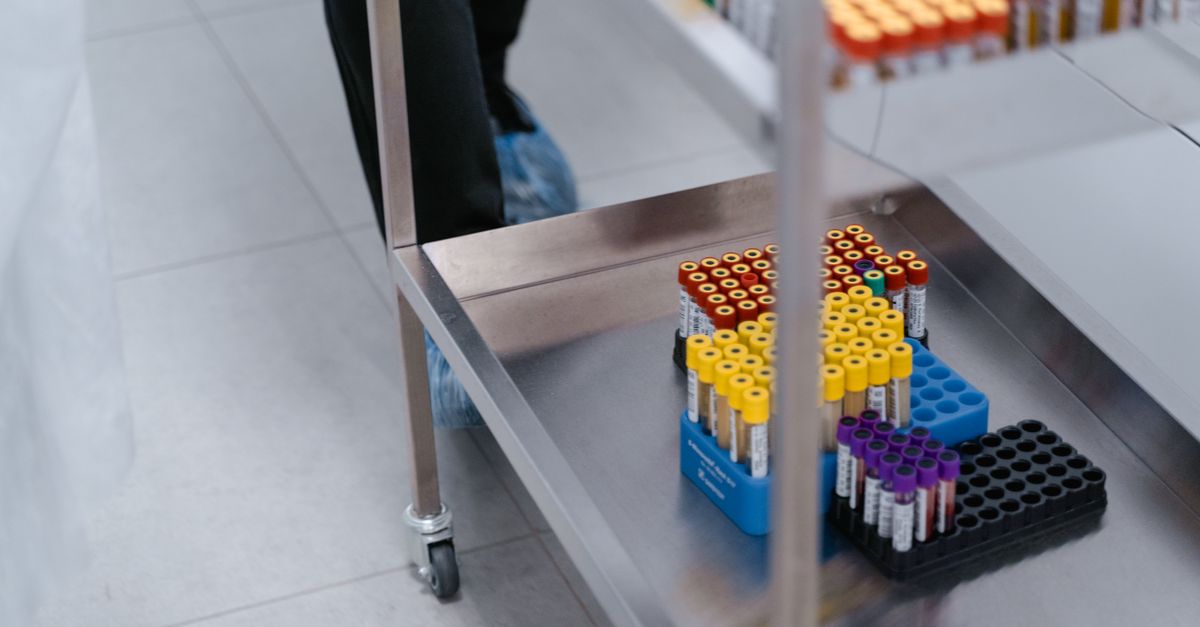
Understanding How Often Should TSH Be Tested? Your Complete Lab Guide
Thyroid-stimulating hormone (TSH) sits at the center of nearly every thyroid conversation — and for good reason. It is the pituitary gland's primary signal to the thyroid, rising when thyroid output drops and falling when output is sufficient. But asking how often should TSH be tested? opens a much bigger conversation about what the number actually tells you, when companion markers are essential, and how precision testing turns a single lab value into an actionable health strategy.
Why TSH Alone Rarely Tells the Whole Story
TSH reflects pituitary feedback, not direct thyroid output. A person can have a TSH that sits comfortably within the conventional reference range (0.45–4.5 mIU/L per most US labs) while simultaneously having low circulating free thyroid hormones — especially if the pituitary is itself sluggish or if peripheral conversion of T4 to active T3 is impaired. Functional medicine practitioners often work with a tighter optimal range of 1.0–2.5 mIU/L, citing evidence that values above 2.5 mIU/L are associated with higher autoimmune thyroid disease risk and progressive thyroid dysfunction (Vanderpump et al., Clinical Endocrinology 1995; PMID: 7641412).
This is why thyroid testing frequency and panel design matter as much as the test itself.
---
How Often Should TSH Be Tested?
The answer depends heavily on your clinical status:
| Clinical Scenario | Recommended TSH Testing Frequency |
|---|---|
| Healthy adult, no symptoms, no history | Every 1–2 years (preventive) |
| Subclinical hypothyroidism, monitoring | Every 6–12 months |
| Newly diagnosed hypothyroidism | Every 6–8 weeks until stable |
| Stable on thyroid medication | Every 6–12 months |
| Thyroid autoimmunity (Hashimoto's) | Every 6 months, with antibodies annually |
| Pregnancy (first trimester) | Every 4 weeks through week 20 |
| Post-thyroidectomy or radioiodine | Every 3–6 months initially, then annually |
| Significant medication or dose change | 6–8 weeks after change |
The American Thyroid Association (ATA) recommends that adults with no known thyroid disease consider baseline TSH screening at age 35 and every five years thereafter, though many clinicians begin annual or biennial monitoring earlier for women, who face a five- to eight-fold higher lifetime risk of thyroid disease compared to men (Garber et al., Thyroid 2012; PMID: 22136048).
For anyone on levothyroxine or combination T4/T3 therapy, the TSH six-to-eight-week re-check after any dose change is non-negotiable — TSH has a half-life of approximately one week and reflects an integrated average of pituitary stimulation, meaning changes in circulating hormone levels take weeks to register fully in TSH readings.
---
How Often Should Free T4 Be Tested?
Free T4 (FT4) is the unbound, biologically active fraction of thyroxine — the primary hormone the thyroid gland secretes. While TSH tells you how hard the pituitary is pushing, FT4 tells you how much hormone is actually circulating. These two values can diverge significantly in real patients.
Optimal free T4 range: Most functional clinicians target 1.1–1.5 ng/dL (the upper half of the conventional 0.8–1.8 ng/dL range).
How often should Free T4 be tested?
- No thyroid condition, preventive: Order alongside TSH every 1–2 years
- On levothyroxine (T4 monotherapy): Every 6–8 weeks during dose titration; every 6–12 months once stable
- Suspected central hypothyroidism (where TSH may be falsely normal): FT4 becomes the primary monitoring marker — test every 6 months
- Pregnancy: Every 4 weeks in the first trimester; once per trimester thereafter
A study published in The Journal of Clinical Endocrinology & Metabolism found that roughly 15% of patients on levothyroxine who maintained a normal TSH still had FT4 levels in the suboptimal range, correlating with persistent fatigue and reduced quality-of-life scores (Wekking et al., European Journal of Endocrinology 2005; PMID: 16322383). This finding underscores why ordering FT4 alongside TSH is standard in comprehensive thyroid assessment, not optional.
If you are exploring comprehensive thyroid panel testing, FT4 should be a fixed component of every draw — not an add-on considered only when TSH is abnormal.
---
How Often Should Free T3 Be Tested?
Free T3 (FT3) is triiodothyronine in its active, unbound form — the hormone that actually binds to cellular receptors and drives metabolic activity. T4 is largely a prohormone; roughly 80% of circulating T3 is generated by peripheral conversion of T4 in the liver, kidneys, and gut. When conversion is impaired — by chronic stress, selenium deficiency, gut dysbiosis, or excessive caloric restriction — FT3 can drop even when TSH and FT4 look fine.
Optimal free T3 range: 3.2–4.2 pg/mL (upper half of the conventional 2.3–4.2 pg/mL range is often targeted functionally).
How often should Free T3 be tested?
| Scenario | FT3 Testing Frequency |
|---|---|
| Baseline thyroid workup | Once, alongside TSH + FT4 |
| On T4-only therapy with persistent symptoms | Every 6 months |
| On combination T4/T3 therapy | Every 6–8 weeks during titration; every 6 months when stable |
| Hashimoto's with normal TSH but symptoms | Every 6 months |
| Caloric restriction, significant stress, illness | As clinically indicated |
The FT3:FT4 ratio is an emerging clinical tool for evaluating peripheral conversion efficiency. A ratio below approximately 0.25 suggests impaired T4-to-T3 conversion and may warrant investigation of selenium status, liver function, or adrenal output — because cortisol excess directly inhibits the deiodinase enzymes responsible for conversion (Maia et al., Journal of Endocrinological Investigation 2011; PMID: 21747258).
For anyone managing low free T3 symptoms like persistent cold intolerance, constipation, slow cognition, or low resting metabolic rate despite a normal TSH, adding FT3 to every thyroid draw is not optional — it is the key data point.
---
How Often Should Thyroid Antibodies Be Checked?
Thyroid peroxidase antibodies (TPO-Ab) and thyroglobulin antibodies (TgAb) identify autoimmune thyroid activity — the mechanism behind Hashimoto's thyroiditis, which accounts for approximately 90% of hypothyroid cases in iodine-sufficient populations. Antibody levels do not need to be checked as frequently as TSH or FT4, but they carry significant predictive value.
- Initial workup: Always include TPO-Ab and TgAb when TSH is outside optimal range or symptoms are present
- Known Hashimoto's, on treatment: Recheck annually to track autoimmune activity
- Elevated antibodies with normal TSH: Recheck TSH and FT4 every 6–12 months — progression to overt hypothyroidism occurs in approximately 5% of patients per year (Vanderpump et al., 1995; PMID: 7641412)
If your antibodies are elevated, the conversation about selenium's role in modulating autoimmune activity is clinically relevant. Selenomethionine at 200 mcg daily has been shown to reduce TPO antibody titers by approximately 40% over 12 months in patients with Hashimoto's (Gärtner et al., Journal of Clinical Endocrinology & Metabolism 2002; PMID: 11932302).
---
How Often Should Fibrinogen Be Tested?
Fibrinogen is an acute-phase inflammatory protein that functions as a clotting factor. While it is not a thyroid hormone, it belongs in a comprehensive thyroid health workup for a specific reason: hypothyroidism — even subclinical hypothyroidism — is independently associated with elevated fibrinogen levels, increasing cardiovascular and thrombotic risk in thyroid patients.
Because this secondary keyword asks about testing frequency rather than mechanism, the most useful guidance is:
- Healthy adult with no cardiovascular risk: Not routinely required unless hs-CRP is elevated or there is a history of clotting disorders
- Subclinical or overt hypothyroidism: Consider baseline fibrinogen as part of cardiovascular risk assessment; recheck every 12 months or after treatment stabilization
- Hashimoto's with metabolic involvement: Annual check alongside lipid panel and hs-CRP
Research published in Thyroid has documented that fibrinogen levels normalize in many hypothyroid patients following adequate levothyroxine replacement, reinforcing the cardiovascular importance of treating even subclinical thyroid dysfunction promptly. If you are tracking cardiovascular biomarkers alongside thyroid function, fibrinogen and hs-CRP are natural companions.
---
How Often Should Homocysteine Be Tested?
Homocysteine is an amino acid byproduct of methionine metabolism, and elevated levels (typically above 10–12 µmol/L) signal risk for cardiovascular disease, cognitive decline, and — relevant here — thyroid insufficiency. Hypothyroidism impairs the remethylation pathway that recycles homocysteine back to methionine, meaning high homocysteine can be both a consequence of undertreated thyroid disease and an independent marker worth tracking.
Key testing guidance:
- Baseline cardiovascular or cognitive risk screen: Once, then every 2–3 years if normal
- Hypothyroidism (especially if untreated or undertreated): Annually, alongside B12, folate, and methylation markers
- MTHFR polymorphism carrier: Every 12 months given impaired endogenous methylation capacity
- Post-treatment normalization check: 6–12 months after achieving stable TSH
Homocysteine's relationship with thyroid function is bidirectional: studies show that effective thyroid replacement in hypothyroid patients reduces homocysteine by approximately 12–15% even without targeted B-vitamin supplementation (Hussein et al., Thyroid 2006; reviewed in context of multiple trials on hypothyroidism and cardiovascular biomarkers). Ensuring adequate B12, folate, and B6 intake becomes especially important for thyroid patients with elevated baseline homocysteine.
---
What This Means for Your Formula
If your thyroid labs come back with suboptimal patterns — TSH creeping above 2.5 mIU/L, FT3 in the lower quartile, elevated TPO antibodies, or sluggish T4-to-T3 conversion — targeted nutrient support can meaningfully shift these biomarkers over time.
Ones evaluates your full lab panel alongside wearable biometrics and health history to build a personalized capsule formula. For thyroid-related findings, several ingredients in the Ones catalog are particularly relevant:
- Thyroid Support (System Blend): Ones' proprietary Thyroid Support blend is formulated specifically for thyroid hormone metabolism, combining nutrients that support iodothyronine synthesis and deiodinase enzyme function — the enzymes responsible for T4-to-T3 conversion that depend heavily on selenium status.
- Selenium (as Selenomethionine, 200 mcg): Matching the dose used in the Gärtner et al. 2002 trial (PMID: 11932302), this is the most clinically validated dose for reducing TPO antibody titers in Hashimoto's patients. Ones includes selenomethionine at this evidence-based dose when lab patterns and autoimmune markers support it.
- Adrenal Support (System Blend): Because elevated cortisol directly inhibits type-1 deiodinase — the enzyme that converts T4 to active T3 in peripheral tissues — Ones may include its Adrenal Support blend alongside thyroid-targeted nutrients when wearable HRV and cortisol patterns suggest chronic stress is disrupting conversion.
The AI practitioner at Ones synthesizes these data points to determine whether a 6-capsule or 9-capsule daily plan is appropriate, calibrating the formula to your specific biomarker gaps rather than offering a generic thyroid supplement stack.
---
Key Takeaways
- TSH should be tested every 6–12 months for stable thyroid conditions, every 6–8 weeks after any medication or dose change, and every 1–2 years preventively for healthy adults with no known thyroid issues
- Free T4 and Free T3 should be ordered alongside TSH in any comprehensive thyroid assessment — TSH alone misses conversion defects and central hypothyroidism
- Thyroid antibody testing (TPO-Ab, TgAb) is essential at baseline and should be rechecked annually in confirmed Hashimoto's to track autoimmune activity
- Fibrinogen and homocysteine are cardiovascular markers that thyroid dysfunction elevates — annual monitoring is appropriate for hypothyroid patients, particularly those with metabolic or cardiovascular risk factors
- Selenium at 200 mcg (selenomethionine) is the most evidence-backed micronutrient intervention for autoimmune thyroid activity and T4-to-T3 conversion efficiency
- Personalized formulas that match your specific lab findings — like those built by Ones — are more likely to address underlying nutrient gaps than broad-spectrum thyroid supplements with non-validated dosing
---
Always consult a licensed healthcare provider before making changes to thyroid medication or supplement protocols. Lab testing frequency recommendations should be individualized based on your clinical history and provider guidance.