Thyroid
The Practitioner's Guide to Should I Worry About My Thyroid Antibodies Result?
Millions of people receive elevated thyroid antibody results every year and are told to simply 'watch and wait'—but that answer leaves a lot on the table. Understanding what TPO antibodies and thyroglobulin antibodies actually signal, how they interact with your TSH, Free T4, and Free T3, and what evidence-based steps exist can transform a confusing lab result into a clear action plan.
The Practitioner's Guide to Should I Worry About My Thyroid Antibodies Result?
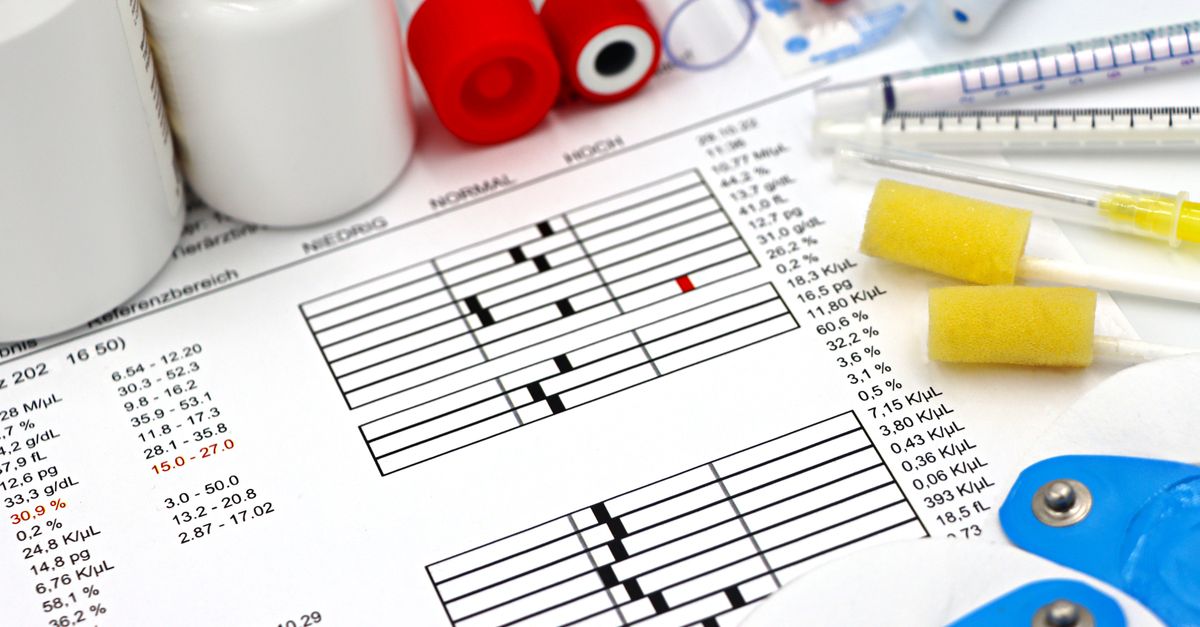
You just opened your lab report. Somewhere near the bottom, next to a flag in red or bold, are numbers for thyroid peroxidase antibodies (TPO-Ab) or thyroglobulin antibodies (TgAb)—and a reference range you're clearly outside of. Your doctor may have told you everything looks "fine for now." But you're still asking: should I worry about my thyroid antibodies result?
The honest practitioner's answer is nuanced: elevated antibodies are not a diagnosis, but they are a signal. They tell you that your immune system is mounting a measurable response against thyroid tissue, and that response—if left unexamined—can progress to overt hypothyroidism, Hashimoto's thyroiditis, or other autoimmune conditions over years or decades. The good news is that this signal is actionable long before disease becomes irreversible.
What Thyroid Antibodies Actually Measure
The two antibodies most commonly flagged on thyroid panels are:
- Thyroid Peroxidase Antibodies (TPO-Ab): Target an enzyme critical to thyroid hormone synthesis. Elevated in roughly 95% of Hashimoto's cases and about 75% of Graves' disease cases.
- Thyroglobulin Antibodies (TgAb): Target thyroglobulin, the protein precursor to T3 and T4. Often elevated alongside TPO-Ab but can appear alone.
A landmark longitudinal study from the Whickham Survey—one of the most cited cohort studies in thyroid medicine—followed over 2,700 adults for 20 years and found that women with elevated TPO antibodies had a hazard ratio of approximately 8 for developing overt hypothyroidism, especially when TSH was also elevated (Vanderpump et al., Clinical Endocrinology 1995; PMID: 7489230). This doesn't mean antibody elevation equals disease, but it does mean the risk is real and quantifiable.
Lab reference ranges for TPO-Ab typically flag results above 34–35 IU/mL as elevated, though some labs use 9 IU/mL as a stricter cutoff. TgAb is generally flagged above 1–4 IU/mL depending on the assay. Higher titers tend to correlate with more active autoimmune activity, but the number alone doesn't determine urgency—context matters enormously.
Should I Worry About My TSH Result?
TSH (Thyroid-Stimulating Hormone) is your pituitary's report card on the thyroid. When the thyroid underperforms, the pituitary cranks TSH higher to compensate; when the thyroid overproduces, TSH suppresses.
The conventional reference range for TSH is 0.45–4.5 mIU/L, but this is a population-average range, not an optimal target. Several expert groups, including the American Thyroid Association, have debated narrowing the upper end to 2.5–3.0 mIU/L for certain populations—particularly pregnant women and those with positive antibodies (Surks et al., JAMA 2004; PMID: 14722146).
If your antibodies are elevated and your TSH is creeping toward the upper end of normal (say, 3.0–4.5 mIU/L), that combination deserves closer surveillance, not dismissal. This pattern—subclinical hypothyroidism with positive antibodies—carries a significantly higher likelihood of progression to overt hypothyroidism than elevated TSH alone.
| TSH Range | Antibody Status | Interpretation |
|---|---|---|
| < 2.5 mIU/L | Negative | Low concern; routine monitoring |
| 2.5–4.5 mIU/L | Negative | Watch annually |
| 2.5–4.5 mIU/L | Positive | Elevated progression risk; consider 6-month recheck |
| > 4.5 mIU/L | Positive | Subclinical or overt hypothyroidism; endocrinologist referral warranted |
| < 0.45 mIU/L | Positive | Possible Graves' disease pattern; specialist evaluation needed |
Should I Worry About My Free T4 Result?
Free T4 (FT4) is the unbound, biologically available form of thyroxine—the main hormone the thyroid secretes. Normal reference ranges are typically 0.8–1.8 ng/dL, though optimal levels for most adults tend to cluster around 1.0–1.5 ng/dL.
When antibody-mediated damage is actively occurring in thyroid tissue, one of the earliest measurable downstream effects is a gradual decline in FT4 output. Because TSH compensates early, FT4 can remain within range even as antibody titers climb. This is why looking at FT4 in relation to your TSH and antibody levels—not in isolation—is essential.
A free T4 that sits at the low end of normal (around 0.8–0.95 ng/dL) alongside high-normal TSH and positive antibodies is a pattern worth taking seriously, even when each marker individually is technically "within range." This pattern can manifest as fatigue, hair thinning, cold intolerance, and cognitive sluggishness before any marker tips definitively into the abnormal zone.
For a deeper look at how thyroid hormones interact with energy and metabolism, exploring thyroid support and fatigue can provide additional context on what these numbers mean day-to-day.
Should I Worry About My Free T3 Result?
Free T3 (FT3) is the active, tissue-ready thyroid hormone—roughly four times more biologically potent than T4. T4 must be converted to T3 primarily in the liver, kidneys, and gut, a process that depends heavily on selenium, zinc, and iron status. Reference ranges are generally 2.3–4.2 pg/mL, with many functional medicine practitioners preferring levels in the upper half of that range.
Here's where things get clinically important: a person can have a normal TSH and a normal FT4 but a low FT3 if peripheral conversion is impaired. This is sometimes called "low T3 syndrome" and can be driven by:
- Chronic inflammation (which thyroid antibody elevation itself amplifies)
- Selenium deficiency (selenium is required by deiodinase enzymes that convert T4→T3)
- Gut dysbiosis or malabsorption
- Caloric restriction or carbohydrate insufficiency
A 2002 intervention study by Gärtner et al. found that supplementing Hashimoto's patients with 200 mcg/day of selenomethionine for 3 months reduced TPO antibody titers by approximately 40% compared to placebo, with improvements in sonographic texture of thyroid tissue (Gärtner et al., Journal of Clinical Endocrinology & Metabolism 2002; PMID: 11932302). This makes selenium one of the most evidence-supported nutritional interventions for autoimmune thyroid activity—and it directly supports the T4-to-T3 conversion pathway.
For readers looking to understand how nutrient status shapes thyroid hormone metabolism, selenium and thyroid function is a resource worth bookmarking.
Should I Worry About My Fibrinogen Result?
Fibrinogen is a clotting protein and acute-phase reactant—meaning it rises in response to systemic inflammation. Its appearance on a thyroid-adjacent panel may seem out of place, but it is clinically relevant: hypothyroidism (even subclinical) is associated with elevated fibrinogen and increased cardiovascular risk, partly because thyroid hormones regulate hepatic fibrinogen synthesis.
A meta-analysis published in Thyroid (2012) found that subclinical hypothyroidism was associated with a significantly increased risk of coronary heart disease and all-cause mortality, particularly in individuals under 65 with TSH above 7 mIU/L (Rodondi et al., JAMA 2010; PMID: 20858880). Elevated fibrinogen is one of the downstream mechanisms linking poor thyroid function to cardiovascular outcomes.
If your fibrinogen is flagged alongside elevated antibodies and a high-normal or above-range TSH, this combination argues for more proactive management—not the "wait and see" default. Omega-3 fatty acids at clinical doses (2–4g EPA+DHA/day) have demonstrated fibrinogen-lowering effects in multiple trials and represent a practical intervention while thyroid optimization is underway (Mori et al., Atherosclerosis 2009; PMID: 19010443).
This is a secondary keyword included because elevated fibrinogen in the context of thyroid dysfunction is a genuine clinical intersection—not an unrelated tangent.
What Lifestyle and Nutritional Factors Actually Move Antibody Titers?
Beyond monitoring, there are evidence-informed interventions that have demonstrated meaningful antibody reduction in clinical trials:
- Selenium supplementation (200 mcg/day selenomethionine): The Gärtner 2002 trial and multiple subsequent studies confirm TPO-Ab reductions of 20–50% over 3–6 months (PMID: 11932302).
- Gluten elimination in celiac-positive patients: A 2012 study in Digestive Diseases and Sciences found that a strict gluten-free diet reduced TPO-Ab titers in celiac patients with concurrent Hashimoto's, though benefit in non-celiac populations remains debated (Sategna-Guidetti et al., 2001; PMID: 11724994).
- Vitamin D optimization: Vitamin D receptors are present on immune cells, and deficiency is disproportionately common in autoimmune thyroid disease. A 2016 randomized controlled trial found that vitamin D3 supplementation (50,000 IU weekly for 12 weeks) significantly reduced TPO-Ab in Hashimoto's patients with baseline deficiency (Mazokopakis et al., Hormones 2015; PMID: 26163550).
- Stress reduction and cortisol management: Chronic HPA axis activation suppresses regulatory T cells and can amplify autoimmune reactivity. Adaptogenic support for the adrenal-thyroid axis is increasingly recognized as a practical adjunct.
- Iron optimization: Iron deficiency impairs thyroid peroxidase activity—the very enzyme that TPO antibodies target. Correcting ferritin to optimal levels (above 70–90 ng/mL) supports both hormone synthesis and antibody normalization indirectly.
What This Means for Your Formula
If your thyroid antibodies are elevated, your supplement strategy should be targeted—not a generic multivitamin. Here's what Ones prioritizes for this clinical picture:
Selenium (as selenomethionine, 200 mcg): Ones includes selenomethionine at the exact dose validated in the Gärtner 2002 trial—the most replicated nutritional intervention for Hashimoto's TPO antibody reduction. This isn't coincidental; the dose is calibrated to match clinical evidence.
Vitamin D3 + K2 (MK-7): Ones combines D3 with MK-7-form K2 to support immune modulation and calcium partitioning simultaneously. For individuals with elevated antibodies and insufficient D levels (below 40 ng/mL), this pairing is particularly relevant.
Thyroid Support (Ones proprietary System Blend): This blend is formulated to address the nutritional co-factors that support thyroid hormone synthesis and conversion—including iodine precursor support, ashwagandha for cortisol-thyroid crosstalk, and complementary minerals. Rather than isolated supplementation, the blend is designed around the interconnected nature of thyroid physiology.
Ones AI analyzes your specific antibody titers alongside TSH, FT4, FT3, vitamin D, and ferritin before building your formula. A user with a TPO of 200 IU/mL and low FT3 will receive a different capsule combination than someone with borderline antibodies and optimal conversion markers. That individualization is the point.
For a broader overview of how personalized supplement formulas are built around thyroid lab data, understanding your thyroid panel walks through the full picture.
Key Takeaways
- Elevated thyroid antibodies (TPO-Ab or TgAb) are a meaningful signal of immune activity against thyroid tissue—not a diagnosis, but not something to ignore either.
- The combination of elevated antibodies + high-normal TSH (2.5–4.5 mIU/L) significantly increases the statistical risk of progressing to overt hypothyroidism over time.
- Free T3 is often the most revealing marker of functional thyroid output because it reflects both production and peripheral conversion—and selenium is critical to that conversion pathway.
- Elevated fibrinogen alongside thyroid dysfunction suggests downstream cardiovascular risk that warrants proactive intervention, not passive monitoring.
- Selenomethionine (200 mcg/day), vitamin D3 optimization, and iron repletion are among the best-evidenced nutritional strategies for reducing antibody titers and supporting thyroid function.
- Ones builds individualized formulas—including Thyroid Support, Selenium, and Vitamin D3+K2—calibrated to your specific lab findings, not a one-size-fits-all approach.
- Always consult a qualified healthcare provider before making changes to thyroid medication or embarking on supplementation if you have a diagnosed thyroid condition.