Women's Health
Is Hair Thinning Normal in Perimenopause?
Up to 50% of women experience noticeable hair thinning during perimenopause, yet most are never told why it happens or what actually helps. Falling estrogen, rising androgens, and nutrient gaps that compound quietly over years are usually the real story — and understanding them is the first step toward reversing the shed.
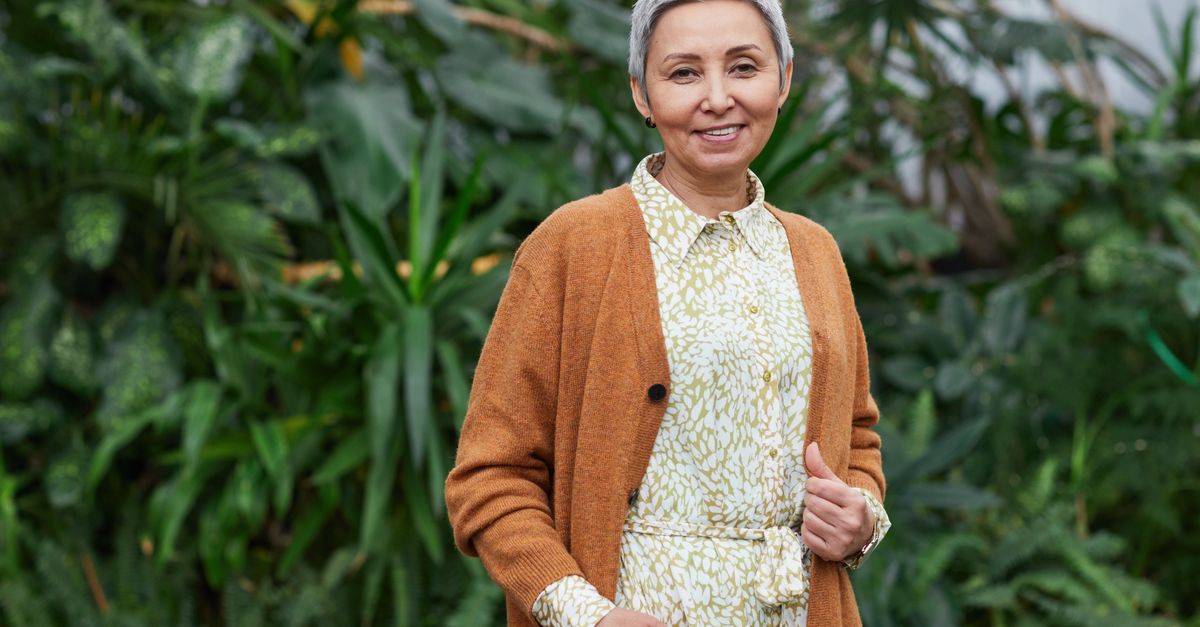
Is Hair Thinning Normal in Perimenopause?
Yes, for most women. Estrogen decline during perimenopause shortens the hair growth phase and tips follicles toward shedding — affecting an estimated 40–50% of women over 40. The main caveat: "normal" does not mean unavoidable. Nutritional deficiencies in iron, selenium, and other cofactors amplify the hormonal signal significantly, and correcting them often produces measurable regrowth.
---
You brush your hair and the handful in your palm is bigger than it used to be. Your part looks wider. Your ponytail feels thinner. If you're in your late 30s or 40s, you're probably in perimenopause — and yes, what you're seeing is one of its most common and least-discussed symptoms.
But "common" is not the same as untreatable. Understanding why perimenopausal hair thinning happens is the first step toward doing something real about it.
---
Why Estrogen Loss Causes Hair Thinning
Hair follicles are exquisitely sensitive to hormones. Estrogen prolongs the anagen (growth) phase of the hair cycle, which is why most women's hair grows faster and feels thicker during pregnancy, when estrogen is high. As estrogen declines during perimenopause, anagen shortens, and more follicles shift prematurely into the telogen (resting/shedding) phase.
At the same time, progesterone — which partially blocks the conversion of testosterone to dihydrotestosterone (DHT) — also falls. The net effect is a relative increase in androgenic activity at the scalp, which miniaturizes follicles in a pattern similar to androgenetic alopecia (Thornton 2002; PMID: 12542533).
This dual mechanism — estrogen withdrawal plus rising DHT sensitivity — explains why perimenopausal hair loss often looks different from the diffuse shed of nutritional deficiency and more like a gradual thinning at the crown and temples.
If you've been wondering whether brain fog and anxiety are also part of this hormonal shift, the answer is the same pattern: estrogen withdrawal affects multiple systems simultaneously, and the symptoms rarely travel alone.
---
Ferrous Bisglycinate for Hair Growth
Hormones get most of the blame for perimenopausal hair thinning, but iron is frequently the hidden accomplice. Ferritin — the storage form of iron — is required for DNA synthesis in rapidly dividing hair matrix cells. When ferritin drops below approximately 30–40 ng/mL, follicles begin shedding even in the absence of obvious anemia (Rushton 2002; PMID: 12190640).
Perimenopausal women are uniquely vulnerable. Irregular, often heavier periods during the transition deplete iron stores faster than they can be replaced by a typical diet. Many women hit perimenopause already borderline low after years of normal menstrual losses — and they never knew it.
Not all iron supplements are equal. Ferrous sulfate, the most commonly prescribed form, is associated with significant GI side effects — constipation, nausea, bloating — that cause many women to abandon supplementation before their ferritin recovers. Ferrous bisglycinate (iron chelated to the amino acid glycine) is absorbed through a different intestinal pathway, producing comparable or superior increases in ferritin with substantially less GI irritation (Bovell-Benjamin et al., Advances in Food and Nutrition Research 2000; PMID: 10917420).
A randomized controlled trial in women with telogen effluvium and low ferritin found that correcting iron stores led to measurable reduction in hair shedding, reinforcing ferritin as a modifiable target rather than a bystander (Rushton 2002; PMID: 12190640).
If you haven't checked your ferritin recently, it's worth doing. You can read more about what a normal ferritin level looks like in perimenopause — the reference ranges on standard lab reports are often set far too low for hair health.
---
Selenium for Hair Growth
Selenium is a trace mineral that most people have heard of but few associate with hair. Its relevance here is mechanistic: selenium is an essential cofactor for selenoproteins, including glutathione peroxidase enzymes that protect follicle stem cells from oxidative stress. Follicle cycling itself generates reactive oxygen species, and without adequate selenoprotein activity, oxidative damage accumulates in the dermal papilla and disrupts the growth signal (Forceville et al., various; general review NIH ODS Selenium Fact Sheet for Health Professionals).
Selenium status also intersects with thyroid function. Iodothyronine deiodinases — the enzymes that convert inactive T4 to active T3 — are selenium-dependent. Thyroid hormones regulate hair follicle cycling directly, and subclinical hypothyroidism is more common in perimenopausal women than in any other demographic. When selenium is low, thyroid conversion is impaired, compounding both the hormonal and the follicle-level dysfunction.
The clinical dose associated with thyroid and antioxidant benefits in human trials is 200 mcg/day as selenomethionine, the organic form with the best bioavailability. In the Gärtner et al. trial (2002; PMID: 11932302), 200 mcg/day of selenomethionine over 3 months significantly reduced thyroid peroxidase antibodies in Hashimoto's patients — a population with substantial follicle-thinning burden.
Dietary selenium intake varies enormously by geography (Brazilian nuts from selenium-rich soil vs. crops from depleted farmland), making individual assessment meaningful rather than optional.
---
Does Calcium Support Hair Growth?
Calcium's role in hair biology is less dramatic than iron or selenium but real. Calcium ions regulate the cell cycle within hair matrix keratinocytes, and the calcium-sensing receptor (CaSR) is expressed in hair follicle outer root sheath cells where it influences follicle cycling and differentiation (Bikle et al., Journal of Investigative Dermatology 2004; PMID: 15086540).
Practically, the more important calcium-hair connection for perimenopausal women is indirect: estrogen promotes intestinal calcium absorption, and as estrogen falls, calcium absorption efficiency decreases. This accelerates the well-known bone loss of perimenopause, but it also means cellular calcium availability across tissues is slightly reduced.
Calcium supplementation alone is unlikely to visibly alter hair density in a woman who is otherwise replete — it is not the primary lever. But ensuring adequate calcium intake (1,000–1,200 mg/day from food and supplement combined) and, critically, adequate vitamin D3 (which regulates intestinal calcium absorption) and vitamin K2 (which directs calcium to bone rather than soft tissue) creates the systemic environment in which follicle cycling is properly supported.
Cholesterol levels also shift meaningfully during this period — you can explore what's normal for cholesterol in perimenopause for context on the broader metabolic picture.
---
Other Nutritional Drivers Worth Testing
Beyond the minerals above, two additional deficiencies are consistently documented in women with perimenopausal hair thinning:
Zinc: Zinc is required for 5-alpha reductase regulation (the enzyme that converts testosterone to DHT) and for keratin synthesis. Low zinc paradoxically increases DHT activity at follicles even when circulating androgens appear normal. Supplementation in zinc-deficient individuals with hair loss has produced significant improvements in the Sinclair Hair Shedding Score (Karashima et al., Acta Dermato-Venereologica 2012; PMID: 22170475).
Biotin: Biotin deficiency is rare in otherwise healthy adults, but it does occur in women with significant gut absorption issues, chronic antibiotic use, or those eating large quantities of raw egg whites (which bind biotin). Unless a deficiency is confirmed, high-dose biotin supplementation is unlikely to produce hair regrowth — and importantly, it interferes with thyroid and troponin lab assays at doses above 5 mg/day, which can create misleading test results.
Thiamine (Vitamin B1): Emerging research suggests thiamine participates in mitochondrial energy production within follicle bulb cells, and deficiency can contribute to telogen effluvium. For a detailed breakdown, the practitioner's guide to thiamine for hair growth covers the evidence base more thoroughly.
---
What This Means for Your Formula
Perimenopausal hair thinning is a multi-root problem — it rarely has a single nutritional fix, and the hormonal component means supplementation alone won't fully substitute for a broader clinical conversation. That said, targeted nutrition significantly modifies how severe the thinning gets and how well follicles recover.
Ones approaches this by analyzing your blood work — including ferritin, thyroid panel, zinc, and vitamin D — alongside wearable data and health history before building a custom daily formula. Rather than stacking a generic "hair supplement" on top of whatever you're already taking, the AI identifies the specific gaps driving your pattern.
For perimenopausal hair concerns, Ones commonly includes:
- Ferrous bisglycinate at therapeutic doses calibrated to your ferritin result — not the minimal RDA, but the repletion dose needed to bring storage iron into the range where follicle cycling normalizes
- Selenomethionine at 200 mcg — matching the dose used in thyroid-selenium human trials — when selenium status, thyroid markers, or both suggest deficiency
- Zinc at clinically relevant doses (typically 25–30 mg elemental zinc) in individuals where serum zinc or alkaline phosphatase patterns indicate insufficiency, paired with copper to maintain the mineral balance
These aren't added as a default "hair blend." They're included or excluded based on your specific findings, which is why personalized analysis produces better outcomes than category-wide supplementation.
If your hair thinning coincides with other hormonal symptoms, it's worth noting that low libido in perimenopause and hair loss often stem from the same estrogen-androgen imbalance — addressing both together yields more complete results than treating each in isolation.
---
Key Takeaways
- Hair thinning affects an estimated 40–50% of perimenopausal women and is driven by estrogen withdrawal, relative androgen excess, and compounding nutritional deficiencies — not one factor alone.
- Ferritin below 30–40 ng/mL is a common, treatable cause of excessive shedding; ferrous bisglycinate is better tolerated than ferrous sulfate and produces comparable repletion.
- Selenium at 200 mcg/day as selenomethionine supports follicle antioxidant defense and thyroid T4-to-T3 conversion — two distinct pathways relevant to perimenopausal hair loss.
- Calcium's role is largely indirect; ensuring adequate vitamin D3 and K2 alongside calcium optimizes the systemic environment for follicle health rather than directly stimulating growth.
- Zinc deficiency increases DHT activity at follicles even when circulating androgens appear normal — making it an underappreciated target in androgenic patterned thinning.
- A personalized approach — testing ferritin, thyroid panel, zinc, selenium, and vitamin D before supplementing — produces better outcomes than broad-spectrum hair formulas, because the gaps vary significantly between individuals. Consult a healthcare provider before starting any supplementation protocol.
---
This article is for informational purposes only and does not constitute medical advice. Please consult a qualified healthcare provider for diagnosis and treatment of hair loss or hormonal conditions.