Supplements
Passionflower Extract Benefits: Evidence-Backed Benefits and Realistic Expectations
Passionflower has been used as a calming botanical for centuries, but modern clinical trials are now giving us a clearer picture of what it can — and cannot — do. If you've been curious about passionflower extract benefits for anxiety, sleep, or nervous system support, the evidence is more nuanced than most supplement labels suggest. Here's what the research actually shows.
Passionflower Extract Benefits: Evidence-Backed Benefits and Realistic Expectations
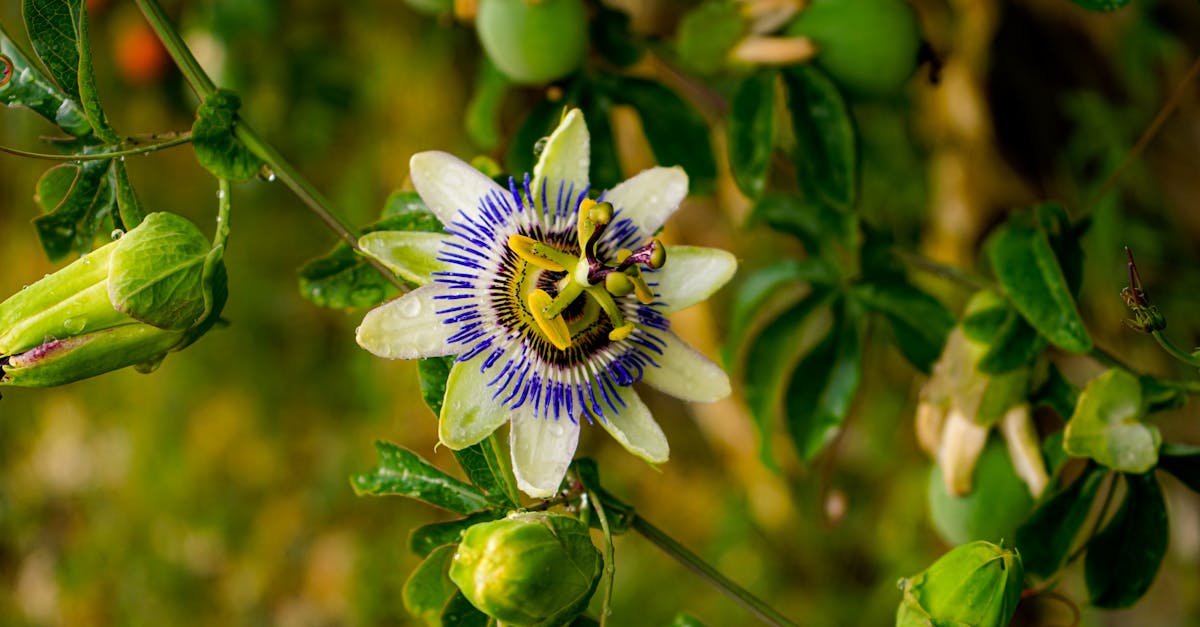
Passionflower (Passiflora incarnata) has a long history in traditional medicine across Europe and the Americas, where it was used to calm the nerves, ease insomnia, and quiet an overactive mind. Today, standardized passionflower extracts are showing up in clinical anxiety trials, sleep support formulas, and personalized supplement stacks — and for good reason. A growing body of peer-reviewed research supports several of its traditional uses, while also clarifying the limits of what this botanical can realistically deliver.
This article breaks down the clinical evidence on passionflower extract benefits, the mechanisms behind them, appropriate dosing ranges, and what to expect if you decide to add it to your daily routine.
---
What Is Passionflower Extract and How Does It Work?
Passionflower extract is derived from the aerial parts of Passiflora incarnata — the leaves, stems, and flowers. Standardized commercial extracts are typically calibrated to a consistent level of flavonoids, including chrysin and vitexin, which are believed to be among the plant's primary bioactive compounds.
The leading proposed mechanism involves the GABAergic system. GABA (gamma-aminobutyric acid) is the brain's primary inhibitory neurotransmitter — it slows neural firing and promotes a calmer mental state. Animal studies have demonstrated that passionflower flavonoids can modulate GABA-A receptors, producing anxiolytic effects without the sedation profile of pharmaceutical GABA modulators like benzodiazepines (Grundmann et al., Phytotherapy Research 2008; PMID: 18853446).
Additionally, chrysin has shown affinity for benzodiazepine binding sites in in vitro models, though human bioavailability of isolated chrysin remains a subject of ongoing research. The full picture likely involves synergistic interactions among multiple flavonoid compounds rather than a single active agent.
---
Clinical Evidence for Anxiety and Stress Reduction
The most robust human evidence for passionflower extract benefits comes from anxiety research. A randomized controlled trial published in Phytotherapy Research compared passionflower extract (45 drops/day of a liquid preparation) to oxazepam (a benzodiazepine) over four weeks in 36 outpatients with generalized anxiety disorder (GAD). Both groups showed equivalent reductions in Hamilton Anxiety Rating Scale (HAM-A) scores, while the passionflower group reported significantly less impairment of job performance — a meaningful functional outcome (Akhondzadeh et al., Phytotherapy Research 2001; PMID: 11679026).
A 2011 double-blind, placebo-controlled trial found that a passionflower-based supplement significantly reduced anxiety scores measured on the State-Trait Anxiety Inventory (STAI) in participants undergoing dental procedures — a high-stress but brief clinical context (Kaviani et al., Journal of Dental Research, Dental Clinics, Dental Prospects 2013; PMID: 23946862).
These findings suggest passionflower is most likely to produce noticeable effects in individuals with mild-to-moderate situational or generalized anxiety rather than severe anxiety disorders. As with any botanical, it is not a replacement for evidence-based psychiatric treatment — always consult a qualified healthcare provider before making changes to an anxiety management plan.
For those exploring a broader approach to stress physiology, it's worth understanding how adaptogenic herbs like ashwagandha work alongside calming botanicals — the two categories address different nodes of the stress response.
---
Passionflower Extract Benefits for Sleep Quality
Sleep is the second major area where passionflower has demonstrated clinically meaningful effects. A randomized, double-blind, placebo-controlled crossover trial published in Phytotherapy Research (Ngan & Conduit, 2011; PMID: 21294203) enrolled 41 healthy adults who consumed either passionflower tea (one cup, standardized to P. incarnata) or a placebo herbal tea for one week each. Sleep diary data showed statistically significant improvements in total sleep quality, sleep onset, wake after sleep onset, and sleep efficiency in the passionflower condition.
The authors noted that passionflower's effects were modest but meaningful — consistent with a gentle anxiolytic action that reduces pre-sleep cognitive arousal rather than a sedative mechanism. This is an important clinical distinction: passionflower appears to help people fall asleep more easily and sleep more continuously by calming the nervous system, not by forcing sedation.
For individuals with sleep issues rooted in racing thoughts or elevated evening cortisol, pairing passionflower with other relaxation-focused nutrients can form a coherent nighttime support strategy. Understanding how magnesium glycinate supports sleep architecture is particularly relevant here, as magnesium also operates through GABAergic and NMDA receptor pathways.
---
Cardiovascular and Blood Pressure Considerations
Some preclinical and early human research has explored passionflower's effects on cardiovascular markers. Animal studies have shown mild hypotensive effects, attributed in part to flavonoid-mediated vasodilation (Dhawan et al., Journal of Ethnopharmacology 2004; PMID: 14706720). However, high-quality human RCTs specifically investigating passionflower and blood pressure are still limited.
Current evidence does not support using passionflower as a primary cardiovascular intervention. People on antihypertensive medications should consult their physician before adding passionflower extract, as additive blood pressure-lowering effects are theoretically possible.
---
Dosing, Forms, and What Clinical Studies Actually Used
One of the most common problems with passionflower supplementation is under-dosing. Many products on the market include passionflower at doses too low to replicate clinical outcomes. Here's a summary of the ranges used in published studies:
| Form | Dose Used in Studies | Duration | Outcome Assessed |
|---|---|---|---|
| Liquid extract (tincture) | 45 drops/day (~700–800 mg equivalent) | 4 weeks | Generalized anxiety (HAM-A) |
| Herbal tea (1 cup standardized) | ~2 g dried herb | 1 week (crossover) | Sleep quality diary |
| Capsule/tablet (standardized extract) | 200–400 mg | Single dose to 4 weeks | Anxiety, perioperative stress |
Standardized extracts are preferable to non-standardized dried herb because flavonoid content can vary significantly between batches and suppliers. Look for products standardized to at least 3.5–4% total flavonoids, with chrysin and vitexin listed as marker compounds.
Passionflower is generally considered well tolerated at therapeutic doses. Reported adverse effects are mild and infrequent, most commonly drowsiness at higher doses — which can actually be useful in a nighttime formula. Rare cases of hypersensitivity have been documented.
---
Realistic Expectations: What Passionflower Will and Won't Do
Being honest about supplement expectations is a core principle of responsible health communication. Here's a realistic framework:
Passionflower extract is likely to help with:
- Mild-to-moderate generalized anxiety symptoms
- Pre-sleep cognitive arousal (racing thoughts at bedtime)
- Subjective sleep quality in otherwise healthy adults
- Acute situational stress (dental procedures, performance anxiety)
Passionflower is unlikely to be sufficient for:
- Severe anxiety disorders or panic disorder without additional treatment
- Clinical insomnia with underlying sleep apnea or circadian disruption
- Depression or mood disorders
- Acute stress responses requiring fast-acting pharmaceutical intervention
The honest framing is that passionflower occupies a meaningful but modest place in a comprehensive stress and sleep support strategy. It works best as part of a layered approach that includes sleep hygiene, stress management practices, and potentially other complementary nutrients.
Platforms that simply sell you a generic "calm blend" without any assessment of your stress biomarkers, cortisol patterns, or sleep data are guessing. Personalized supplementation — where your wearable-derived sleep data or lab-flagged cortisol levels actually inform what goes into your capsule — is a fundamentally different proposition.
---
What This Means for Your Formula
At Ones, passionflower extract is evaluated in the context of your full health picture — including wearable sleep data, self-reported stress load, and relevant biomarkers. If your data points to nervous system dysregulation, disrupted sleep onset, or elevated physiological stress markers, your Ones AI health practitioner may incorporate passionflower alongside complementary actives. Here are three ingredients from the Ones catalog that pair logically with passionflower in a stress and sleep support context:
1. Ashwagandha (KSM-66, 600mg)
KSM-66 is the most clinically studied form of ashwagandha, with randomized controlled trials demonstrating significant reductions in serum cortisol and perceived stress scores at the 600mg dose (Chandrasekhar et al., Indian Journal of Psychological Medicine 2012; PMID: 23439798). Where passionflower targets acute GABAergic calming, ashwagandha addresses the hypothalamic-pituitary-adrenal (HPA) axis — making them complementary rather than redundant. Ones includes KSM-66 at the full 600mg clinical dose.
2. Magnesium Glycinate (from Magnesium Complex Blend)
Magnesium plays a central role in GABA receptor function and NMDA receptor regulation — overlapping with passionflower's proposed mechanisms. A meta-analysis published in Nutrients (2017; PMID: 28445426) found magnesium supplementation reduced subjective anxiety measures, particularly in vulnerable populations. Ones includes magnesium glycinate as part of its Magnesium Complex System Blend, in forms and doses chosen for bioavailability and tolerability.
3. Rhodiola Rosea
For individuals whose stress response manifests as mental fatigue and cognitive blunting (rather than purely anxious activation), Rhodiola rosea offers complementary support via its effects on serotonin, dopamine, and stress protein pathways. A 2009 trial found Rhodiola reduced fatigue and improved cognitive performance under stress conditions (Shevtsov et al., Phytomedicine 2003; PMID: 12725561). Ones includes Rhodiola as an individual active dosed to clinically relevant ranges.
If you're already curious about how personalized layering of adaptogens and calming botanicals works in practice, exploring the clinical rationale behind Rhodiola Rosea for stress and fatigue is a useful next step.
---
Key Takeaways
- Passionflower extract benefits are best supported in anxiety and sleep: RCTs show meaningful reductions in anxiety scores (comparable to low-dose oxazepam in one trial) and improvements in sleep quality diary measures in healthy adults.
- The mechanism is primarily GABAergic: Passionflower flavonoids modulate GABA-A receptors and benzodiazepine binding sites, producing calming effects without strong sedation at typical doses.
- Dose and standardization matter significantly: Clinical effects were seen with ~700–800mg liquid extract equivalents or 200–400mg standardized capsule extracts; many commercial products fall below therapeutic thresholds.
- Realistic expectations prevent disappointment: Passionflower is a meaningful but modest tool — best suited for mild-to-moderate situational anxiety and pre-sleep cognitive arousal, not severe psychiatric conditions.
- Personalized context amplifies results: Pairing passionflower with complementary actives like KSM-66 ashwagandha, magnesium glycinate, or Rhodiola based on your actual sleep data and stress biomarkers is more effective than guessing with a generic blend.
- Always consult a healthcare provider before combining passionflower with prescription medications, particularly benzodiazepines, sedatives, or antihypertensives, due to potential additive effects.