Men's Health
What Happens to Free Testosterone with PCOS?
In PCOS, free testosterone levels are often significantly elevated — not just total testosterone. This distinction matters because it's the unbound fraction that drives the most visible symptoms. Understanding why free T rises and what can lower it is the first step toward effective management.
What Happens to Free Testosterone with PCOS?
In PCOS, free testosterone is almost always elevated, even when total testosterone looks borderline normal. The condition reduces sex hormone-binding globulin (SHBG), leaving more testosterone unbound and biologically active. This explains why symptoms like acne, hair thinning, and irregular periods persist even when a standard testosterone panel seems unremarkable.
---
Why Free Testosterone Rises in PCOS
PCOS is fundamentally a hormonal dysregulation syndrome with three intersecting drivers: excess androgen production, insulin resistance, and disrupted LH/FSH signaling. All three converge on free testosterone in meaningful ways.
Ovarian androgen overproduction. In PCOS, the ovarian theca cells produce excess androgens — primarily testosterone and androstenedione — in response to elevated luteinizing hormone (LH). Elevated LH is a hallmark of PCOS that amplifies ovarian steroidogenesis beyond what normal follicular development requires. You can read more about this dynamic in our article on what happens to LH levels when you have PCOS.
Insulin resistance and SHBG suppression. Insulin suppresses hepatic SHBG production. Because up to 70% of women with PCOS have some degree of insulin resistance (Diamanti-Kandarakis & Dunaif, Endocrine Reviews 2012; PMID: 22872561), their SHBG levels are chronically low. When SHBG falls, the fraction of testosterone that remains unbound — free testosterone — rises even if total testosterone stays the same. This mechanism is why free testosterone is a more clinically sensitive marker in PCOS than total testosterone.
Adrenal contribution. Roughly 20–30% of women with PCOS have elevated DHEA-S, indicating the adrenal glands are also contributing to the androgen pool (Azziz et al., Journal of Clinical Endocrinology & Metabolism 2004; PMID: 15181022). DHEA-S converts peripherally to testosterone, adding to the free fraction.
Reduced 5-alpha reductase context. Some tissue-level conversion of testosterone to dihydrotestosterone (DHT) is also elevated in PCOS, intensifying androgenic effects at hair follicles and sebaceous glands even without additional serum increases.
The net result is a biochemical environment where free testosterone is elevated in roughly 60–80% of PCOS cases, making it the most diagnostically and symptomatically relevant androgen marker in this condition (Franks, New England Journal of Medicine 1995; PMID: 7739993).
---
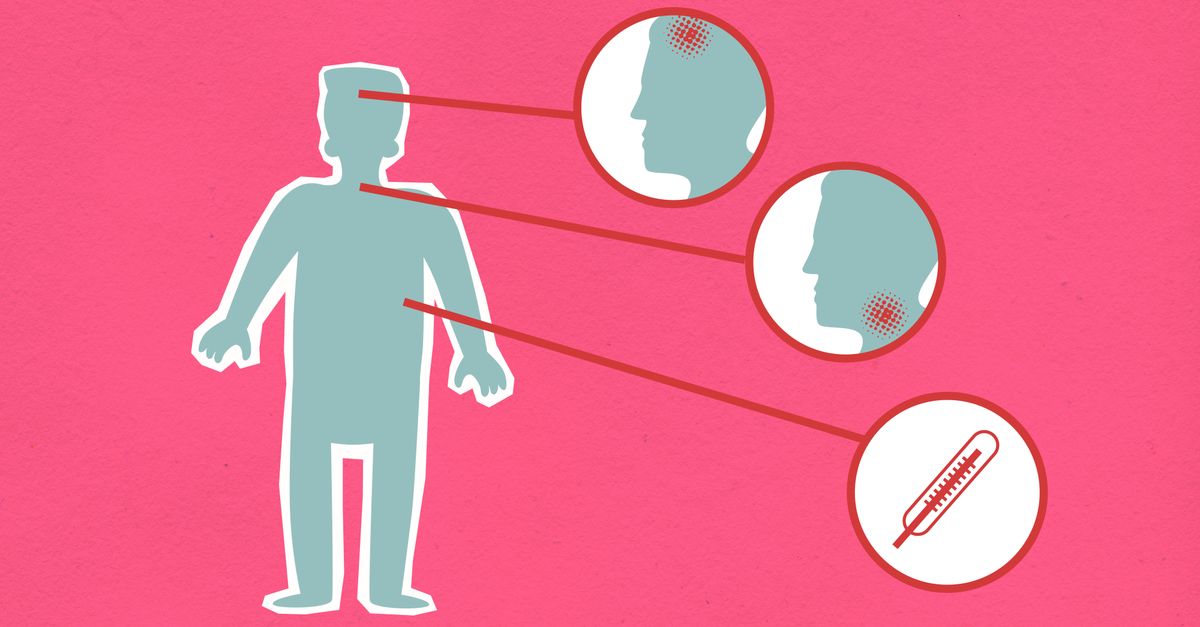
Symptoms of High Free Testosterone in PCOS
Because free testosterone is the biologically active form, its elevation produces direct androgenic effects on target tissues. The symptoms are often what bring people to their doctor in the first place.
Hirsutism. Excess facial and body hair — particularly on the chin, upper lip, chest, and abdomen — is driven by DHT acting on androgen-sensitive hair follicles. This is one of the most common presentations of androgen excess in PCOS.
Androgenic alopecia. Paradoxically, the same androgenic signaling that grows hair in unwanted places causes miniaturization of scalp follicles, leading to diffuse hair thinning, especially at the crown and temples.
Acne. Elevated androgens stimulate sebaceous gland activity, increasing sebum production and creating conditions for acne-causing bacteria to thrive. Adult cystic acne — particularly along the jawline — is a classic sign of elevated free testosterone.
Menstrual irregularity and anovulation. High androgen levels disrupt the normal LH/FSH ratio needed for follicular development and ovulation. What happens to FSH levels in PCOS covers how this ratio disruption contributes to cycle irregularity.
Insulin resistance amplification. Elevated androgens worsen insulin sensitivity, creating a self-reinforcing loop: more insulin resistance → lower SHBG → more free testosterone → more androgenic stimulation.
Mood and libido changes. While moderate testosterone supports libido, supraphysiologic free testosterone in the context of PCOS — combined with elevated cortisol and disrupted sleep — often paradoxically reduces sexual satisfaction and increases irritability. The role of cortisol in this picture is explored in our piece on what happens to cortisol in PCOS.
| Symptom | Mechanism | Tissue Affected |
|---|---|---|
| Hirsutism | DHT at androgen receptors | Facial/body hair follicles |
| Scalp hair thinning | Follicular miniaturization | Crown and temporal scalp |
| Cystic acne | Increased sebum production | Sebaceous glands |
| Irregular cycles | Disrupted LH/FSH signaling | Ovarian follicles |
| Insulin resistance | Androgen receptor cross-talk | Skeletal muscle, liver |
---
Symptoms of Low Free Testosterone in PCOS
Less commonly discussed is the scenario where treatment (pharmaceutical or otherwise) or naturally low adrenal output brings free testosterone below optimal range. Some people with PCOS who are treated with combined oral contraceptives or spironolactone can end up with suppressed free testosterone, and this has its own symptom profile.
Fatigue and low motivation. Free testosterone supports mitochondrial energy pathways and dopaminergic tone. When free T drops too low — whether due to over-treatment or natural variation — persistent fatigue and reduced motivation are common.
Low libido and vaginal dryness. Testosterone at physiologic levels supports genital tissue health and sexual drive in people with ovaries. Suppression below the normal range, especially with combined oral contraceptives that also raise SHBG, can substantially reduce libido.
Loss of lean muscle and increased fat mass. Testosterone has anabolic effects on skeletal muscle. Below-normal free testosterone contributes to loss of muscle tone and difficulty with body composition despite adequate training.
Brain fog and mood changes. Free testosterone interacts with serotonin and GABA pathways. Low levels correlate with depressive symptoms and cognitive dulling, distinct from the irritability more often seen with high free T.
Understanding whether your free testosterone is high or low — rather than assuming PCOS always means high — is why testing the free fraction specifically, rather than total testosterone alone, is clinically important. For a deeper look at reference ranges, see our article on what is a normal free testosterone level with PCOS.
---
Supplements to Lower Free Testosterone in PCOS
For most people with PCOS, the clinical goal is reducing elevated free testosterone — or more precisely, improving SHBG levels and reducing androgen production to bring the free fraction back into range. Several evidence-based supplements support this.
Inositol (Myo-Inositol + D-Chiro-Inositol). The combination of myo-inositol and D-chiro-inositol at a 40:1 ratio is among the most well-studied nutritional interventions in PCOS. A 2018 randomized controlled trial found that this combination significantly reduced free testosterone, improved SHBG, and restored menstrual regularity in women with PCOS compared to placebo (Monastra et al., Gynecological Endocrinology 2018; PMID: 29373898). The mechanism operates through insulin sensitization — improving insulin signaling raises SHBG, which binds free testosterone and lowers the active fraction.
Spearmint. Spearmint tea and spearmint extract have demonstrated anti-androgenic activity in two controlled trials. A 30-day randomized trial found that spearmint tea twice daily significantly reduced free testosterone levels and LH in women with PCOS compared to chamomile tea (Grant, Phytotherapy Research 2010; PMID: 19585478). The proposed mechanism involves inhibition of 5-alpha reductase and direct suppression of ovarian androgen synthesis.
Zinc. Zinc plays a dual role: it supports normal LH secretion patterns while also inhibiting 5-alpha reductase activity. Studies in hyperandrogenic populations show that zinc supplementation at 50mg daily reduces free androgen index scores over 8 weeks (Oner & Muderris, Journal of Obstetrics and Gynaecology Research 2013; PMID: 22970460).
Licorice root (Glycyrrhiza glabra). Licorice has been shown in small studies to reduce serum testosterone by inhibiting 17-hydroxysteroid dehydrogenase, an enzyme involved in androgen synthesis. Clinical use typically ranges from 3.5g dried root daily, though long-term use requires monitoring for blood pressure effects due to glycyrrhizin content.
| Supplement | Mechanism | Dose Used in Trials |
|---|---|---|
| Myo-Inositol + DCI (40:1) | Insulin sensitization → raises SHBG | 4g myo + 100mg DCI/day |
| Spearmint extract | 5-alpha reductase inhibition | 2 cups tea or 500mg extract/day |
| Zinc | LH normalization, 5-AR inhibition | 50mg elemental zinc/day |
| Licorice root | 17-HSD inhibition | 3.5g/day (short-term) |
---
Supplements for Free Testosterone Support (When Levels Are Low)
For those who have been over-treated or naturally present with low-normal free testosterone, supporting the testosterone pathway — without pushing into excess — requires a different approach.
Vitamin D3. Vitamin D receptors are expressed in the ovaries and adrenal glands, and D3 supplementation has been shown to modestly improve androgen balance in deficient individuals. Since vitamin D deficiency is extremely common in PCOS, restoring adequate levels often normalizes hormonal signaling rather than simply pushing testosterone in one direction. For more on this, see our article on what happens to vitamin D levels in PCOS.
Ashwagandha (KSM-66). Ashwagandha's primary hormonal effect in women with PCOS is HPA axis regulation — reducing cortisol, which in turn reduces adrenal androgen output when that output is excessive, while supporting adrenal resilience when the system is underactive. In women with stress-related hormonal dysregulation, KSM-66 at 300–600mg has been shown to normalize cortisol-to-DHEA ratios (Chandrasekhar et al., Indian Journal of Psychological Medicine 2012; PMID: 23439798).
Magnesium. Magnesium deficiency exacerbates insulin resistance, which depresses SHBG and elevates free testosterone. Correcting magnesium status — particularly with well-absorbed forms like magnesium glycinate — supports insulin sensitivity and by extension, healthier SHBG levels.
---
What This Means for Your Formula
Managing free testosterone in PCOS isn't a one-size-fits-all intervention. The direction of imbalance (high vs. low free T), the underlying drivers (insulin resistance vs. adrenal excess vs. LH dysregulation), and individual lab values all determine which ingredients belong in a formula — and at what dose.
Ones uses AI analysis of bloodwork, wearable data, and health history to identify which hormonal levers are most relevant for each individual. For someone with PCOS and elevated free testosterone driven by insulin resistance, a formula might prioritize Zinc (dosed to clinical trial levels at 25–50mg elemental) to modulate 5-alpha reductase activity and normalize the free androgen index. For a person whose adrenal androgens are the primary contributor — identifiable through elevated DHEA-S on labs — the formula may emphasize Ashwagandha KSM-66 at 600mg, which has the most robust evidence for HPA axis and cortisol-to-DHEA normalization.
For women with PCOS who also show vitamin D insufficiency — which, given that PCOS populations have dramatically higher rates of deficiency, is common — Vitamin D3 + K2 (MK-7) is incorporated at doses that target the 50–80 ng/mL optimal range, not just sufficiency. This approach avoids the trap of generic PCOS supplement bundles that load every ingredient without asking which ones are actually warranted by your data.
Because Ones builds 6- or 9-capsule daily plans calibrated to your specific findings, the capsule budget is allocated to the ingredients with the highest signal-to-noise ratio for your hormonal profile — not spread thin across a crowded label.
---
Key Takeaways
- Free testosterone is more diagnostically sensitive than total testosterone in PCOS because reduced SHBG leaves more testosterone unbound, even when total levels appear normal.
- The primary drivers of elevated free T in PCOS are insulin resistance (which suppresses SHBG), excess LH stimulation of ovarian theca cells, and in some cases, adrenal androgen overproduction.
- High free testosterone symptoms include hirsutism, jawline acne, scalp hair thinning, menstrual irregularity, and compounding insulin resistance.
- Low free testosterone can also occur in PCOS — particularly in over-treated individuals — producing fatigue, low libido, muscle loss, and mood changes.
- Evidence-based supplements to lower free T include myo-inositol/DCI (40:1 ratio), spearmint, and zinc, all with randomized trial data in PCOS populations.
- Personalized supplementation matters: the right intervention depends on whether free T is high or low, which driver dominates, and what your lab data actually shows — not on a generic PCOS protocol.
---
This article is for informational purposes only and does not constitute medical advice. Consult a qualified healthcare provider before making changes to your supplement regimen or treatment plan.