Men's Health
What Causes Weak Urine Stream in Men with High Blood Pressure?
A weak urine stream is easy to dismiss as just a prostate problem, but in men who also carry high blood pressure, the two conditions frequently share the same underlying drivers — poor vascular tone, elevated sympathetic nervous system activity, and declining nitric oxide availability. Understanding the overlap can accelerate both diagnoses.
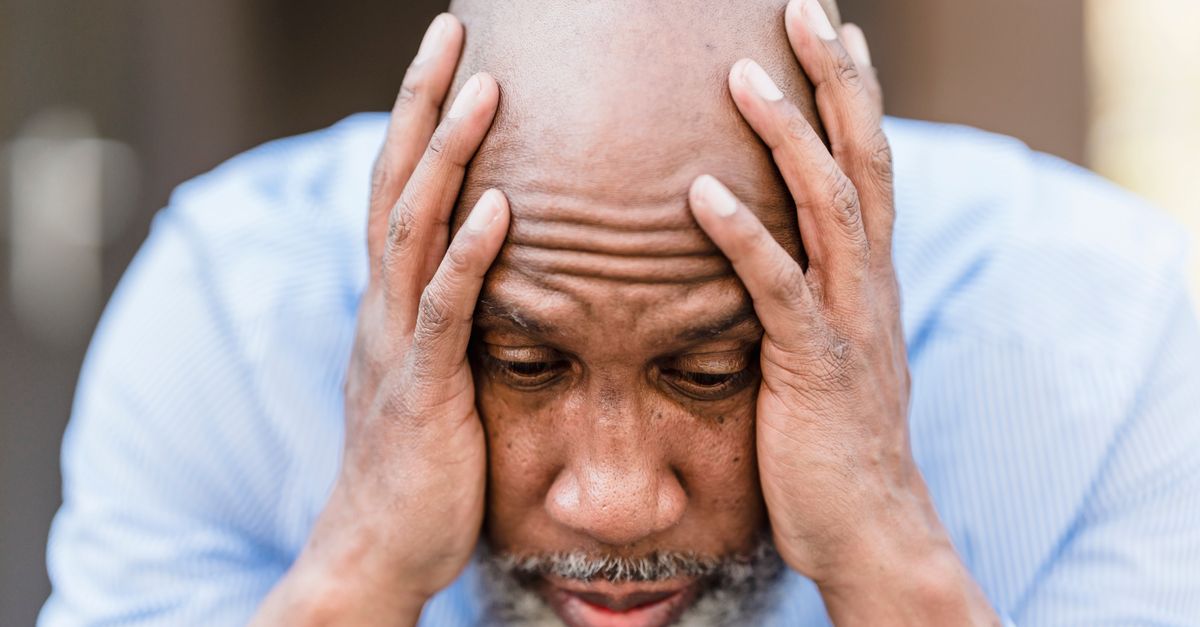
What Causes Weak Urine Stream in Men with High Blood Pressure?
For most men, yes — there is a meaningful link. High blood pressure and a weak urine stream often share the same root cause: impaired nitric oxide signaling and elevated smooth-muscle tone. The main caveat is that prostatic obstruction can exist independently of blood pressure. The exception is men under 40 with no prostate enlargement, where hypertension-related vascular dysfunction is the more likely culprit.
---
Why High Blood Pressure and Urinary Symptoms Overlap
The bladder outlet and the vascular system rely on the same molecular machinery to relax. Nitric oxide (NO), produced by endothelial cells lining blood vessels, also governs the smooth muscle of the urethra and bladder neck. When NO bioavailability drops — a hallmark of hypertension — both arterial walls and urethral smooth muscle stay in a state of elevated tone.
A large cross-sectional study published in the European Urology found that men with hypertension had significantly higher rates of lower urinary tract symptoms (LUTS) than normotensive men, independent of prostate size (Kupelian et al., J Urology 2009; PMID: 19371887). The relationship was dose-dependent: the higher the systolic pressure, the more severe the urinary symptoms.
There are three primary overlapping mechanisms:
- Elevated sympathetic tone — Chronic hypertension is associated with heightened sympathetic nervous system activity. Alpha-1 adrenergic receptors in the prostate stroma and bladder neck respond to norepinephrine by contracting, which physically narrows the urethral lumen and reduces flow.
- Reduced nitric oxide availability — Endothelial dysfunction in hypertension depletes the NO needed to relax urethral smooth muscle. This is the same pathway that drives erectile dysfunction, which is why all three symptoms — high blood pressure, weak stream, and ED — cluster together.
- Benign prostatic hyperplasia (BPH) acceleration — Hypertension-associated insulin resistance and elevated insulin-like growth factor promote prostate tissue proliferation, enlarging the gland and further compressing the urethra (Hammarsten & Högstedt, Prostate 1999; PMID: 10405482).
If you're also dealing with other vascular symptoms, reviewing what causes high blood pressure is a logical first step before focusing purely on urologic interventions.
---
Key Biomarkers to Investigate
Symptom-only assessments miss the reversible biochemical drivers. The following panel covers both the cardiovascular and urologic axes:
| Biomarker | What It Tells You | Target Range |
|---|---|---|
| eGFR + Creatinine | Kidney filtration pressure load | eGFR >60 mL/min/1.73m² |
| PSA (total + free) | Prostate volume proxy; rules out malignancy | Total <4 ng/mL (age-adjusted) |
| Testosterone (total + free) | Low T drives BPH and smooth muscle atrophy | Total >450 ng/dL |
| Fasting Insulin + HOMA-IR | Metabolic driver of prostate growth | HOMA-IR <2.0 |
| Urine flow rate (uroflowmetry) | Objective stream measurement | Peak >15 mL/s |
| hs-CRP | Systemic inflammation linking both conditions | <1.0 mg/L |
| TMAO | Gut-derived cardiovascular risk marker | Lower is better |
Elevated TMAO is worth flagging here — it is an independent predictor of endothelial dysfunction, and endothelial dysfunction underlies both hypertension and urethral smooth-muscle dysregulation. For a full explanation of that pathway, see what causes high TMAO levels.
For a broader review of which lab tests are most informative in this context, what lab tests you should get for high blood pressure covers the full cardiovascular panel.
---
Arginine for Men: The Nitric Oxide Precursor
L-arginine is the direct substrate from which endothelial nitric oxide synthase (eNOS) produces NO. In men with both cardiovascular risk factors and LUTS, raising arginine availability has physiological rationale for both systems simultaneously.
A randomized trial involving men with mild-to-moderate hypertension found that oral L-arginine at 6–9 g/day produced a clinically meaningful reduction in systolic blood pressure and improved endothelium-dependent vasodilation over 4 weeks (Böger et al., Cardiovascular Research 1998; PMID: 9764421). The limitation is that high-dose isolated arginine is partly degraded by arginase before reaching the endothelium.
That limitation is why the field has largely shifted toward citrulline — but arginine remains a useful co-factor, particularly at clinical doses (3–6 g/day) when combined with antioxidants that protect the NO molecule from oxidative degradation.
---
Citrulline for Men: A More Efficient NO Pathway
L-citrulline bypasses arginase degradation in the gut and liver, recycling back to arginine in the kidneys with higher efficiency. This makes it a more practical strategy for raising sustained plasma arginine levels than taking arginine directly.
A 2017 randomized controlled trial in hypertensive adults showed that watermelon extract (providing ~6 g citrulline/day) reduced aortic blood pressure and improved arterial stiffness over 12 weeks (Figueroa et al., American Journal of Hypertension 2017; PMID: 27658152). Smooth muscle relaxation in the vasculature and in the bladder outlet share the same cGMP-dependent mechanism, meaning improved vascular tone likely extends to urethral smooth muscle as well.
For men dealing with high blood pressure alongside training recovery challenges, improved NO signaling through citrulline also supports muscle perfusion — a topic covered in more detail at what causes slow recovery after training with high blood pressure.
Practical dosing reference:
| Form | Typical Clinical Dose | Onset |
|---|---|---|
| L-citrulline (pure) | 3–6 g/day | 2–4 weeks |
| Citrulline malate (2:1) | 6–8 g/day | 2–4 weeks |
| Watermelon extract | 4–6 g citrulline equivalent | 4–6 weeks |
---
L-Lysine for Men: Collagen, Vascular Integrity, and the Arginine Connection
L-lysine is best known as a collagen precursor, but it has a secondary role relevant to this discussion: lysine competes with arginine at intestinal transport sites. In the context of urology and vascular health, this matters because excess arginine without adequate lysine can create an imbalance that — paradoxically — reduces effective NO synthesis.
More directly, lysine is essential for maintaining the collagen matrix of blood vessel walls and the urethral connective tissue. As men age, declining collagen synthesis (partly driven by lysine insufficiency) can reduce the structural integrity of pelvic connective tissue, contributing to bladder outlet instability.
There is also evidence that lysine supplementation reduces cortisol responses to psychological stress in men with low lysine intake (Smriga et al., PNAS 2004; PMID: 15148399). Elevated cortisol potentiates sympathetic tone, which loops back to the alpha-1 receptor mechanism at the bladder neck. At doses of 2.5–3 g/day, lysine appears safe and may modulate the stress-sympathetic-urinary axis.
---
Beta-Alanine for Men: What It Does — and What It Doesn't
Beta-alanine is a secondary keyword that belongs in an honest conversation about supplement stacking, not because it directly relaxes urethral smooth muscle — it does not — but because it is frequently combined with citrulline and arginine in performance formulas, and men with hypertension need to understand what they are taking.
Beta-alanine raises muscle carnosine levels, which buffers intramuscular acidosis during high-intensity exercise (Hobson et al., Amino Acids 2012; PMID: 22270875). Carnosine also has mild antioxidant and anti-glycation properties that may protect vascular endothelium over time, but this is a secondary effect, not a primary cardiovascular mechanism.
The clinical caveat for hypertensive men: high-intensity exercise acutely raises blood pressure. Beta-alanine's main benefit is enabling harder training sets — which can transiently spike systolic pressure. Men with uncontrolled hypertension should clear high-intensity training protocols with their physician before adding ergogenic aids designed to extend exercise capacity.
For performance, standard evidence-based dosing is 3.2–6.4 g/day in divided doses to minimize paresthesia (the harmless tingling side effect). It contributes to the broader training ecosystem rather than directly addressing urinary symptoms.
---
The Sympathetic Nervous System: The Missing Link
Much of the connection between high blood pressure and poor urinary flow runs through sympathetic overactivation. Alpha-1 receptors in the prostate smooth muscle and bladder neck contract in response to norepinephrine — this is why alpha-blocker medications (tamsulosin, doxazosin) are prescribed for both hypertension and BPH, sometimes simultaneously.
Non-pharmacological strategies that reduce sympathetic tone — including adaptogenic herbs, structured aerobic exercise, and sleep optimization — can therefore benefit both conditions. Men who also experience anxiety symptoms alongside their cardiovascular findings may find the overlap discussed in what causes anxiety in men with high blood pressure clinically relevant.
---
What This Means for Your Formula
Ones analyzes biomarkers — including vascular inflammatory markers, hormone panels, and metabolic data — to identify the upstream drivers before recommending ingredients. For men presenting with the combination of high blood pressure and LUTS, the most evidence-supported targets are the nitric oxide pathway and sympathetic modulation.
Specific ingredients Ones may include in a formula addressing this profile:
- L-Citrulline at clinically active doses targeting the arginine-eNOS-NO axis, based on evidence from the Figueroa 2017 hypertension trial. This addresses both arterial stiffness and urethral smooth-muscle tone through the same cGMP mechanism.
- Ashwagandha (KSM-66, 600 mg) — a well-characterized adaptogen that reduces sympathetic overactivation by lowering cortisol and blunting HPA axis reactivity (Chandrasekhar et al., Indian Journal of Psychological Medicine 2012; PMID: 23439798). Reduced sympathetic tone directly lowers alpha-1 receptor stimulation at the bladder neck.
- Omega-3 (EPA/DHA) — polyunsaturated fatty acids that improve endothelial function and reduce TMAO-associated cardiovascular risk, supporting the same vascular environment that determines urethral smooth-muscle flexibility.
Ones formulas are built from a 6- or 9-capsule daily plan, with the AI determining the capsule budget based on the totality of a user's findings — not by user selection. Ingredient selection is driven by biomarker data, not generic symptom categories.
---
Key Takeaways
- Weak urine stream in men with high blood pressure frequently shares a root cause: impaired nitric oxide signaling and elevated sympathetic tone, not just prostate enlargement.
- Nitric oxide precursors — particularly L-citrulline (3–6 g/day) and L-arginine (3–6 g/day as a co-factor) — address both arterial stiffness and urethral smooth-muscle relaxation through the cGMP pathway.
- BPH acceleration is partly metabolic: insulin resistance and elevated insulin-like growth factor promote prostate proliferation, making fasting insulin and HOMA-IR key biomarkers to track.
- L-lysine at 2.5–3 g/day may reduce cortisol-driven sympathetic tone and supports connective tissue integrity in the urethral and vascular walls.
- Beta-alanine improves exercise capacity via muscle carnosine buffering, but hypertensive men should ensure blood pressure is controlled before using ergogenic aids that enable higher-intensity training.
- Always consult a healthcare provider for persistent urinary symptoms — uroflowmetry and PSA testing are essential to rule out obstructive pathology before attributing symptoms to vascular causes alone.