Women's Health
What Is a Normal LH Level with PCOS?
LH levels are one of the most revealing biomarkers in PCOS, yet most people never fully understand what their numbers mean. An LH:FSH ratio above 2:1 is found in up to 75% of women with PCOS — and the way stress, weight, and even undetected tumors can shift this ratio is something every person with PCOS deserves to know.
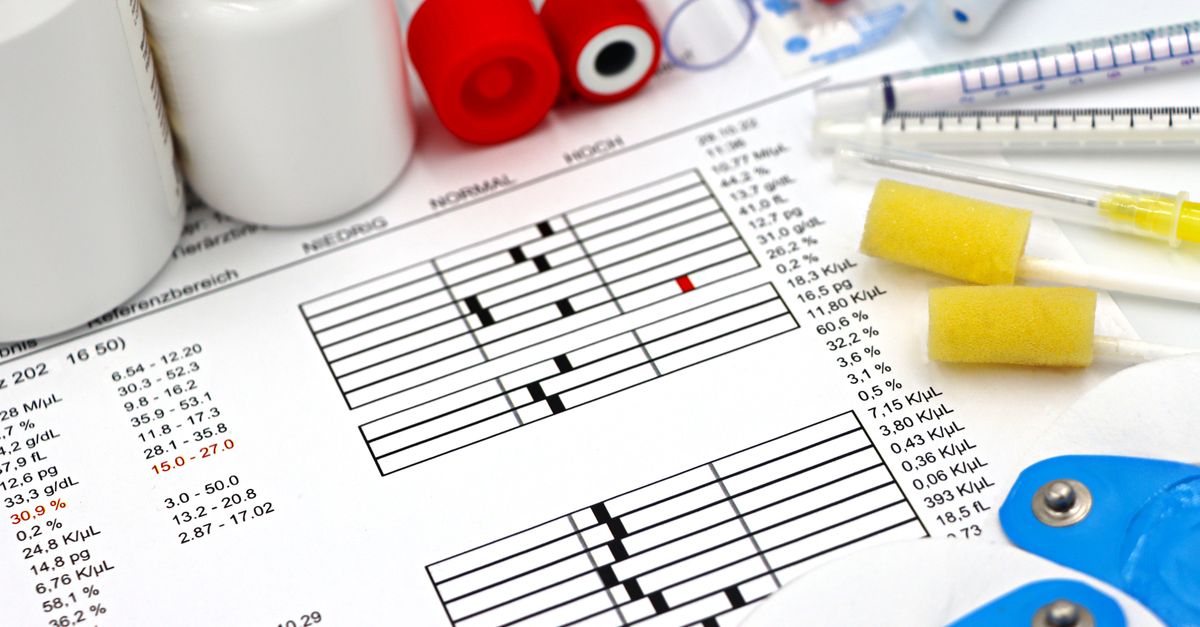
What Is a Normal LH Level with PCOS?
For most people with PCOS, a "normal" LH sits between 2–15 mIU/mL — but the ratio to FSH matters more than the raw number. An LH:FSH ratio above 2:1 (and especially above 3:1) is a classic PCOS pattern that drives excess androgen production and disrupts ovulation. The exception: not every person with PCOS shows an elevated ratio, particularly in women with a higher BMI, so a "normal" result doesn't rule out the diagnosis.
---
What LH Does and Why It Gets Elevated in PCOS
Luteinizing hormone (LH) is released by the pituitary gland in pulses and has two main jobs in people with ovaries: triggering ovulation mid-cycle and stimulating theca cells in the ovary to produce androgens like testosterone. In a typical cycle, LH and FSH (follicle-stimulating hormone) rise gradually together, then LH surges sharply at ovulation.
In PCOS, this system goes off-script. The hypothalamus fires GnRH (gonadotropin-releasing hormone) pulses at a faster frequency than normal, which preferentially increases LH secretion relative to FSH. The result: chronically elevated LH, relatively suppressed FSH, and ovarian theca cells that are over-stimulated to produce testosterone (Balen et al., Human Reproduction 1995; PMID: 7782436). Elevated androgens then partially suppress FSH further, locking the cycle in a state where follicles grow but never fully mature — the hallmark of polycystic ovaries.
| Marker | Typical Reference Range | Common PCOS Pattern |
|---|---|---|
| LH (early follicular) | 2–15 mIU/mL | Often 10–20+ mIU/mL |
| FSH (early follicular) | 3–10 mIU/mL | Normal to low-normal |
| LH:FSH Ratio | ~1:1 | ≥ 2:1, often 3:1 or higher |
| LH Pulse Frequency | ~1 pulse/90 min | ~1 pulse/60 min or faster |
It's worth noting that LH is highly pulsatile — a single blood draw can miss a peak or a trough. Ideally, your clinician interprets your LH in the context of your cycle day (day 2–5 is standard), FSH, estradiol, and symptoms rather than as a standalone number.
---
What LH Levels Actually Tell You — And What They Don't
A commonly misunderstood point: elevated LH is not present in every PCOS phenotype. Research shows that women with PCOS who have a higher BMI often have normal or even low LH levels, because adipose tissue affects hypothalamic GnRH pulsatility differently than in lean individuals (Taylor et al., Journal of Clinical Endocrinology & Metabolism 1997; PMID: 9062499). This means:
- Lean PCOS: LH:FSH ratio is frequently elevated (2:1 to 4:1 or higher)
- Higher-BMI PCOS: LH:FSH ratio may appear normal (1:1), yet ovarian androgen excess and insulin resistance are still present
- Post-adolescent PCOS: Ratio may normalize over time even without treatment, while other markers (AMH, testosterone) remain elevated
This is why LH alone is not a diagnostic criterion under either the Rotterdam criteria or the Androgen Excess Society guidelines. It's a useful supportive biomarker when the pattern fits the clinical picture. If you're reviewing your own lab panel, pairing LH with FSH and their ratio gives a much clearer picture than either value alone.
---
How Stress Amplifies LH Dysregulation in PCOS
One of the most consistent patterns people with PCOS describe is the feeling that stress triggers flares — irregular periods, worsening acne, bloating, mood swings, and insomnia clustering after a stressful week or month. There's solid mechanistic evidence behind this experience, and it runs directly through the HPA-HPG axis.
When cortisol rises chronically, it directly disrupts hypothalamic GnRH pulsatility. Corticotropin-releasing hormone (CRH) and cortisol both suppress the kisspeptin neurons that normally regulate GnRH frequency. In a healthy system, this creates a temporary pause in the reproductive axis during acute stress. In PCOS, where GnRH pulsatility is already dysregulated, stress can push an already unstable system further into LH excess (Kalantaridou et al., Annals of the New York Academy of Sciences 2004; PMID: 15169939).
Practically speaking, this means:
- Chronic work stress, poor sleep, or caloric restriction can worsen LH:FSH imbalance
- Elevated cortisol also worsens insulin resistance — a driver of androgen excess independent of LH
- Stress-driven LH spikes can cause mid-cycle spotting or false LH surges on ovulation predictor kits, making cycle tracking unreliable
Tracking your cortisol levels alongside LH is worth asking your clinician about — and understanding what a normal cortisol level looks like in PCOS is a key piece of the puzzle. Interventions that lower HPA activation — including resistance training, mindfulness-based stress reduction, and adaptogenic support — can have secondary benefits on LH regulation.
---
The Long Road: What Happens to LH Over 15+ Months of Managing PCOS
For people who have been living with PCOS for over a year and are tracking their labs regularly, one of the most hopeful findings is that LH:FSH ratios can normalize with the right interventions — but the timeline is longer than most people expect.
In a 16-week randomized controlled trial of inositol (myo-inositol at 4g/day), LH levels dropped significantly alongside improvements in insulin sensitivity and androgen levels (Gerli et al., Gynecological Endocrinology 2007; PMID: 17520369). However, clinical improvement in cycle regularity typically takes 3–6 months of consistent intervention, and full restoration of regular ovulatory cycles can take 12–18 months depending on the severity of insulin resistance and the degree of LH excess at baseline.
The psychological dimension of this timeline is real and underappreciated. People managing PCOS for 15+ months describe the experience as exhausting not just physically — the chronic uncertainty around fertility, the body composition changes, the fatigue — but mentally. The condition affects:
- Identity: Symptoms like hirsutism, acne, and weight changes can profoundly affect self-image
- Trust in the medical system: Many people report years of dismissed symptoms before a diagnosis
- Motivation: When labs improve but symptoms lag (or vice versa), it's hard to stay consistent with interventions
- Anxiety around ovulation and fertility: Even when not actively trying to conceive, the awareness of irregular cycles is a chronic stressor
LH normalization is a meaningful milestone — but it's important to recognize it as part of a longer arc, not a finish line. Pairing lab tracking with an understanding of related markers like progesterone and SHBG helps give a fuller picture of where your cycle function actually stands.
---
Weight, LH, and the Insulin Connection
Body weight and LH are connected in a bidirectional, often frustrating way in PCOS. Excess adipose tissue — especially visceral fat — drives insulin resistance, which elevates insulin, which stimulates ovarian androgen production, which suppresses SHBG, which leaves more free testosterone circulating. That downstream androgen excess feeds back to disrupt GnRH pulsatility and worsen LH dysregulation.
At the same time, elevated LH and androgens promote fat storage, particularly around the abdomen. This central adiposity pattern is one of the most commonly reported PCOS symptoms, and it creates a self-reinforcing cycle that makes weight loss harder than it is for people without PCOS. For a detailed look at what's driving abdominal weight gain in PCOS specifically, this breakdown of central weight gain in PCOS covers the hormonal mechanisms in depth.
What does the evidence say about weight loss and LH? A landmark systematic review found that even modest weight reduction (5–10% of body weight) in overweight women with PCOS significantly improved LH:FSH ratios, reduced androgen levels, and restored ovulatory function in a substantial proportion of participants (Kiddy et al., Clinical Endocrinology 1992; PMID: 1551535). More recent data confirms that dietary interventions targeting insulin sensitivity — including lower glycemic load diets and time-restricted eating — produce measurable improvements in LH pulsatility within 8–12 weeks.
Key strategies supported by evidence:
- Reduce refined carbohydrate load to lower postprandial insulin spikes
- Prioritize protein at 25–30% of calories to support satiety and lean mass
- Resistance training 2–3x/week to improve insulin sensitivity independent of weight loss
- Avoid severe caloric restriction — it raises cortisol, which can worsen GnRH dysregulation
- Track cycle markers alongside weight — LH:FSH and cycle length often improve before the scale moves significantly
---
When an Underlying Tumor Is Driving Your LH Pattern
In rare but important cases, markedly abnormal LH levels — either very high or paradoxically suppressed — can indicate an underlying tumor rather than classic PCOS. Two tumor types in particular are relevant:
Pituitary adenomas (specifically gonadotroph adenomas or LH-secreting tumors): These can cause inappropriately elevated LH that doesn't suppress with normal feedback. They're rare, but a persistently LH level >25–30 mIU/mL outside of an ovulatory surge, particularly with other pituitary symptoms (headaches, visual field changes), warrants MRI evaluation.
Adrenal and ovarian androgen-secreting tumors: These don't directly elevate LH, but they drive very high testosterone and DHEA-S levels that can mimic severe PCOS. When DHEA-S is markedly elevated (>700 µg/dL), an adrenal source — including rare adrenocortical tumors — should be excluded before attributing the picture to PCOS alone. Understanding what a normal DHEA-S level looks like can help you assess whether your adrenal picture warrants further investigation.
Finding out that a tumor was partly responsible for a PCOS-like presentation is uncommon, but not vanishingly rare — and it dramatically changes the treatment path. If your LH or androgen levels are significantly outside the ranges in the table above, or if your symptoms have been severe, atypical, or poorly responsive to standard interventions, discuss tumor workup with your endocrinologist.
---
What This Means for Your Formula
LH dysregulation in PCOS isn't a single-lever problem. It sits at the intersection of insulin sensitivity, HPA-HPG axis signaling, androgen excess, and inflammatory load. A supplement strategy that targets only one pathway is unlikely to move the needle much — which is why personalized formulation based on your actual lab values matters.
At Ones, the AI health practitioner reviews your full hormonal panel — including LH, FSH, testosterone, SHBG, cortisol, and insulin markers — to identify which pathways are most dysregulated in your specific case. Rather than recommending a generic "women's health" formula, Ones builds a capsule plan calibrated to your findings.
For the LH-related mechanisms in PCOS, relevant ingredients in the Ones catalog include:
- Ashwagandha (KSM-66, 600mg): A well-characterized adaptogen shown to reduce cortisol by roughly 27% in a double-blind RCT (Chandrasekhar et al., Indian Journal of Psychological Medicine 2012; PMID: 23439798). By lowering chronic HPA activation, KSM-66 may reduce one of the upstream drivers of GnRH hyperpulsatility in stress-driven PCOS flares.
- Ones Adrenal Support blend: Designed to support HPA axis regulation through a combination of adaptogenic and adrenal-targeted actives — directly relevant when elevated cortisol is contributing to hormonal dysregulation.
- Zinc: Plays a direct role in ovarian steroidogenesis and has been shown in clinical studies to reduce androgen markers in PCOS while supporting insulin receptor signaling — both pathways implicated in the LH:FSH imbalance.
Ones formulas come in 6 or 9-capsule daily plans, with the plan selected by the AI based on how many findings need addressing — not by the user. This calibration matters in PCOS, where the gap between a mild hormonal imbalance and a severe multi-system presentation can be wide.
---
Key Takeaways
- A normal LH level for most people is 2–15 mIU/mL in the early follicular phase, but the LH:FSH ratio (typically ≥2:1 in PCOS) is more diagnostically meaningful than either number alone.
- Not everyone with PCOS shows an elevated LH:FSH ratio — this pattern is more common in lean phenotypes; higher-BMI PCOS can present with a normal ratio despite significant androgen excess.
- Chronic stress directly disrupts GnRH pulsatility through the HPA axis, which can worsen LH dysregulation and trigger symptomatic flares.
- Even modest weight loss (5–10%) improves LH:FSH ratios and restores ovulatory function in a meaningful proportion of people with PCOS — dietary and exercise strategies that target insulin sensitivity are the most evidence-based first step.
- In cases of severely elevated LH or markedly elevated androgens that are unresponsive to standard interventions, tumor workup (pituitary adenoma, adrenal or ovarian tumor) should be considered before assuming classic PCOS.
- Lab tracking over 12–18 months — pairing LH with FSH, progesterone, SHBG, testosterone, and cortisol — gives the most complete picture of whether your interventions are working.