Women's Health
What Supplements Affect Estradiol Levels in Women?
Estradiol doesn't exist in a vacuum — several common supplements measurably shift its levels up or down, and the direction depends on your baseline, your life stage, and which compound you're taking. Understanding these interactions can mean the difference between supporting hormonal balance and accidentally working against it.
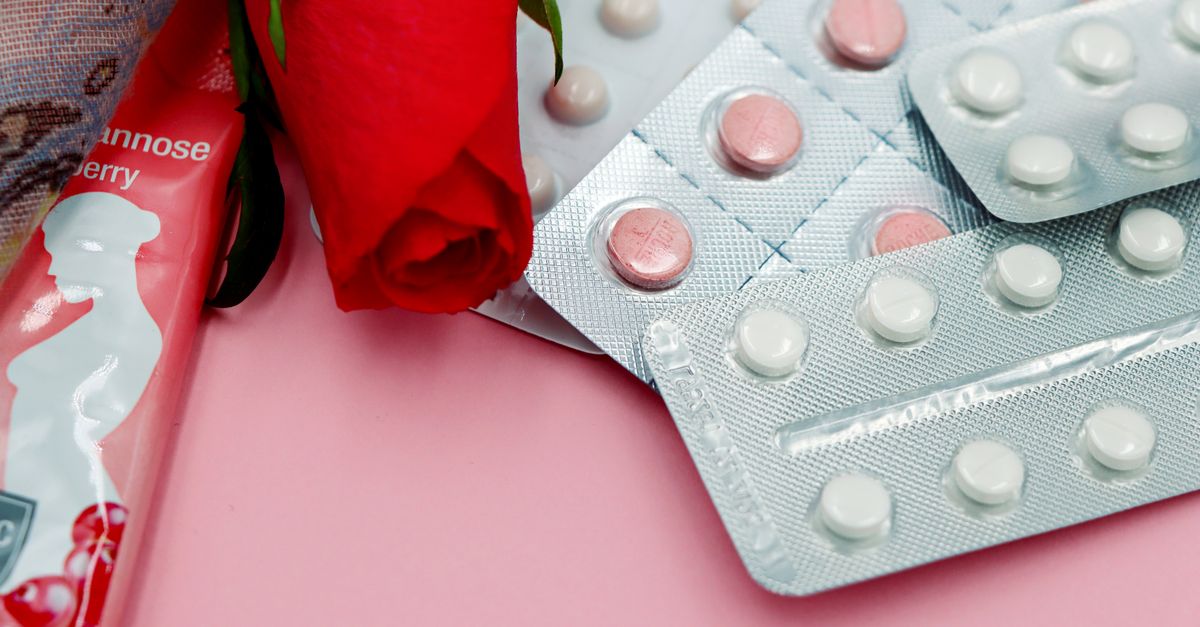
What Supplements Affect Estradiol Levels in Women?
Yes, several supplements meaningfully shift estradiol levels in women. Phytoestrogens like soy isoflavones can modestly raise or buffer estrogen activity depending on menopausal status, while other compounds — including certain anti-inflammatory botanicals — appear to suppress aromatase or modulate estrogen metabolism. The main caveat: effect size is highly individual and baseline hormone status matters enormously.
Why Estradiol Balance Matters More Than You Think
Estradiol (E2) is the dominant estrogen in premenopausal women and the primary driver of the menstrual cycle, bone density maintenance, cardiovascular protection, and cognitive function. When levels fall too low — as in perimenopause or hypothalamic amenorrhea — women experience hot flashes, disrupted sleep, accelerated bone loss, and mood changes. When levels run chronically high relative to progesterone, the result can be estrogen dominance: heavy periods, breast tenderness, and increased proliferative risk.
For this reason, any supplement that meaningfully interacts with estradiol biosynthesis, metabolism, or receptor activity deserves careful attention. The compounds most studied include phytoestrogen-containing herbs, polyphenols that modulate the aromatase enzyme (CYP19A1), and anti-inflammatory botanicals that influence the estrogen-inflammation axis.
Before diving in, one clarification: supplements that affect thyroid function in women can indirectly shift estradiol because thyroid hormones regulate sex-hormone-binding globulin (SHBG), which in turn controls free estradiol. The interconnection between endocrine systems is real, and no single marker lives in isolation.
Phytoestrogens: Soy Isoflavones and Red Clover
Phytoestrogens are plant-derived compounds with structural similarity to 17β-estradiol. They bind estrogen receptors (ERα and ERβ) but with far lower affinity than endogenous estrogen — roughly 1/100 to 1/1000 the potency. That lower affinity is exactly what makes them useful as modulators rather than straight agonists.
Soy isoflavones (genistein, daidzein): A systematic review and meta-analysis of 17 randomized controlled trials (n = 1,196 women) found that soy isoflavone supplementation significantly reduced hot flash frequency and severity in peri- and postmenopausal women without meaningfully increasing circulating estradiol (Perna et al., Nutrients 2019; PMID: 31671578). In contrast, premenopausal women given 90 mg/day soy isoflavones showed small but detectable reductions in serum estradiol across the cycle (Cassidy et al., Journal of Nutrition 1994; PMID: 8089766), suggesting a mild anti-estrogenic buffering effect when endogenous estrogen is already high.
This bidirectional behavior — weakly estrogenic in low-estrogen states, weakly anti-estrogenic in high-estrogen states — is why isoflavones are classified as selective estrogen receptor modulators (SERMs).
Red clover isoflavones (formononetin, biochanin A) operate through a similar mechanism. At doses of 40–160 mg/day they appear to modestly reduce vasomotor symptoms in menopausal women without significantly altering serum E2 (Atkinson et al., Maturitas 2004; PMID: 15036235).
Clinical dosing range: 40–90 mg/day of standardized isoflavones is the range used in most positive trials. Below 40 mg, effects are inconsistent.
Curcumin for Women: Estrogen, Inflammation, and Aromatase
Curcumin — the principal bioactive in turmeric — is one of the most studied polyphenols for hormonal health, and its relationship with estradiol is multidirectional.
Aromatase inhibition: Curcumin has been shown in in vitro studies to downregulate CYP19A1 (aromatase), the enzyme that converts androgens to estrogens. This suggests a potential anti-estrogenic effect in tissues where aromatase is overexpressed — particularly in adipose tissue, which is the primary site of post-menopausal estrogen production. For women with estrogen-dominant conditions or higher body fat, this could translate to lower peripheral estradiol conversion.
Anti-inflammatory pathway: Elevated inflammatory cytokines (particularly IL-6 and TNF-α) stimulate aromatase expression. Curcumin's well-established NF-κB inhibition suppresses this inflammatory drive on aromatase, indirectly reducing estrogen overproduction in inflammatory environments. A double-blind RCT in 50 women with PCOS found that curcumin supplementation (1,500 mg/day for 12 weeks) significantly reduced testosterone and improved insulin sensitivity, with favorable shifts in the androgen-to-estrogen ratio (Heshmati et al., Phytotherapy Research 2021; PMID: 33438816).
Bioavailability caveat: Standard curcumin has poor oral bioavailability (~1%). Formulations using piperine (BioPerine), phospholipid complexes (Meriva), or nanoparticle encapsulation dramatically improve absorption — a critical detail when evaluating clinical trial dosing.
Who benefits most: Women with signs of estrogen dominance, elevated inflammatory markers, or PCOS may see the most meaningful shifts. Women with low estradiol (early perimenopause, hypothalamic amenorrhea) should use curcumin more cautiously until more data exist on its net effect in estrogen-deficient states.
Turmeric for Women: Beyond Curcumin
Whole turmeric root contains curcumin alongside turmerones, polysaccharides, and other bioactive compounds, making its hormonal effects slightly broader than isolated curcumin.
Turmeric's turmerones appear to support gut microbiome diversity — and gut bacteria play a direct role in estrogen metabolism via the estrobolome, the collection of gut microbial genes encoding enzymes that deconjugate estrogen metabolites for reabsorption or excretion. A dysbiotic gut estrobolome can lead to excess estrogen recirculation, so the microbiome-supportive effects of turmeric may indirectly help normalize estradiol throughput.
Turmeric also supports liver detoxification pathways. Because the liver is responsible for conjugating and clearing estrogen metabolites (via glucuronidation and sulfation), anything that improves hepatic function helps ensure estrogen doesn't accumulate. This is why compounds like DIM (diindolylmethane) and calcium-D-glucarate are often paired with turmeric in estrogen-detox protocols — they support the same downstream clearance pathways.
For women tracking multiple biomarkers, it's worth noting that turmeric supplementation may also modestly shift cholesterol levels in women, since cholesterol is the upstream precursor to all steroid hormones including estradiol.
Ginger for Women: Estrogen Receptor Modulation and Menstrual Health
Ginger (Zingiber officinale) has a long history of use for menstrual pain, but its direct effects on estradiol are less well-characterized than its prostaglandin-inhibiting effects.
Mechanism: Gingerols and shogaols — the primary bioactives in ginger — inhibit COX-2 and 5-LOX, enzymes that drive prostaglandin and leukotriene production. Excess prostaglandins drive dysmenorrhea and also stimulate aromatase expression, particularly in endometrial tissue. By suppressing prostaglandin overproduction, ginger may attenuate the inflammatory amplification of local estrogen signaling.
Clinical evidence for dysmenorrhea: A randomized trial (n = 150 students) found 250 mg ginger powder four times daily during the first three days of menstruation significantly reduced pain compared to placebo (Ozgoli et al., Journal of Alternative and Complementary Medicine 2009; PMID: 19216660). Pain reduction in dysmenorrhea correlates with prostaglandin suppression, which in turn relates to the estrogen-driven proliferative environment of the endometrium.
Direct estradiol data are limited: Most ginger studies focus on inflammatory markers and symptoms rather than serum estradiol directly. Animal data suggest ginger may have weak phytoestrogenic properties, but human RCTs measuring circulating E2 as a primary endpoint are sparse. Ginger is best framed as an indirect modulator — improving the hormonal environment through anti-inflammatory and prostaglandin-suppressing pathways rather than acting as a direct estrogen agonist or antagonist.
Practical context: Ginger is especially relevant for women who experience cycle-related inflammation, painful periods, or endometriosis-adjacent symptoms where the estrogen-inflammation loop is overactive.
Boswellia for Women: The Anti-Inflammatory Estrogen Connection
Boswellia serrata — the source of frankincense resin — produces boswellic acids, particularly AKBA (acetyl-11-keto-β-boswellic acid), which are potent 5-LOX inhibitors. Its relevance to estradiol is primarily indirect, running through the same inflammatory pathways as ginger and curcumin.
5-LOX and estrogen signaling: 5-LOX-derived leukotrienes upregulate estrogen receptor α activity. By suppressing 5-LOX, boswellic acids may dampen ER-driven proliferative signaling without directly binding estrogen receptors — a mechanistically clean approach that differs from phytoestrogens.
Endometriosis and fibroids: Boswellia is increasingly investigated in conditions like endometriosis where pro-inflammatory prostaglandins and elevated local estrogen both drive lesion growth. Though large RCTs are still limited, early evidence suggests boswellia extract (500–1,500 mg/day standardized to 70% boswellic acids) can reduce pain and inflammatory markers in women with endometriosis-related pelvic pain.
Bone density consideration: Because estradiol is the primary defender of bone mineral density in premenopausal women, any intervention that reduces estrogen activity needs to be evaluated in the context of skeletal health. Boswellia itself has anti-inflammatory effects that may be bone-protective through separate pathways — a nuance worth tracking for women interested in supplements that affect bone density.
Other Supplements With Notable Estradiol Interactions
| Supplement | Direction of Effect | Mechanism | Notes |
|---|---|---|---|
| DIM (Diindolylmethane) | Shifts E2 metabolism toward 2-OH (protective) pathway | CYP1A2 induction | Does not lower total E2 significantly |
| Flaxseed lignans | Weak anti-estrogenic in high-E2 states | ER competition, SHBG increase | Dose: 25–40 g ground flaxseed/day |
| Vitex (Chaste Tree) | Raises progesterone relative to estrogen | Dopaminergic modulation of LH/FSH | Indirect effect on E2/P4 ratio |
| Zinc | May support aromatase regulation | CYP19A1 cofactor | Also affects [SHBG levels in women](/blog/what-supplements-affect-shbg-in-women) |
| Resveratrol | Weak phytoestrogenic + aromatase inhibiting | ER partial agonist, CYP19A1 downregulation | Highly dose-dependent |
| Black cohosh | Reduces hot flashes; mechanism debated | Possible serotonergic, not purely estrogenic | Does NOT significantly raise serum E2 |
What This Means for Your Formula
Estradiol is a highly dynamic marker. The same supplement can push levels in opposite directions depending on whether a woman is premenopausal with high estrogen, perimenopausal with declining estrogen, or postmenopausal — which is exactly why a one-size-fits-all approach consistently underperforms.
Ones analyzes your hormone panel alongside inflammatory markers and other biomarkers to determine which direction of support is actually indicated. Here's how specific ingredients map to the mechanisms covered above:
- Curcumin (as high-bioavailability complex): Included in Ones formulas when blood work and symptom data suggest estrogen-dominant patterns with elevated inflammatory markers. The clinical dose used in PCOS and inflammatory trials is 1,000–1,500 mg/day — Ones calibrates within this range based on individual findings rather than applying a blanket dose.
- Ones Liver Support blend: Since estrogen clearance depends on hepatic conjugation, Ones' Liver Support system blend is relevant for women whose labs suggest impaired detoxification — high estradiol with low SHBG, or patterns consistent with recirculating estrogen metabolites.
- Zinc: At clinically meaningful doses, zinc supports aromatase regulation and influences SHBG synthesis in the liver. Ones includes zinc in individualized formulas where both hormonal and immune markers warrant it, avoiding the unnecessary megadosing that can suppress copper.
If you're also monitoring iron or hemoglobin alongside estradiol — as many women tracking heavy periods should — the article on supplements that affect hemoglobin in women covers the iron-estrogen overlap in more detail.
Key Takeaways
- Phytoestrogens (soy isoflavones, red clover) act as weak SERMs — mildly estrogenic in low-estrogen states and mildly anti-estrogenic when estrogen is high; clinical evidence is strongest at 40–90 mg/day.
- Curcumin and turmeric modulate estradiol indirectly by inhibiting aromatase and suppressing the inflammatory cytokines that drive aromatase overexpression; most relevant for estrogen-dominant or inflammatory phenotypes.
- Ginger primarily reduces estrogen-related symptoms (dysmenorrhea, pelvic inflammation) through COX-2/prostaglandin suppression rather than directly altering serum E2.
- Boswellia attenuates 5-LOX-driven amplification of estrogen receptor signaling, making it useful in endometriosis-adjacent presentations.
- Effect direction and magnitude are highly dependent on baseline estradiol, life stage, and formula bioavailability — the same compound can modestly raise or lower E2 depending on context.
- Personalized supplementation based on actual lab data consistently outperforms standardized protocols because estradiol is a moving target across the reproductive lifespan.