Lab Results
How to Test Cystatin C: Ranges, Symptoms, and Next Steps
Cystatin C is a kidney filtration marker that most standard blood panels skip entirely — yet research shows it predicts cardiovascular risk and early chronic kidney disease years before creatinine rises. Understanding how to test it, interpret it, and act on it could change how you manage your long-term health.
How to Test Cystatin C: Ranges, Symptoms, and Next Steps
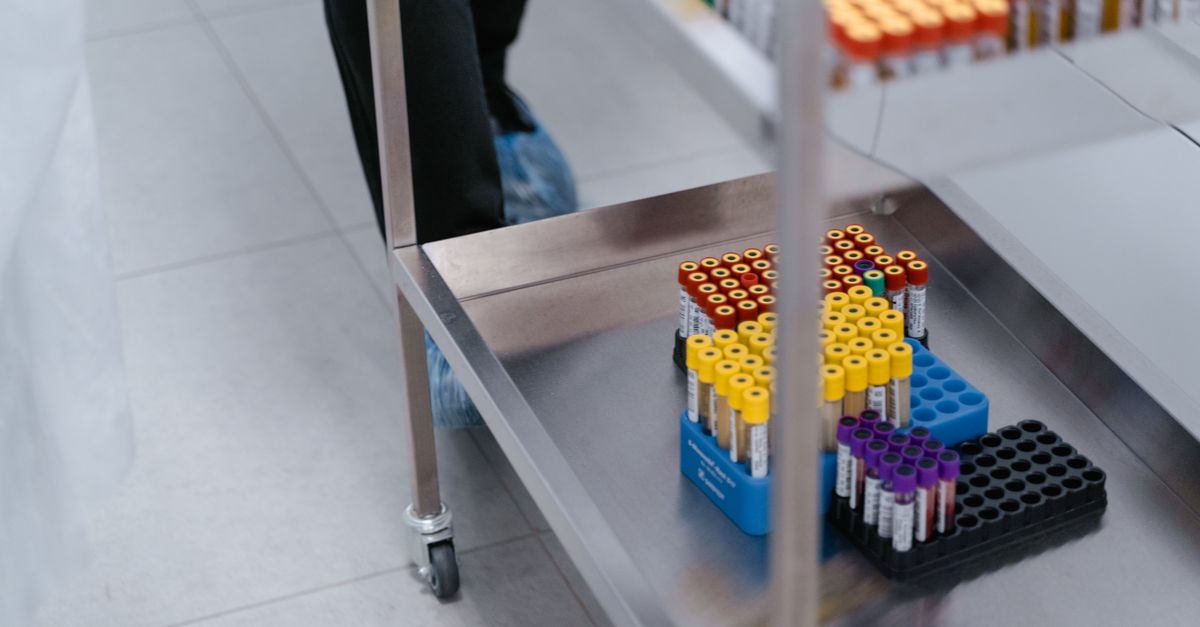
Yes — a simple blood draw is all it takes. Cystatin C is measured from a standard serum sample ordered by your physician or through a direct-to-consumer lab. The main caveat is that most routine metabolic panels don't include it, so you have to request it specifically. The exception is people already under nephrology care, where it's often run alongside creatinine as standard practice.
---
What Is Cystatin C and Why It Outperforms Creatinine
Cystatin C is a low-molecular-weight protein produced at a constant rate by virtually every nucleated cell in the body. Because production is essentially fixed and unaffected by muscle mass, diet, or hydration status, it's a cleaner signal of glomerular filtration rate (GFR) than serum creatinine — which is heavily influenced by how much muscle you carry and how much protein you ate yesterday.
In a landmark analysis of 11,909 adults from the NHANES cohort, cystatin C-based eGFR (eGFRcys) reclassified kidney disease stage in a meaningful proportion of participants who appeared normal on creatinine-based estimates alone (Peralta et al., Journal of the American Society of Nephrology 2011; PMID: 21784895). That matters clinically: people misclassified as "normal" on creatinine may be missing early intervention windows.
Creatinine is also notoriously poor in two specific populations:
- Sarcopenic older adults — lower muscle mass means lower creatinine regardless of kidney function
- Bodybuilders and high-protein athletes — higher muscle mass falsely inflates creatinine, potentially hiding true GFR that is actually low
Cystatin C sidesteps both problems. Its production rate is set at the cellular level, not at the dinner table.
---
Cystatin C Blood Test: How to Order It and What to Expect
Ordering the Test
You can access a cystatin C blood test through several routes:
- Ask your primary care physician or nephrologist to add cystatin C to your next metabolic panel. Use CPT code 82610 when requesting it — this helps the lab and insurance process it correctly.
- Direct-to-consumer lab services (e.g., Quest Diagnostics, LabCorp patient portals) allow you to order cystatin C without a physician order in most U.S. states.
- Comprehensive health platforms that analyze wearable data and blood work — like Ones — flag cystatin C as a priority biomarker when your profile suggests cardiovascular or metabolic risk, and can direct you toward the right labs to run.
What the Draw Involves
There is no special preparation beyond a standard fasting blood draw. Some labs prefer an 8–12 hour fast to minimize variability from recent food intake, though cystatin C is generally less diet-sensitive than lipid panels. Results typically return within 1–3 business days.
Reference vs. Optimal Ranges
| Range Type | Cystatin C (mg/L) | Interpretation |
|---|---|---|
| Optimal | 0.50 – 0.90 | Excellent filtration, low cardiovascular signal |
| Standard normal | 0.62 – 1.15 | Broadly accepted reference range (lab-dependent) |
| Mildly elevated | 1.16 – 1.50 | Early GFR decline; warrants repeat testing |
| Moderately elevated | 1.51 – 2.00 | CKD stage G2–G3a likely; nephrology referral |
| Severely elevated | > 2.00 | Significant kidney impairment; urgent evaluation |
Note: Reference ranges vary slightly between analyzers (particle-enhanced turbidimetric immunoassay vs. ELISA-based platforms). Always interpret your result in the context of your specific lab's reference interval.
eGFRcys Calculation
Most labs now automatically calculate eGFRcys using the 2021 CKD-EPI cystatin C equation, which removed race as a variable. If your lab reports only raw cystatin C, the NIH-endorsed calculator at kidney.org can derive eGFRcys from your result. An eGFRcys below 60 mL/min/1.73m² for more than three months defines chronic kidney disease, while values between 60–89 signal mildly reduced kidney function worth monitoring.
---
Symptoms of High Cystatin C
One of the most clinically important features of early kidney function decline is that it's usually silent. Patients with mildly elevated cystatin C — say, 1.2–1.5 mg/L — rarely report any symptoms at all. This is precisely why waiting for symptoms to test is a poor strategy.
That said, as cystatin C rises and eGFR falls further, the following symptoms may appear:
- Persistent fatigue — reduced erythropoietin production from the kidneys contributes to anemia
- Swelling in the lower extremities — reduced fluid regulation leads to peripheral edema
- Elevated blood pressure — impaired sodium excretion activates the renin-angiotensin system (you can read more about blood pressure's systemic effects in our guide to what causes high blood pressure)
- Brain fog and poor concentration — uremic toxin accumulation begins affecting cognitive function (a symptom pattern also explored in is poor concentration normal with high blood pressure)
- Nocturia — waking to urinate at night, which can be a signal of impaired tubular concentrating ability (is getting up to urinate at night normal with high blood pressure covers this in more detail)
- Shortness of breath on exertion — often tied to anemia or fluid accumulation
Importantly, cystatin C elevation doesn't just predict kidney outcomes. A meta-analysis of 16 prospective cohort studies involving over 68,000 participants found that each 0.1 mg/L increase in cystatin C was associated with a statistically significant increase in all-cause mortality and cardiovascular events, independent of traditional risk factors (Shlipak et al., JAMA 2013; PMID: 23462786). This positions cystatin C as a cardiovascular biomarker as much as a renal one.
---
Cystatin C vs. Creatinine: When Each Test Falls Short
| Feature | Cystatin C | Serum Creatinine |
|---|---|---|
| Affected by muscle mass | No | Yes (significantly) |
| Affected by protein intake | Minimal | Moderate |
| Detects early GFR decline | Earlier | Later |
| Cardiovascular risk predictor | Strong | Weaker |
| Included in standard metabolic panel | Rarely | Yes |
| Cost (approximate, U.S.) | $30–$75 | Included in BMP/CMP |
| Useful in sarcopenic patients | Yes | Unreliable |
For most healthy adults looking to optimize their biology — not just avoid disease — running both cystatin C and creatinine together gives you the clearest picture. The CKD-EPI 2021 combined equation (eGFRcr-cys) using both markers is now considered the most accurate available method for GFR estimation in clinical practice (Inker et al., New England Journal of Medicine 2021; PMID: 34554658).
---
Albumin Blood Test: Why It Pairs With Cystatin C
If your cystatin C is elevated, your clinician will almost certainly also evaluate serum albumin and urine albumin-to-creatinine ratio (uACR). Here's why they matter together:
Serum albumin reflects the kidney's ability to retain protein rather than lose it. Normal serum albumin runs 3.5–5.0 g/dL. Falling below 3.5 g/dL in the absence of malnutrition suggests the kidney's filtration barrier is leaking — a condition called nephrotic-range proteinuria in its most severe form.
Urine albumin (via the uACR) is even more sensitive. A uACR above 30 mg/g indicates early microalbuminuria, often the first detectable sign of diabetic nephropathy or hypertensive kidney damage — sometimes appearing years before cystatin C rises.
| Biomarker | Optimal | Borderline | Abnormal |
|---|---|---|---|
| Cystatin C (mg/L) | 0.50–0.90 | 0.91–1.15 | > 1.15 |
| Serum albumin (g/dL) | 4.0–5.0 | 3.5–3.9 | < 3.5 |
| Urine ACR (mg/g) | < 10 | 10–29 | ≥ 30 |
Together, cystatin C and albumin tell you both how well the kidney is filtering and whether it is retaining what it should. If you're already looking into what lab tests should you get for high blood pressure, cystatin C and uACR should be on that list.
---
What Causes Cystatin C to Rise?
Elevation can stem from several mechanisms:
- Chronic kidney disease (CKD) — the most common cause; reduced nephron mass means less filtration
- Acute kidney injury — cystatin C rises within 24–48 hours, outpacing creatinine as an early injury signal
- Cardiovascular disease — reduced cardiac output impairs renal perfusion even when the kidney itself is structurally intact
- Thyroid dysfunction — both hyperthyroidism and hypothyroidism alter cystatin C production rate; thyroid status should be assessed alongside an elevated result (Fricker et al., Kidney International 2003; PMID: 12969143)
- Glucocorticoid use — high-dose corticosteroids transiently raise cystatin C independent of GFR
- Inflammation — C-reactive protein and IL-6 elevation can mildly increase cystatin C, which is why interpreting it in the context of a full inflammatory panel matters
---
Supplements for Cystatin C: What the Evidence Supports
There is no supplement that "lowers cystatin C" directly — doing so would require actually improving filtration or reducing the upstream drivers of kidney stress. What the evidence does support is addressing modifiable inputs that burden renal function over time.
Omega-3 fatty acids (EPA/DHA): A meta-analysis of randomized controlled trials found that omega-3 supplementation significantly reduced proteinuria and had a modest protective effect on eGFR decline in patients with CKD, with the effect size correlated with dose and duration (Hu et al., PLOS ONE 2017; PMID: 28222095). The proposed mechanism involves reduced inflammatory prostaglandin synthesis in the glomerulus and improved endothelial function in the renal vasculature.
Coenzyme Q10 (CoQ10/Ubiquinol): Mitochondrial dysfunction in renal tubular cells is an underappreciated driver of progressive CKD. CoQ10 supports mitochondrial electron transport chain efficiency, and early clinical data suggests it may attenuate oxidative stress in kidney tissue. While large RCT data in CKD is still accumulating, the mechanistic rationale is strong given that tubular cells are among the most metabolically demanding in the body.
Magnesium: Magnesium deficiency is common in CKD patients — tubular reabsorption is impaired as nephrons are lost — and low serum magnesium independently predicts faster kidney function decline. Correcting magnesium status through glycinate or malate forms (which don't require excessive renal processing) may slow this trajectory.
Vitamin D3 + K2: Vitamin D receptor activation has renoprotective effects, and deficiency is nearly universal in CKD populations. Research suggests active vitamin D analogs reduce proteinuria and suppress renin-angiotensin system overactivation. K2 as MK-7 matters here because vascular calcification — a major complication of kidney disease — is partly mediated by K2-dependent proteins like matrix Gla protein.
Note: If you have confirmed moderate-to-severe CKD (eGFR < 45), supplement decisions should always be cleared with your nephrologist. Potassium- and phosphorus-containing supplements in particular require careful management.
---
What This Means for Your Formula
Ones analyzes your blood work, wearable trends, and health history together — which means that an elevated cystatin C doesn't get interpreted in a vacuum. It gets cross-referenced with your blood pressure readings, inflammatory markers, and cardiovascular risk signals before a formula is built.
For someone showing early kidney stress markers, the Ones AI is likely to prioritize:
- Omega-3 (EPA/DHA): Included at a clinically meaningful dose aligned with the RCT literature on renal inflammation. The anti-inflammatory effect on glomerular endothelium is one of the more well-supported supplement mechanisms in kidney health.
- CoQ10/Ubiquinol at 200mg: This is the dose used in clinical trials examining mitochondrial support in metabolically demanding tissues. For users with elevated cystatin C alongside fatigue or cardiovascular signals, CoQ10 addresses mitochondrial efficiency in both renal tubular cells and cardiomyocytes simultaneously.
- Ones Heart Support blend: This proprietary blend addresses cardiovascular strain — a major upstream driver of reduced renal perfusion. Reduced cardiac output is one of the underappreciated reasons cystatin C rises in people without classic CKD.
The formula is calibrated to a 6 or 9-capsule daily plan based on the totality of your findings — not a one-size-fits-all approach. The specificity is the point.
---
Key Takeaways
- Cystatin C is ordered as a standard blood draw — no special preparation required, but you must request it specifically since most routine panels don't include it.
- Optimal cystatin C is 0.50–0.90 mg/L; values above 1.15 warrant follow-up and may indicate early GFR decline even when creatinine looks normal.
- Symptoms of high cystatin C are often absent in early stages — elevated levels typically cause fatigue, edema, and brain fog only as filtration declines further.
- Pair cystatin C with serum albumin and urine ACR for the most complete picture of kidney filtration and protein retention.
- Thyroid status, inflammation, and cardiovascular function all influence cystatin C and should be assessed alongside an elevated result.
- Omega-3s, CoQ10, vitamin D3+K2, and magnesium are the best-supported supplement strategies for the upstream drivers of cystatin C elevation — but always consult a clinician before supplementing with confirmed kidney disease.