Lab Results
What Is a Normal Fasting Glucose Level in Postmenopause?
Fasting glucose tends to creep upward after menopause — sometimes by 5–10 mg/dL — even without weight gain or dietary changes. Standard lab reference ranges don't flag this shift as abnormal, yet the metabolic risk it carries is very real. Understanding what 'normal' actually means in this life stage can change how you interpret your next blood panel.
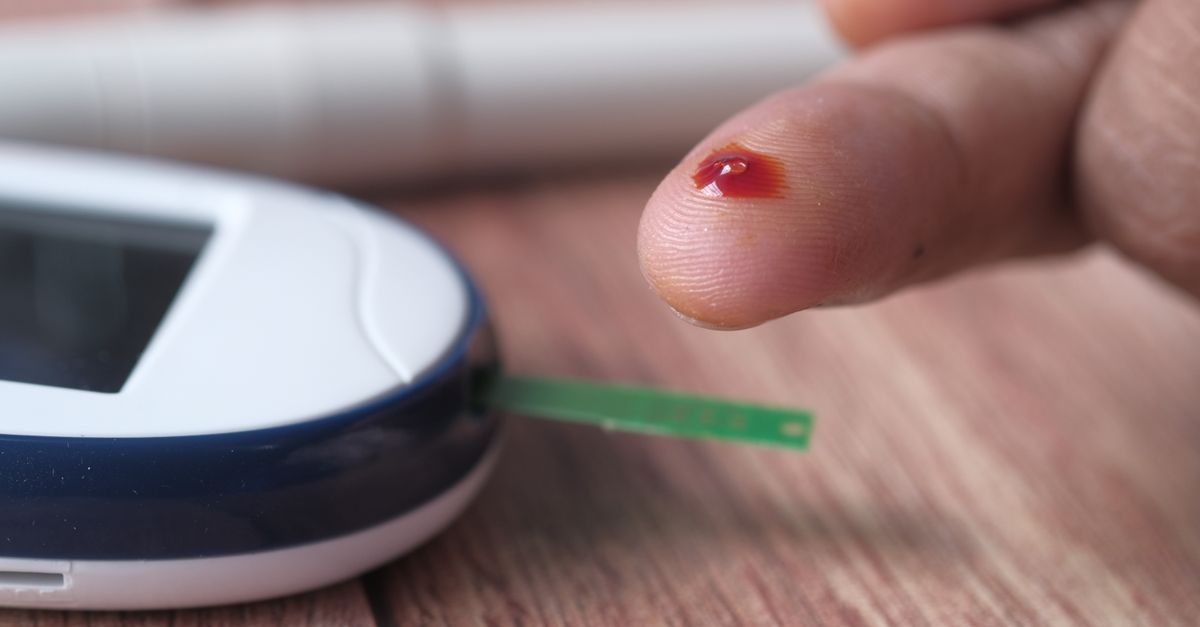
What Is a Normal Fasting Glucose Level in Postmenopause?
For most postmenopausal women, a fasting glucose below 90 mg/dL is optimal; the conventional "normal" cutoff of 99 mg/dL was not calibrated for estrogen-depleted physiology. The main caveat: glucose in isolation tells only part of the story — fasting insulin and HbA1c are needed to identify early insulin resistance. The exception is women on hormone therapy, whose glucose metabolism may be partially preserved.
---
Why Menopause Changes Your Glucose Metabolism
Estrogen is not just a reproductive hormone. It is a potent insulin sensitizer, acting through estrogen receptor-β on skeletal muscle cells and pancreatic β-cells to improve glucose uptake and regulate insulin secretion. When estrogen declines at menopause, this protective mechanism withdraws — and glucose regulation becomes measurably less efficient.
Data from the Study of Women's Health Across the Nation (SWAN) showed that the transition through menopause was independently associated with a worsening of insulin resistance, even after controlling for age, BMI, and physical activity (Sutton-Tyrrell et al., Diabetes Care 2010; PMID: 20185736). In practical terms, this means two women with identical lifestyles — one premenopausal, one postmenopausal — may show meaningfully different fasting glucose readings, with the postmenopausal woman running 5–15 mg/dL higher through no fault of her own.
This biology matters because standard laboratory reference ranges — typically 70–99 mg/dL for fasting glucose — were derived from populations that included women across all reproductive stages and large proportions of metabolically healthy men. They were not designed to flag the specific pattern of glucose creep that postmenopause drives.
---
What the Reference Ranges Actually Mean After Menopause
Here is how the conventional tiers map — and how functional medicine practitioners often re-interpret them for postmenopausal women:
| Fasting Glucose (mg/dL) | Conventional Category | Functional Interpretation (Postmenopause) |
|---|---|---|
| < 85 | Normal | Optimal |
| 85–94 | Normal | Acceptable; monitor trend |
| 95–99 | Normal (high-normal) | Early risk signal — assess fasting insulin |
| 100–125 | Prediabetes (IFG) | Prediabetes confirmed; act now |
| ≥ 126 | Diabetes (if confirmed) | Diabetes |
Functional medicine thresholds — particularly the 85 mg/dL optimal target — have been supported by cohort studies showing that cardiovascular risk begins rising continuously above 85 mg/dL fasting glucose, well below the 100 mg/dL prediabetes threshold (Levitan et al., Annals of Epidemiology 2004; PMID: 15177267).
For postmenopausal women specifically, targeting a fasting glucose below 90 mg/dL is a reasonable and evidence-informed goal. If your result sits between 90 and 99 — a range your lab report will stamp "normal" in green — it still warrants a conversation with your clinician about fasting insulin and HbA1c, because those markers can reveal insulin resistance that glucose alone does not.
---
Fasting Glucose vs. Fasting Insulin: Why You Need Both
Fasting glucose is a lagging indicator. The pancreas can compensate for years of declining insulin sensitivity by simply secreting more insulin — keeping glucose in the "normal" range while underlying resistance worsens silently. This is why a glucose reading of 92 mg/dL can be entirely benign in one woman and a sign of significant hyperinsulinemia in another.
Fasting insulin below 5–7 µIU/mL is generally considered optimal. When fasting insulin is elevated (above 10–12 µIU/mL) alongside a glucose in the high-normal range, that combination — sometimes captured in the HOMA-IR index — identifies early insulin resistance with far more sensitivity than glucose alone (Bonora et al., Diabetes Care 2000; PMID: 10842977).
If you're reading your lab results and trying to understand what is a normal fasting glucose level in a broader context — including the HOMA-IR calculation and functional thresholds — that full framework applies here too, with the postmenopausal modifier layered on top.
For women who also have PCOS entering perimenopause, the picture is more complex; insulin resistance from PCOS compounds the menopause-related shift. Understanding what is a normal fasting glucose level in PCOS provides important baseline context before interpreting postmenopausal readings.
---
How Does Postmenopausal Glucose Relate to Other Cardiometabolic Markers?
Glucose rarely exists as an isolated finding. In postmenopause, the same estrogen withdrawal that disrupts glucose regulation also drives changes in lipid profiles, inflammatory markers, and body fat distribution. These markers are interconnected and should be read together.
LDL cholesterol tends to rise after menopause. The relationship between insulin resistance and LDL particle size is well established — higher insulin drives smaller, denser LDL particles that are more atherogenic. If your fasting glucose is creeping upward, reviewing your LDL trajectory matters. For more on that marker in this life stage, see what is a normal LDL level in postmenopause.
Triglycerides are perhaps the most direct reflection of carbohydrate metabolism in a lipid panel. When fasting glucose is elevated, triglycerides almost always follow. A fasting triglyceride level above 100 mg/dL in a postmenopausal woman with high-normal glucose is a clinically meaningful combination — the data on normal triglycerides in postmenopause covers optimal vs. reference ranges in detail.
CRP (C-reactive protein) is elevated by both insulin resistance and the inflammatory shift that follows estrogen decline. High-sensitivity CRP above 1.0 mg/L alongside elevated glucose is an additive cardiovascular risk signal.
Magnesium is easy to overlook but mechanistically central. Magnesium is required as a cofactor for over 300 enzymatic reactions, including every step of glycolysis and insulin receptor signaling. Hypomagnesemia impairs insulin receptor tyrosine kinase activity and is independently associated with type 2 diabetes risk (Larsson & Wolk, Journal of Internal Medicine 2007; PMID: 17645588). Postmenopausal women are at higher risk for magnesium insufficiency — estrogen helps maintain renal magnesium reabsorption, and its withdrawal accelerates loss. For more on that specific marker, what is a normal magnesium level in postmenopause is worth reading alongside your glucose data.
---
Lifestyle Factors That Move the Needle Most
The research is consistent: lifestyle interventions remain the most powerful tools available, and their effectiveness in postmenopausal women — while sometimes modestly reduced compared to younger cohorts — is well documented.
Diet
Low-glycemic and Mediterranean-style dietary patterns consistently reduce fasting glucose and improve insulin sensitivity. A meta-analysis of 20 randomized controlled trials found Mediterranean diet adherence was associated with significant reductions in fasting glucose (mean −3.89 mg/dL) and HbA1c (Huo et al., European Journal of Nutrition 2015; PMID: 25547530). In postmenopausal women, the additional anti-inflammatory benefit — via reductions in IL-6 and CRP — amplifies this effect.
Practical priorities:
- Front-load fiber at breakfast (aim for ≥ 10g at first meal) to blunt the morning cortisol-glucose spike
- Prioritize protein at each meal (≥ 25–30g) to slow gastric emptying and reduce postprandial glucose excursions
- Limit refined carbohydrates and ultra-processed foods, which carry the highest glycemic load per serving
- Time carbohydrate-heavier foods earlier in the day, when insulin sensitivity is higher
Exercise
Resistance training is particularly effective for postmenopausal glucose regulation because skeletal muscle is the primary site of insulin-mediated glucose disposal. Building and maintaining muscle mass directly expands the capacity for non-insulin-dependent glucose uptake via GLUT4 translocation. Aim for at least two sessions of resistance training per week, with aerobic activity on the remaining days.
Sleep
Sleep disruption — which worsens significantly during the menopausal transition — directly impairs glucose regulation by elevating cortisol, increasing sympathetic tone, and reducing GLP-1 secretion. Even one night of partial sleep deprivation can reduce insulin sensitivity by 20–25% the following morning. Addressing sleep quality is not ancillary to glucose management; it is central.
Stress management
Chronic psychological stress elevates cortisol, which is directly gluconeogenic — it instructs the liver to produce and release more glucose, raising fasting levels. Postmenopausal women often experience compounding stressors alongside hormonal changes. Mind-body practices and adaptogenic support can be meaningful adjuncts.
---
What Should You Do If Your Fasting Glucose Is 95–105 mg/dL?
This range is where most postmenopausal women find themselves flagged "normal" by standard labs but where functional risk is accumulating. Here is a practical action framework:
- Request fasting insulin — if your clinician will not order it, it is widely available as a direct-pay test for under $30
- Calculate HOMA-IR using the formula: (fasting glucose in mmol/L × fasting insulin in µIU/mL) / 22.5; above 2.0 is clinically meaningful
- Add HbA1c — a three-month average that reveals patterns your single fasting glucose cannot
- Consider a continuous glucose monitor (CGM) for two to four weeks — postprandial glucose spikes (above 140 mg/dL) are a critical risk marker even when fasting glucose appears controlled
- Repeat fasting glucose after at least 10 hours of fasting, ideally in the morning before coffee, to standardize conditions
- Review correlated markers — triglycerides, ApoB, and CRP in the same blood draw give a metabolic risk cluster rather than a single data point
---
What This Means for Your Formula
Optimizing postmenopausal glucose metabolism through targeted supplementation requires specificity — the right nutrients, at clinical doses, matched to your actual lab findings.
Magnesium Glycinate is the most directly relevant ingredient in the Ones catalog for this topic. At 300–400 mg elemental magnesium daily, supplementation has been shown to improve insulin sensitivity in individuals with hypomagnesemia and reduce fasting glucose in those with prediabetes or type 2 diabetes (Rodríguez-Morán & Guerrero-Romero, Diabetes Care 2003; PMID: 12610048). Ones includes magnesium glycinate in its Magnesium Complex blend and as an individual active — the glycinate form optimizes absorption while minimizing gastrointestinal side effects, making it appropriate for the sustained daily use postmenopausal glucose management requires.
Zinc is a cofactor in insulin synthesis, storage, and secretion. Pancreatic β-cells have among the highest zinc concentrations of any cell type in the body, and zinc is structurally required for the hexameric insulin crystal. Postmenopausal women are at elevated risk for zinc insufficiency, and low zinc status is associated with impaired glucose tolerance. Ones includes zinc in clinically relevant forms at doses aligned with the evidence base.
Omega-3 fatty acids (EPA/DHA) reduce hepatic triglyceride production and improve adiponectin levels — a hormone that enhances insulin sensitivity in muscle and liver. For postmenopausal women whose fasting glucose is rising alongside triglycerides, the dual benefit of omega-3 supplementation on both markers is well supported. Ones sources EPA/DHA at a combined dose calibrated to clinical trial ranges.
Beyond individual nutrients, Ones functions as an AI health practitioner that cross-references your blood work against its full ingredient catalog — not just the three listed above. When your fasting glucose, fasting insulin, and lipid markers are uploaded together, the formula can address the full metabolic cluster rather than a single lab value in isolation.
---
Key Takeaways
- The conventional "normal" range for fasting glucose (up to 99 mg/dL) was not calibrated for postmenopausal physiology. An optimal target below 90 mg/dL is evidence-informed for this life stage.
- Fasting glucose is a lagging indicator. Fasting insulin and HbA1c are essential companions — a glucose of 92 mg/dL with elevated fasting insulin can signal significant early insulin resistance.
- Estrogen withdrawal directly impairs insulin sensitivity via skeletal muscle estrogen receptor-β pathways, making postmenopausal glucose management an active process rather than a passive one.
- Glucose does not exist in isolation. Triglycerides, LDL particle size, CRP, and magnesium status are all mechanistically connected and should be interpreted together.
- Lifestyle interventions — particularly resistance training, Mediterranean-pattern diet, and sleep optimization — remain the highest-leverage tools, with meaningful evidence in postmenopausal women specifically.
- Targeted supplementation can address specific nutrient-driven mechanisms — magnesium for insulin receptor signaling, zinc for β-cell function, and omega-3s for adiponectin and triglyceride pathways — when dosed at clinical ranges matched to your lab results.
---
This article is for informational purposes only and does not constitute medical advice. Always consult a qualified healthcare provider before making changes to your diet, lifestyle, or supplement regimen.