Skin & Beauty
Is Hair Thinning Normal During a Heavy Period?
Heavy periods and hair thinning often show up together — and it's not a coincidence. Losing more than 80 mL of blood per cycle depletes iron, B vitamins, and other nutrients your follicles rely on every single day. Understanding the connection is the first step toward stopping the shedding.
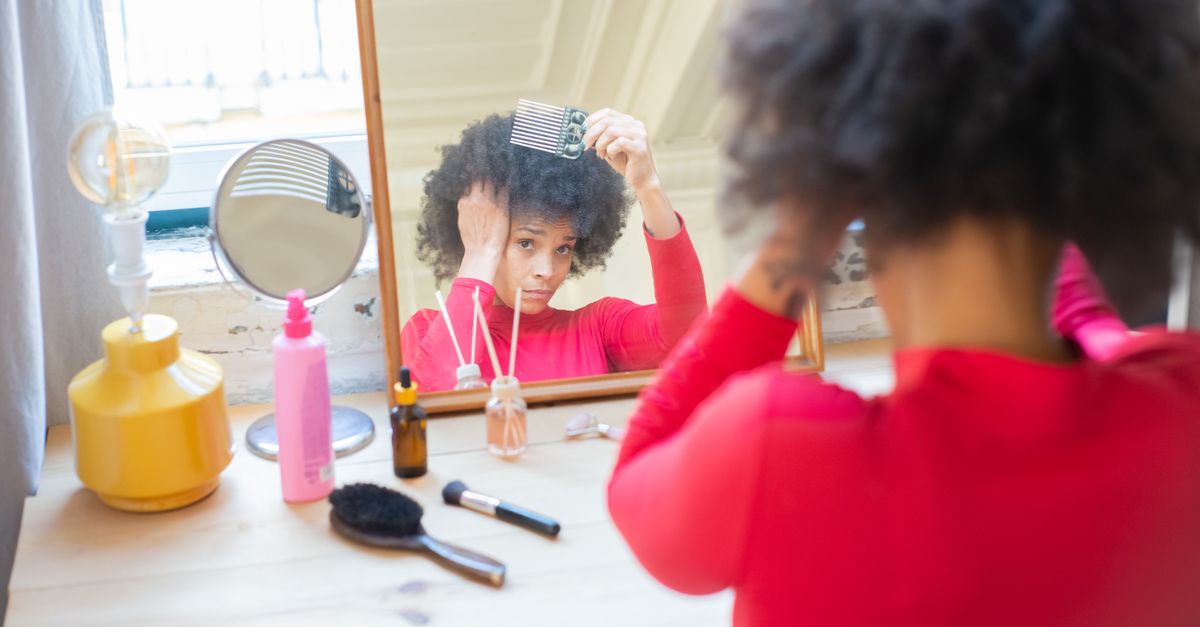
Is Hair Thinning Normal During a Heavy Period?
Yes, hair thinning is common during heavy periods, but it isn't something you should simply accept. Chronic heavy flow depletes iron and key B vitamins faster than diet can replenish them, and follicles starved of these nutrients enter a resting phase rather than growing. The exception: if your labs are normal and flow is light-to-moderate, another cause is more likely.
---
Why Heavy Periods and Hair Loss Are Biologically Linked
Menorrhagia — clinically defined as losing more than 80 mL of blood per menstrual cycle — creates a monthly drain on several nutrients that hair follicles consume at unusually high rates. The follicle is one of the most metabolically active structures in the body, second only to bone marrow. That means any systemic nutrient deficit hits hair first, and hits it fast.
The core mechanism works in two steps. First, repeated blood loss depletes serum ferritin (stored iron). Ferritin is required for ribonucleotide reductase, the enzyme that manufactures DNA in dividing hair-matrix cells. When ferritin drops — even before full iron-deficiency anemia develops — follicle cycling slows (Trost, Bergfeld & Calogeras, Journal of the American Academy of Dermatology 2006; PMID: 16635664). Second, B-vitamin status falls in tandem because B6, B1 (thiamine), and B12 are all involved in red blood cell synthesis and energy metabolism; as blood volume drops and dietary intake stays constant, the marginal supply available to non-essential tissue (like hair) contracts.
This is why many people notice increased shedding not during the period itself but six to twelve weeks later — that lag matches the telogen effluvium timeline, the phase in which follicles that were nutritionally stressed finally release their shafts.
If you're also noticing brittle nails during a heavy period or bloating that worsens with heavy flow, the same nutrient depletion pattern is almost certainly at play across multiple systems simultaneously.
---
The Iron-Ferritin-Follicle Connection
Ferritin is the storage protein for iron, and it is the single most important lab marker for hair-loss investigation in pre-menopausal women. A landmark study found that women with telogen effluvium had significantly lower ferritin levels than controls, and that ferritin below 30 ng/mL was consistently associated with hair shedding even when hemoglobin remained in range (Rushton et al., Clinical and Experimental Dermatology 2002; PMID: 12190636).
For women with heavy periods, ferritin can fall well below that threshold within a few months of heavy cycling without ever triggering a formal anemia diagnosis. That is the gap where hair thinning lives: low storage iron, normal CBC, no red flags on a standard panel — but follicles that are functionally starved.
Optimal ferritin for hair retention is debated, but most trichologists target 70–100 ng/mL for active recovery. Replenishment takes time: oral iron supplementation in iron-deficient women raises ferritin at roughly 1–2 ng/mL per week under ideal conditions, which means a six-month commitment before regrowth is visible.
---
Vitamin C for Hair Growth: More Than an Antioxidant
Vitamin C plays a dual role in hair recovery after iron depletion. First, it directly enhances non-heme iron absorption in the gut by reducing ferric iron (Fe³⁺) to the absorbable ferrous form (Fe²⁺) — a co-ingestion of 200 mg of vitamin C can increase iron absorption by up to 67% in some studies (Lynch & Cook, Annals of the New York Academy of Sciences 1980; PMID: 6940487). For anyone trying to rebuild ferritin after heavy-period losses, this single pairing is mechanistically important.
Second, vitamin C is essential for collagen synthesis, which provides the structural scaffolding for the hair follicle's dermal papilla. Without adequate ascorbate, the collagen matrix around the follicle degrades, reducing the mechanical anchoring of the shaft. Vitamin C also quenches reactive oxygen species produced during the inflammatory cascade that accompanies heavy bleeding — oxidative stress is a documented contributor to follicle miniaturization (Almohanna et al., Dermatology and Therapy 2019; PMID: 30547302).
Dietary sources are often inadequate for women actively losing blood. Supplemental vitamin C in the range of 500–1000 mg daily — ideally split across two doses and taken with iron-containing meals — maximizes both the absorption benefit and the antioxidant effect.
---
Vitamin B6 for Hair Growth: The Hormone and Melanin Link
Vitamin B6 (pyridoxine) is a cofactor in more than 100 enzymatic reactions, but three matter most for hair:
- Amino acid metabolism — B6 is required to transaminate the amino acids that build keratin, the structural protein of the hair shaft.
- Hemoglobin synthesis — B6 is essential for the production of delta-aminolevulinic acid, the first committed step in heme biosynthesis. Low B6 compounds iron-deficiency effects even when iron intake is adequate.
- Hormonal modulation — B6 is involved in the catabolism of estrogen and progesterone. Heavy periods are frequently associated with elevated estrogen relative to progesterone; inadequate B6 can worsen this ratio, and elevated estrogen is linked to telogen effluvium in some research frameworks.
The RDA for B6 in adult women is 1.3 mg/day, but functional sufficiency for hair and hormonal support is often cited at 25–50 mg as pyridoxal-5-phosphate (the active coenzyme form). B6 toxicity is real above 200 mg/day (peripheral neuropathy), but doses below 100 mg are considered safe for most adults (NIH Office of Dietary Supplements, 2023).
If you've also been experiencing low mood around your period, that's another signal worth investigating — B6 is required for the synthesis of serotonin and dopamine, and the mood and hair symptoms often share the same root deficiency.
---
Vitamin B1 (Thiamine) for Hair Growth: The Overlooked Energy Cofactor
Thiamine doesn't get the press that B12 and B6 do, but it is equally critical for the hair growth cycle. Follicle cells divide continuously and rely on mitochondrial energy production — specifically, the conversion of pyruvate to acetyl-CoA via pyruvate dehydrogenase, an enzyme that requires thiamine as a cofactor. When thiamine is insufficient, that metabolic step stalls, and high-energy-demand tissues (follicles included) downregulate activity.
Thiamine deficiency is underdiagnosed in the developed world, partly because standard nutrition panels don't include it routinely, and partly because clinical signs — fatigue, peripheral tingling, cognitive fog — are non-specific. Women with heavy periods who also consume refined carbohydrates heavily are at elevated risk, because carbohydrate metabolism consumes thiamine rapidly.
The RDA for thiamine is 1.1 mg/day for adult women, but therapeutic supplementation in functional deficiency often uses 50–100 mg of thiamine HCl or benfotiamine (a fat-soluble thiamine analog with better tissue penetration). There are no reported toxicity concerns at these doses.
| Nutrient | Role in Hair | Depletion Risk with Heavy Period | Suggested Therapeutic Range |
|---|---|---|---|
| Iron (Ferritin) | DNA synthesis in follicle matrix | High | Target ferritin 70–100 ng/mL |
| Vitamin C | Iron absorption + collagen scaffolding | Moderate | 500–1000 mg/day |
| Vitamin B6 (P5P) | Keratin synthesis + hormone metabolism | Moderate | 25–50 mg/day (as P5P) |
| Vitamin B1 (Thiamine) | Mitochondrial energy in follicle cells | Low-Moderate | 50–100 mg/day |
| Vitamin B12 | Red blood cell maturation | Moderate | 500–1000 mcg/day |
---
What to Expect on a Recovery Timeline
Hair recovery from nutritional depletion is notoriously slow. Here's what the evidence generally supports:
- Weeks 1–4: Shedding may temporarily increase as malnourished telogen hairs release. This is alarming but expected.
- Weeks 4–12: Shedding rate begins to normalize as nutrient levels climb. Scalp density doesn't visibly change yet.
- Months 3–6: New anagen hairs become visible, initially as fine regrowth along the hairline and part.
- Months 6–12: Diameter and density of regrowth approaches baseline, assuming the underlying heavy flow is also being managed.
The secondary keyword about finasteride and hair transplants in the context of heavy-period hair loss reflects a real pattern: women frustrated with shedding sometimes pursue androgenic hair-loss treatments (like finasteride) before the nutritional root cause has been ruled out. Finasteride targets 5-alpha reductase and DHT conversion — a relevant pathway in androgenetic alopecia — but it does not address iron, B vitamin, or ferritin-mediated telogen effluvium. Starting a 4-month finasteride trial when ferritin is at 12 ng/mL is unlikely to produce meaningful regrowth, and recovery will appear to stall until nutrition is corrected. Always confirm the pattern of loss with a dermatologist or trichologist before pursuing medical hair-loss interventions.
While hair thinning is the focus here, heavy periods often bring a cluster of overlapping symptoms. Low libido during a heavy period and joint pain during a heavy period frequently trace back to the same iron and inflammatory dysregulation — which is why addressing root cause tends to improve multiple symptoms at once.
---
What This Means for Your Formula
If a blood panel confirms low ferritin, sub-optimal B6, or thiamine insufficiency alongside heavy periods and hair shedding, supplementation needs to be specific — not a generic multivitamin at RDA doses that won't move the needle on deficiency.
Ones analyzes blood work and health history through its AI health practitioner and builds a personalized capsule formula calibrated to your actual gaps. For the nutrient pattern described in this article, relevant ingredients in the Ones catalog include:
- Vitamin C (as ascorbic acid): Dosed to support iron absorption and collagen synthesis, taken in the Ones formula in timing-aware windows to maximize gut co-absorption with dietary iron.
- Vitamin B6 (as pyridoxal-5-phosphate): The active coenzyme form rather than generic pyridoxine — clinically relevant because a significant minority of people have reduced conversion capacity from pyridoxine, making P5P a more reliable choice.
- B-Complex support: Ones incorporates thiamine and other B-family cofactors at doses above RDA where blood or symptom data indicate functional demand — not reflexively, but when the evidence for depletion is present.
The goal is not to stack every hair-related nutrient simultaneously, but to close the specific gaps confirmed by data — then track regrowth systematically over the following two to three menstrual cycles.
---
Key Takeaways
- Hair thinning during or after a heavy period is common and mechanistically explained — it is not inevitable, and it is addressable.
- The primary driver is ferritin depletion: follicles need stored iron for DNA synthesis, and heavy flow empties ferritin before hemoglobin drops.
- Vitamin C accelerates recovery by boosting iron absorption up to 67% and protecting follicle collagen via antioxidant activity.
- Vitamin B6 (as P5P) supports keratin synthesis, hormone metabolism, and hemoglobin production — all relevant to heavy-period hair loss.
- Vitamin B1 (thiamine) provides the mitochondrial energy follicle cells need to stay in the active growth phase.
- Before pursuing pharmaceutical hair-loss interventions, rule out nutritional deficiency — specifically ferritin, B6, and thiamine — with a blood panel and work with a clinician to interpret results in the context of your menstrual history.
---
This article is for informational purposes only and does not constitute medical advice. Consult a qualified healthcare provider before starting any new supplement regimen.