Women's Health
Is Thinning Skin Normal with PCOS?
Thinning skin affects a significant subset of women with PCOS, yet it rarely makes the top of symptom checklists dominated by acne and irregular periods. The same androgen and insulin-signaling disruptions that drive more visible symptoms quietly degrade collagen and alter skin structure over time. Understanding the mechanism — and which targeted nutrients may help — is the first step toward addressing it.
Is Thinning Skin Normal with PCOS?
Yes, thinning skin can be a legitimate symptom of PCOS, though it affects a minority of women with the condition rather than the majority. Elevated androgens and disrupted estrogen signaling both reduce collagen synthesis and skin thickness — but the direction of skin changes in PCOS is paradoxical: some women develop thicker, oilier skin while others experience thinning, depending on which hormonal imbalance dominates.
---
Why PCOS Affects Skin at All
Polycystic ovary syndrome is fundamentally a hormonal and metabolic disorder, and skin is one of the most hormone-sensitive tissues in the body. Androgen receptors are expressed in keratinocytes, sebocytes, and dermal fibroblasts — meaning testosterone, DHT, and their precursors directly regulate how skin cells behave (Zouboulis et al., Dermatoendocrinol 2009; PMID: 20592791).
In classic hyperandrogenic PCOS, elevated dihydrotestosterone (DHT) tends to drive sebaceous gland overactivity, resulting in oily skin and acne. But DHT also accelerates the rate at which dermal fibroblasts stop producing collagen, a process that mirrors what happens in androgenetic alopecia of the scalp. The same mechanism that thins hair follicles can thin the dermis itself over time.
Insulín resistance — present in an estimated 50–70% of women with PCOS — compounds the problem through a separate pathway. Chronically elevated insulin drives IGF-1 signaling, which at first may stimulate skin proliferation (hence acanthosis nigricans), but over time the downstream inflammatory load degrades the extracellular matrix that gives skin its structural resilience.
If you're also dealing with itchy or irritated skin alongside your PCOS diagnosis, the hormonal and inflammatory mechanisms are closely related and worth exploring together.
---
What "Thinning Skin" Actually Means in PCOS
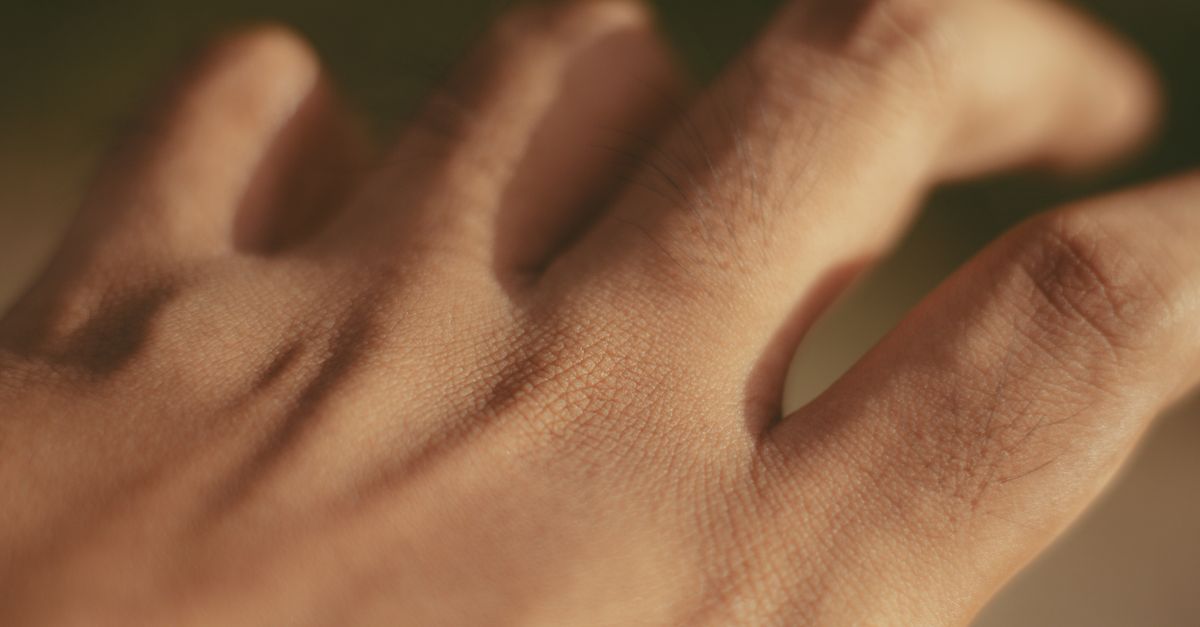
Skin thickness is determined by two layers: the epidermis (outer, cellular) and the dermis (deeper, collagen-rich). When people describe thinning skin, they're usually referring to the dermis becoming less dense — skin that bruises more easily, shows veins more prominently, or feels more fragile and papery to the touch.
In PCOS specifically, researchers have observed:
- Reduced dermal collagen density, driven by androgen-mediated suppression of fibroblast type-I collagen production
- Altered skin barrier function, linked to changes in ceramide and fatty acid composition that accompany insulin resistance
- Increased skin fragility, sometimes appearing alongside other connective tissue symptoms like joint pain or hair thinning
Skin thinning associated with PCOS is distinct from the rapid, more severe dermal atrophy caused by corticosteroid excess (Cushing's syndrome), which is an important differential diagnosis a clinician should rule out if the thinning is pronounced.
---
Saw Palmetto for Skin: Does It Help with PCOS-Related Thinning?
Saw palmetto (Serenoa repens) is best known for its use in benign prostatic hyperplasia, but its mechanism is directly relevant to PCOS skin concerns. The active liposterolic extract inhibits 5-alpha reductase, the enzyme that converts testosterone to DHT — the more potent androgen responsible for collagen-suppressing effects in dermal tissue.
A randomized controlled trial in women with androgenetic alopecia found that topical saw palmetto extract significantly improved hair density compared to placebo over 24 weeks, with the proposed mechanism being local DHT reduction at the follicular and dermal level (Prager et al., J Altern Complement Med 2002; PMID: 12006122). While direct skin-thickness trials in PCOS are lacking, the mechanistic logic is sound: lower DHT activity in dermal fibroblasts should translate to better collagen preservation.
Oral saw palmetto has also shown measurable reductions in total and free DHT in small clinical studies in men, suggesting systemic 5-alpha reductase inhibition is achievable at doses of 320 mg/day of standardized extract (Marks et al., J Urol 2001; PMID: 11490257).
For women with PCOS whose skin thinning tracks alongside elevated androgens, saw palmetto represents a reasonable, evidence-informed option — though it should not be used during pregnancy.
---
Beta-Sitosterol for Skin: The Phytosterol Connection
Beta-sitosterol is a plant-derived sterol found in saw palmetto extract, as well as in avocados, nuts, and pygeum bark. It contributes meaningfully to the anti-androgenic effects of botanical DHT blockers and has additional direct actions in skin.
In dermatological research, beta-sitosterol has demonstrated:
- 5-alpha reductase inhibition similar in mechanism to saw palmetto's liposterolic fraction, reducing local DHT synthesis
- Anti-inflammatory activity via suppression of NF-κB and prostaglandin pathways, which is relevant because chronic low-grade inflammation in PCOS accelerates matrix metalloproteinase (MMP) activity — enzymes that degrade collagen and elastin
- Collagen-supportive signaling in preliminary cell culture work, suggesting it may directly upregulate type-I collagen expression in fibroblasts
A 2019 review in the International Journal of Molecular Sciences highlighted beta-sitosterol's ability to modulate androgen receptor signaling and reduce inflammatory cytokines in skin models, making it a structurally relevant candidate for androgen-driven dermal atrophy (Shi et al., Int J Mol Sci 2019; PMID: 31540257).
Beta-sitosterol is not typically found in isolation in supplements — it's usually part of a phytosterol complex or embedded in saw palmetto or pygeum extracts. This is worth noting when evaluating supplement labels.
---
Pygeum for Skin: An Overlooked Anti-Androgen Botanical
Pygeum africanum (African plum tree bark) is a less mainstream botanical that shares mechanistic ground with saw palmetto but has a distinct phytochemical profile. It inhibits 5-alpha reductase and also contains pentacyclic triterpenoids that suppress DHT binding at the androgen receptor — a dual mechanism that may make it complementary rather than redundant when stacked with saw palmetto.
From a skin perspective, pygeum's anti-androgen activity is relevant to the same collagen-preservation pathway discussed above. In a double-blind placebo-controlled trial of men with BPH, pygeum extract at 100 mg/day produced measurable reductions in androgen-related urological end points over 60 days (Breza et al., Eur Urol 1998; PMID: 9471857). While this is a different population and outcome, the systemic androgen modulation observed is mechanism-applicable to skin in androgen-excess conditions.
The research base for pygeum in PCOS or female skin specifically is thin, but clinicians working with hyperandrogenic women have begun incorporating pygeum into anti-androgen botanical protocols alongside saw palmetto and zinc — a combination that targets the DHT pathway at multiple points.
---
Stinging Nettle Root for Skin: The SHBG Angle
Stinging nettle root (Urtica dioica radix) takes a different approach than saw palmetto or pygeum. Rather than inhibiting 5-alpha reductase, nettle root's primary mechanism involves binding to sex hormone-binding globulin (SHBG), the protein that keeps free androgens in check. By occupying SHBG binding sites, nettle root effectively reduces the amount of free testosterone and DHT available to act on skin tissue.
This is particularly relevant to PCOS because low SHBG is a consistent feature of the condition — insulin resistance suppresses hepatic SHBG production, leaving more free androgens circulating and acting on the dermis (Plymate et al., J Clin Endocrinol Metab 1988; PMID: 3366370).
A controlled study found that nettle root lignans bind to SHBG with measurable affinity, suggesting a competitive mechanism that could modulate free androgen availability (Hryb et al., Planta Medica 1995; PMID: 7700989). If even a modest increase in effective SHBG activity can be achieved, the downstream benefit to skin collagen preservation could be meaningful.
If you want a deeper look at the clinical evidence for this botanical, our article on stinging nettle root supplement clinical trials covers the research in detail.
Stinging nettle root is often combined with saw palmetto in anti-androgen formulas precisely because the two work on different steps of the same pathway — 5-alpha reductase inhibition plus SHBG modulation creates broader androgen control than either alone.
---
The Role of Insulin Resistance in Skin Integrity
No discussion of PCOS skin health is complete without addressing insulin resistance. Beyond its effect on free androgens via SHBG suppression, insulin resistance drives systemic inflammation — elevated CRP, IL-6, and TNF-alpha — all of which activate MMPs that break down dermal collagen and elastin.
Interventions that improve insulin sensitivity in PCOS (lifestyle, inositol, berberine, chromium) therefore have an indirect but meaningful impact on skin structure by reducing the inflammatory collagen-degradation signal. This is one reason that PCOS skin improvements often track closely with metabolic improvements rather than skin-specific treatments alone.
Women with PCOS who experience a cluster of connective tissue symptoms — thinning skin, dry or sensitive skin, joint discomfort — may be experiencing the downstream effects of chronic low-grade inflammation driven by insulin resistance and androgen excess working together.
---
What This Means for Your Formula
For women with PCOS whose lab work or symptom profile suggests androgen excess and skin changes, targeted botanical support makes mechanistic sense — but the specific ingredients and their doses matter significantly.
Saw palmetto (320 mg standardized extract): This is the clinically studied dose for 5-alpha reductase inhibition. Ones includes saw palmetto at this standardized dose as part of its catalog of individual actives, appropriate for users whose AI-driven assessment flags elevated androgens or androgen-sensitive skin symptoms.
Stinging nettle root (extract standardized to lignan content): Ones carries stinging nettle root in a form standardized for the lignans responsible for SHBG-binding activity — the mechanism most relevant to PCOS-driven free androgen elevation. This pairs logically with saw palmetto to address the DHT pathway at two distinct points.
Endocrine Support blend: Ones' proprietary Endocrine Support is a System Blend formulated for hormonal regulation, drawing on botanicals and cofactors that address the insulin-androgen feedback loop central to PCOS. For users whose data suggests PCOS-pattern hormonal disruption, this blend may appear in a 6- or 9-capsule personalized formula alongside targeted actives — the AI determines which combination is appropriate based on the full picture of your lab results, wearable data, and health history.
The goal is never a generic women's supplement. It's a formula calibrated to whether your PCOS presents primarily as insulin-driven, androgen-driven, or inflammatory — because the skin implications differ in each case.
---
Key Takeaways
- Thinning skin is a real but underreported PCOS symptom, driven primarily by DHT-mediated collagen suppression in dermal fibroblasts and amplified by insulin-resistance-driven inflammation.
- The direction of skin changes in PCOS is paradoxical — some women develop thicker, oilier skin while others experience dermal thinning, depending on which hormonal imbalance dominates.
- Saw palmetto (320 mg standardized extract) inhibits 5-alpha reductase and reduces local DHT levels, making it mechanistically relevant to collagen preservation in androgen-sensitive skin.
- Stinging nettle root lignans bind SHBG and reduce free androgen availability — a complementary mechanism to 5-alpha reductase inhibition, particularly relevant given that low SHBG is a consistent PCOS feature.
- Beta-sitosterol and pygeum contribute anti-androgen and anti-inflammatory activity that may protect the extracellular matrix from MMP-driven collagen degradation.
- Improving insulin sensitivity addresses skin thinning at its metabolic root — skin-specific interventions work best when systemic PCOS management is addressed in parallel.
---
This article is for informational purposes only and does not constitute medical advice. Always consult a qualified healthcare provider before starting any supplement, particularly if you have a diagnosed condition or are taking medications.