Supplements
What Blood Tests Should You Get Annually?
Most standard annual physicals include only a basic metabolic panel and CBC — missing dozens of markers that reveal early-stage thyroid dysfunction, insulin resistance, hormone imbalance, and nutrient gaps. Knowing exactly which tests to request can mean catching problems years before symptoms appear.
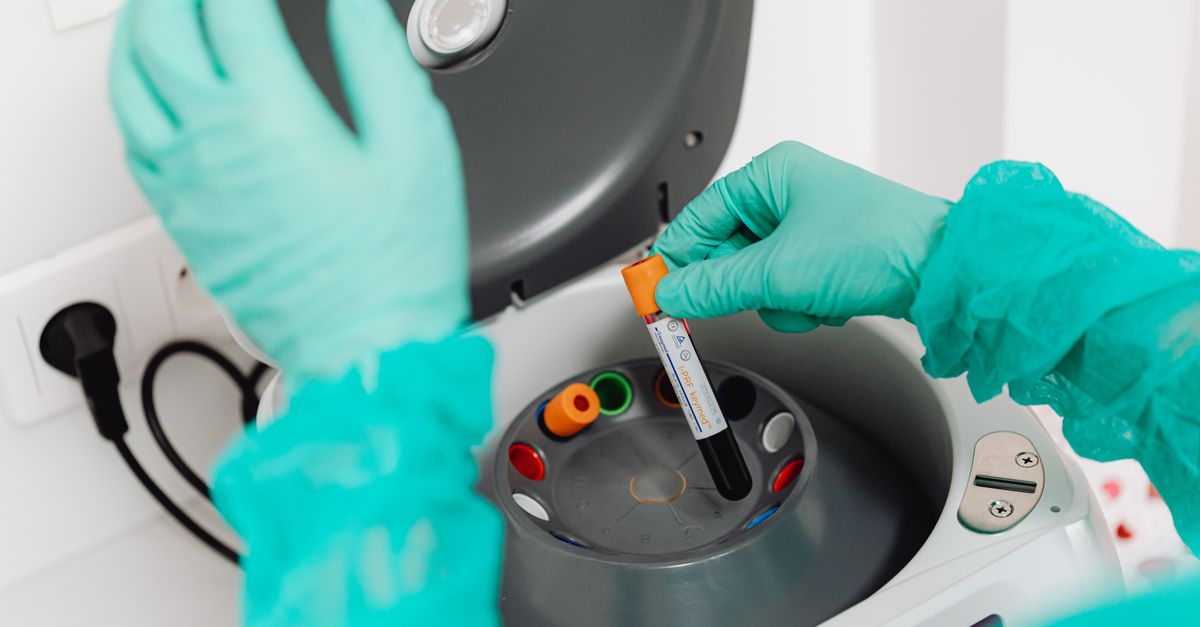
What Blood Tests Should You Get Annually?
For most adults, a core annual panel should include a CBC, comprehensive metabolic panel, fasting glucose, HbA1c, lipid panel, TSH, vitamin D, ferritin, and a full thyroid panel (Free T3, Free T4). The main caveat: what you need beyond that core depends on your symptoms, sex, family history, and existing conditions — there is no single list that fits everyone.
---
Why Your Standard Physical Isn't Enough
The average primary care visit orders fewer than five lab markers at an annual exam (Sequist et al., JGIM 2004; PMID: 15577491). That standard set — often just a CBC and basic metabolic panel — is designed to catch acute illness, not to map the trajectory of your metabolic health. Prediabetes, early thyroid dysfunction, low-grade inflammation, and nutrient deficiencies can all exist for years before they appear on a basic panel or produce obvious symptoms.
The consequence is that most people walk away from their annual physical with a clean bill of health that isn't actually clean — it's just incomplete. Understanding which additional tests to request, and why, is one of the highest-leverage things you can do for long-term health.
---
The Core Annual Blood Panel Every Adult Should Consider
Below is a framework for a comprehensive annual panel. These are not fringe tests — most are covered by insurance under preventive care and are ordered routinely by functional medicine physicians and internists.
| Marker | Why It Matters | Optimal Range (not just "normal") |
|---|---|---|
| CBC with differential | Flags anemia, infection, immune dysfunction | WBC 4.5–8.0; RBC, Hgb within sex-specific norms |
| Comprehensive Metabolic Panel (CMP) | Liver enzymes, kidney function, electrolytes | ALT <25 U/L; creatinine <1.0 mg/dL (women); eGFR >90 |
| Fasting glucose | Screens for insulin resistance and diabetes | 70–90 mg/dL (optimal) |
| HbA1c | 3-month glucose average | <5.4% (optimal); 5.7–6.4% = prediabetes |
| Fasting insulin | Often omitted; most sensitive IR marker | <5 µIU/mL (optimal) |
| Lipid panel + ApoB | Standard lipids miss atherogenic particle count | ApoB <80 mg/dL |
| TSH + Free T3 + Free T4 | Full thyroid picture beyond TSH alone | TSH 1.0–2.5 mIU/L optimal |
| TPO antibodies (anti-TPO) | Detects autoimmune thyroid disease (Hashimoto's) | <35 IU/mL |
| 25-OH Vitamin D | Deficiency linked to immune, mood, and metabolic dysfunction | 40–60 ng/mL (optimal) |
| Ferritin | Most sensitive iron storage marker | Women: 50–100 ng/mL; Men: 70–150 ng/mL |
| Magnesium (RBC, not serum) | Serum magnesium is unreliable; RBC reflects tissue stores | 5.2–6.5 mg/dL |
| hs-CRP | Sensitive inflammation marker | <1.0 mg/L |
| Homocysteine | Cardiovascular and methylation risk marker | <8 µmol/L |
For women, adding estradiol, LH, FSH, DHEA-S, and progesterone (timed to cycle) rounds out the picture significantly. If you're wondering about whether women should get estradiol tested or whether DHEA-S testing is appropriate for women, both are worth reviewing with your provider — especially if you're experiencing fatigue, mood changes, or cycle irregularities.
---
Lab Tests for Prediabetes: Catching Insulin Resistance Early
One of the most common failures in annual blood work is testing fasting glucose alone and calling it sufficient for diabetes screening. The problem: glucose is a lagging indicator. By the time fasting glucose climbs into the prediabetic range (100–125 mg/dL), insulin resistance has typically been present for years.
The far more sensitive early marker is fasting insulin. A 2016 analysis published in Diabetologia found that elevated fasting insulin predicted type 2 diabetes up to 20 years before diagnosis, well before glucose or HbA1c crossed clinical thresholds (Tabák et al., Diabetologia 2009; PMID: 19565233). An optimal fasting insulin is below 5 µIU/mL; values above 10 µIU/mL suggest meaningful insulin resistance even when fasting glucose is normal.
The HOMA-IR (Homeostatic Model Assessment of Insulin Resistance) combines fasting glucose and fasting insulin into a single composite score. A HOMA-IR above 1.9 is a reliable early signal.
For a complete prediabetes screen, request:
- Fasting glucose
- Fasting insulin (calculate HOMA-IR)
- HbA1c
- Triglycerides (elevated TG is a surrogate for IR; >100 mg/dL warrants attention)
- HDL cholesterol (low HDL tracks closely with insulin resistance)
Adiponectin, a hormone secreted by fat cells that sensitizes tissues to insulin, is an emerging marker — low levels appear in insulin-resistant states even before glucose rises (Hotta et al., Diabetes 2000; PMID: 10866062).
---
Lab Tests for Hashimoto's: Beyond Just TSH
Hashimoto's thyroiditis is the most common autoimmune condition in the United States, affecting an estimated 14 million Americans, the majority of them women. Yet most standard physicals order only TSH — a pituitary hormone, not a direct measure of thyroid function or autoimmunity.
TSH can appear completely normal for years while Hashimoto's-driven destruction of thyroid tissue is actively underway. The diagnostic markers that actually matter:
- Anti-TPO antibodies (TPO-Ab): Elevated in roughly 95% of Hashimoto's cases. This is the primary diagnostic marker.
- Anti-thyroglobulin antibodies (TgAb): Positive in ~60–80% of cases; important when TPO-Ab is borderline.
- Free T3 and Free T4: Measure the actual active thyroid hormones, not just the pituitary signal (TSH).
- Reverse T3 (rT3): Elevated rT3 indicates the body is producing an inactive form of T3, often seen in chronic stress and inflammation.
A landmark study in Thyroid (Canaris et al. 2000; PMID: 10718249) found that subclinical hypothyroidism — TSH elevated but Free T4 normal — was present in nearly 10% of adults, with the majority undiagnosed. Hashimoto's can cause both thyroid underactivity and transient hyperthyroid episodes ("Hashitoxicosis"), making antibody testing essential context.
Selenium is frequently discussed alongside Hashimoto's: a randomized controlled trial (Gärtner et al., Journal of Clinical Endocrinology & Metabolism 2002; PMID: 11836280) found that 200 mcg/day of selenomethionine reduced TPO antibody levels by approximately 36% over three months in patients with autoimmune thyroiditis. This finding has been replicated in meta-analyses (Wichman et al., Thyroid 2016; PMID: 27702392).
---
Lab Tests for Estrogen Dominance: What the Panel Should Include
Estrogen dominance — a state where estrogen is elevated relative to progesterone, regardless of absolute estrogen level — is implicated in PMS, irregular cycles, fibrocystic breasts, weight gain, mood instability, and endometriosis risk. It's also one of the most underdiagnosed hormonal patterns, in part because standard labs rarely test the right markers at the right time.
A proper hormonal panel for estrogen dominance includes:
- Estradiol (E2): Drawn on day 3 of the menstrual cycle for a baseline, and again mid-luteal (day 19–22) if progesterone is also being assessed.
- Progesterone: Must be drawn in the luteal phase (days 19–22); a low progesterone-to-estradiol ratio is the hallmark of estrogen dominance.
- LH and FSH: Useful to contextualize cycle phase and rule out anovulation. For more on this, understanding LH testing for women covers the clinical reasoning.
- SHBG (Sex Hormone Binding Globulin): Regulates how much estrogen is free and biologically active. Low SHBG (often driven by high insulin) increases free estrogen exposure.
- DHEA-S: An adrenal androgen that can influence estrogen pathways, particularly after menopause.
The estrogen metabolite ratio — specifically the 2-OHE1 to 16α-OHE1 ratio — is measurable via DUTCH test (urine, not blood) and provides insight into whether estrogen is being metabolized through protective or proliferative pathways. This isn't a standard blood panel, but it's worth knowing about for persistent symptoms.
If you're considering these tests, reviewing whether women should get estradiol tested provides useful context on timing and interpretation.
---
Lab Tests for Seasonal Allergies: When Blood Work Adds to the Picture
Most people don't think of blood tests in the context of seasonal allergies — but lab work can meaningfully change how allergy-driven symptoms are managed, particularly for people with year-round or unclear triggers.
Key blood markers relevant to allergic and immune reactivity include:
- Total IgE: Elevated total immunoglobulin E signals a systemic allergic tendency. Normal is typically below 100 IU/mL in adults.
- Specific IgE panels (sIgE): Also called RAST or ImmunoCAP testing — these quantify immune reactivity to specific allergens (tree pollen, dust mites, grass, mold, etc.) from a blood draw, without the skin-prick discomfort.
- Eosinophil count (from CBC differential): Elevated eosinophils (>500 cells/µL) are a systemic marker of allergic inflammation and can also signal parasitic infection or eosinophilic esophagitis.
- Basophil activation test (BAT): An emerging functional test measuring real-time basophil response to allergens; not yet widely available but increasingly used in allergy research.
- Vitamin D: Multiple meta-analyses link low vitamin D with increased allergic sensitization and IgE levels (Hollams et al., JACI 2011; PMID: 21570714).
For people whose allergy symptoms don't respond well to antihistamines, or who experience overlapping gut and respiratory symptoms, checking for histamine intolerance via DAO enzyme activity and histamine blood levels is an emerging clinical approach. This is distinct from IgE-mediated allergy and doesn't show on standard allergy panels.
---
What This Means for Your Formula
Blood work doesn't just tell you what's wrong — it tells you exactly what your body needs. At Ones, every custom formula is built from an individual's lab data, wearable metrics, and health history, so the recommendations are calibrated to what the numbers actually show rather than what a generic protocol suggests.
For the markers covered in this article, here's how specific Ones ingredients align with common findings:
- Selenium (as selenomethionine, 200 mcg): Included for individuals with elevated anti-TPO antibodies, matching the dose used in the Gärtner 2002 RCT. This isn't a blanket recommendation — it's triggered by relevant thyroid autoimmunity markers.
- Vitamin D3 + K2 (MK-7): Calibrated to your actual 25-OH vitamin D level, not a one-size-fits-all dose. Relevant across thyroid, immune, and allergy-related findings. K2 is included to direct calcium appropriately and support cardiovascular safety at higher D3 doses.
- Ones Histamine Support (proprietary blend): Formulated for individuals showing signs of histamine excess or DAO insufficiency — a pattern that can underlie seasonal and food-related reactivity that doesn't fit a classic IgE allergy picture.
- Magnesium Complex: When RBC magnesium is low — which often accompanies insulin resistance and elevated cortisol — Ones includes its Magnesium Complex, which uses glycinate and malate forms for optimal absorption over the oxide form found in most supplements.
For questions about which tests are appropriate for specific conditions, lab tests for high blood pressure and lab tests for IBS are worth exploring as companion reads.
---
Key Takeaways
- A meaningful annual blood panel goes well beyond CBC and CMP — fasting insulin, HbA1c, full thyroid panel (not just TSH), ferritin, vitamin D, RBC magnesium, hs-CRP, and ApoB are all clinically justified additions.
- Prediabetes screening requires fasting insulin and HOMA-IR, not just fasting glucose — insulin resistance can be present for 10–20 years before glucose crosses clinical thresholds.
- Hashimoto's cannot be ruled out with TSH alone; anti-TPO and anti-thyroglobulin antibodies, Free T3, and Free T4 are necessary for a complete thyroid autoimmunity workup.
- Estrogen dominance is a ratio problem, not an absolute level problem — progesterone, LH, SHBG, and timed estradiol testing are all part of a proper hormonal assessment.
- Seasonal allergy blood work (total IgE, specific IgE panels, eosinophil count) can identify immune drivers that standard symptom management misses, and low vitamin D is a consistent co-finding.
- The optimal use of lab results is to personalize supplementation and lifestyle interventions — not to self-diagnose. Always review findings with a qualified healthcare provider before making changes.