Lab Results
What Is a Normal HDL Level in Pregnancy?
HDL cholesterol behaves differently during pregnancy than at any other point in a woman's life — and most standard lab reference ranges don't reflect that. Understanding what 'normal' means trimester by trimester can help you and your provider catch meaningful changes before they become problems.
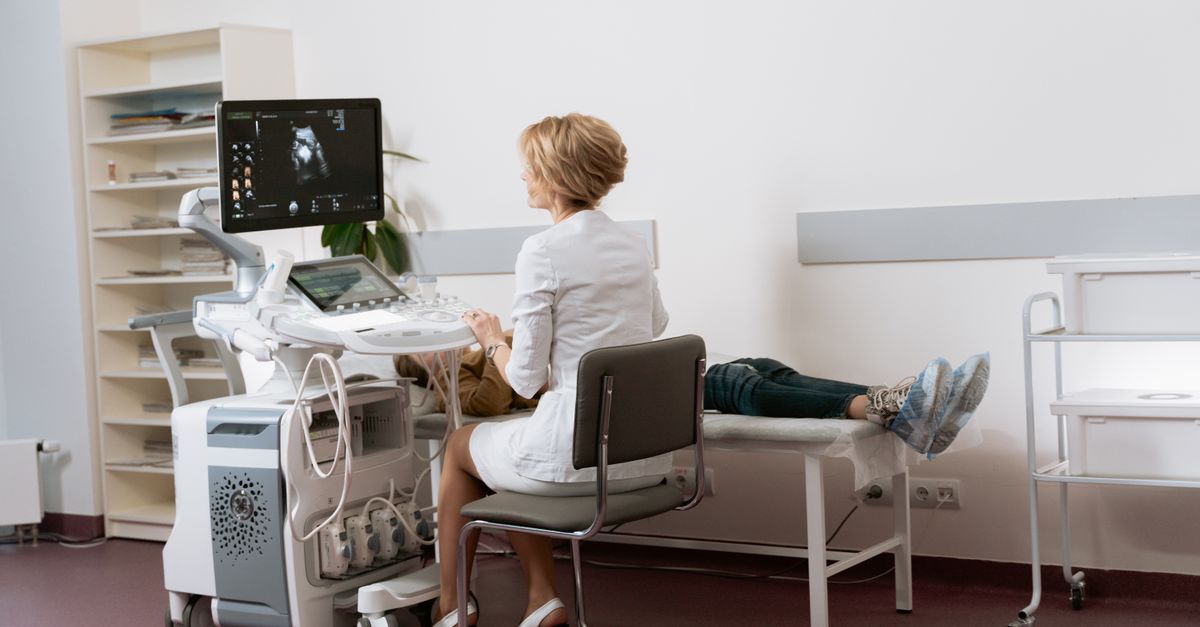
What Is a Normal HDL Level in Pregnancy?
For most pregnant women, an HDL level above 50 mg/dL is considered acceptable, but HDL typically rises through the second trimester — sometimes reaching 70–80 mg/dL — before declining slightly in the third. A reading below 40 mg/dL at any stage warrants attention. Women with pre-existing metabolic conditions may not see the usual rise, and that failure to increase is itself a risk signal.
---
Why HDL Changes Dramatically During Pregnancy
Pregnancy rewires lipid metabolism in ways that can look alarming on a standard lab panel. Total cholesterol, LDL, and triglycerides all rise significantly — a well-documented physiological adaptation that supports fetal development, placental function, and steroid hormone synthesis. HDL follows a more nuanced trajectory.
In the first trimester, HDL levels are broadly similar to a woman's pre-pregnancy baseline. From approximately weeks 16 to 28, estrogen surges drive a measurable increase in hepatic production of ApoA-I (the primary structural protein in HDL particles), which typically pushes HDL values higher. In the third trimester, HDL begins to decrease again as progesterone climbs and lipid transfer activity increases, redirecting cholesterol toward the fetus (Bartels et al., Clinica Chimica Acta 2012; PMID: 22085916).
This means a static reference range — say, the standard adult female range of 50–80 mg/dL — applies imperfectly throughout gestation. A value of 55 mg/dL in week 10 and a value of 55 mg/dL in week 32 carry different clinical meanings.
---
What Are the Reference Ranges by Trimester?
The table below synthesizes data from prospective cohort studies and population-level lipid surveys in pregnant women. These are population medians and approximate interquartile ranges, not diagnostic cutoffs — individual variation is wide.
| Trimester | Typical HDL Range (mg/dL) | Notes |
|---|---|---|
| First (weeks 1–13) | 50–70 | Close to pre-pregnancy baseline |
| Second (weeks 14–27) | 60–85 | Peak driven by estrogen-mediated ApoA-I synthesis |
| Third (weeks 28–40) | 50–75 | Gradual decline as cholesterol transfers to fetus |
A landmark study of lipid changes across gestation in a Norwegian birth cohort found that median HDL rose from approximately 62 mg/dL in the first trimester to a peak near 74 mg/dL mid-pregnancy, then fell to around 66 mg/dL by the late third trimester (Tóth et al., Clinical Chemistry 2011; PMID: 21300920).
For clinical context, the American Heart Association still defines HDL below 50 mg/dL in women as a cardiovascular risk marker. Pregnancy does not suspend that concern — women whose HDL fails to rise above 50 mg/dL during the second trimester, or drops below 40 mg/dL at any point, should prompt a conversation about underlying metabolic health.
If you're trying to understand where your HDL sits relative to cardiovascular risk thresholds outside of pregnancy, the full breakdown of optimal HDL cholesterol levels is a useful reference.
---
What Does Low HDL in Pregnancy Actually Mean?
Low HDL during pregnancy is not simply a cosmetic lab finding. Research has linked persistently low maternal HDL to several clinically meaningful outcomes.
Gestational diabetes risk. A 2019 systematic review and meta-analysis found that women who developed gestational diabetes mellitus (GDM) had significantly lower first-trimester HDL levels compared to women who remained normoglycemic. The pooled data showed that for every 1 mg/dL decrease in first-trimester HDL, GDM risk rose by approximately 3% (Ryckman et al., Journal of Diabetes Research 2019; PMID: 30800684). Tracking fasting glucose levels during pregnancy alongside HDL gives a fuller metabolic picture.
Preeclampsia association. Dyslipidemia — including low HDL and high triglycerides — has been identified as an independent contributor to endothelial dysfunction, one of the core mechanisms behind preeclampsia. A prospective cohort study of 1,000 pregnant women found that women in the lowest HDL quartile had significantly higher odds of developing preeclampsia in the third trimester (Enquobahrie et al., American Journal of Hypertension 2004; PMID: 15607627).
Inflammation marker. HDL is not just a passive cholesterol transporter — it carries anti-inflammatory proteins and paraoxonase enzymes. When HDL is low or dysfunctional, oxidative stress in the placental vasculature can increase. This matters because placental inflammation is upstream of several adverse pregnancy outcomes, including preterm birth.
Postpartum cardiovascular trajectory. Women who enter or exit pregnancy with low HDL may be at elevated long-term cardiovascular risk. Pregnancy effectively acts as a cardiovascular stress test — what happens to your lipids during gestation is predictive of your lipid profile years later.
---
Optimal HDL Cholesterol Range: What Practitioners Target
The term "optimal" in lipid medicine is context-dependent. In non-pregnant women, most cardiovascular guidelines set optimal HDL at ≥60 mg/dL, with the range of 60–80 mg/dL associated with the lowest cardiovascular event rates. Below 50 mg/dL is considered low; below 40 mg/dL is clinically concerning regardless of age.
In pregnancy, the target shifts slightly upward in the second trimester and downward toward baseline in the third. Practitioners generally interpret the following as a reasonable framework:
- Reassuring: HDL ≥60 mg/dL through the second trimester
- Acceptable: HDL 50–59 mg/dL across gestation
- Monitor closely: HDL 40–49 mg/dL, especially if accompanied by elevated triglycerides
- Concerning: HDL <40 mg/dL — warrants metabolic workup
To understand how HDL interacts with your total cholesterol ratio — which matters more than any single number in isolation — the optimal cholesterol ratio guide explains how to read your full panel.
It's also worth noting that HDL quality matters, not just HDL quantity. Small, dense, oxidized HDL particles — despite appearing normal on a standard lipid panel — may not confer the usual protective benefit. Functional HDL testing (ApoA-I, HDL particle number) is increasingly used in integrative and functional medicine contexts, though it remains less standard in obstetric care.
---
Factors That Affect HDL During Pregnancy
Several physiological and lifestyle factors modulate how HDL behaves during gestation. Understanding them helps contextualize an individual result.
Insulin resistance. Pregnancy is inherently insulinogenic — the placenta produces hormones that deliberately blunt maternal insulin sensitivity to redirect glucose toward the fetus. In women already predisposed to insulin resistance, this effect can suppress HDL more than expected. Low HDL and high fasting insulin together form a pattern that warrants attention. Checking normal fasting insulin levels in pregnancy can help clarify whether insulin dynamics are contributing to a low HDL reading.
Pre-pregnancy BMI and metabolic health. Women who enter pregnancy overweight or with pre-existing dyslipidemia tend to have lower baseline HDL and may not experience the expected second-trimester rise. A 2017 analysis of the HAPO study data confirmed that pre-pregnancy BMI was independently and inversely associated with maternal HDL across all three trimesters.
Multiple gestation. Twin and higher-order pregnancies produce more pronounced lipid changes, including greater triglyceride elevation and, in some studies, attenuated HDL response.
Thyroid function. Hypothyroidism is a recognized cause of low HDL outside of pregnancy, and thyroid dysfunction during gestation — including subclinical hypothyroidism — can blunt the expected HDL rise. Given that thyroid antibody levels in pregnancy need careful monitoring, a concurrent thyroid panel is worth reviewing alongside a lipid panel if HDL is unexpectedly low. The reference ranges for thyroid antibodies in pregnancy provide useful context here.
Nutritional status. Omega-3 fatty acids (EPA and DHA) have documented HDL-modulating effects. A Cochrane-level review of omega-3 supplementation in pregnancy found that adequate DHA intake was associated with favorable lipid profiles in mothers, including modest HDL support (Middleton et al., Cochrane Database of Systematic Reviews 2018; PMID: 29582656).
---
How to Read Your Lab Result in Context
If your prenatal lipid panel shows an HDL number, here's how to interpret it without jumping to conclusions:
- Note the gestational week. A result from week 10 is not comparable to a result from week 34 — the physiological context is entirely different.
- Look at the full lipid panel. HDL in isolation is less informative than the HDL-to-triglyceride ratio or total cholesterol-to-HDL ratio. High triglycerides paired with low HDL signal atherogenic dyslipidemia more strongly than either number alone.
- Compare to your pre-pregnancy baseline if available. A woman whose HDL was 45 mg/dL before pregnancy and remains at 45 mg/dL in the second trimester has not lost ground — but she also hasn't made the expected physiological improvement.
- Ask about units. Some Canadian and European labs report in mmol/L. To convert: multiply mmol/L by 38.67 to get mg/dL. A "normal" European result of 1.5 mmol/L equals approximately 58 mg/dL.
- Consider the clinical picture. One lab value is a data point, not a diagnosis. Blood pressure trends, weight gain trajectory, fasting glucose, and symptom patterns all inform how seriously to take an HDL reading.
For a broader look at how HDL reference ranges are defined and what they indicate outside of pregnancy, understanding what constitutes a normal HDL level provides useful foundational context.
---
What This Means for Your Formula
Ones doesn't replace your OB or maternal-fetal medicine specialist — but it does translate lab data into a personalized supplement formula calibrated to what your biomarkers actually show. For women whose lipid panel during pregnancy reveals suboptimal HDL alongside other metabolic signals, a few specific ingredients from Ones' catalog are particularly relevant.
Omega-3 (EPA/DHA): Ones includes pharmaceutical-grade omega-3 at clinically relevant EPA and DHA concentrations. As noted above, DHA is not only structurally essential for fetal brain development but also supports favorable maternal lipid metabolism, including HDL function (Middleton et al., 2018; PMID: 29582656). This is one of the few supplements with strong evidence in pregnant populations specifically.
Heart Support blend: Ones' proprietary Heart Support system blend is formulated for cardiovascular system function. For women whose HDL is trending low alongside other cardiometabolic signals — elevated triglycerides, borderline fasting glucose — this blend addresses the overlapping biochemistry rather than treating a single number in isolation.
Magnesium Complex: Magnesium deficiency is common in pregnancy and is associated with insulin resistance, which secondarily suppresses HDL. Ones includes a Magnesium Complex with high-bioavailability forms, dosed to support the increased magnesium demands of gestation without over-supplementing.
Because Ones formulas are generated from blood work, wearable data, and health history rather than self-selected supplements, the AI can identify whether a low HDL reading is occurring in the context of insulin resistance, thyroid dysfunction, or isolated dyslipidemia — and adjust ingredient selection accordingly. The formula comes as a 6 or 9-capsule daily plan based on what your data shows, not a generic prenatal stack.
---
Key Takeaways
- A normal HDL level in pregnancy varies by trimester: expect a rise to 60–85 mg/dL in the second trimester and a partial decline in the third. A flat or low HDL curve is worth investigating.
- HDL below 40 mg/dL at any gestational stage warrants a metabolic workup; HDL below 50 mg/dL in the second trimester is at minimum worth discussing with your provider.
- Low first-trimester HDL is associated with increased gestational diabetes and preeclampsia risk in prospective cohort data.
- Insulin resistance, pre-pregnancy BMI, thyroid function, and omega-3 status are among the modifiable factors that influence maternal HDL.
- HDL quality (particle function, ApoA-I concentration) matters as much as the raw number — standard lipid panels may not capture this.
- Always interpret your HDL in the context of your full lipid panel, gestational week, and other metabolic biomarkers, not as a standalone data point.
---
Always consult a qualified healthcare provider before making any changes to your supplement regimen during pregnancy. The information in this article is educational and does not constitute medical advice or diagnosis.